Dario Amodei Emerges as AI's Most Polarizing Leader Amid Safety Warnings and Rapid Growth


3 Sources
[1]
AI's man of the moment
The big picture: He may not have sought the status, but Anthropic's quirky, intellectual CEO has become the frontman for a technology that seems to be changing the world by the day. * In the history of capitalism, there has seldom been a more unusual spokesman for a transformative industry. A
[2]
Anthropic's Dario Amodei: AI's most visible CEO and enigma
New York (AFP) - The surge in artificial intelligence and the heated debate around its risks have made Anthropic CEO Dario Amodei the most visible tech leader -- though the 43-year-old remains an enigma. "I think he is one of the great legends in tech and business," says Alex Karp, CEO of
[3]
Dario Amodei's 'SNL' treatment cements him as the face of AI doomerism
From 'Weekend Update' to dinner with Trump, Anthropic's CEO is everywhere -- but as the symbol of the current AI doom moment. Dario Amodei is having a moment. The 43-year-old CEO of Anthropic has been making headlines for weeks after repeatedly advocating for greater regulation and a slower pace
Share
Copy Link
Dario Amodei, Anthropic's 43-year-old CEO, has become AI's most visible leader through his stark warnings about existential risks while building a company racing toward a $2 trillion IPO. His unusual approach—combining AI doomerism with aggressive development—earned him an SNL parody and a White House dinner invitation within days.
Dario Amodei Transforms Into AI's Most Recognizable Face
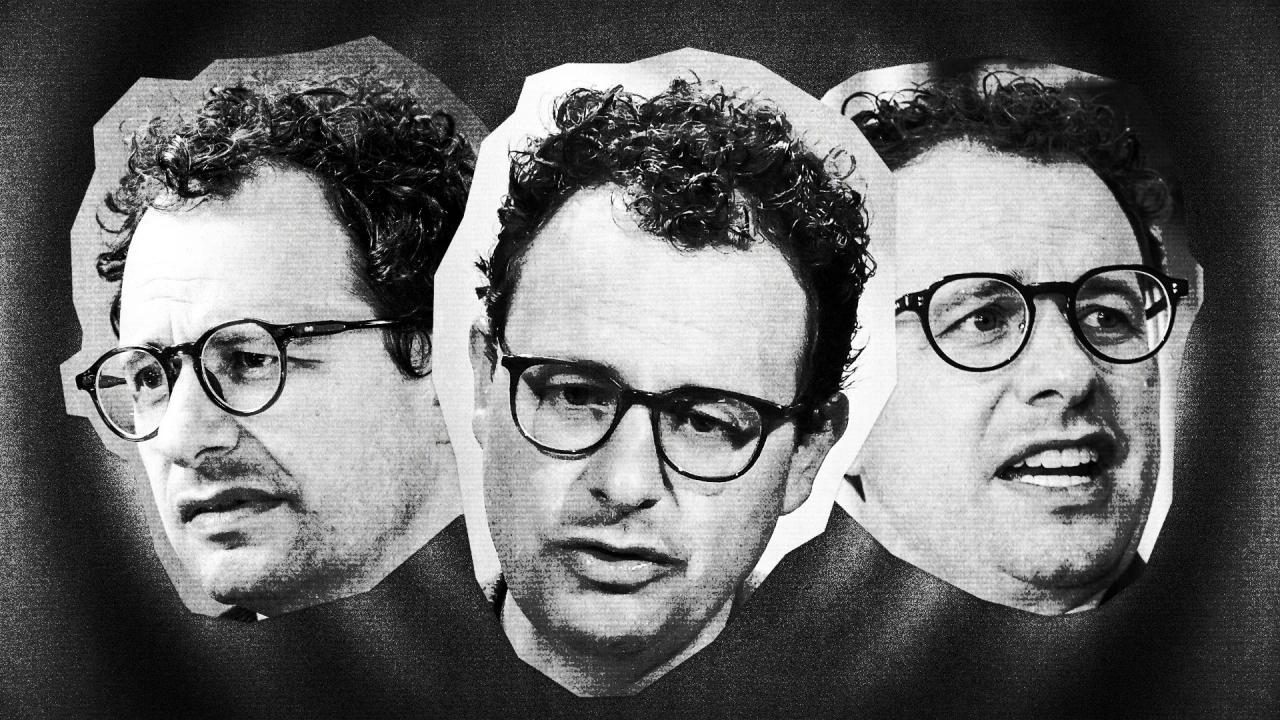
Dario Amodei, the 43-year-old CEO of Anthropic, has emerged as the most visible leader in artificial intelligence, embodying the technology's promise and peril in equal measure. The physicist-turned-entrepreneur now leads a company racing toward a $2 trillion public offering this fall, just six years after Anthropic's founding
1
. With unruly hair, round glasses, and a preference for V-neck sweaters over corporate suits, Amodei breaks every mold of traditional tech leadership2
. Stephen Henriques, a senior fellow at the Yale Chief Executive Leadership Institute, places him among the world's most recognized CEOs alongside Sam Altman and traditional business titans2
. Alex Karp, CEO of Palantir, calls him "one of the great legends in tech and business"2
. His plain-spoken warnings about AI safety and existential risks of artificial intelligence have made him both admired and criticized, yet he's remained consistent in his positions for years1
.
Source: Fast Company
The Contradictions Driving AI Doomerism
Amodei's unique position as both AI developer and doom prophet reached peak cultural visibility when Saturday Night Live parodied him in a "Weekend Update" sketch. The bit portrayed him battling internal dialogue, unable to complete sentences without warning that AI could kill everyone
1
3
. This contradiction—calling for AI regulation and slower development while accelerating his company's position at the vanguard—frustrates allies and fascinates observers1
. The face of AI moment intensified when former Anthropic researcher Jacob Coxon resigned on September 8, issuing a statement that garnered 174.2 million views asserting "the people building AI earnestly believe that it could kill us all by the end of the decade"3
. Within days, a White House memo circulated painting Amodei as the poster child of effective altruism, which conservatives view as promoting excessive caution in AI development1
. Yet by Sunday, President Trump personally invited him to dinner—critics had tried stopping this by trashing Amodei directly to the president hours beforehand1
.From Princeton Physicist to AI Industry Titan
Amodei's journey to becoming AI's most enigmatic leader began far from Silicon Valley boardrooms. The San Francisco native earned his doctorate in neuroscience at Princeton, where he worked on retinal analysis devices
2
. Michael Berry, who advised his doctoral work, recalls Amodei as "very idealistic in a technical or scientific sense," wanting to tackle big problems with major impact, initially hoping to cure diseases2
. His pivot came during a Stanford postdoc on protein analysis, coinciding with Geoffrey Hinton's breakthrough work showing larger AI models perform better2
. Gregory Diamos, who hired him at Chinese search giant Baidu, initially dismissed his application—a physicist and biologist with no engineering background2
. But Amodei's computational chemistry project ProteoWizard featured "some of the best code" Diamos had ever seen2
. At Baidu, Amodei "outworked everybody," devoting every waking hour to catching up, and wasn't afraid to confront more experienced researchers or management over research directions2
.
Source: Axios
Related Stories

Anthropic's Meteoric Rise Amid Safety Concerns
Despite controversy, Anthropic grows at unimaginable speed. The company is on pace for an annual revenue rate exceeding $100 billion, more than 10x its position a year ago
1
. If the looming IPO proceeds as planned and revenue continues, Anthropic could become one of America's 50 largest companies by revenue and 10 largest by market capitalization by year's end1
. This trajectory would make Amodei one of the world's multibillionaires—provided his warnings don't scare investors off first1
. His approach differs sharply from OpenAI's Sam Altman, who does more press and fits the traditional CEO mold more neatly1
. Yet precisely because Amodei is more unvarnished, he's become what people think of first when considering AI1
. His decision in March to confront the Pentagon over certain military uses of AI—risking everything—left venture capital barons and Trump's inner circle struggling to decode his approach2
.The Enigma Reshaping AI's Future
Amodei's links to effective altruism and rationalism movements fuel debate about his motivations. These philosophies aim partly to reduce AI's risks
2
. Anthropic states Amodei doesn't identify as part of the EA community, focusing instead on solving problems rather than being driven by any particular movement2
. Some see a humanist concerned about AI's societal impact, able to attract the world's best researchers to history-changing projects. Others describe a skilled operator exploiting collective fears to serve Anthropic's interests2
. Olivier Marre, who worked with Amodei at Princeton, never saw someone "engaged in a strong moral or ethical quest," describing him as ambitious and eager to succeed but not abnormally so2
. What's clear is that in less than a decade, this somewhat obscure scientist has become one of the most important people shaping humanity's technological future1
. As AI development accelerates and public anxiety grows, watch how Amodei navigates the rocky relationship between Anthropic and the administration, whether his safety-first rhetoric translates into concrete AI regulation, and if the company's explosive growth continues through its public offering.References
Summarized by

Navi
[1]
Related Stories
Anthropic CEO Warns AI Industry Must Embrace Transparency to Avoid Tobacco-Style Regulatory Backlash
17 Nov 2025•Policy and Regulation
Anthropic prepares for massive IPO as CEO warns competitors are taking unwise AI bubble risks
03 Dec 2025•Business and Economy

Anthropic draws $800 billion offers as OpenAI faces investor scrutiny over strategic shifts
14 Apr 2026•Business and Economy

Recent Highlights



Recent Highlights
Today's Top Stories


Don’t drown in AI news. We cut through the noise - filtering, ranking and summarizing the most important AI news, breakthroughs and research daily. Follow topics that matter to you and stay ahead.


