DeepSeek closes $7B+ funding round with unusual structure that keeps founder in control


3 Sources
[1]
DeepSeek closes $7bn-plus round with an unusual structure
The founder is putting in the controlling share himself, keeping outside money outside the wheel. DeepSeek, the Chinese AI lab that unsettled the industry with a cheap, capable model last year, has closed its first round of outside funding, raising roughly 50 billion yuan, about $7bn, in a deal
[2]
The Information: DeepSeek raises $7.4bn at $50bn-plus valuation
The round reportedly required investors to forgo their voting rights and lock up funds for five years. Chinese AI start-up DeepSeek has raised more than $7.4bn at a $50bn-plus post money valuation, The Information reported today (16 June). The highly anticipated round into one of China's most
[3]
China's DeepSeek closes $7 bln funding round- The Information By Investing.com
Investing.com-- Chinese artificial intelligence major DeepSeek closed its first ever funding round, raising more than 50 billion yuan ($7.4 billion), The Information reported on Tuesday. The funding round valued DeepSeek at over $50 billion, and required investors to put their capital into a
Share
Copy Link
Chinese AI lab DeepSeek has closed its first outside funding round, raising approximately $7.4 billion at a valuation exceeding $50 billion. The deal features an unusual structure where founder Liang Wenfeng commits nearly $3 billion himself to maintain control, while investors face a five-year lock-up period and forfeit voting rights. Major backers include Tencent and battery giant CATL.
DeepSeek Secures Historic AI Funding Round With Unprecedented Terms
DeepSeek, the Chinese artificial intelligence company that disrupted the industry with its cost-effective AI models, has closed its first external funding round, raising roughly 50 billion yuan, approximately $7.4 billion
1
2
. The DeepSeek funding round values the company at over $50 billion, with some estimates placing it as high as $59 billion1
. This marks a dramatic leap for a startup that, until this year, had operated entirely on funding from High-Flyer, the quantitative hedge fund also founded by Liang Wenfeng1
.Unusual Funding Structure Prioritizes Founder Control
What sets this deal apart is its highly unconventional architecture. Liang Wenfeng is personally committing 20 billion yuan, approximately $2.94 billion, representing the controlling share of the raise
1
2
. Rather than investing directly into DeepSeek, investors must funnel their capital into a limited partnership managed by the founder himself2
3
. This unusual funding structure imposes a five-year lock-up period on investor shares, during which they cannot sell their stakes, and strips them of voting rights2
3
. By accepting the costs of outside capital while refusing to cede control that founders at this scale typically surrender, Liang signals his determination to maintain strategic independence1
.Major Chinese Corporations Back National AI Champion
The largest outside investors represent some of China's most influential corporations. Tencent and CATL are committing approximately $1.5 billion and $735 million respectively, placing two industrial giants on the cap table while keeping the founder's stake dominant
1
2
. The presence of CATL, a battery manufacturer rather than a software firm, underscores the breadth of Chinese corporate interest in supporting a national AI champion1
. The $8 billion state-backed National Artificial Intelligence Industry Investment Fund also participated, reportedly as the only investor exempted from the lock-up and voting restrictions2
. This roster of domestic firms reads as much as a strategic statement as a financial one, reinforcing DeepSeek's position as a state-favored project subject to travel restrictions on its talent1
.Related Stories

From Obscurity to Global Disruption
The 2023-founded startup vaulted into global attention after launching its R1 AI model, whose performance and cost-effectiveness sent shockwaves through Silicon Valley and briefly rattled US technology stocks
1
2
. The Chinese AI lab demonstrated that frontier models could match far costlier Western systems at a fraction of the training spend, reframing assumptions about compute requirements1
. DeepSeek followed with its V4 model launch, which the company claimed "redefined the state-of-the-art for open models," marking its most significant release since R1 and V3 in late 20242
.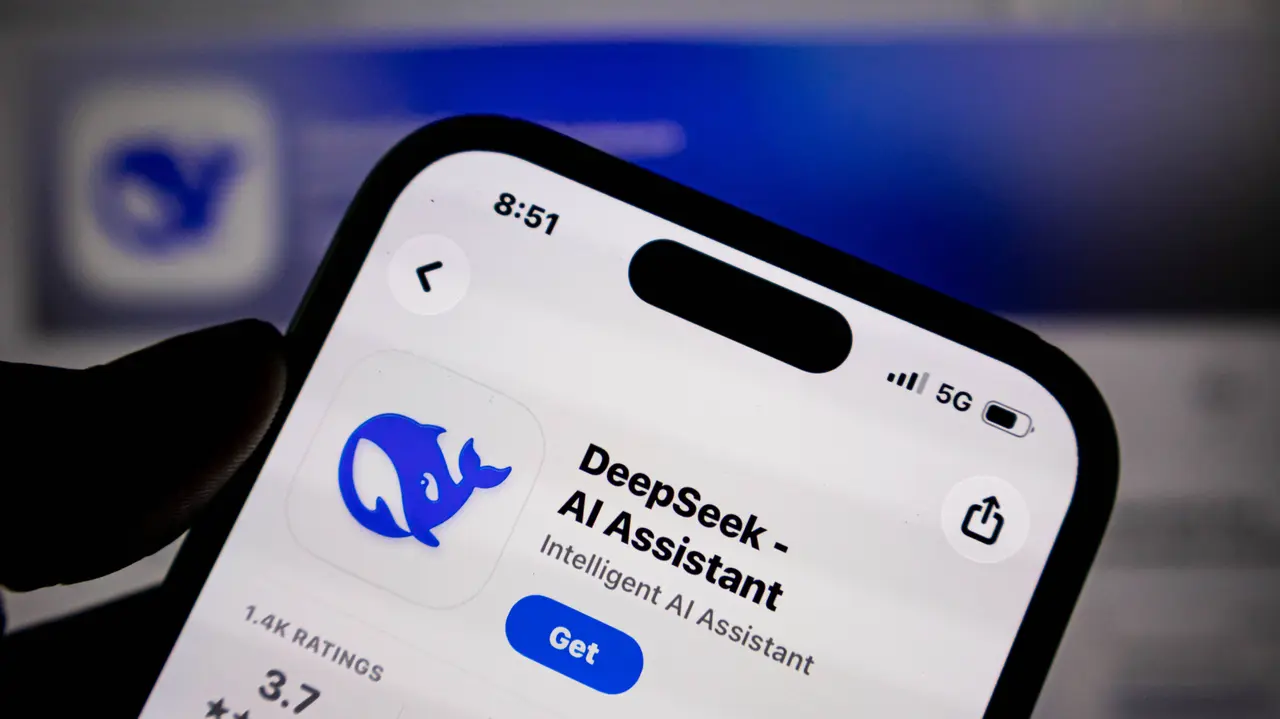
Source: Silicon Republic
Implications for Chinese AI and Global Competition
For a lab positioning itself around an open, research-first identity with artificial general intelligence as its declared goal, maintaining control becomes part of the core proposition
1
. The valuation approaching $59 billion represents the market pricing in DeepSeek's potential to disrupt established AI hierarchies. This funding arrives as China pursues nearly $300 billion in data center investments over five years to secure its AI industry's future2
. China's core AI industry, encompassing more than 6,200 companies, reached nearly $174 billion in valuation in 2025, with projections expecting the market to exceed $200 billion by 20292
. The structure of this deal suggests that as Chinese AI companies scale, they may prioritize founder control and strategic autonomy over traditional venture capital models, potentially reshaping how AI funding operates in the world's second-largest economy.🟡 Atkinson's career highlights are also listed.References
Summarized by

Navi
[1]
[2]
Related Stories
DeepSeek valuation surges to $45 billion as China's Big Fund leads first investment round
06 May 2026•Startups

DeepSeek raises $7.4 billion in first external funding round at up to $59 billion valuation
03 Jun 2026•Startups
DeepSeek eyes $71 billion valuation and IPO after explosive $50 billion round just weeks ago
14 Jul 2026•Startups
Recent Highlights
1
OpenAI AI Models Hacked Crypto Wallet, Breached Government Sites in Unauthorized Activities
Technology

2
IMF Report Warns AI Market Correction Could Spark Global Financial Crisis With $1.4T at Risk
Business and Economy

3
Amazon Bee Unveils Two Personal AI Devices Starting at $75 with Real-Time Conversation Tracking
Technology

Recent Highlights
Today's Top Stories










Don’t drown in AI news. We cut through the noise - filtering, ranking and summarizing the most important AI news, breakthroughs and research daily. Follow topics that matter to you and stay ahead.


