The Devil Wears Prada 2 meme mistaken for AI was actually painted by a human artist


3 Sources
[1]
A 'Devil Wears Prada 2' meme that viewers thought was AI slop was actually made by a human
What some viewers thought was an AI-generated meme in "The Devil Wears Prada 2" was actually drawn by a human artist. The highly anticipated sequel to the 2006 classic dominated the box office this weekend as its original cast returned to the story of the fictional magazine "Runway" 20 years
[2]
The 'Devil Wears Prada 2' hired an artist whose work looked like AI. How she did it is going viral
Forget AI replacing human artists -- The Devil Wears Prada 2 just proved that human artists can replace AI. The new movie, a long-awaited sequel to 2006's The Devil Wears Prada, sees the return of star Meryl Streep as iconic fashion editor Miranda Priestly. It begins with Priestly in a PR crisis,
[3]
How a Devils Wears Prada 2 "nailed AI slop"
Film fans are on the alert for any sign of AI art these days, and there seemed to be a flagrant case in The Devil Wears Prada 2. A meme appearing in the film bears all the hallmarks of AI slop, but the backlash is on hold: it turns out that it was made by human artist, who inadvertently replicated
Share
Copy Link
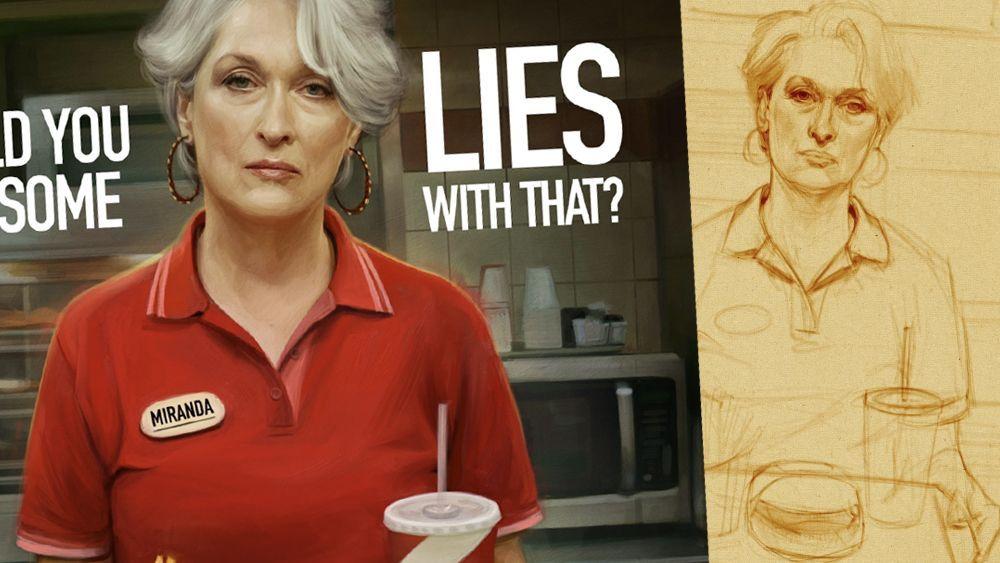
A meme in The Devil Wears Prada 2 showing Miranda Priestly as a fast-food worker looked like AI-generated content to viewers. But digital artist Alexis Franklin revealed she hand-painted the image at director David Frankel's request. The viral discussion highlights growing confusion between AI art and human craftsmanship as people struggle to distinguish between the two.
Human Artist Behind Viral The Devil Wears Prada 2 Meme
When The Devil Wears Prada 2 dominated the box office on its opening weekend, audiences spotted what appeared to be a glaring example of AI-generated content. A brief meme showing Miranda Priestly, played by Meryl Streep, dressed as a fast-food worker with the caption "Would you like some lies with that?" looked unmistakably like AI slop to many viewers
1
. The image featured blurred menu text and that uncanny, soulless aesthetic commonly associated with machine-generated visuals. But the truth sparked a viral discussion across social media: digital artist Alexis Franklin hand-painted the entire piece2
.
Source: Creative Bloq
Franklin, a professional illustrator for nearly a decade, was commissioned directly by director David Frankel to create the meme for the film. She shared a time-lapse of her artistic process on Instagram, revealing that the digital painting took her a few days of on-and-off work to complete using Procreate and Photoshop
3
. "Absolutely no disrespect to Queen Meryl, but this is something I would've painted in my free time, so when they asked me to do this it was nothing but fun," Franklin wrote in her post1
. She confirmed she was fairly compensated for the work.The Irony of Human Craftsmanship Mimicking AI Art
The confusion wasn't accidental. Franklin explained she was going for a "cheap, plastic look that reminded me of the photoshopped 2010's meme aesthetic"
1
. She was hired to create a cheap meme that would be immediately readable as doctored and fake, since the image appears on screen for only a brief moment. Franklin deployed a "logo" state of mind rather than focusing heavily on brush strokes or traditional artistry3
. However, she clarified that while she was trying to make it look artificial, "emulating AI was not on my mind when I painted it"1
.The image includes features commonly associated with AI-generated imagery, including blurred and distorted lettering and that ubiquitous retro golden tone. Illegible text has become a telltale sign of AI-generated imagery as models struggle to replicate small details. Franklin noted that people have pointed out regular human micro-errors in the piece and claimed she did it intentionally to nail the AI slop aesthetic, which she finds amusing
1
. On X, she remarked that "'You nailed the AI slop of it!' is such a harrowing compliment"3
.Why This Matters for the Creative Industry
Franklin's Instagram post accrued hundreds of comments praising her work and the film's decision to hire a human artist. One commenter wrote that it was "so refreshing it not being AI," while another celebrated: "Ai replacing artists 🙅🏻♀️ artists replacing ai 🙂↕️"
1
. The revelation carries particular weight given that The Devil Wears Prada 2 addresses AI as a looming threat replacing human taste and potentially jobs in the creative industry3
. The film's narrative follows the fictional fashion magazine Runway facing falling sales and a reputational crisis, with the meme appearing amid backlash against Miranda Priestly for failing to vet an article3
.Yet the incident also reveals a troubling phenomenon affecting the perception of AI in art. Despite sharing her time-lapse and public portfolio of work from long before AI images became commonplace online, Franklin received accusations of faking her work
1
. As generative AI technology becomes increasingly sophisticated, people are not only more likely to believe AI-generated images are real, but they're also more likely to believe real images are AI. Franklin described this as "mass hypervigilance" driven by people who don't want to be fooled, leading them to see signs that aren't really there1
.Related Stories

What Artists and Audiences Should Watch For
While Franklin understands people's skepticism, especially when it comes from wanting to support human artists, she warns it has the potential to hurt those artists. "AI is so prevalent now, it feels like people have forgotten how it got that good -- it studied us," Franklin wrote. "The techniques it uses are ours!"
1
. This raises questions about how audiences will navigate an environment where distinguishing between human and machine-made work becomes increasingly difficult. For artists, the short-term implication is a need to document their creative process more thoroughly to prove authenticity. Long-term, the creative industry faces a paradox where human craftsmanship might need to deliberately differentiate itself from the very techniques AI learned by studying human work. As one fan noted on Instagram, the fact that the filmmakers could have used AI but chose not to "is a slap to AI generated content"3
, suggesting that intentional hiring of human artists may become a statement in itself.References
Summarized by

Navi
[2]
[3]
Related Stories
Real Monet Painting Labeled AI Sparks Viral Social Experiment on Authenticity and Bias
15 May 2026•Entertainment and Society

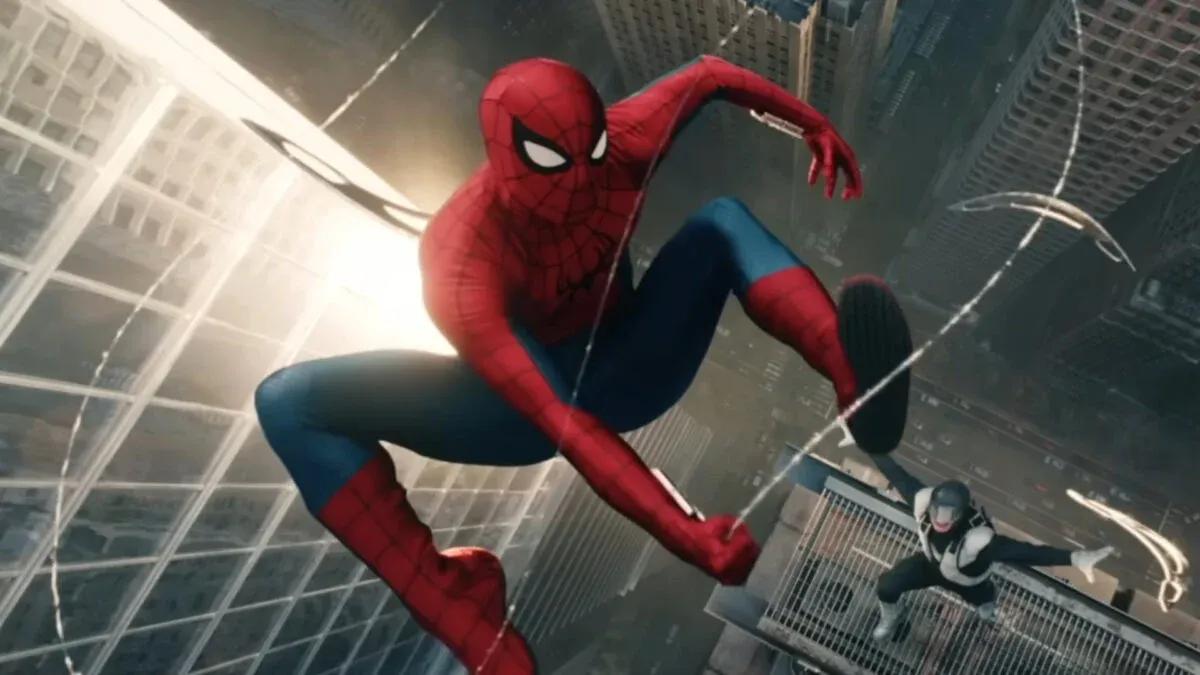
Spider-Man: Brand New Day AI Art Controversy Sparks Hollywood Debate Over Generative AI Use
21 Aug 2026•Entertainment and Society
AI in Film Divides Hollywood as Studios Shift from Clip Generation to Full Production Workflows
19 May 2026•Entertainment and Society
Recent Highlights
1
Microsoft and Nvidia Launch Surface Laptop Ultra: A $2,599 AI-Ready PC With RTX Spark Chip
Technology

2
Trump Consulted Grok AI Before Ordering Venezuela Invasion and Capture of Nicolás Maduro
Policy and Regulation

3
Scientists Build AI Model That Reconstructs Images From Brain Scans in Record Time
Science and Research

Recent Highlights
Today's Top Stories




Don’t drown in AI news. We cut through the noise - filtering, ranking and summarizing the most important AI news, breakthroughs and research daily. Follow topics that matter to you and stay ahead.


