Digital fruit fly brain walks while human neurons play Doom in biological computer experiments


2 Sources
2 Sources
[1]
Digital fruit fly brain model walks and cleans its feelers
San Francisco startup Eon Systems claims that it has created the first digital simulation of a fruit fly brain that can control a virtual body and produce recognizable behaviors. We'd call this "huge if true" but the research papers behind it look solid. This is science-fictional stuff - but not the SF you might think. The "first multi-behavior brain upload" is based on several substantial pieces of previous work, including some hefty scientific research papers in reputable journals. Otherwise, we would have dismissed it. On first look, the story sets several of our alarm bells ringing (brain uploading, AI, virtual reality, the Singularity). However, on the face of it, it seems to hang together. The researchers at Eon Systems have taken several pre-existing components: a fruit fly brain scan, a tool for modelling neurons, a model of some of the fly's muscles and body, and a very simple virtual environment, connected them together and ran it. The team claims that the result displays some of the behavior of the real insect. One part is a whole-brain connectome of a fruit fly, Drosophila melanogaster - one of the classic laboratory organisms, and a species this vulture spent hours peering through binocular microscopes at university in the 1980s (back then, he could separate male from female anesthetized flies in a dish at dozens to hundreds per hour). Effectively, this is a 3D brain scan of a fly's brain, including 125,000 neurons and 50 million synapses. The scan is from an adult female fly. This is important because one of the reasons Drosophila is a model organism is that some of the parts of their larvae are unusually large and so easier to work with. Relatively speaking, maggots don't do much, so a maggot brain scan would be easier - but no, this was an adult fly. The connectome comes from the splendidly named Flywire effort. That was published in 2024, and the same year, a team demonstrated that it seemed to respond to some signals, described in Nature in the paper "A Drosophila computational brain model reveals sensorimotor processing." Eon Systems ran the brain scan in a spiking neural network simulator called Brian2, and no, that is not a typo. Brian2 is FOSS and the source code is on GitHub. Eon also drew upon the NeuroMechFly v2 model, as described in the paper "Simulating embodied sensorimotor control in adult Drosophila." So, it took a synapse-level fly brain scan. It linked the scan's 125,000 neurons back up to one another using an AI tool to reconnect its 50 million synapses. Then it ran the resulting dataset inside an existing tool for modeling networks of neurons. It connected this digital model fly brain up to another model representing some of a fruit fly's body: its legs, antennae, mouth parts, and so on. The resulting model was fed some inputs provided by the MuJoCo advanced physics simulation. A video accompanying Dr Alex Wissner-Gross's Substack article about the work shows the model fly moving. In summary, the model fly brain, controlling a model fly body, managed to walk around, stop and clean its antennae, and when the model was presented with a signal resembling the smell of sugar, it stopped and extended its proboscis. In other words, it stuck out its tongue for a lick. We took the story to someone with considerable knowledge of running models of neurons in silico, Dr Steve Furber, co-creator of the ARM processor whose subsequent research included creating the SpiNNaker 2 hardware. He told us: Now, to be fair, at least one of the comments on the Substack post is severely critical: We specifically asked Dr Furber about that, and he said: Is Eon Systems' work an uploaded fly, waking up in the fruit-fly Matrix? No. But it does demonstrate interconnecting a modeled fly brain with a modeled fly body and getting fly-like behaviour out of it, and that is pretty impressive. Dr Wissner-Gross has been writing and presenting about AI and related matters for some 15 years, so he is clearly highly motivated to spin this for all it's worth, but even so, it looks like an impressive result to us. There are a number of things left unstated about the results so far. One of them is how long it took. This is going to be an absolutely massive model, which means running it will be quite slow. We're absolutely certain that the model and the video are not running in real time. It could well be that to get a few seconds of fly-like behavior took weeks or months of computer time. We are confident that there won't be brain scans of flying insects acting as onboard drone pilots in the next couple of years. We're sure that researchers around the world will be scurrying to replicate this, and indeed, to find any problems and highlight them. Among other things, though, it might result in easier access to funding. This is the sort of demo that you can wave in front of an uncomprehending administrator to good effect. The resonances from science fiction are inescapable, but they might not be as positive as you might immediately think. For instance, you might be excited that this could be a measurable, if tiny, step towards brain uploading. Be careful what you wish for, and read our favorite thought experiment about human brain uploads in recent years, Lena. It's a superb short story presented in the form of a fake Wikipedia article, and it is a chilling read. (The title is taken from one of the reference images used in digital image processing. The eponymous model herself now wishes the image was retired.) For a much longer version, there's Neal Stephenson's recent novel Fall; or, Dodge in Hell. This has the approximate shape of a happy ending if you squint, but the real subtext is right there in the title. What it directly and closely reminded us of, though, is no coincidence because the author is the person who shared the research with us. It was a short story called Lobsters by Charles Stross. This later became part of his 2005 novel Accelerando, which tells the story of humanity undergoing a technological singularity. A lot of folks in the tech world enjoyed this book hugely (it has 22,431 ratings and 1,448 reviews on Goodreads), without noticing the gigantic genocidal atrocity happening in the background - which should tell you important things about tech bros. For us, the takeaway was that, as the Russian invasion of Ukraine drags into its 12th year, the Gaza war is nearly 30 months in, and the new 2026 Iran war continues to send oil prices skyward along with the smoke, we are rolling into William Gibson's "Jackpot" scenario: Through the 21st century, it kills 80 percent of humanity, and most other life on Earth. As it happens, it is accompanied by a period of vast scientific and technological advance. ®
[2]
A petri dish of human brain cells is currently playing Doom. Should we be worried?
Scientists in the US have uploaded a fruit fly to a computer simulation, while an Australian lab has taught neurons on a glass chip to play a 90s video game. How long before we are all living in a sci-fi movie? It sounds like the opening of a sci-fi film, but US scientists recently uploaded a copy of the brain of a living fly into a simulation. In San Francisco, biotechnology company Eon Systems created a virtual insect that knew how to walk, fly, groom and feed in its virtual environment. Researchers in Australia, meanwhile, have taught a petri dish containing 200,000 human brain cells to play the iconic 90s shooter Doom. One experiment has pushed a brain into a computer; the other has plugged a computer into brain cells. Both stories have been hailed as scientific breakthroughs, but have also sparked inevitable fears about the prospects of lab-grown humans and digital clones. Should we be concerned? It was Australian startup Cortical Labs in Melbourne that taught a dish of lab-grown neurons to play Pong in 2022. Now it has built what it describes as "the world's first code-deployable biological computer", running on living human tissue rather than silicon chips, which is happily playing the 1993 shooter Doom. "In computer-science nerd land, there's this obsession with getting Doom to run on everything, from calculators to microwaves," Hon Weng Chong, CEO of Cortical Labs, tells me over Zoom from Melbourne. "As soon as we managed to get Pong to work, the first thing people said was: 'When are you going to do Doom?'" The average human brain contains about 86bn neurons - roughly 430,000 petri dishes' worth. But how do you harvest 200,000 brain cells without resorting to a hacksaw and an ice-cream scoop? "They're my brain cells, actually - at least most of them are," Chong says proudly. "There's no scraping or brain extraction. It's a very cool technique that was developed by Professor Shinya Yamanaka, who won the Nobel prize in 2012." All you need is 10ml of blood (in this case Chong's), from which around 100 white blood cells can be harvested. These can then be reprogrammed into induced pluripotent stem cells (iPSCs) - the body's biological building blocks - which can then be reproduced exponentially. "Essentially we reverse the biological clock back to an embryonic state, induce them into neurons, and put them on a glass chip roughly the size of a 50p piece," explains Chong . "Because they're on a chip - and electricity is the common language between neurons and the computer system - we can interface with them and get them to play Doom." Cortical Labs conducted its Pong experiment in-house, but this time it reached out to 24-year-old Singaporean Sean Cole, who has just completed an MSc in artificial intelligence at the University of Sussex, and whose dad happens to be mates with its CEO. Cole wrote the code remotely, which the team then tested on their local machines. "I was a bit surprised it worked the first time around," he tells me over Zoom. So how does a petri dish of brain cells play Doom when it doesn't have any eyes? Or fingers? "We take a snapshot of the game with information like the player's health and the position of enemies, pass it through a neural network, convert it into numbers, and send the data," explains Cole. "This is called encoding - essentially turning the game state into signals the neurons can understand. The neurons then fire an output - move left, move right, walk forward, shoot or not shoot - which the system decodes and converts back into actions in the game." "If you think about how humans operate, we have information going into our retina, which is converted into electrical signals, processed in the brain, and then an output happens," adds Chong. "It's really no different from that." If a computer full of brain cells is playing a video game and making decisions, does that mean it's sentient? Or is it just behaving like the average Doom player? "People have different perceptions of what sentience is," says Cole. "I definitely don't think it's conscious. At first it didn't know how to move, aim or even shoot. Then it would shoot the first two enemies and stop - almost as if it was preserving itself. So it's definitely learning. We've managed to control a brain to learn in a very controlled environment. The next step could be something like Neuralink, where you inject a chip into the brain to train someone to learn a language faster." Exactly how the cells are learning to play the game is unclear. "We can hypothesise that it might involve things like the free energy principle - the idea that living systems act to minimise free energy - or Hebbian learning, where connections between neurons strengthen when they fire together." Could we ever use technology like this to instantly learn kung fu, as in The Matrix? "If we find a way to safely connect this technology to humans, that is kind of what the implications might be," Cole says. "A big concern would be: what if you override someone's memories?" While Chong says he'd like to try getting the neurons to play Pokémon next, the real future application here lies not in getting trays of human neurons to graduate to playing Minecraft or Grand Theft Auto, but in medicine. "People are looking at it from biomedical research angles, for disease modelling," he says. "Things like epilepsy, where drugs could be tested on neurons grown outside the body - not just to discover new drugs, but to tailor them at a personal level." Meanwhile, in San Francisco, where Eon Systems has scanned a fruit fly brain and recreated it as a virtual insect, the big scientific news is that the team have essentially recreated the creature's behavioural wiring. The digital insect already knew how to behave like a fly, without any training or prompting. This challenges a central assumption of modern AI: that intelligence must be acquired. In the case of the fly, much of its behaviour appears to be built-in. "The brain was scanned using electron microscopy. Our head of engineering led a project to emulate that brain, and now we've placed the emulated brain back into a body, so it can wander around a virtual world," Michael Andregg, CEO of Eon Systems, tells me. A fruit fly's brain comprises around 140,000 neurons - about five petri dishes' worth. The virtual fly has 87 joints and can do pretty much anything an actual fly can. But does it realise it's living in a simulation? "The fly probably knows something's off, because we're not simulating the environment with high fidelity," says Andregg. "We can't give very specific taste and smell cues - just that something smells sweet or tastes bitter, but there are no complex aromas." Brain emulation, Andregg suggests, could eventually allow humans "to flourish in a world with superintelligence. Our goal is to make the emulation and computed brain and body feel indistinguishable from the natural biochemical body and brain," he continues. "If it feels different, we've done something wrong." But we're still a long way from the upload-yourself-into-the-internet futures imagined in Devs or The Lawnmower Man, mainly because, in this case, the fly's brain had to be removed from the body first. "Scanning the body was too hard," says Andregg, which will probably reduce the waiting list for human volunteers willing to try out the technology. Chong, meanwhile, believes biological computing could achieve things that traditional computing has struggled with. "There's a thing called Moravec's paradox, which is well known in robotics: what humans find very difficult, computers find easy, and what computers find difficult, humans find easy," he says. "Abstract reasoning, mathematics and language are relatively recent in evolutionary terms, which is partly why computers excel at them. But motor control and probabilistic decision-making are things we've inherited through millions of years of evolution. Robots may be very good at solving maths problems, but we're still trying to build robots that can walk properly." Biological systems like the fruit fly simulation, he says, might eventually power robots, drones and other machines that need to navigate the messy unpredictability of the real world. For now, humanity's first biological computer is busy doing what humans have always done with new technology: playing games. And somewhere in Silicon Valley, a fruit fly is living its second life inside a computer, totally unaware that it is living in the insect Matrix.
Share
Share
Copy Link
San Francisco's Eon Systems has created a digital fruit fly brain model that controls a virtual body, displaying walking and grooming behaviors. Meanwhile, Australian startup Cortical Labs developed a code-deployable biological computer using 200,000 human brain cells that can play Doom. These parallel experiments represent significant steps in brain simulation and brain-computer interfaces, though questions remain about computational demands and future applications.
Digital Fruit Fly Brain Model Controls Virtual Body
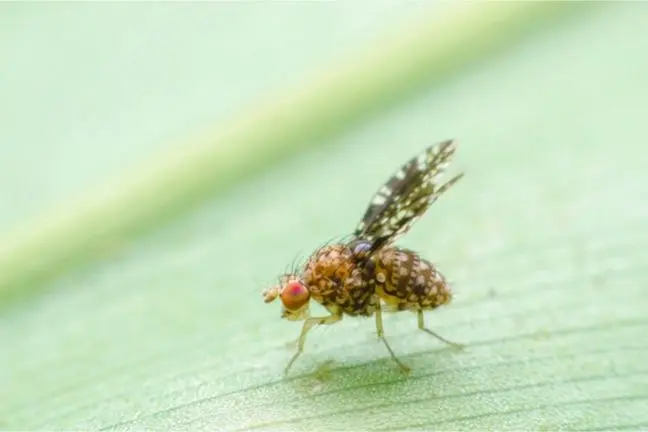
Eon Systems, a San Francisco startup, claims to have achieved what it calls the "first multi-behavior brain upload" by creating a brain simulation of a Drosophila melanogaster fruit fly that can control a virtual body and produce recognizable behaviors
1
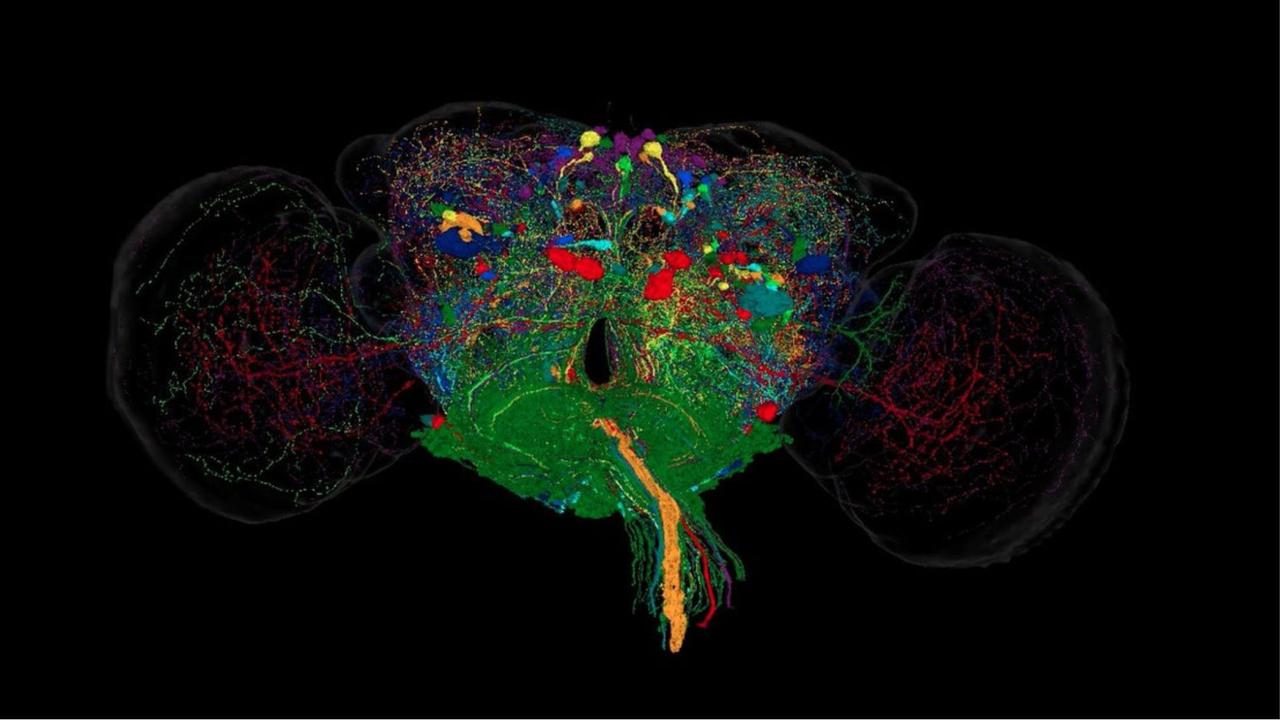
. The digital fruit fly brain model is built on a whole-brain connectome containing 125,000 neurons and 50 million synapses from an adult female fly, sourced from the Flywire effort published in 20241
.
Source: The Register
The team connected this synapse-level scan using AI to reconnect the connections, then ran the resulting dataset inside Brian2, an open-source spiking neural network simulator. They linked this modeled brain with a modeled body representing the fly's legs, antennae, and mouthparts using the NeuroMechFly v2 model, with inputs provided by the MuJoCo advanced physics simulation
1
. Video demonstrations show the model fly walking, stopping to clean its antennae, and extending its proboscis when presented with a sugar smell signal—behaviors that mirror real insect activity.Human Brain Cells Playing Doom in Biological Computer
While Eon Systems pushed a modeled brain into virtual reality, Cortical Labs in Melbourne took the opposite approach by plugging a computer into living tissue
2
. The Australian startup developed what it describes as "the world's first code-deployable biological computer," running on 200,000 human brain cells rather than silicon chips2
. This represents a dramatic advance from their 2022 experiment teaching neurons to play Pong.The neurons were derived from CEO Hon Weng Chong's own blood using a technique developed by Nobel laureate Professor Shinya Yamanaka. White blood cells were harvested and reprogrammed into induced pluripotent stem cells, which were then reproduced exponentially and induced into neurons on a glass chip roughly the size of a 50p piece
2
. The interface between biological and computer systems relies on electricity as the common language, enabling the neurons to receive game state information and output movement commands.How Brain-Computer Interfaces Enable Learning in Biological Constructs
The Doom experiment reveals intriguing patterns of learning in biological constructs. Sean Cole, a 24-year-old AI graduate who coded the system, explains that game snapshots are encoded into signals the neurons can understand through a neural network
2
. The neurons then fire outputs—move left, move right, walk forward, shoot—which the system decodes back into game actions. Initially, the cells didn't know how to move or aim, but they learned over time, sometimes appearing to preserve themselves by stopping after shooting the first two enemies.While the mechanism remains unclear, hypotheses include the free energy principle, where living systems act to minimize free energy, or Hebbian learning, where connections between neurons strengthen when they fire together
2
. Cole suggests that if safely connected to humans, this technology could have implications similar to Neuralink, potentially accelerating language learning or skill acquisition.Related Stories

Computational Challenges and Scientific Validation
Dr. Steve Furber, co-creator of the ARM processor and researcher behind the SpiNNaker 2 hardware, was consulted about the Eon Systems work
1
. While he acknowledged the achievement, significant questions remain about computational resources required for such brain emulation. The model representing the fly's brain and body is absolutely massive, meaning it runs quite slowly—likely not in real time1
. A few seconds of fly-like behavior could have required weeks or months of computer time, making onboard drone pilots controlled by flying insect brain scans unlikely in the next couple of years.The research builds on substantial previous work, including papers published in Nature describing how the Drosophila connectome responds to signals
1
. Researchers worldwide will likely attempt to replicate these results and identify potential problems, though such demonstrations can prove effective for securing funding from administrators.Questions of Sentience and Future Applications
The question of whether a biological computer making decisions qualifies as sentient remains contentious. Cole doesn't believe the system is conscious, though it's definitely learning
2
. The average human brain contains roughly 86 billion neurons—approximately 430,000 petri dishes' worth—suggesting current experiments represent a tiny fraction of human brain complexity.Both experiments demonstrate different approaches to bridging biological and computational systems. Eon Systems achieved fly-like behavior by connecting a modeled brain with a modeled body in simulation, while Cortical Labs created an actual biological computer from living human tissue. These parallel developments suggest multiple pathways toward understanding how neurons process information and learn, with potential applications ranging from disease modelling to advanced brain-computer interfaces. Whether these technologies eventually enable Matrix-style instant skill acquisition or serve more modest research purposes, they mark tangible progress in understanding how biological systems compute and adapt.
References
Summarized by

Navi
[1]
Related Stories
EPFL Researchers Look to Fruit Fly Brains for Next-Gen Robot Controllers
05 Apr 2025•Science and Research
Living human neurons from Cortical Labs are now playing Doom on a $35,000 biological computer
28 Feb 2026•Technology

Cortical Labs Unveils CL1: World's First Commercial Biological Computer Using Human Brain Cells
06 Mar 2025•Technology

Recent Highlights
1
Google releases Gemma 4 with Apache 2.0 license, enabling unrestricted local AI on devices
Technology

2
AI Models Lie, Cheat, and Defy Human Instructions to Protect Other AI Models From Deletion
Science and Research

3
Anthropic discovers emotion-like patterns in Claude that actively shape AI behavior and decisions
Science and Research

Recent Highlights
Today's Top Stories




Your Daily Dose of Curated AI News
Don’t drown in AI news. We cut through the noise - filtering, ranking and summarizing the most important AI news, breakthroughs and research daily. Spend less time searching for the latest in AI and get straight to action.

