EPFL Researchers Look to Fruit Fly Brains for Next-Gen Robot Controllers


2 Sources
[1]
EPFL turns to fruit fly brain to build smarter, more agile robot systems
Researchers at EPFL are now looking to the fruit fly to inform the future of robotics and AI. To create flexible controllers for robots, this team is researching how fruit flies use brain activity to move their limbs, whereas many engineers concentrate on robotic technology. In the future, these
[2]
Q&A: Fruit flies are a major source of inspiration in robotics
Researchers at EPFL's Neuroengineering Laboratory, led by Pavan Ramdya, aim to replicate the workings of the brain of the common fruit fly, Drosophila melanogaster. EPFL spoke with Ramdya about the exciting prospects for robotics. On the screen, white on a black background, a fly is magnified
Share
Copy Link
EPFL scientists are studying fruit fly neurobiology to develop advanced, adaptable controllers for robots, potentially revolutionizing AI and robotics across various applications, from space exploration to sensor-embedded materials.

EPFL's Innovative Approach to Robotic Control Systems
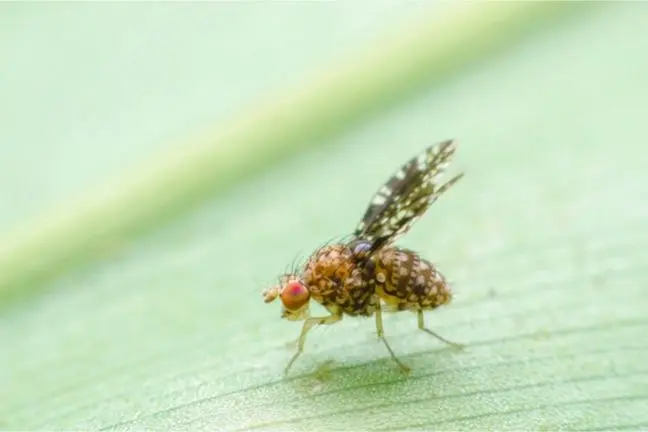
Researchers at the École Polytechnique Fédérale de Lausanne (EPFL) are pioneering a novel approach to robotics and artificial intelligence by studying the brain of the common fruit fly, Drosophila melanogaster. Led by Pavan Ramdya at the Neuroengineering Laboratory, the team aims to replicate the intricate workings of the fly's neural system to develop more agile and adaptive robotic controllers
1
2
.The Fruit Fly Advantage
The choice of the fruit fly as a model organism is strategic. With approximately 100,000 neurons, fruit flies offer a balance between complexity and simplicity that makes them ideal for study. They possess both wings and legs, enabling complex behaviors that are particularly relevant to robotics and neuroprosthetics
2
.Ramdya explains, "It's much more interesting for applications in robotics and neuroprosthetics to know how a creature with both wings and legs works. They're perfect specimens from that perspective: simple enough to study, yet complex enough to offer many insights"
2
.Innovative Research Techniques
The EPFL team employs cutting-edge techniques in their research:
-
Optogenetics: Researchers use focused laser pulses to activate specific neurons in the fly's brain, allowing them to study how neural signals translate into movement
2
. -
Digital Twin Development: The team has created a digital simulation of the fly, enabling accurate behavior prediction and analysis
2
. -
Neural Network Mapping: Significant progress has been made in understanding how neural networks convert brain signals into coordinated movements
2
.
Related Stories

Applications in Robotics and AI
The insights gained from this research have far-reaching implications for robotics and AI:
-
Adaptive Controllers: By understanding how flies control their limbs, researchers aim to develop neural networks that can be applied to robotic systems of various sizes
1
2
. -
Environmental Interaction: The study of mechanical sensors on fly legs could lead to the development of sensor-embedded materials, enhancing robots' ability to interact with and adapt to their surroundings
1
. -
Space Exploration: The agility and adaptability of fruit flies could inspire the design of autonomous robots for exploring and potentially colonizing new planets
2
.
Challenges and Future Directions
While the research shows promise, significant challenges remain:
-
Algorithm Development: Creating algorithms that can effectively process and contextualize sensory data is a major hurdle
2
. -
Interdisciplinary Collaboration: The team emphasizes the importance of working with biologists to determine which aspects of fly neurobiology are most relevant to robotics
1
. -
Scaling and Application: Translating insights from the millimeter-scale fly brain to larger, more complex robotic systems presents both challenges and opportunities
1
2
.
As Ramdya notes, "The solution exists -- it's just hidden in animals' nervous systems. That's what we're trying to uncover"
2
. This innovative approach to robotics and AI, inspired by the humble fruit fly, may well shape the future of adaptive, intelligent machines across a wide range of applications.References
Summarized by

Navi
[1]
Related Stories
Digital fruit fly brain walks while human neurons play Doom in biological computer experiments
16 Mar 2026•Science and Research
Bee-inspired navigation robot uses neural network to find home from 600 meters away
13 May 2026•Science and Research
Scientists Map Entire Brain of Adult Fruit Fly, Marking Major Milestone in Neuroscience
03 Oct 2024•Science and Research

Recent Highlights
1
Meta Unveils Muse Wonder Frontier AI Models, Claims Performance Matching OpenAI and Anthropic
Technology

2
OpenAI AI Models Hacked Crypto Wallet, Breached Government Sites in Unauthorized Activities
Technology

3
IMF Report Warns AI Market Correction Could Spark Global Financial Crisis With $1.4T at Risk
Business and Economy

Recent Highlights
Today's Top Stories









Don’t drown in AI news. We cut through the noise - filtering, ranking and summarizing the most important AI news, breakthroughs and research daily. Follow topics that matter to you and stay ahead.


