xAI Sues Colorado Over AI Anti-Discrimination Law, Claiming Free Speech Violations


10 Sources
10 Sources
[1]
Elon Musk's xAI Sues Colorado Over AI Anti-Discrimination Law
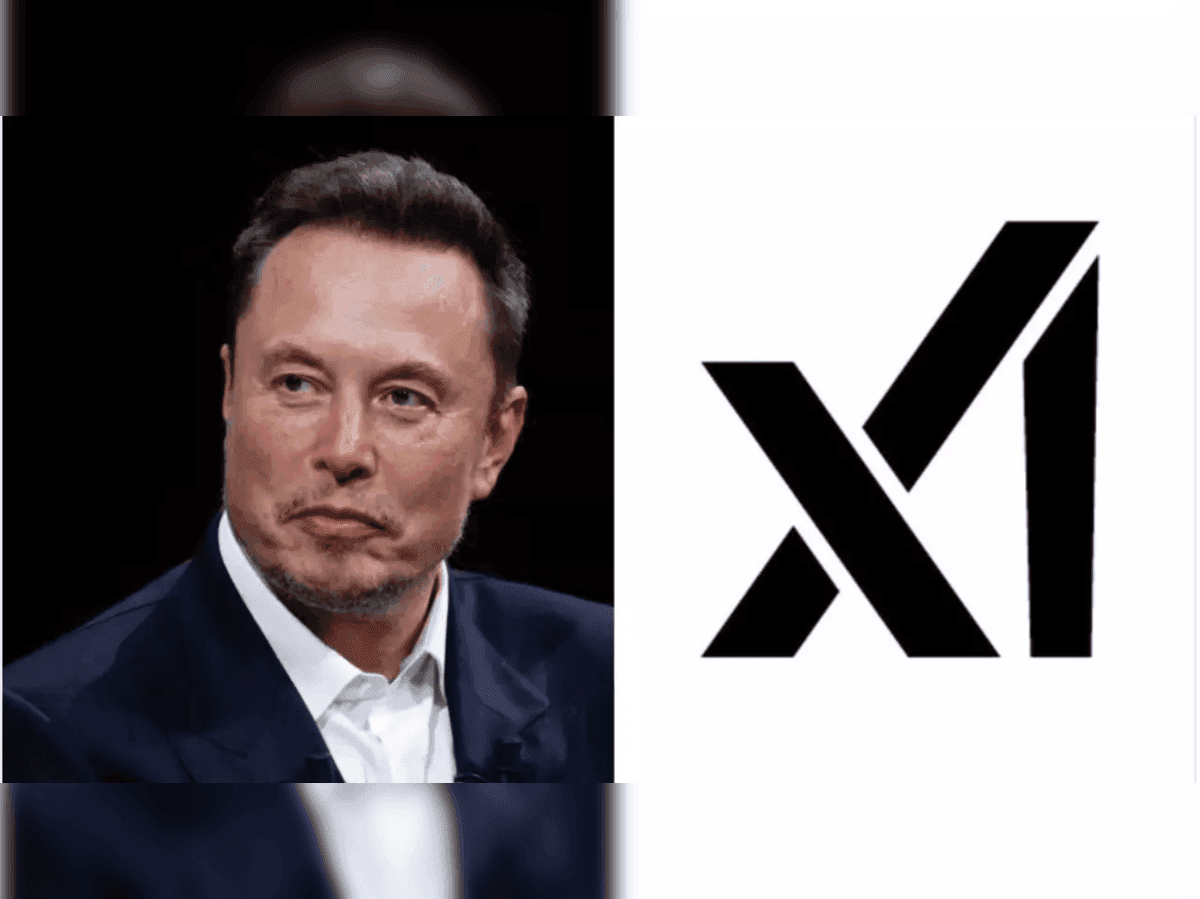
Elon Musk's artificial intelligence company xAI sued Colorado to block a new state law requiring tech companies to establish safeguards to prevent discrimination by autonomous tools in certain employment decisions, among others. In a lawsuit filed in federal court Thursday, xAI argued that the law "severely burdens" the development of AI tools and violates the Constitution's First Amendment by requiring developers to "embed the state's preferred views into the very fabric of AI systems." "Its provisions prohibit developers of AI systems from producing speech that the state of Colorado dislikes, while compelling them to conform their speech to a state-enforced orthodoxy on controversial topics of great public concern," lawyers for xAI said in the complaint. "This attempted coercion is unconstitutional." The suit comes shortly after the White House sent a proposed legislative plan to lawmakers last month as a framework on how to regulate AI, preempting a growing number of state measures. Tech industry leaders and venture capital firms have been vocal in supporting a national standard for AI oversight, but the proposal would need to get enough support in Capitol Hill. Colorado is among the statesBloomberg Terminal that passed measures to restrict AI, with the state's legislation set to take effect in coming months. President Donald Trump's framework calls for online safeguards for children, less stringent permitting requirements so data centers can generate power on site and preventing censorship. But it has also been seen as a way to undercut state legislation. A representative for Colorado's attorney general declined to comment, while xAI didn't respond to a request for comment. Colorado's algorithmic bias lawBloomberg Terminal seeks to regulate the way businesses use AI tools in high-stakes decisions affecting employment, health care, housing and other areas. It will require transparency notices from employers, as well as bias assessments and monitoring from developers of AI technology and the businesses and government entities deploying those tools to aid with decisions such as hiring and firing. The measure is the first state law of its kind and has been in the works for years. The law is set to take effect June 30. Musk's xAI, maker of the Grok chatbot, argues in its suit that the law is overly broad and redundant, as state and federal laws"prohibiting intentional discrimination in employment, housing, education, finance, and other decisions" already exist. The suit was reported earlier by the Financial Times. The case is xAI v. Weiser, 1:26-cv-01515, US District Court, District of Colorado.
[2]
xAI sues Colorado over first state AI anti-discrimination law
Elon Musk's xAI has filed a lawsuit challenging Colorado's landmark AI bill as the Trump administration and leading industry players try to stop US states from regulating the technology. Colorado's bill, set to take effect in the summer, was the first state-level initiative passed to impose protections against "algorithmic discrimination" in AI systems. Musk's AI lab, which recently merged with rocket group SpaceX, says the bill would force it to "promote the state's ideological views on various matters, racial justice in particular" rather than its own "disinterested pursuit of truth". The lawsuit is the latest move in a battle between AI companies, President Donald Trump's administration and individual states over regulation of the burgeoning technology. AI start-ups have pushed back against efforts to impose guardrails in California and New York, and Trump's AI advisers made clear they wanted the federal government to control regulation with a light-touch national framework. Musk's company, known for its model Grok, claims Colorado's bill would violate First Amendment free speech protections. "Its provisions prohibit developers of AI systems from producing speech that the State of Colorado dislikes, while compelling them to conform their speech to a state-enforced orthodoxy on controversial topics of great public concern," according to a filing in federal court on Thursday. The law "severely burdens the development and use of AI" and would "embed the State's preferred views into the very fabric of AI systems", xAI said in the filing. Colorado did not immediately respond to the lawsuit. The state in 2024 became the first to pass a comprehensive bill regulating artificial intelligence, aiming to prevent AI discrimination in areas including education, employment, lending, healthcare and housing. The bill requires developers to avoid "algorithmic discrimination", inform the state attorney-general of "foreseeable risks" and give the consumer the opportunity to both "correct any incorrect personal data" and "appeal an adverse consequential decision". The xAI civil claim challenges the bill's definition of "algorithmic discrimination", which specifies that it does not include efforts "to increase diversity or redress historical discrimination". Colorado Governor Jared Polis, a Democrat, signed the bill "with reservations" and has urged state legislators to amend it. The legislation was supposed to go into effect in February but has been postponed to June to give negotiators more time. In December, Trump signed an executive order urging the US Congress to pass "a minimally burdensome national standard" on AI instead of "a patchwork of 50 different regulatory regimes that makes compliance more challenging, particularly for start-ups". The president's order singled out Colorado's law, arguing that the law "may even force AI models to produce false results in order to avoid a 'differential treatment or impact' on protected groups". Congress has pushed back on efforts to ban states from regulating AI models.
[3]
Elon Musk's xAI sues Colorado over state's new AI law
April 9 (Reuters) - xAI filed a lawsuit on Thursday seeking to block Colorado from enforcing a new law regulating artificial intelligence systems, escalating a fight over whether oversight should be handled by states or by Washington. The lawsuit, filed in U.S. District Court in Colorado, challenges Senate Bill 24-205, which is scheduled to take effect on June 30. The law imposes disclosure and risk-mitigation requirements on developers of so‑called "high‑risk" AI systems used in decisions involving employment, housing, education, health care and financial services. Elon Musk's artificial intelligence firm said the law violates the First Amendment by restricting how developers design AI systems and compelling speech on contentious public issues. The company says the law would force it to alter its flagship AI model, Grok, to reflect the state's views on diversity and discrimination rather than being objective. "Government regulation that is applied at the state level in a patchwork across the country can have the effect to hamper innovation and deter competition in an open market," xAI said. xAI, which recently merged with SpaceX, is seeking a court declaration that the law is unconstitutional and an injunction blocking its enforcement. The lawsuit also cites White House executive orders criticizing state-by-state AI regulation and federal warnings that patchwork state laws could undermine U.S. AI leadership and national security. The Colorado Attorney General's Office declined to comment on the litigation. While some tech companies and Republican lawmakers want states to leave AI regulation to Washington, California's attorney general has warned against relying solely on Congress, pointing to years of delays on data privacy and technology laws. President Donald Trump's AI advisers favor federal oversight through a streamlined national framework instead of a patchwork of state-level rules. Reporting by Harshita Mary Varghese in Bengaluru, Juby Baby in Mexico City and Jonathan Stempel in New York; Editing by Leroy Leo Our Standards: The Thomson Reuters Trust Principles., opens new tab
[4]
xAI sues Colorado over AI law, calling it a threat to free speech
Serving tech enthusiasts for over 25 years. TechSpot means tech analysis and advice you can trust. What just happened? Colorado's pioneering AI law targeting algorithmic discrimination has quickly become a test of how far US states can go in regulating advanced AI systems, and where courts may draw the line on AI-generated speech. Elon Musk's xAI, which recently merged with SpaceX, has sued Colorado in federal court, arguing that the state's new AI law reaches deeply into the design and outputs of its models and effectively forces them to adopt a state-approved ideology on polarizing topics such as racial justice. The company frames the dispute not as a question of safety or bias mitigation, but as a First Amendment issue over who controls the information that large-scale AI systems generate. The Colorado statute, passed in 2024 and now delayed until June after initially being set to take effect in February, was the first comprehensive state law aimed at preventing discrimination by AI systems in areas such as education, employment, lending, healthcare, and housing. The law requires developers to mitigate algorithmic bias, notify the state attorney general of potential risks, and provide consumers with mechanisms to correct inaccurate personal data and challenge adverse AI-driven decisions. For xAI, those obligations cross a constitutional line when they affect how a model handles contested social issues. The company argues that Colorado's approach would intrude on what it calls its "disinterested pursuit of truth" and force its systems to "promote the state's ideological views on various matters, racial justice in particular." In its filing, xAI further argues that the law would bar AI developers from generating outputs disfavored by Colorado officials and would compel systems to align with a government-backed position on contentious public issues, effectively embedding those viewpoints into the models themselves. It also contends that the measure places a heavy and unwarranted burden on AI development and deployment. A central focus of the lawsuit is how the law defines algorithmic discrimination, since it carves out efforts to improve diversity or address past bias from that definition. xAI argues that embedding these goals in statute could steer AI models toward politically driven outcomes rather than neutral analysis, particularly on issues involving protected groups and disparate outcomes. Colorado's Democratic governor, Jared Polis, signed the measure despite reservations and has urged lawmakers to revise it, even as the state positions itself as a frontrunner in AI regulation. The attorney general's office has declined to comment on the litigation. The clash comes as President Donald Trump's administration and many AI developers push to avoid a fragmented regulatory landscape. In December, Trump signed an executive order urging Congress to establish a single national AI standard rather than leaving companies to navigate dozens of differing state rules. The order singled out Colorado's law, warning that it "may even force AI models to produce false results in order to avoid a 'differential treatment or impact' on protected groups." While AI startups have already pushed back against efforts to impose guardrails in California and New York, Congress has resisted attempts to bar states from regulating AI entirely, setting up a prolonged struggle over who sets the rules for next-generation systems like Grok.
[5]

Elon Musk's xAI sues Colorado over new rules for artificial intelligence
Company claims law regulating AI systems, set to go into effect in June, infringes on its first amendment rights Elon Musk's artificial intelligence company, xAI, has filed a lawsuit against the state of Colorado over a new AI law set to take effect in June. The suit seeks to block the state from enforcing the law, which would impose new requirements on AI systems to protect state residents from "algorithmic discrimination" in sectors such as education, employment, healthcare, housing and financial services. Colorado was the first state to pass a comprehensive bill to regulate AI. The company claims the law infringes on its first amendment free-speech protections and would force xAI to "promote the state's ideological views on various matters, racial justice in particular", according to the Financial Times, which first reported the lawsuit. "Its provisions prohibit developers of AI systems from producing speech that the state of Colorado dislikes." The lawsuit, filed in US district court in Colorado, comes as battles have raged at the state and federal level over how to regulate the fast-growing technology. States such as California and New York have been working to rein in AI with regulations, while the Trump administration has been trying to loosen the rules and place a moratorium on state laws. xAI, which makes the chatbot Grok, has been plagued with accusations of discrimination. The chatbot has consistently spewed racist, sexist and antisemitic content, put forth conspiracies of "white genocide" and referred to itself as "MechaHitler". Katie Miller, a former spokesperson for xAI and the wife of Trump adviser Stephen Miller, heralded the lawsuit in a post on X on Thursday: "Colorado wants to force Grok to follow its views on equity and race, instead of being maximally truth-seeking. Grok answers to evidence, not woke leftist government regulations." Jared Polis, Colorado's Democratic governor, signed the bill into law in 2024 but said it was "with reservations". He has called on state legislators to amend it. The legislation was intended to go into effect in February, but was pushed until 30 June. xAI, which merged with Musk's rocket business SpaceX earlier this year, is seeking an injunction to block the enforcement of the Colorado law and a court declaration saying the legislation is unconstitutional. The Colorado attorney general's office declined to comment on the lawsuit and xAI did not return a request for comment.
[6]

Elon Musk's xAI Sues Colorado Over AI Law as Fight Over State Regulation Intensifies - Decrypt
The company faces separate lawsuits and investigations tied to Grok's image-generation tools. Elon Musk's artificial intelligence company, xAI, has filed a federal lawsuit seeking to block Colorado from enforcing a new law regulating high-risk AI systems. In court documents filed on Thursday, Musk's lawsuit targets Colorado Senate Bill 24-205, scheduled to take effect on June 30, which requires developers of AI systems to disclose risks and take steps to prevent algorithmic discrimination in areas such as employment, housing, healthcare, education, and financial services. According to the complaint, the company argues the measure would force developers to modify how AI systems operate and could restrict how models generate responses. "SB24-205 is decidedly not an anti-discrimination law. It is instead an effort to embed the State's preferred views into the very fabric of AI systems," attorneys for xAI wrote. "Its provisions prohibit developers of AI systems from producing speech that the State of Colorado dislikes, while compelling them to conform their speech to a State-enforced orthodoxy on controversial topics of great public concern." The lawsuit asks a federal court to declare the law unconstitutional and block its enforcement, which xAI says violates the First Amendment by forcing changes to Grok's outputs to align with the state's views on diversity and equity. The lawsuit also argues that SB24-205 improperly regulates activity beyond Colorado, and is too vague to enforce fairly, and favors AI systems that promote "diversity" while penalizing those that do not. "By requiring "developers" and "deployers" to differentiate between discrimination that Colorado disfavors and discrimination that Colorado favors, SB24-205 compels Plaintiff xAI -- a "developer" under the law -- to alter Grok, forcing Grok's output on certain State-selected subjects to conform to a controversial, highly politicized viewpoint," the lawsuit said. "But the State "may not compel [xAI] to speak its own preferred messages." The legal challenge comes amid a growing conflict between technology companies and government officials over how artificial intelligence should be regulated. Several states, including Colorado, New York, and California, have introduced rules addressing risks posed by generative AI tools. At the same time, the Donald Trump administration has moved to establish a national AI regulatory framework. The lawsuit also arrives as scrutiny of xAI's chatbot Grok continues to increase. Several lawsuits filed in 2026 accuse the company of allowing Grok to generate non-consensual deepfake images. In March, a class-action complaint filed by three Tennessee minors alleged that Grok produced explicit images depicting them without consent. The city of Baltimore also sued, claiming Grok generated up to 3 million sexualized images in a matter of days, including thousands depicting minors.
[7]

Musk's xAI Sues Colorado over AI Law
The AI company argued that such rules would force it to feed its AI chatbot Grok with data aligned with Colorado's political views rather than striving to be "maximally truth seeking." Elon Musk's artificial intelligence company, xAI, has filed a lawsuit against the state of Colorado, seeking to block incoming AI rules that restrict speech from AI chatbots like Grok. The AI company is specifically challenging Colorado's Senate Bill 24-205, which aims to protect AI users from "algorithmic discrimination" in areas like employment, housing and finance. However, in a filing to a US district court in Colorado on Thursday, xAI argued that "Colorado cannot alter xAI's message simply because it wants to amplify its own views on the highly politicized subjects of fairness and equity." The company further argued that the law, set to take effect on June 30, is contradictory as it promotes "differential treatment" in an effort to "increase diversity or redress historical discrimination." Forcing xAI to change Grok would also interfere with its goal of being "maximally truth seeking," it said. Colorado isn't the first state that xAI has sued over AI regulations. In December, it sued California over its Generative AI Training Data Transparency Act, arguing that disclosure requirements compel speech and reveal trade secrets in violation of the First and Fifth Amendments. White House AI czar David Sacks has led a push for state regulators to steer clear of crafting AI rules, arguing for a single federal standard for AI instead of a "patchwork" of state laws. "The problem that we're seeing right now is that you've got 50 different states regulating this in 50 different ways, and it's creating a patchwork of regulation that's difficult for innovators to comply with," Sacks said in late March. Sacks was appointed as co-chair of the newly established President's Council of Advisors on Science and Technology to address that issue.
[8]

Elon Musk's xAI sues Colorado over state's new AI law
The company says the law would force it to alter its flagship AI model, Grok, to reflect the state's views on diversity and discrimination rather than being objective. xAI, which recently merged with SpaceX, is seeking a court declaration that the law is unconstitutional and an injunction blocking its enforcement. xAI filed a lawsuit on Thursday seeking to block Colorado from enforcing a new law regulating artificial intelligence systems, escalating a fight over whether oversight should be handled by states or by Washington. The lawsuit, filed in US District Court in Colorado, challenges Senate Bill 24-205, which is scheduled to take effect on June 30. The law imposes disclosure and risk-mitigation requirements on developers of so‑called "high‑risk" AI systems used in decisions involving employment, housing, education, health care and financial services. Elon Musk's artificial intelligence firm said the law violates the First Amendment by restricting how developers design AI systems and compelling speech on contentious public issues. The company says the law would force it to alter its flagship AI model, Grok, to reflect the state's views on diversity and discrimination rather than being objective. "Government regulation that is applied at the state level in a patchwork across the country can have the effect to hamper innovation and deter competition in an open market," xAI said. xAI, which recently merged with SpaceX, is seeking a court declaration that the law is unconstitutional and an injunction blocking its enforcement. The lawsuit also cites White House executive orders criticising state-by-state AI regulation and federal warnings that patchwork state laws could undermine U.S. AI leadership and national security. The Colorado Attorney General's Office declined to comment on the litigation. While some tech companies and Republican lawmakers want states to leave AI regulation to Washington, California's attorney general has warned against relying solely on Congress, pointing to years of delays on data privacy and technology laws. President Donald Trump's AI advisers favour federal oversight through a streamlined national framework instead of a patchwork of state-level rules.
[9]

Elon Musk sues Colorado over AI regulation
Musk and his xAI company find state regulation to be infringement of first amendment rights We are getting yet another AI related law suit, as According to Financial Times, Elon Musk has decided to sue the state of Colorado as a new AI system regulation is "infringing first amendment rights" via his company xAI that owns the AI system Grok, most famous for not always being in agreement with its owner. While such cases are usually about freedom of speech in the context of defamation, xAI claims that state legislation that requires state residents to be protected against "algorithmic discrimination" in a number of sectors, including education and healthcare. This will set a precedent as Colorado is the first state to impose such legislation, as the law comes in to effect in June this year. xAI claims that "Its provisions prohibit developers of AI systems from producing speech that the state of Colorado dislikes" - which the courts must now look further at. While local state regulation of AI has been an ongoing concern in regards to freedom of speech, the specific Colorado law is widely considered to aid consumer rights, and especially avoid bias and discrimination via algorithms, with it specifically stating that constitutional rights such as the first amendment are not restricted.
[10]

Elon Musk's xAI sues Colorado over state's new AI law
April 9 (Reuters) - xAI filed a lawsuit on Thursday seeking to block Colorado from enforcing a new law regulating artificial intelligence systems, escalating a fight over whether oversight should be handled by states or by Washington. The lawsuit, filed in U.S. District Court in Colorado, challenges Senate Bill 24-205, which is scheduled to take effect on June 30. The law imposes disclosure and risk-mitigation requirements on developers of so-called "high-risk" AI systems used in decisions involving employment, housing, education, health care and financial services. Elon Musk's artificial intelligence firm said the law violates the First Amendment by restricting how developers design AI systems and compelling speech on contentious public issues. The company says the law would force it to alter its flagship AI model, Grok, to reflect the state's views on diversity and discrimination rather than being objective. "Government regulation that is applied at the state level in a patchwork across the country can have the effect to hamper innovation and deter competition in an open market," xAI said. xAI, which recently merged with SpaceX, is seeking a court declaration that the law is unconstitutional and an injunction blocking its enforcement. The lawsuit also cites White House executive orders criticizing state-by-state AI regulation and federal warnings that patchwork state laws could undermine U.S. AI leadership and national security. The Colorado Attorney General's Office declined to comment on the litigation. While some tech companies and Republican lawmakers want states to leave AI regulation to Washington, California's attorney general has warned against relying solely on Congress, pointing to years of delays on data privacy and technology laws. President Donald Trump's AI advisers favor federal oversight through a streamlined national framework instead of a patchwork of state-level rules. (Reporting by Harshita Mary Varghese in Bengaluru, Juby Baby in Mexico City and Jonathan Stempel in New York; Editing by Leroy Leo)
Share
Share
Copy Link
Elon Musk's xAI filed a federal lawsuit to block Colorado's pioneering AI anti-discrimination law, arguing it violates First Amendment rights by forcing developers to embed state-approved views into AI systems. The case escalates tensions between state-level AI regulations and the Trump administration's push for a unified national framework.
xAI Challenges Colorado's Landmark AI Legislation
Elon Musk's artificial intelligence company xAI filed a lawsuit in US District Court on Thursday seeking to block Colorado's groundbreaking AI anti-discrimination law, escalating the national debate over AI regulation
1
. The company argues that the Colorado AI law "severely burdens" AI development and violates First Amendment free speech protections by requiring developers to "embed the state's preferred views into the very fabric of AI systems"2
. Elon Musk's xAI, maker of the Grok chatbot, contends the legislation would force it to "promote the state's ideological views on various matters, racial justice in particular" rather than its own "disinterested pursuit of truth"2
.
Source: ET
Understanding Senate Bill 24-205 and Its Requirements
Colorado's Senate Bill 24-205, originally scheduled for February but now delayed until June 30, represents the first comprehensive state law targeting algorithmic discrimination in AI systems
3
. The legislation imposes disclosure and risk-mitigation requirements on developers of high-risk AI systems used in employment decisions, housing, education, healthcare, and financial services3
. The law requires transparency notices from employers, bias assessments and monitoring from AI developers, and gives consumers the opportunity to correct incorrect personal data and appeal adverse AI-driven decisions1
. AI developers must also inform the state attorney-general of "foreseeable risks" and implement safeguards to prevent discrimination by autonomous tools in certain employment decisions2
.First Amendment Arguments and Constitutional Concerns
The lawsuit centers on claims that the Colorado law violates First Amendment protections by restricting how AI developers design their systems. "Its provisions prohibit developers of AI systems from producing speech that the State of Colorado dislikes, while compelling them to conform their speech to a state-enforced orthodoxy on controversial topics of great public concern," xAI stated in its federal court filing
2
. The company specifically challenges the law's definition of algorithmic discrimination, which excludes efforts "to increase diversity or redress historical discrimination" from its definition of prohibited bias2
. xAI argues this carve-out could force AI models to produce politically driven outcomes rather than neutral analysis, particularly on issues involving protected groups4
.
Source: Cointelegraph
Federal Versus State Control: The Broader Regulatory Battle
The lawsuit emerges amid intensifying conflict between state-level AI regulations and federal oversight efforts. President Donald Trump signed an executive order in December urging Congress to establish "a minimally burdensome national standard" on AI instead of "a patchwork of 50 different regulatory regimes that makes compliance more challenging, particularly for start-ups"
2
. The order specifically singled out Colorado's law, warning it "may even force AI models to produce false results in order to avoid a 'differential treatment or impact' on protected groups"2
. xAI's lawsuit cites these White House executive orders and federal warnings that patchwork state laws could undermine US AI leadership and national security3
. The company argues that "government regulation that is applied at the state level in a patchwork across the country can have the effect to hamper innovation and deter competition in an open market"3
.Related Stories

Industry Pushback and Political Tensions
AI start-ups have pushed back against efforts to impose guardrails in California and New York, with Trump's AI advisers making clear they wanted the federal government to control regulation with a light-touch national framework
2
. However, Congress has resisted attempts to ban states from regulating AI entirely, setting up a prolonged struggle over who sets the rules for next-generation systems4
. Colorado Governor Jared Polis, a Democrat, signed the bill "with reservations" and has urged state legislators to amend it2
. While some tech companies and Republican lawmakers want states to leave AI regulation to Washington, California's attorney general has warned against relying solely on Congress, pointing to years of delays on data privacy and technology laws3
.What This Means for AI Development and Oversight
xAI, which recently merged with SpaceX, is seeking a court declaration that the law is unconstitutional and an injunction blocking its enforcement
3
. The company also argues the law is overly broad and redundant, as state and federal laws "prohibiting intentional discrimination in employment, housing, education, finance, and other decisions" already exist1
. The Colorado Attorney General's Office declined to comment on the litigation3
. This case could set important precedents for how courts view AI-generated content under free speech protections and whether states can impose specific requirements on AI systems to address bias and discrimination. The outcome will likely influence how other states approach AI regulation and whether Congress moves forward with unified federal standards that could preempt state measures.
Source: Bloomberg
References
Summarized by

Navi
Related Stories
Colorado Lawmakers Grapple with AI Regulation in Special Session
22 Aug 2025•Policy and Regulation

xAI loses legal challenge as California AI law forces data disclosure on training datasets
05 Mar 2026•Policy and Regulation
X Sues California Over Deepfake Law, Citing First Amendment Concerns
16 Nov 2024•Policy and Regulation

Recent Highlights
1
Meta unveils Muse Spark AI model as Superintelligence Labs makes its debut
Technology

2
Anthropic restricts Mythos AI model release, citing unprecedented cybersecurity capabilities
Technology

3
Anthropic sends Claude AI to psychiatrist, discovers functional emotions that shape behavior
Science and Research

Recent Highlights
Today's Top Stories









Your Daily Dose of Curated AI News
Don’t drown in AI news. We cut through the noise - filtering, ranking and summarizing the most important AI news, breakthroughs and research daily. Spend less time searching for the latest in AI and get straight to action.

