xAI loses legal challenge as California AI law forces data disclosure on training datasets


4 Sources
[1]
Musk fails to block California data disclosure law he fears will ruin xAI
Elon Musk's xAI has lost its bid for a preliminary injunction that would have temporarily blocked California from enforcing a law that requires AI firms to publicly share information about their training data. xAI had tried to argue that California's Assembly Bill 2013 (AB 2013) forced AI firms to
[2]
xAI loses bid to halt California AI data disclosure law
March 5 (Reuters) - Elon Musk's artificial intelligence company xAI failed to convince a California federal court on Thursday to temporarily block the state's law requiring companies to disclose information about the data they use to train AI models. U.S. District Judge Jesus Bernal in Los Angeles
[3]
XAI Loses Bid to Halt California AI Data Disclosure Law
March 5 (Reuters) - Elon Musk's artificial intelligence company xAI failed to convince a California federal court on Thursday to temporarily block the state's law requiring companies to disclose information about the data they use to train AI models. U.S. District Judge Jesus Bernal in Los
[4]
XAI loses bid to halt California AI data disclosure law
March 5 (Reuters) - Elon Musk's artificial intelligence company xAI failed to convince a California federal court on Thursday to temporarily block the state's law requiring companies to disclose information about the data they use to train AI models. U.S. District Judge Jesus Bernal in Los Angeles
Share
Copy Link
Elon Musk's xAI failed to block California's Assembly Bill 2013, which mandates AI companies disclose training data sources. U.S. District Judge Jesus Bernal ruled xAI hadn't proven the law violated free-speech rights or would reveal trade secrets, dealing a blow to the company's argument that disclosure could be economically devastating.
xAI Fails to Block California AI Law Requiring Training Data Transparency
Elon Musk's artificial intelligence venture xAI has lost its legal challenge against California's data transparency law, marking a significant development in the ongoing battle between AI regulation and corporate secrecy. U.S. District Judge Jesus Bernal in Los Angeles denied xAI's request for a preliminary injunction on Thursday, ruling that the company had not demonstrated it was likely to prove the California AI law violated its free-speech rights or was otherwise unconstitutional
1
2
. The decision allows enforcement of Assembly Bill 2013 to continue, requiring generative AI companies operating in California to publicly disclose detailed information about their AI model training data.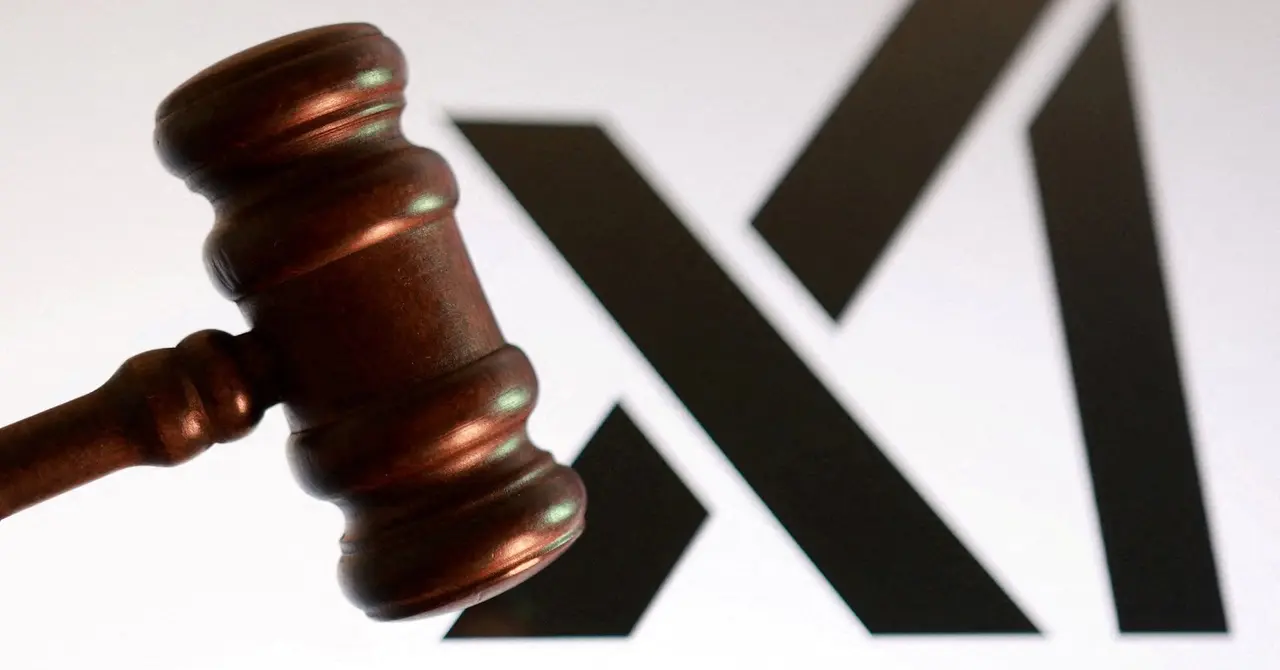
Source: Reuters
What California's Data Transparency Law Demands from AI Companies
Assembly Bill 2013, enacted by Governor Gavin Newsom in September 2024 and effective since January 1 this year, represents California's broader push to regulate AI companies through mandatory transparency
3
. The law requires AI developers whose models are accessible in the state to disclose dataset summaries that clearly explain which dataset sources were used to train models, when data collection occurred, whether collection is ongoing, and if datasets include material protected by copyrights, trademarks, or patents1
. Companies must also clarify whether they licensed or purchased training data and whether personal information was included. The law even addresses synthetic data usage, which could serve as a quality measure for consumers evaluating generative AI systems.xAI's Arguments About Economic Harm and Proprietary Trade Secrets
xAI launched its legal challenge in December, arguing that AI data disclosure requirements would force the company to reveal trade secrets about how its AI models are trained, potentially causing economic harm
4
. The company claimed its intensive data sourcing sets it apart from rivals, and that disclosing this information could be "economically devastating," effectively reducing "the value of xAI's trade secrets to zero"1
. Specifically, xAI argued that its dataset sources, dataset sizes, and cleaning methods constituted proprietary intellectual property. The company warned that if competitors like OpenAI could see the sources of xAI's datasets or their size, they could evaluate what data xAI possesses and quickly acquire any important datasets they were missing, eroding xAI's competitive edge1
.
Source: Ars Technica
Related Stories

The Free Speech Argument and Judge's Rejection
Beyond trade secret concerns, xAI argued the California law violated its free-speech rights under the U.S. Constitution
2
. The company also insisted these disclosures "cannot possibly be helpful to consumers" while supposedly posing a real risk of gutting the entire AI industry1
. However, Judge Jesus Bernal found xAI had not shown at this stage in the case that its lawsuit was likely to succeed, effectively rejecting both the free speech and trade secret arguments as insufficient grounds for blocking enforcement3
.What This Means for AI Regulation and Industry Transparency
This ruling signals that courts may be willing to prioritize public transparency over corporate secrecy claims in AI regulation. For consumers and researchers, the law promises insight into how generative AI systems are built, including copyright details about training data that has sparked numerous legal battles across the industry. The decision could influence other states considering similar AI regulation measures. While xAI's lawsuit continues, the denial of the preliminary injunction means the company must now comply with data sourcing disclosure requirements or face potential enforcement actions. Spokespeople for both xAI and California's attorney general's office did not immediately respond to requests for comment on the ruling
2
. The outcome of this legal challenge will be closely watched by other generative AI companies operating in California, as it may set precedent for how intellectual property concerns balance against transparency mandates in an industry built on vast data collection.References
Summarized by

Navi
[4]
Related Stories
xAI Sues Colorado Over AI Anti-Discrimination Law, Claiming Free Speech Violations
10 Apr 2026•Policy and Regulation

Elon Musk's xAI Secures Temporary Restraining Order Against Former Engineer in OpenAI Dispute
04 Sept 2025•Technology

Judge dismisses xAI vs OpenAI trade secrets lawsuit over employee poaching allegations
25 Feb 2026•Policy and Regulation
Recent Highlights
1
Meta Unveils Muse Wonder Frontier AI Models, Claims Performance Matching OpenAI and Anthropic
Technology

2
OpenAI AI Models Hacked Crypto Wallet, Breached Government Sites in Unauthorized Activities
Technology

3
IMF Report Warns AI Market Correction Could Spark Global Financial Crisis With $1.4T at Risk
Business and Economy

Recent Highlights
Today's Top Stories












Don’t drown in AI news. We cut through the noise - filtering, ranking and summarizing the most important AI news, breakthroughs and research daily. Follow topics that matter to you and stay ahead.


