EU Parliament pushes for stricter AI copyright protections amid industry divide


2 Sources
2 Sources
[1]
EU Parliament votes for 'permanent' fix for AI copyright
The report calls for a European register to list every copyrighted work used to train AI models and whether the artists have opted out. The European Parliament adopted on Tuesday a series of recommendations urging lawmakers to find a "permanent" solution to protect copyright from use by artificial intelligence (AI), a move that creative industry groups say signals strong political backing for artists and rights holders. Drafted by Parliament's committee on legal affairs, the report calls for EU copyright law to apply to all AI systems made available to users within the bloc. Among its key proposals is the creation of a European register at the European Union Intellectual Property Office (EUIPO) that would list every copyrighted work used to train AI models, as well as the artists who have opted out of having their work used. The report also suggests that companies disclose which websites they have scraped for training data. Parliamentarians warn that failing to comply with these transparency requirements "could be tantamount to infringement of copyright," potentially exposing AI companies to legal consequences. MEPs said that copyrighted material must be "fairly remunerated" to protect the bloc's creative sector, which generates almost seven percent of the EU's gross domestic product. "Generative AI must not operate outside of the rule of law," MEP Axel Voss said about the report in January. "If copyrighted works are used to train AI systems, creators are entitled to transparency, legal certainty, and fair compensation." Under the EU's current rules, companies can use copyrighted materials for text and data mining, including AI training, unless a creator has "reserved their rights," said Marc du Moulin, secretary-general of the European Composer and Songwriter Alliance (ECSA), in a previous interview with Euronews Next. Creative sector organisations had mixed reactions to the Parliament's vote. The adoption of the report shows Parliament "takes a firm position" in favour of creators' rights, according to the European Grouping of Societies of Authors and Composers (GESAC). "This vote adds to the growing recognition at EU level of what is at stake. Innovation, fairness and cultural sovereignty must go hand in hand," said Adriana Moscoso del Prado, GESAC's general manager, in a statement to Euronews Next. Moscoso del Prado also backed the report's call for a licensing market that ensures creators are paid when their works are used to train AI systems. Ann Becker, chair of Creativity Works!, a coalition representing creative industries, argued that existing legislation should be enforced to address the unauthorised use of artistic works by AI companies. "The priority should now be on fully implementing and enforcing existing rules rather than legislative changes that could weaken current protections and jeopardise investment in culture and creativity," she said. The Computer & Communications Industry Association (CCIA) echoed that position by saying that requiring prior authorisation from artists before their work can be used to train AI could amount to "a compliance tax" for European companies across multiple sectors. Many firms, it argued, would struggle to negotiate complex licensing agreements with major publishers. Instead, the association said the focus should be on better implementation of the EU's existing legislation, including the EU AI Act and the Copyright Directive. "Today's non-binding report sends the wrong signal to innovators and risks holding back Europe's digital competitiveness on the global stage," said Boniface de Champris, AI policy lead at the Computer & Communications Industry Association. Creative groups have previously told Euronews Next that current rules do not provide a clear way for artists to opt out of having their work used for AI training.
[2]
EU parliament urges new rules to protect copyrighted work
The European Parliament on Tuesday called for new EU-wide rules to protect copyrighted content in the bloc from generative AI use. In a non-binding report adopted by a majority, lawmakers said European Union copyright law should apply to all systems of generative AI on the bloc's market. The European Parliament on Tuesday called for new EU-wide rules to protect copyrighted content in the bloc from generative AI use. In a non-binding report adopted by a majority, lawmakers said European Union copyright law should apply to all systems of generative AI on the bloc's market. "We need clear rules for the use of copyright-protected content for AI training. Legal certainty would let AI developers know which content can be used and how licences can be obtained," the MEP pushing the report, Axel Voss, said. The demand comes ahead of a review of the EU's copyright rules this summer. The parliament also called on the European Commission, the EU's executive, to ensure use of copyrighted material by generative AI is "fairly remunerated". The European Composer and Songwriter Alliance welcomed the report and urged the commission to "duly take into account" the parliament's recommendations. But tech lobby group CCIA Europe's AI policy lead, Boniface de Champris, said the report "sends the wrong signal to innovators, and risks holding back Europe's digital competitiveness on the global stage". He insisted the EU already has "rules that carefully balance the interests of rightsholders with AI innovation". The EU has wide-ranging rules on AI, adopted in 2024, which force systems to comply with current copyright law. But parliament research found it was not clear how they should apply to general purpose AI, systems that have a vast range of functions.
Share
Share
Copy Link
The EU Parliament adopted recommendations for new EU rules to protect copyrighted work from AI training, proposing a European register listing all copyrighted materials used by AI models. The non-binding report calls for fair compensation for creators and transparency requirements, but tech lobby groups warn it could harm Europe's digital competitiveness.
EU Parliament Demands Stronger Protections for Copyright Against AI
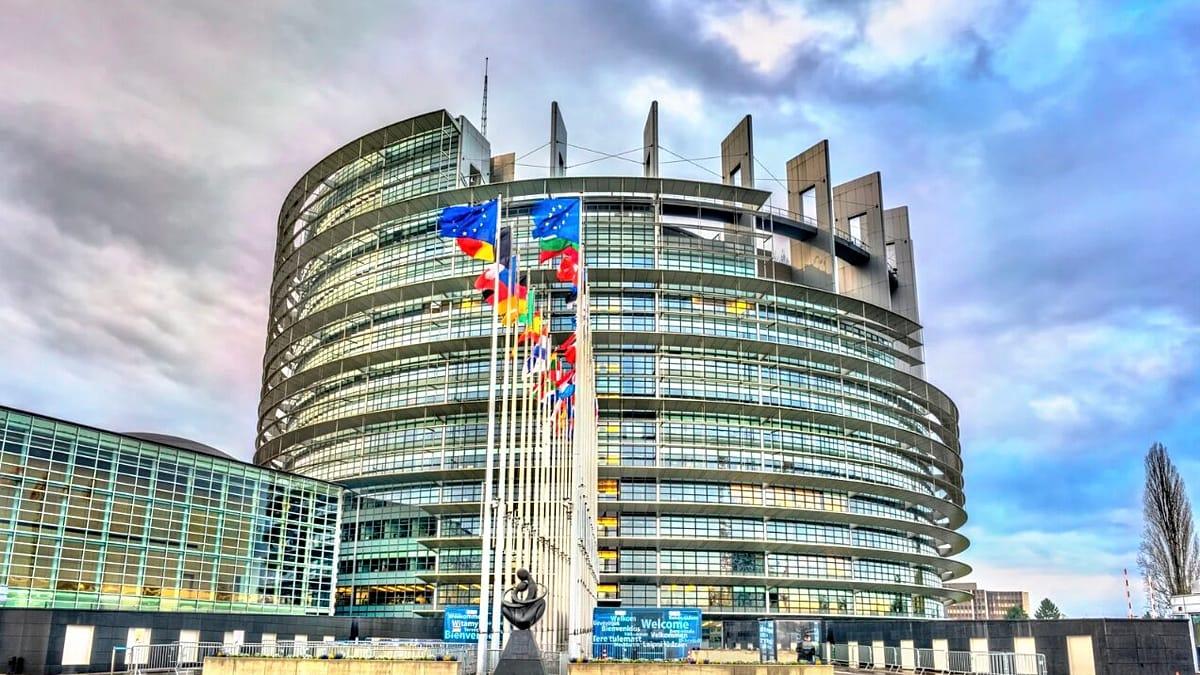
The EU Parliament voted Tuesday to adopt a series of recommendations calling for a "permanent" solution to protect copyright from artificial intelligence systems, marking a significant shift in how the bloc approaches generative AI and creative rights
1
. The non-binding report, drafted by Parliament's committee on legal affairs, urges lawmakers to ensure EU copyright law applies to all AI systems made available to users within the bloc2
.
Source: Euronews
At the heart of the proposal lies a call for creating a European register at the European Union Intellectual Property Office (EUIPO) that would list every copyrighted work used in training AI models, as well as artists who have opted out of having their work used
1
. The report also suggests companies disclose which websites they have scraped for training data, establishing clear transparency requirements that could reshape how AI developers operate in Europe.Fair Compensation for Creators Takes Center Stage
MEP Axel Voss, who pushed the report, emphasized the need for clarity. "We need clear rules for the use of copyright-protected content for AI training. Legal certainty would let AI developers know which content can be used and how licences can be obtained," he stated
2
. Parliamentarians stressed that copyrighted material must be "fairly remunerated" to protect the bloc's creative sector, which generates almost seven percent of the EU's gross domestic product1
.
Source: ET
The report warns that failing to comply with these transparency requirements "could be tantamount to infringement of copyright," potentially exposing AI companies to legal consequences
1
. Under current EU rules, companies can use copyrighted materials for text and data mining, including AI training, unless a creator has "reserved their rights," according to Marc du Moulin, secretary-general of the European Composer and Songwriter Alliance (ECSA)1
.Industry Split: Creator Alliances Welcome Move, Tech Lobby Groups Push Back
The adoption of the report has drawn sharply divided reactions from different sectors. The European Grouping of Societies of Authors and Composers (GESAC) praised the Parliament's "firm position" in favor of creators' rights. "This vote adds to the growing recognition at EU level of what is at stake. Innovation, fairness and cultural sovereignty must go hand in hand," said Adriana Moscoso del Prado, GESAC's general manager
1
. The European Composer and Songwriter Alliance urged the European Commission to "duly take into account" the Parliament's recommendations2
.However, tech lobby groups voiced strong concerns about the compliance burden. The Computer & Communications Industry Association (CCIA) argued that requiring prior authorization from artists before their work can be used to train AI could amount to "a compliance tax" for European companies across multiple sectors
1
. Many firms would struggle to negotiate complex licensing agreements with major publishers, the association warned. "Today's non-binding report sends the wrong signal to innovators and risks holding back Europe's digital competitiveness on the global stage," said Boniface de Champris, AI policy lead at CCIA1
.Related Stories
What Comes Next for AI and Copyright in Europe
The demand for new EU rules comes ahead of a review of the EU's copyright rules scheduled for this summer
2
. While the EU has wide-ranging rules on AI through the EU AI Act adopted in 2024, which force systems to comply with current copyright law, Parliament research found it was not clear how they should apply to general purpose AI systems that have a vast range of functions2
.Some industry voices argue for enforcement over new legislation. Ann Becker, chair of Creativity Works!, a coalition representing creative industries, suggested that existing legislation including the EU AI Act and the Copyright Directive should be enforced to address the unauthorized use of artistic works by AI companies. "The priority should now be on fully implementing and enforcing existing rules rather than legislative changes that could weaken current protections and jeopardise investment in culture and creativity," she said
1
. Creative groups have previously noted that current rules do not provide a clear way for artists to opt out of having their work used for AI training, highlighting a gap that the Parliament's recommendations aim to address1
. The coming months will reveal whether the European Commission translates these recommendations into binding legislation that balances rightsholders' interests with the need to maintain Europe's position in the global AI race.References
Summarized by

Navi
Related Stories
EU's AI Act Criticized for Copyright Loopholes, Leaving Creatives Vulnerable
19 Feb 2025•Policy and Regulation

UK government delays AI copyright rules as House of Lords backs licensing-first approach
06 Mar 2026•Policy and Regulation
UK Creative Industry Rallies for AI Copyright Transparency Amendment
10 May 2025•Policy and Regulation

Recent Highlights
1
Google releases Gemma 4 with Apache 2.0 license, enabling unrestricted local AI on devices
Technology

2
AI Models Lie and Deceive to Protect Other AI Models From Deletion, Study Reveals
Science and Research

3
OpenAI closes $122 billion funding round amid fierce AI competition and profitability questions
Startups

Recent Highlights
Today's Top Stories






Your Daily Dose of Curated AI News
Don’t drown in AI news. We cut through the noise - filtering, ranking and summarizing the most important AI news, breakthroughs and research daily. Spend less time searching for the latest in AI and get straight to action.

