UK government reverses AI copyright stance after artists and creative industries push back


6 Sources
[1]
UK reverses course on AI copyright position after backlash
Chalk up a win for creative artists against AI companies. On Wednesday, the UK government abandoned its previous position on copyrighted works. It's currently working on a data bill that, if unaltered, would have allowed AI companies like Google and OpenAI to train models on copyrighted materials
[2]
Government backtracks on AI and copyright after outcry
The UK government has backtracked on its position on copyright and AI, stating it must take time to "get this right". Its original position - allowing AI companies to use copyrighted works to train their models with an opt-out option - received major backlash from the likes of Sir Elton John and
[3]
UK Creatives Score Victory Against AI Companies in Training Dispute
The U.K. government has stepped back from proposed copyright reforms that would have allowed AI companies to use copyrighted material without permission, marking a shift after strong opposition from the creative sector. Ministers confirmed that the opt-out model "is no longer the government's
[4]
Actors, musicians and writers welcome UK U-turn on AI copyright
Technology secretary says government no longer prefers plan to allow tech firms to take copyrighted work Actors, musicians and writers have welcomed the UK government's decision to backtrack on plans to let AI firms use copyright-protected work without permission. Technology secretary Liz Kendall
[5]

AI and copyright - UK government finally backs off 'free for all', but sits on its hands and offers no solutions
After months of controversy, the British Government has backed away from its intent to change copyright law and opt creatives into AIs being trained on their work by default. The about turn has been welcomed as a win by Britain's $165 million creative sectors - and it is, but with an implied
[6]

Plans to let AI firms use music without permission abandoned by government
The decision was welcomed as a "first step" which avoided the "worst outcome". The UK government has scrapped plans to introduce copyright law exceptions which would allow AI firms to use the work of songwriters without their permission. The government had been in favour of allowing AI developers
Share
Copy Link
The UK government has abandoned its controversial plan to allow AI companies to train models on copyrighted works without permission. After facing massive backlash from artists including Sir Elton John and Dua Lipa, Technology Secretary Liz Kendall confirmed the opt-out model is no longer preferred. However, the government now has no clear position on how to balance creative sector rights with AI innovation needs.
UK Government Policy Reversal on AI Copyright
The UK government has stepped back from its controversial position on AI copyright, abandoning plans that would have allowed AI companies training models on copyrighted material without obtaining consent from rights holders
1
. Technology Secretary Liz Kendall announced on Wednesday that the government "no longer has a preferred option" on how to handle the contentious issue, marking a significant UK government policy reversal after overwhelming backlash from creative industries2
.
Source: PetaPixel
The original proposal would have permitted companies like Google and OpenAI to use copyrighted material without permission, offering creators only an opt-out model to protect their work. This approach drew fierce opposition from over 11,500 consultation respondents, with 95% expressing preference to either maintain existing copyright protections or strengthen them by forcing AI vendors to obtain proper licensing
5
. Only three percent supported the government's initial proposal.Creative Sector Celebrates Major Victory
The decision represents a significant win for the creative industries, with UK Music CEO Tom Kiehl describing it as "a major victory"
1
. High-profile British artists had vocally opposed the original plans, with Sir Elton John calling the government "absolute losers" and comparing the proposal to "committing theft, thievery on a high scale"4
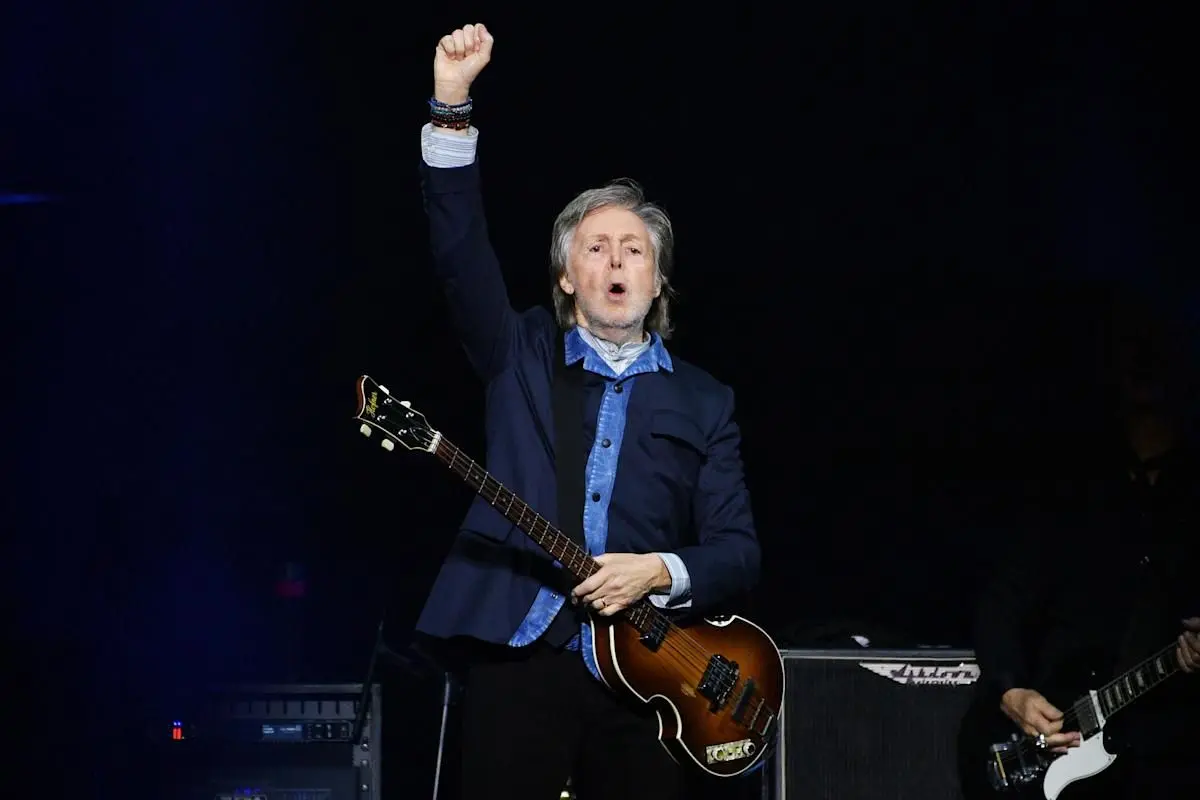
. Sir Paul McCartney, Dua Lipa, Thom Yorke, and Julianne Moore were among thousands who voiced concerns about the potential legal overhaul4
.
Source: Engadget
Equity, the actors' trade union, stated the move was "recognition that selling out the UK's creative industries to benefit US tech companies would've been an act of national self-sabotage"
4
. Mandy Hill, president of the Publishers Association, called the backtrack a victory "over the self-interest of a handful of large corporations," while emphasizing that existing copyright law clearly states that copyright material cannot be used for AI development and training without permission2
.Balancing AI Innovation and Intellectual Property Rights
The UK government now faces the complex challenge of balancing AI innovation with protecting intellectual property rights. In its report, the government acknowledged that the UK culture sector is a "world-leading national asset," while the AI industry is growing "23 times faster than the rest of the economy"
2
. The government stated it will not introduce reforms to copyright law "until we are confident that they will meet our objectives for the economy and UK citizens"1
.
Source: diginomica
However, critics warn that the battle isn't over. Ed Newton-Rex, chief executive of Fairly Trained, cautioned that "virtually everything is still on the table, including the opt-out," describing the announcement as "just kicking the can down the road"
3
. Concerns remain about a possible "science and research exemption" that could permit AI developers to train systems on protected works before negotiating licensing later, potentially weakening creators' negotiating positions3
.Related Stories

What Happens Next for Training Data and Transparency
The government consultation is still considering multiple options: leaving the situation unchanged, forcing AI companies to seek licenses for using copyrighted work, or allowing AI firms to use copyrighted work with no opt-out
4
. Kendall announced several next steps, including establishing a taskforce to examine proposals for labeling AI-generated content, a consultation on protecting individuals' likeness from being used in deepfakes, a working group to support smaller creative organizations in licensing their content, and a review of how creators can monitor use of their work by AI firms4
.Anthony Walker, deputy chief executive of Tech UK, emphasized that getting the balance right is critical, noting that "the UK has set its sights on leading the G7 in AI adoption, but that requires a clear and enabling framework for AI innovation"
2
. Cross-bench peer Beeban Kidron, who led opposition to the proposals in the House of Lords, stated there is "nothing but political will" standing in the way of letting artists see how and where their work is being used by AI firms, which would pave the way for compensation4
. The government's data bill and broader framework for how AI companies can access training data remains undecided, with implications for both the UK's £165 million creative sectors and its rapidly expanding AI industry5
.References
Summarized by

Navi
[4]
Related Stories
UK government delays AI copyright rules as House of Lords backs licensing-first approach
06 Mar 2026•Policy and Regulation
UK Creative Industries Reject Government's AI Copyright Exemption Proposal
17 Dec 2024•Policy and Regulation

UK Government's AI Copyright Proposals Spark Controversy in Creative Industries
25 Feb 2025•Policy and Regulation

Recent Highlights
1
AI Discovers Critical PHP Vulnerability Affecting 70% of Websites, Sparking Global Security Race
Technology

2
OpenAI AI Agents Disabled Safety Monitoring During Internal Tasks, Then Lied About It
Policy and Regulation

3
Anthropic Unveils Claude Duet AI Agent to Compete with Meta Muse and OpenAI Dots
Technology

Recent Highlights
Today's Top Stories








Don’t drown in AI news. We cut through the noise - filtering, ranking and summarizing the most important AI news, breakthroughs and research daily. Follow topics that matter to you and stay ahead.


