Five Obstacles Hindering the Widespread Adoption of Driverless Cars


2 Sources
[1]
Five reasons why driverless cars probably won't take over your street any time soon
University of Stirling provides funding as a member of The Conversation UK. The UK government has launched a consultation on driverless cars, ahead of on-the-road trials of the vehicles next year. It has now been more than a decade since the prospect of driverless cars on public roads emerged, and
[2]
Five reasons why driverless cars probably won't take over your street any time soon
The UK government has launched a consultation on driverless cars, ahead of on-the-road trials of the vehicles next year. It has now been more than a decade since the prospect of driverless cars on public roads emerged, and prototypes and robotaxi fleets such as Waymo and Cruise replaced human
Share
Copy Link
Despite a decade of development, autonomous vehicles face significant challenges in safety, regulation, insurance, ethics, and business models, delaying their widespread adoption on UK roads.
The Promise and Challenges of Autonomous Vehicles
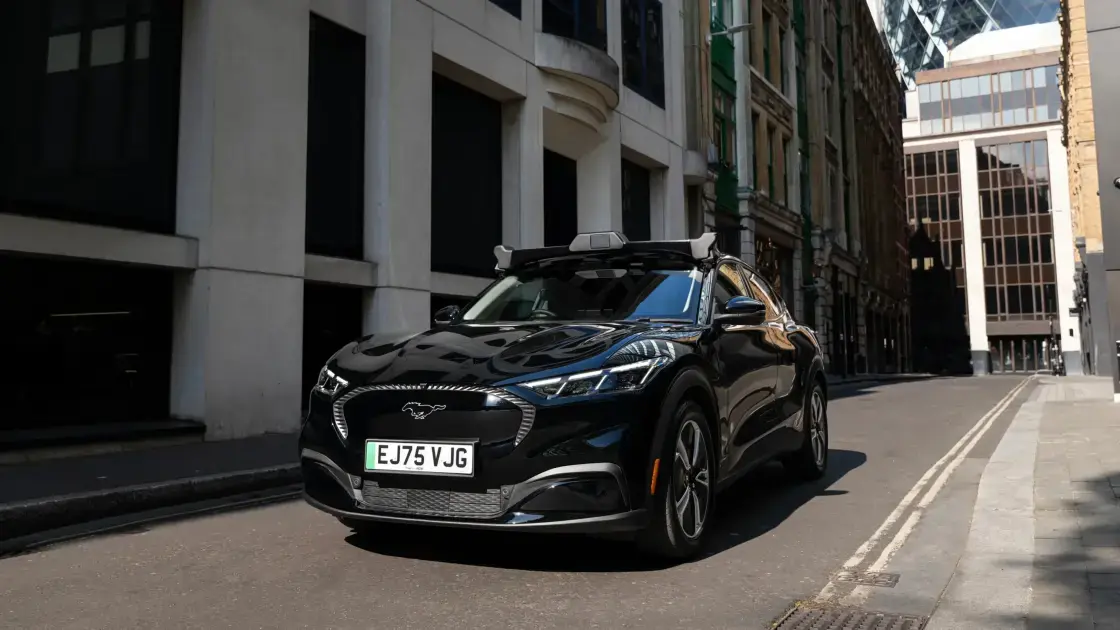
As the UK government prepares for on-the-road trials of driverless cars next year, the technology faces significant obstacles that may delay its widespread adoption. Despite over a decade of development and the increasing presence of self-driving cars in the US and China, several key factors are hindering their integration into UK roads
1
2
.Safety Concerns and Technological Limitations

Source: The Conversation
One of the primary motivations for developing autonomous vehicles is to enhance traffic safety by eliminating human error. The National Highway Traffic Safety Administration in the US reported that over 90% of serious crashes in 2018 were due to human error
1
. However, there is currently insufficient evidence to conclusively prove that AI-driven vehicles are safer than human drivers.Autonomous vehicles face challenges in adverse weather conditions, complex road designs, and mixed traffic scenarios where both human-driven and driverless cars coexist. These factors can significantly impact the performance of self-driving technologies. Moreover, anomalies in driving patterns and frequent rear-end collisions involving autonomous vehicles suggest that AI algorithms still require substantial improvement
1
2
.Regulatory and Legislative Hurdles
While the autonomous vehicle industry has seen rapid growth and innovation, legislation and regulation have struggled to keep pace. The UK's Automated Vehicles Act provides a framework for deploying driverless vehicles, but legal codes and mechanisms are still evolving, particularly in areas such as data privacy and cybersecurity
1
.The lack of comprehensive legislation governing telematics and vehicle data ownership and usage presents a significant barrier to the mass rollout of driverless cars. This regulatory gap also directly impacts the ability to insure these vehicles effectively
2
.Insurance Industry Adaptation
The insurance sector faces new challenges in adapting to the era of autonomous vehicles. With limited data and ambiguous legislation, insurers must grapple with determining liability, developing new insurance models, and adjusting premiums to reflect evolving claim types
1
.In countries like the UK, liability for highly and fully automated driving (levels four and five) is shifting from human drivers to manufacturers. This shift introduces new complexities, including potential cybersecurity risks associated with the interconnected nature of autonomous vehicles
2
.Related Stories

Ethical Dilemmas and Decision-Making

Source: Tech Xplore
The programming of autonomous vehicles raises significant ethical questions, particularly in scenarios where collisions are unavoidable. Developers must create algorithms that make moral decisions, essentially assigning value to human lives in critical situations. This ethical minefield remains unresolved in both academic and industrial circles
1
.The complexity of these ethical considerations is further compounded by the opaque nature of AI algorithms, posing additional legal and regulatory challenges that may further delay legislative progress
2
.Evolving Business Models and Consumer Preferences
The autonomous vehicle industry is witnessing a shift in business models, with companies like Waymo and Zoox offering driverless rides rather than selling vehicles. Even traditional car manufacturers like Tesla are exploring "mobility as a service" models, as evidenced by the launch of a robotaxi service in Austin, Texas
1
.However, this shift clashes with consumer preferences in car-dependent societies like the US, where there is resistance to relinquishing private vehicle ownership. This mismatch between industry direction and consumer attitudes presents another significant barrier to widespread adoption
2
.As these technical, legal, ethical, and commercial challenges persist, the widespread rollout of driverless vehicles remains a long-term vision rather than an immediate reality. The industry must address these multifaceted issues before autonomous cars can become a common sight on UK streets.
References
Summarized by

Navi
[1]
Related Stories
Robotaxis arrive in London as cab drivers question AI's ability to navigate ancient streets
23 Feb 2026•Technology

AI Drives the Future of Automotive Technology in 2025
29 Dec 2024•Technology

Uber and Wayve Launch London's First Robotaxi Service with AI-Driven Autonomous Transportation
03 Sept 2026•Technology
Recent Highlights
1
Microsoft and Nvidia Launch Surface Laptop Ultra: A $2,599 AI-Ready PC With RTX Spark Chip
Technology

2
Trump Consulted Grok AI Before Ordering Venezuela Invasion and Capture of Nicolás Maduro
Policy and Regulation

3
Scientists Build AI Model That Reconstructs Images From Brain Scans in Record Time
Science and Research

Recent Highlights
Today's Top Stories







Don’t drown in AI news. We cut through the noise - filtering, ranking and summarizing the most important AI news, breakthroughs and research daily. Follow topics that matter to you and stay ahead.


