2 Sources
[1]
France Advances Europe's AI Future With NVIDIA Technologies
From AI factories to open models, France is turning its AI ambitions into production reality. A year ago at NVIDIA GTC Paris at VivaTech, France laid out plans to advance local AI -- from new AI factories and national compute capacity to open frontier models and industrial platforms. Now, that AI infrastructure is coming online. AI agents are running in production, startups are deploying applications and the French AI ecosystem is developing models, datasets and platforms designed around local languages, cultural context and European requirements. French AI Infrastructure Takes Shape France's AI ambitions are gaining momentum. Billions in investment commitments through France 2030, the 2025 AI Action Summit and this year's Choose France Summit are reinforcing the country's position as one of Europe's leading destinations for AI infrastructure. As part of these efforts, Mistral is building a new 44-megawatt data center in Bruyères-le-Châtel, a commune in northern France. Announced at GTC Paris last year, Mistral's first deployment is already operational with 18,000 NVIDIA GB200 systems -- laying the foundation for the company's roadmap of 200 megawatts of compute capacity across Europe by 2027. The NVIDIA Blackwell platform is designed to help AI factories maximize throughput within fixed power budgets, combining higher performance‑per‑watt silicon with software features that boost data center throughput in power‑constrained environments. Mistral is also working with French public investment bank Bpifrance, AI and advanced tech investment company MGX and NVIDIA to expand Campus AI, a network of AI factories anchored by a planned 1.4-gigawatt facility, making it one of Europe's largest AI campuses. This momentum reflects a broader wave of AI infrastructure investment in France. Scaleway, a European public cloud provider, now offers NVIDIA Blackwell B300‑SXM instances, giving developers and enterprises access to accelerated computing on demand. Bull and Foxconn have announced the production of NVIDIA Vera Rubin NVL72 in Europe. Systems will be manufactured and initially tested at Foxconn's facilities in the Czech Republic before being assembled, integrated and fully validated at Bull's factory in Angers, France. And a consortium of eight leading French companies has submitted a bid to host a European AI gigafactory in France to strengthen European AI infrastructure and accelerate AI adoption. Meanwhile, Schneider Electric has teamed with NVIDIA to develop blueprints for gigawatt-scale AI factories, helping organizations accelerate AI infrastructure deployment. Open Models Underpin AI Development France's AI ecosystem is producing models, datasets and platforms tailored to local languages, cultural context, and European business and regulatory requirements. As AI agents become more capable, organizations are increasingly adopting systems of models, using the right model for the right task to improve accuracy, reduce costs and accelerate outcomes. On stage at this year's VivaTech event, leaders from Gradium, H Company, LINAGORA, Pleias and NVIDIA explored the role of open models in enabling more transparent, customizable and locally relevant AI for governments, enterprises and developers. "What we see now is a shift from building one isolated model to running continuous model infrastructure, where models train the next models, curate data, generate synthetic environments and verify reinforcement learning," said Pierre-Carl Langlais, chief technology officer of Pleias. "Open model infrastructure is simply the way to ensure that many people can build AI and frontier-level practice can disseminate throughout the entire economy." The discussion underscored a key theme: combining open models with energy‑efficient infrastructure gives organizations the control they need to inspect, adapt, deploy and audit AI that meets Europe's compliance and trust requirements. NVIDIA Nemotron is advancing this with open models, datasets and playbooks that help model builders accelerate workflows from training to deployment. * Mistral, a founding member of the NVIDIA Nemotron Coalition -- a network of AI builders collaborating on open frontier models -- is contributing model-development expertise and multimodal capabilities to help advance open frontier models through open collaboration. * LINAGORA is building multilingual large language models with strong focus on the French language with its Luciole model family, developed using NVIDIA Nemotron and NeMo libraries and designed for local language and cultural context. Luciole 1B, 8B and 23B were pretrained on Jean-Zay -- one of Europe's most powerful and eco-efficient AI supercomputers -- in collaboration with CNRS/IDRIS in the frame of the OpenLLM-France project. These open source models are distributed on Hugging Face (OpenLLM-France) along with their pretraining datasets. * H Company, also part of the Nemotron Coalition, is developing Holotron, a family of AI agents built on open NVIDIA Nemotron models. These computer-use agents can interact with any software interface in the same way a human would, without needing application programming interfaces or custom integrations, and automate complex enterprise workflows from end to end. * Pleias, in collaboration with NVIDIA, developed Nemotron-Personas-France and Nemotron-Personas-Belgium, privacy-preserving synthetic persona datasets grounded in French and Belgian demographics and cultural context. The startup is also using Jean Zay train compact language models entirely on open, well‑documented datasets, making it easier for customers to address EU AI Act requirements around data provenance and transparency. The team is now building specialized versions for search, retrieval-augmented generation and public sector document workflows. AI Production Pays Off The shift from pilot to production is the defining story of the past year, as organizations across every major industry in France use AI to boost efficiency, quality and speed. Initiatives like the collaboration -- announced at Adopt AI -- between AI Factory France (AI2F), led by GENCI, NVIDIA Inception and NVIDIA Connect programs are helping startups gain access to national supercomputing resources, including Jean Zay. Early participants, including Pleias, Nebula and Ryax Technologies, are already turning that access into deployable applications. In healthcare, Sanofi is deploying AI agents across the value chain, from research, manufacturing and commercial to daily operations like procurement and IT, helping teams automate complex workflows at global scale. The company is also working with startups Owkin and Biolevate to develop autonomous agents for drug discovery and development. Orange Business, the B2B subsidiary of telecom company Orange, adopted a lead-with-internal-use approach by first testing and scaling its Live Intelligence GenAI platform internally, with more than 100,000 active users across the company. At the same time, Orange Business made the platform available as a trusted agentic AI solution, enabling businesses and public sector organizations across Europe to adopt AI securely while keeping data hosted within the region. Stellantis announced a strategic initiative to advance AI-enabled digital twins across its global manufacturing footprint, powered by real-time data, simulation and AI, to improve efficiency, quality and operational decision-making. Dassault Systèmes is combining virtual twins with AI infrastructure and open models on its agentic 3DEXPERIENCE platform, powered by science-validated industry world models that enable the design, simulation and operation of complex systems with confidence. This establishes a secure and trustworthy foundation for industrial AI, helping scale innovation across the generative economy. TotalEnergies is building Pangea 5, a next-generation supercomputer developed with Dell Technologies and NVIDIA that will increase the company's computing power to support seismic imaging, advanced simulation and AI-driven research in the energy sector. L'Oréal is using its CreAltech platform to combine generative AI and 3D digital twins, helping creative teams scale content production while maintaining brand consistency, quality and responsible AI practices across global markets. France's trajectory has moved from announcing its AI ambitions to deploying the infrastructure, models and applications needed to realize them. As new AI factories come online and adoption accelerates across industries, the country is emerging as one of Europe's most active environments for AI development. The foundations are in place. What gets built on top of them is just getting started. Join NVIDIA at VivaTech 2026 in Paris, running June 17-20.
[2]
VivaTech 2026: Foxconn and Nvidia bet big on France as Europe's AI hub
Foxconn, Nvidia and Mistral AI announce major AI infrastructure deals at Europe's VivaTech conference, with France's cheap nuclear energy and homegrown talent drawing global investment. The race to build Europe's artificial intelligence future sets up a home in Paris this week, as the city's flagship tech conference VivaTech becomes a magnet for global technology giants who see France as a key to building AI on the continent. The event has grown from a 45,000-person gathering into Europe's largest startup and tech conference, drawing over 200,000 attendees from 170 countries. This year, it carries more geopolitical weight than ever, with AI sovereignty and infrastructure dominating the agenda. Taiwanese manufacturing giant Foxconn and French computing firm Bull announced a partnership on Thursday to build powerful AI computers in Europe to power the continent's fast-growing network of AI factories, the large-scale computing centres that form the backbone of artificial intelligence infrastructure. "France is one of the biggest countries in Europe with quite a lot of talent... We also know that France is very good at high-tech and especially in the space industry," Foxconn's vice president and spokesperson James Wu told Euronews Next. "France has very great ambitions in solving AI projects and we believe we can create a very important role to help France achieve that goal," he added. Components will be manufactured and tested at Foxconn's facilities in the Czech Republic before final assembly and validation at Bull's factory in Angers, France. The servers are targeted at cloud providers and the growing market of AI factories across Europe. The announcement was made at VivaTech in Paris, marking Foxconn's first appearance at the show. Alongside the Nvidia-powered AI server news, the company displayed two electric vehicles, one of which had a massage chair, and a wheeled humanoid robot capable of performing precision assembly tasks. The Foxconn-Bull deal is part of a wider surge of AI infrastructure investment in Europe anchored by Nvidia. At last year's VivaTech, Nvidia CEO Jensen Huang committed to building more than 20 AI factories across Europe and named Mistral AI as the continent's sovereign-compute champion. This year, Nvidia and Mistral AI announced the creation of Mistral Compute, a sovereign AI infrastructure and GPU cloud platform project designed specifically for Europe. Why France is attractive to AI giants Under French President Emmanuel Macron, the country has positioned itself as startup nation and a serious contender in AI. France is at a unique advantage over other European countries in that its energy source is much cheaper, as it relies on nuclear, which was attractive to Foxconn. "Today we talk about AI computing capacity as a power, but utility actually is fundamental for computing power. So I think France has a very good advantage in the power structures... especially with a lot coming from nuclear, which is very stable as a supply," Wu said. "I believe for those advanced countries to generate new energy to fulfil the demand for the AI era, France definitely has a very, very good advantage here," he said, adding that France was also at an advantage as it has a "determination to develop the AI industry". Wu said that it was not just the AI server rack that powers AI factories that the company is bringing to France, but also the potential to boost the country's entire AI ecosystem from electric vehicles to smartphones and PC's, all of which require AI-embedded technology. Foxconn will provide the AI factory infrastructure while the US giant Nvidia provides the latest AI chips. Nvidia CEO Jensen Huang this month described AI as a five-layer cake that includes energy, chips, infrastructure, data centre servers and the AI models and applications. "Nvidia is trying to help everyone across that cake, all the layers, work together and progress together," Nat Ives, Nvidia's director of enterprise for Benelux, France & Nordics, told Euronews Next. He said that "comes home to roost in France in particular," as France has the French multinational electric utility company EDF, which is owned by the government of France, nuclear power and renewable power. "When I look at the work that goes into deciding where data centres should be and when people are contracting with data centres, the sustainability and the carbon impact or lack of is a really massive part of the process," Ives said. The planning is increasingly shaped by Nvidia's own environmental commitments. The company powered all of its global offices and data centres with renewable electricity. Its latest Blackwell chip architecture also delivers up to 25 times lower energy consumption for AI tasks compared to the previous generation. France is at another advantage with its AI champions, including Mistral AI, AMI, H Company, as well as software providers and builders, and has a strong history of talent that rises through the universities, he added. "Those model builders in Europe have a massive role to play and I'm pleased to say that I've known Mistral guys since they were like three guys in a coffee shop and even before they were Mistral, and we've worked with them all the way through," Ives said. These open-source and open-science companies that allow access to AI for organisations or developers that lack the means to pay for other closed-source companies, such as OpenAI, help promote a more equal playing field. "So we've worked with and collaborated with and helped and invested in those things since the very beginning because we believe that open source and open science, which most of them are doing, is super important to generate that choice," he added.
Share
Copy Link
France is rapidly becoming Europe's leading AI destination as global tech giants including NVIDIA, Foxconn, and Mistral AI announce major infrastructure investments. At VivaTech, companies revealed plans for sovereign AI infrastructure, with Mistral AI's 44-megawatt data center already operational with 18,000 NVIDIA GB200 systems and ambitious plans for a 1.4-gigawatt AI campus.
France is solidifying its position as Europe's AI hub, with billions in investment transforming ambitious plans into operational reality. At this year's VivaTech conference in Paris, which drew over 200,000 attendees from 170 countries, major announcements from NVIDIA, Foxconn, and Mistral AI underscored the country's appeal for AI infrastructure development
2
. Just a year after NVIDIA CEO Jensen Huang committed to building more than 20 AI factories across Europe at VivaTech, the infrastructure is coming online at scale1
.
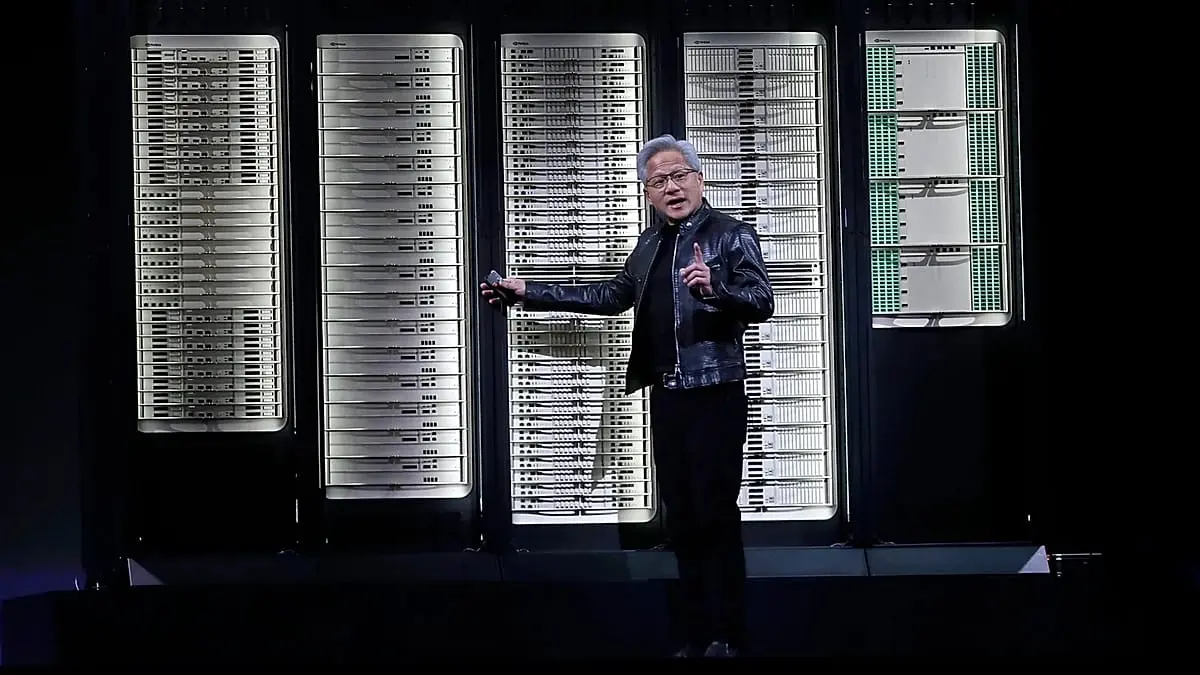
Source: Euronews
Mistral AI is now operating its first deployment at a new 44-megawatt data center in Bruyères-le-Châtel, northern France, with 18,000 NVIDIA GB200 systems already running
1
. This marks the foundation of the company's roadmap to deploy 200 megawatts of compute capacity across Europe by 2027. The momentum extends further with plans for Campus AI, a network of AI factories anchored by a planned 1.4-gigawatt facility developed in partnership with French public investment bank Bpifrance, AI investment company MGX, and NVIDIA, making it one of Europe's largest AI campuses1
.Taiwanese manufacturing giant Foxconn and French computing firm Bull announced a partnership to produce NVIDIA Vera Rubin NVL72 systems in Europe, with components manufactured and tested at Foxconn's facilities in the Czech Republic before final assembly and validation at Bull's factory in Angers, France
1
2
. The servers target cloud providers and the growing market of AI factories across Europe. "France is one of the biggest countries in Europe with quite a lot of talent... We also know that France is very good at high-tech and especially in the space industry," Foxconn vice president James Wu told Euronews Next2
.France's reliance on nuclear energy provides a critical advantage in attracting AI infrastructure investment. The stable, low-carbon power supply addresses a fundamental requirement for data center operations in an era where AI sovereignty and sustainability intersect. "Today we talk about AI computing capacity as a power, but utility actually is fundamental for computing power. So I think France has a very good advantage in the power structures... especially with a lot coming from nuclear, which is very stable as a supply," Wu explained
2
. The NVIDIA Blackwell platform, now available through European cloud provider Scaleway as B300-SXM instances, delivers up to 25 times lower energy consumption for AI tasks compared to previous generations, maximizing throughput within fixed power budgets1
2
.Related Stories
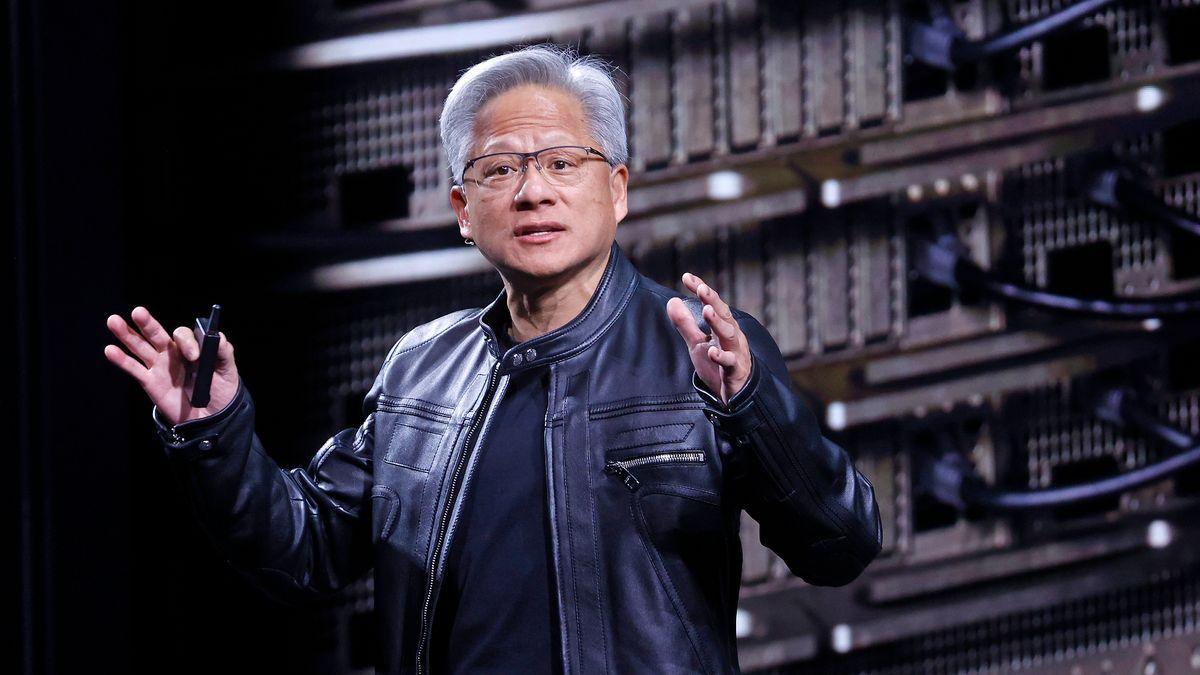
NVIDIA and Mistral AI announced the creation of Mistral Compute, a sovereign AI infrastructure and GPU cloud platform designed specifically for Europe
2
. This reflects growing emphasis on AI sovereignty as organizations seek control over their AI systems to meet European regulatory requirements. The broader investment wave includes a consortium of eight leading French companies submitting a bid to host a European AI gigafactory in France, while Schneider Electric partnered with NVIDIA to develop blueprints for gigawatt-scale AI factories1
.

Source: NVIDIA
France AI ecosystem is producing open models, datasets, and platforms tailored to local languages and cultural context. At VivaTech, leaders from Gradium, H Company, LINAGORA, Pleias, and NVIDIA explored how open models enable more transparent and locally relevant AI
1
. LINAGORA is building multilingual large language models with its Luciole model family (1B, 8B, and 23B parameters), developed using NVIDIA Nemotron and NeMo libraries and pretrained on Jean-Zay, one of Europe's most powerful AI supercomputers1
. Mistral AI joined the NVIDIA Nemotron Coalition, contributing model-development expertise to advance open frontier models through collaboration1
. "Open model infrastructure is simply the way to ensure that many people can build AI and frontier-level practice can disseminate throughout the entire economy," said Pierre-Carl Langlais, chief technology officer of Pleias1
.Summarized by
Navi
1
Policy and Regulation

2
Business and Economy

3
Policy and Regulation