4 Sources
[1]
Freehand raises $75M to put AI agents in charge of supply-chain spend
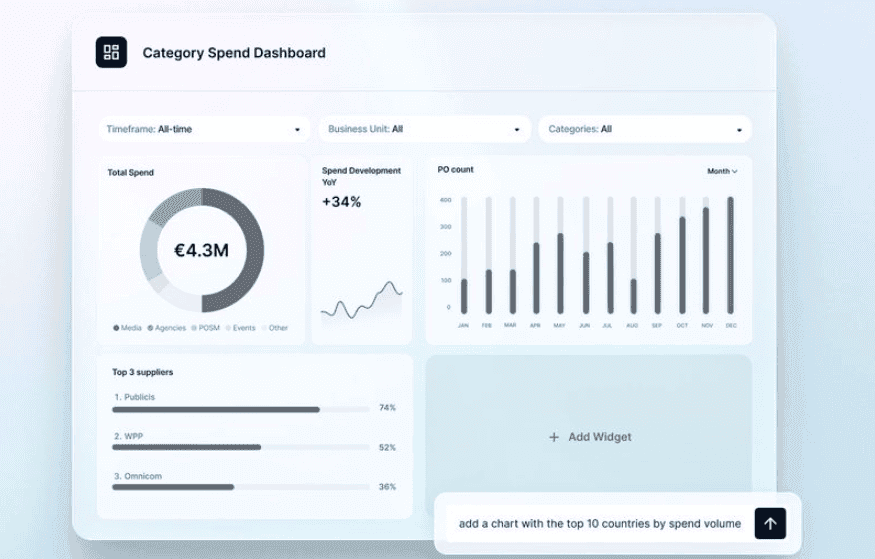
The startup, whose agents negotiate and pay across procurement for the likes of Unilever and Pfizer, is betting enterprises want software that acts, not software that suggests. Freehand, a startup whose AI agents take over the grunt work of managing what large companies spend on their supply chains, has raised $75 million. The round is co-led by Battery Ventures and NewRoad Capital Partners, with participation from Nexus Venture Partners and PSP Growth, the fund run by former US Commerce Secretary Penny Pritzker. The company sits in a lane that is filling fast. Its pitch, that enterprises want software which acts rather than merely advises, is the same one behind a wave of agentic startups, including Pivot, which raised $40 million for an AI procurement system aimed at the same enterprise back office. Freehand's target is the invoice. Its agents read contracts, negotiate rates with suppliers, catch overbilling, process payments, and reconcile the results inside a company's own ERP systems, work that has traditionally run on legacy software and large teams of outsourced staff. The customer list is the headline claim. Freehand says its agents are deployed at Meta, Unilever, Johnson & Johnson, Pfizer, Dunkin', and Cardinal Health, an unusually blue-chip roster for a company that only emerged from stealth in February. One of those customers went on the record. "Freehand marks one of the first full-scale agentic deployments at Unilever," said Matt Algar, the consumer-goods group's global vice-president of supply chain, describing a shift "from software that assists to software that runs our supply chain." The numbers Freehand attaches to those deployments are its own. It says early customers have recovered 5 to 10% of spend in complex categories, completed workflows five to seven times faster, and shortened procure-to-pay cycles by more than 70%, figures that have not been independently audited. The macro pitch is about timing. Tariffs, taxes, and tighter immigration policy are straining the outsourcing model that ran corporate supply chains for three decades, and Freehand argues the same pressure is what makes autonomous software attractive now, at a moment when even governments, Dubai among them, are pushing agentic adoption. The market it is chasing is enormous on paper. American companies spend more than $20 trillion a year on the materials, logistics, data centres, and services behind the economy, according to the Bureau of Economic Analysis, while Freehand's own estimate is that enterprises spend $16 billion a year on supply-chain software and a further $348 billion on the people doing what that software cannot. "We built Freehand to close that gap, with AI Agents that decide, act and take accountability for outcomes," said Nitin Jayakrishnan, co-founder and chief executive, who previously founded the enterprise logistics company Pando. The technical claim underneath is a data structure. Freehand's core intellectual property is what it calls a Category Context Graph, a running record of every decision, transaction, and exception in a category of spend that stitches the unstructured signals in emails and documents to the structured data in enterprise systems. The idea is that context, not the model, is the moat. Co-founder Abhijeet Manohar puts the distinction bluntly, that "the difference between an agent that acts and a chatbot that suggests is context," and every agent Freehand deploys is meant to enrich the graph for the next one. The plan is to widen out from there. Having started with the narrow job of checking and paying invoices, Freehand says it intends to expand across supply-chain processes and categories of spend until it becomes, in its own words, part of the infrastructure that runs global supply chains. Battery Ventures, whose general partner Dharmesh Thakker is joining the board, has been busy in this corner of enterprise software, having also backed the procurement startup Levelpath.
[2]
Freehand Raises $75M Series B To Automate Fortune 500 Supply Chain Spend
Enterprise AI startup Freehand has raised $75 million in a Series B funding round to scale its autonomous AI agents, which manage complex supply chain spend and back-office operations for enterprise companies. Battery Ventures and NewRoad Capital Partners co-led the financing, which included participation from Nexus Venture Partners and former U.S. Commerce Secretary Penny Pritzker. With its latest capital injection, San Francisco-based Freehand has now raised $100 million. While Freehand declined to reveal its valuation, CEO and co-founder Nitin Jayakrishnan said it was "a significant step up" from the startup's $25 million Series A that was raised in March 2024. The deal comes as tariffs, taxes, and immigration policy strain the outsourcing model that ran supply chains for decades. Freehand's fundraise also lands amid an uptick in venture funding to supply chain and logistics-related startups, with 2026 on pace to deliver the strongest year since 2022, per Crunchbase data, with $6.2 billion raised by such companies in the first half of this year across 350 deals. Logistics roots Freehand was founded in February 2024 by Jayakrishnan and Abhijeet Manohar, two enterprise logistics veterans who previously co-founded and recently sold Pando, a SaaS transportation management system (TMS) and procure-to-pay system of record for large enterprise logistics. In early 2024, as AI transformation accelerated, Jayakrishnan and Manohar stepped away from operational roles at Pando, moving to board positions, to launch Freehand as an independent entity focused entirely on agentic AI. Pando continued operating under a newly appointed executive team before being sold to a strategic buyer in early 2026, marking a complete shareholder exit for the founders. Their experience building enterprise supply chain software convinced them that existing back-office paradigms were ripe for disruption. "We had been in this fairly archaic dinosaur of an industry for the last six to eight years," Jayakrishnan told Crunchbase News in an interview. "Instead of trying to catch them up to a technology paradigm that was sunsetting, we thought we could leapfrog them into a technology paradigm that was just rising." Beyond corporate cards While spend management platforms like Ramp focus on corporate cards, employee travel expenses, and bill payments, Freehand targets complex supply chain operations. That means that instead of processing standard receipts and routine approvals, its AI agents manage non-standard spending across logistics, raw materials, parts, and labor. The software operates inside existing company systems, performing tasks like reading contracts, policies, emails, and internal data to verify bills, track operational milestones, and handle vendor negotiations. Automating complex financial governance For large, global businesses, keeping track of supplier bills across complex shipping routes like the Red Sea and the Strait of Hormuz is difficult. Contracts are detailed, and checking whether large bills match actual work has historically required big back-office teams. "When eventually rubber hits the road, when you get an invoice from a supplier saying, 'Hey, you owe me $16.948 million for everything that I've done for you in the last six months,' there aren't a lot of proof points to figure out whether you know if that number is right or wrong," Jayakrishnan noted. "And so there are large teams that have gotten built over the course of the last decade or so, whose job it is to check these invoices, negotiate these contracts, and figure out whether service obligations from global suppliers are in alignment with contract governance overall." When billing discrepancies arise, Freehand's AI agents negotiate adjustments directly with suppliers while maintaining strategic vendor relationships. "If it is not, then negotiating with the supplier becomes, ''you should have charged me $16.4 million instead of charging me $16.9 million and here's why I'm not going to pay you the difference,' and going back and forth without... losing the sensitivity towards that relationship itself," Jayakrishnan said. "Taking those business calls, which have historically been done through tribal knowledge... and truly automating the process to the point of no human intervention is effectively what Freehand does." Measurable ROI for Fortune 500 spend By shifting from manual oversight to agentic automation, Freehand believes it allows enterprises to reduce their reliance on third-party offshore outsourcing and give internal employees more room to perform higher-value strategic work. Freehand counts some 50 customers, including Meta, Johnson & Johnson, Pfizer and Cardinal Health. Its platform autonomously processes billions in payments across 60 to 70 countries and hundreds of currencies without human supervision, per the company. Some of the benefits of its technology, according to Jayakrishnan, include recovering 5% to 10% of total spend across a number of categories; completing "complex" operational workflows 5x to 7x faster; and reducing overall procure-to-pay cycle times by more than 70%. "We are, for a lot of companies, their first global rollout of AI deployments at scale that impacts daily transactions and daily operations at global scale," Jayakrishnan said. "Our ask of the enterprise ... is to allow us to give AI a free hand to run supply chain finance for your business." Dharmesh Thakker, general partner at Battery Ventures, noted that while supply chain and logistics management is a massive sector, it predominantly "still runs on manual labor and repetitive workflows that are begging to be automated." "And that's before you account for the turmoil: tariffs, shifting geopolitics, disrupted trade routes," he wrote via email. "Meanwhile, technology spending is a rounding error at just over $20 billion, which tells us AI has enormous room to drive efficiency, starting with the most mission-critical but repetitive workflows like freight audits and payments." Thakker said his firm did deep research on supply chain AI across its global offices and found Freehand to stand out on multiple fronts, including founder market-fit, a focus on the largest Fortune 500 shippers "rather than the intermediaries everyone else chases, and clear, measurable business outcomes."
[3]
AI startup Freehand raises $75 million led by Battery Ventures, NewRoad, Nexus
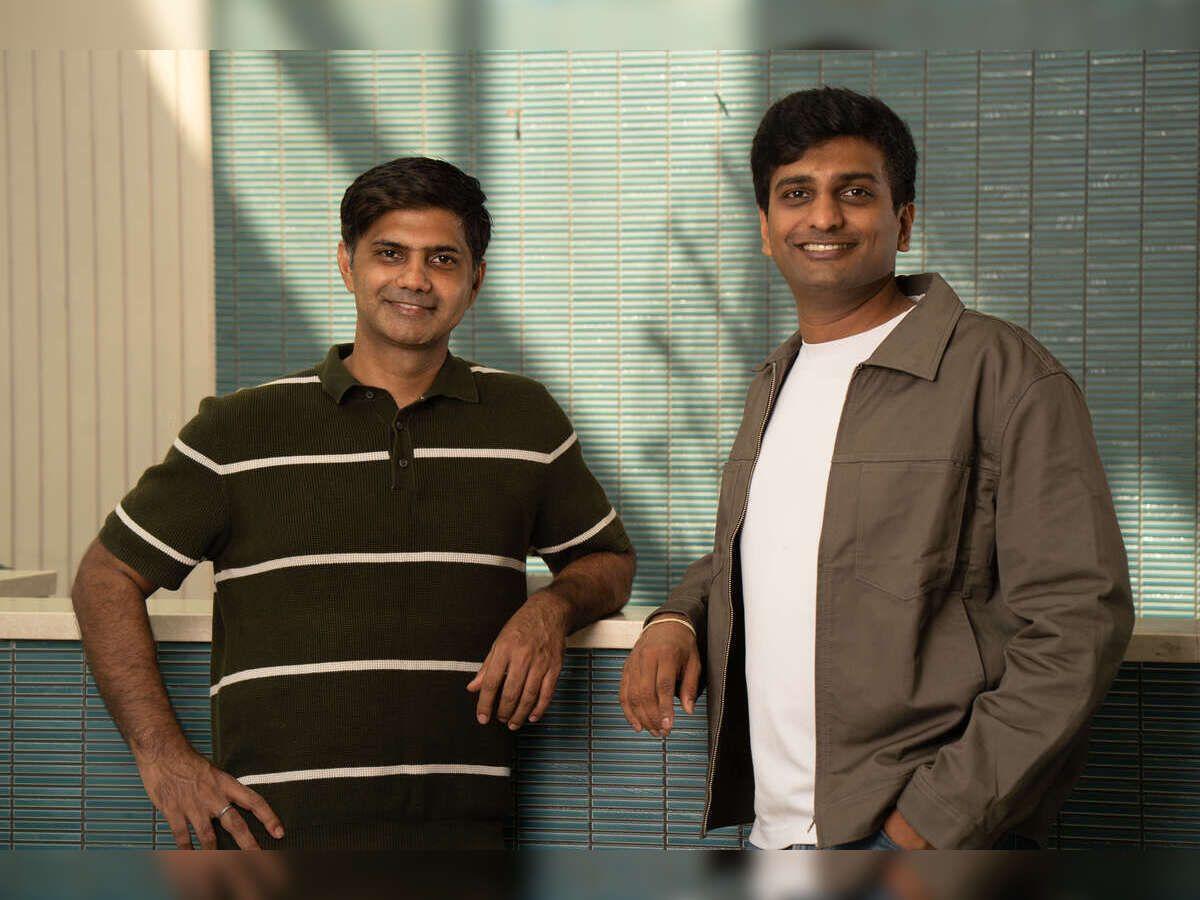
Founded by Indian entrepreneurs Nitin Jayakrishnan and Abhijeet Manohar, the San Francisco-headquartered startup has been operating in stealth for the past two years. It counts Meta, Unilever, Johnson & Johnson, Pfizer, Dunkin' and Cardinal Health among its customers. It will use the fresh capital to expand deployments of its AI agents, which automate procurement, supplier management, invoice processing and payment workflows for large enterprises. AI startup Freehand, which builds autonomous AI agents for enterprise supply chain operations, has raised $75 million in a funding round co-led by Battery Ventures and NewRoad Capital Partners.Existing investor Nexus Venture Partners also participated in the round, along with PSP Growth, the venture capital firm founded by former US Commerce Secretary Penny Pritzker, and other investors.Founded by Indian entrepreneurs Nitin Jayakrishnan and
[4]
Freehand Raises $75 Million to Automate Enterprise Procurement and Payments | PYMNTS.com
These agents automate procurement, supplier management, invoicing and payments, the company said in a Wednesday (July 29) press release. The agents can negotiate rates, enforce contracts, manage suppliers, process payments and reconcile data within enterprise systems, according to the release. Freehand's AI platform has already been deployed by companies such as Meta, Unilever, Johnson & Johnson, Dunkin', Pfizer and Cardinal Health, according to the release. In these deployments, the platform is delivering measurable improvements in savings and workflows, together with reduced reliance on outsourcing and legacy software. The results include recovering 5% to 10% of spend in complex categories, completing workflows five to seven times faster, shortening procure-to-pay cycles by more than 70%, and allowing companies to redeploy teams and wind down outsourcing, the release said. Nitin Jayakrishnan, co-founder and CEO of Freehand, said in the release that the company's AI agents "decide, act and take accountability for outcomes." Abhijeet Manohar, co-founder of Freehand, said in the release: "Shifting from building software for the user to building software that is the user meant we could drive far deeper transformation for our customers." Freehand's latest funding round was co-led by Battery Ventures and NewRoad Capital Partners. Battery Ventures General Partner Dharmesh Thakker said in the release that because Freehand's agents have enterprise context, make decisions and take actions, they unlock "millions in savings for enterprises." Gregoire Lehmann, partner at NewRoad Capital Partners, said in the release that Freehand's customers are achieving measurable business outcomes and that NewRoad believes the company is "well positioned to become the category leader in AI-native supply chain spend management." The PYMNTS Intelligence report "The Investment Impact of GenAI Operating Standards on Enteprise Adoption" found that 73% of enterprises now use or are considering using generative AI to enhance procurement efficiency. Larger enterprises, particularly those generating $10 billion or more in revenue, show the highest rates of exploring the technology, according to the report. PYMNTS reported Monday (July 27) that procurement is leading enterprise AI adoption and that AI agents are already negotiating supplier contracts, processing purchase orders and closing deals on behalf of major corporations.
Share
Copy Link
San Francisco-based Freehand has raised $75 million to scale its autonomous AI agents that manage complex supply chain spend for Fortune 500 companies including Meta, Unilever, and Pfizer. The startup's agents negotiate contracts, process invoices, and handle payments autonomously, recovering 5-10% of spend while shortening procure-to-pay cycles by over 70%.
Freehand, a startup building autonomous AI agents for enterprise supply chain operations, has raised $75 million in a Series B funding round co-led by Battery Ventures and NewRoad Capital Partners
1
. Nexus Venture Partners and PSP Growth, the venture capital firm founded by former US Commerce Secretary Penny Pritzker, also participated in the round2
. The San Francisco-based company has now raised $100 million in total capital, with CEO and co-founder Nitin Jayakrishnan describing the valuation as "a significant step up" from its $25 million Series A raised in March 20242
.
Source: ET
Founded in February 2024 by Indian entrepreneurs Nitin Jayakrishnan and Abhijeet Manohar, Freehand has been operating in stealth for the past two years
3
. The company will use the fresh capital to expand deployments of its AI agents, which automate procurement, supplier management, invoice management, and payment workflows for large enterprises.Freehand sits at the center of a rapidly filling lane in enterprise software. Its core pitch is that enterprises want software that acts rather than merely advises, positioning it alongside a wave of agentic startups targeting enterprise back-office operations
1
. The company's AI agents read contracts, negotiate rates with suppliers, catch overbilling, process payments, and reconcile results inside a company's own ERP systems—work that has traditionally run on legacy software and large teams of outsourced staff1
.The technical foundation underneath is what Freehand calls a Category Context Graph, a running record of every decision, transaction, and exception in a category of spend that stitches unstructured signals in emails and documents to structured data in enterprise systems
1
. Co-founder Abhijeet Manohar frames the distinction bluntly: "the difference between an agent that acts and a chatbot that suggests is context," with every agent Freehand deploys meant to enrich the graph for the next one1
.

Source: PYMNTS
Freehand's customer list is its headline claim. The AI-native supply chain spend management platform counts approximately 50 customers, including Meta, Unilever, Johnson & Johnson, Pfizer, Dunkin', and Cardinal Health—an unusually blue-chip roster for a company that only emerged from stealth in February
1
4
. Matt Algar, Unilever's global vice-president of supply chain, went on record describing "Freehand marks one of the first full-scale agentic deployments at Unilever," representing a shift "from software that assists to software that runs our supply chain"1
.The platform autonomously processes billions in payments across 60 to 70 countries and hundreds of currencies without human supervision
2
. While spend management platforms like Ramp focus on corporate cards and employee travel expenses, Freehand targets complex supply chain operations, managing non-standard spending across logistics, raw materials, parts, and labor2
.Freehand attaches significant numbers to its deployments. The company says early customers have recovered 5% to 10% of spend in complex categories, completed workflows five to seven times faster, and shortened procure-to-pay cycles by more than 70%
1
4
. These deployments also allow companies to redeploy teams and wind down outsourcing, reducing reliance on third-party offshore operations4
.For large global businesses, keeping track of supplier bills across complex shipping routes is difficult. When a supplier submits an invoice for $16.948 million, there aren't many proof points to verify accuracy, Jayakrishnan explained
2
. Large teams have been built over the past decade to check these invoices, negotiate contracts, and verify whether service obligations align with contract governance. When billing discrepancies arise, Freehand's autonomous AI agents negotiate adjustments directly with suppliers while maintaining strategic vendor relationships2
.
Source: Crunchbase
The macro pitch centers on timing. Tariffs, taxes, and tighter immigration policy are straining the outsourcing model that ran corporate supply chains for three decades, making autonomous software attractive now
1
. The market Freehand is chasing is enormous. American companies spend more than $20 trillion annually on materials, logistics, data centers, and services, according to the Bureau of Economic Analysis1
. Freehand estimates enterprises spend $16 billion yearly on supply chain software and a further $348 billion on people doing what that software cannot1
.The fundraise lands amid an uptick in venture funding to supply chain and logistics-related startups, with 2026 on pace to deliver the strongest year since 2022, per Crunchbase data, with $6.2 billion raised by such companies in the first half of this year across 350 deals
2
. A PYMNTS Intelligence report found that 73% of enterprises now use or are considering using generative AI to enhance procurement efficiency, with larger enterprises generating $10 billion or more in revenue showing the highest rates of exploring the technology4
.Related Stories
Battery Ventures General Partner Dharmesh Thakker, who is joining Freehand's board, emphasized that because the company's agents have enterprise context, make decisions, and take actions, they unlock "millions in savings for enterprises"
4
. Battery Ventures has been active in this corner of enterprise software, having also backed the procurement startup Levelpath1
.Gregoire Lehmann, partner at NewRoad Capital Partners, stated that Freehand's customers are achieving measurable business outcomes and that NewRoad believes the company is "well positioned to become the category leader" in AI-native supply chain spend management
4
.Jayakrishnan and Manohar are enterprise logistics veterans who previously co-founded and recently sold Pando, a SaaS transportation management system and procure-to-pay system of record for large enterprise logistics
2
. In early 2024, as AI transformation accelerated, they stepped away from operational roles at Pando, moving to board positions, to launch Freehand as an independent entity focused entirely on agentic AI2
. Pando continued operating under a newly appointed executive team before being sold to a strategic buyer in early 2026, marking a complete shareholder exit for the founders2
.Their experience building enterprise supply chain software convinced them that existing back-office operations paradigms were ripe for disruption. "We had been in this fairly archaic dinosaur of an industry for the last six to eight years," Jayakrishnan told Crunchbase News. "Instead of trying to catch them up to a technology paradigm that was sunsetting, we thought we could leapfrog them into a technology paradigm that was just rising"
2
.Freehand plans to widen out from its initial focus. Having started with the narrow job of checking and paying invoices, the company says it intends to expand across supply chain processes and categories of spend until it becomes part of the infrastructure that runs global supply chains
1
. The shift from building software for the user to building software that is the user enables far deeper transformation for customers, according to Manohar4
. As procurement leads enterprise AI adoption and AI agents increasingly negotiate supplier contracts and close deals on behalf of major corporations, Freehand's approach to automate supply chain spend positions it at the forefront of this transformation in financial governance and back-office operations.Summarized by
Navi
27 Nov 2025•Startups

01 Jul 2025•Business and Economy

22 Sept 2025•Business and Economy