GM Doubles Down on AI and Autonomous Driving to Cut Development Time in Half


16 Sources
[1]
Forget "Malaise 2.0," GM says it's still all-in on EVs and autonomy
General Motors' plans will require quite a lot of customers' trust. It's easy to criticize US automakers and their tepid approach to electric vehicles under the current administration and the expiration of the EV tax credit. It's also easy to look at the rest of the world's embrace of EVs and
[2]
GM is betting compute and AI will help it compete with Chinese automakers
When GM announced its new fourth-generation EV platform on Wednesday, what the automaker didn't share was almost as notable as what it did. The new EV platform, part of a series of technology-focused announced during its annual GM Forward event in New York, didn't talk about suspension geometries,
[3]
GM Wants Your Car to Do Your Chores
The Detroit automaker wants your next vehicle to be a personal assistant, a best friend, and an autonomous errand-runner. Americans spent about 95 billion hours behind the wheel last year, traveling something like 2.76 trillion miles. On Wednesday, General Motors executives are outlining the
[4]
GM is giving OnStar an AI makeover
General Motors is adding a personal AI assistant to OnStar as part of a broader makeover of the subscription-based connected car service that the U.S. automaker launched 30 years ago. The OnStar AI Assistant will debut in the 2027 Cadillac Lyriq EV in the coming months, with more GM vehicles to
[5]
Sterling Anderson doesn't think humanoid robots should be building cars
At a splashy event in New York City last week, General Motors unveiled its new tech roadmap centered on AI-driven vehicle development, advanced battery tech, high-powered car computers, and autonomous driving. Some of this was old news: We already knew the automaker was developing hands-free,
[6]
GM promises smarter cars, faster updates, and autonomous dry-cleaning runs
General Motors is still very much in the business of selling gas-guzzling trucks and massive SUVs. But if you listen to its leadership, the Detroit giant is rapidly transforming into a nimble, software-defined tech player with a tightened grip on AI. That was the pitch today, when GM hosted its
[7]

GM aims to develop vehicles in as little as two years with AI, software push
* General Motors is hoping to reduce the time it takes to develop vehicles, targeting a roughly two-year cycle as it expands its use of artificial intelligence, simulation and vehicle software. * GM says it is using artificial intelligence, simulation and more concurrent engineering to shorten
[8]

G.M. Hopes to Design New Cars in as Little as 2 Years Using A.I.
General Motors is seeking help from artificial intelligence to keep up with Chinese companies that introduce vehicles very quickly. General Motors said Wednesday that it was starting to use artificial intelligence to halve the time it took to design a new vehicle to as little as two years. If
[9]

GM taps AI to help match speed of Chinese rivals
Why it matters: Chinese carmakers have a formidable speed advantage, allowing them to introduce new models and technologies faster than their Western rivals can respond. The big picture: GM chief product officer Sterling Anderson acknowledges that Chinese automakers benefit from a deeply
[10]

GM is giving OnStar AI smarts and a new way to monitor your parked car
GM's 2027 OnStar overhaul will introduce an AI assistant for natural-language vehicle controls and a new camera feature that records certain incidents around parked cars. General Motors has announced plans to add a new Connected Cameras feature to its OnStar service starting next year, giving
[11]

GM is using AI to try to cut vehicle development time in half
The automaker plans to launch an OnStar AI assistant in the 2027 Cadillac LYRIQ in the coming months through an over-the-air update General Motors $GM set a goal on Wednesday of cutting its traditional four-to-five-year vehicle development timeline in half, using enterprise AI and virtualization,
[12]

GM's OnStar AI Assistant Debuts In The Cadillac Lyriq
The digital assistant can control various vehicle functions and answer specific questions through voice commands. * General Motors is launching an in-vehicle artificial intelligence-powered voice assistant. * The new OnStar AI Assistant will debut in the 2027 Cadillac Lyriq through a software
[13]
GM unveils sweeping tech and self-driving overhaul
Why it matters: As software, AI and autonomous driving reshape the auto industry, GM is taking a big swing amid growing competition from Chinese rivals and leaders in the race toward self-driving cars. Driving the news: GM on Wednesday unveiled a sweeping technology strategy combining autonomous
[14]

GM wants to turn your car into a personal AI assistant on wheels
The automaker is giving its OnStar service an upgrade for the AI age, with the aim of integrating it into your life even when you're not on the road. When General Motors launched OnStar 30 years ago, it was a novel way to connect people to the internet while they were inside their cars: Press the
[15]

General Motors Just Gave OnStar an AI Brain. Here Is What It Can Do Now
General Motors has unveiled OnStar AI, a new in-car assistant designed to talk to drivers, predict road hazards, and coordinate family schedules. General Motors is baking AI into its vehicles. At GM's Forward event on Wednesday, the company unveiled OnStar AI, an AI assistant embedded into the
[16]

Mary Barra Pushes GM into A.I. and Autonomous Driving
At GM Forward in New York, the automaker laid out a software and autonomy push reaching from OnStar to cars that could one day run errands alone. Mary Barra still runs a company deeply involved in manufacturing gas-guzzling SUVs and pickup trucks, but she is increasingly turning to A.I. and
Share
Copy Link
General Motors announced a sweeping technology overhaul at its GM Forward event, introducing OnStar AI assistant, hands-off autonomous driving by 2028, and AI-powered development tools that slash vehicle creation timelines from four to five years down to just over two. The move positions GM to compete directly with Tesla and fast-moving Chinese automakers.
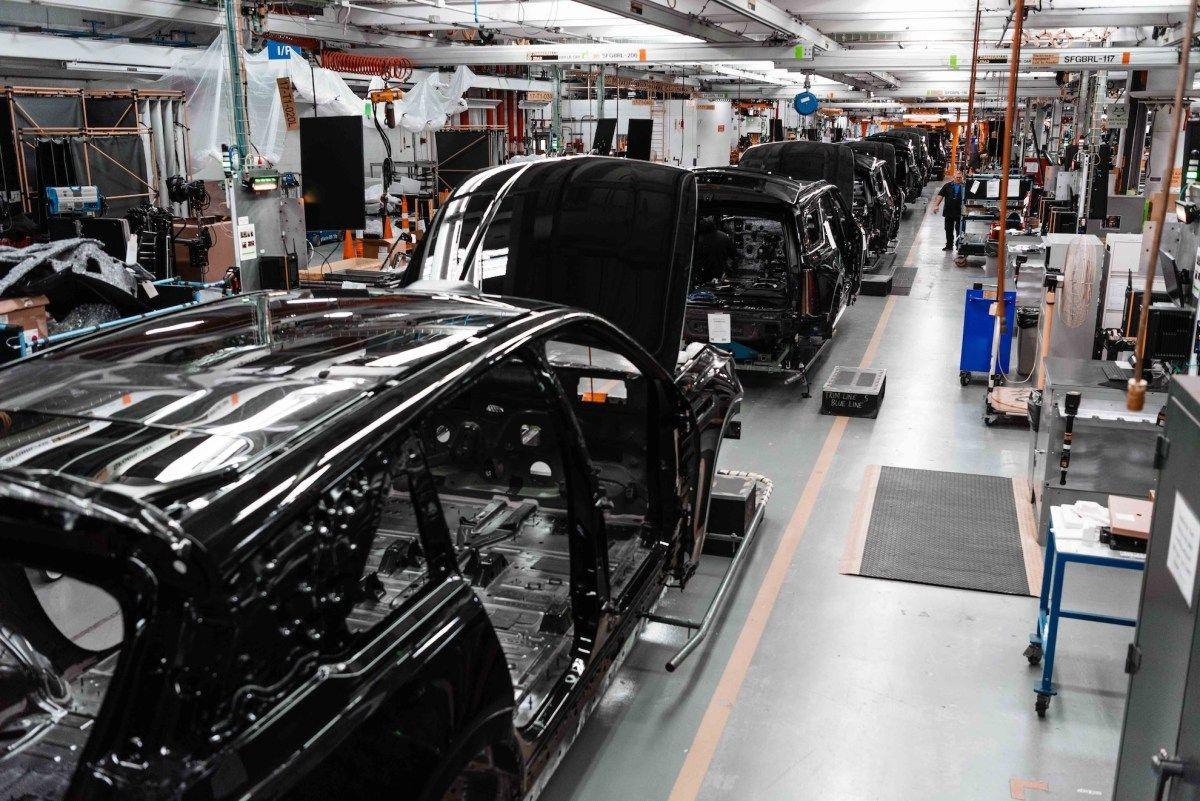
General Motors Unveils Intelligence-Defined Vehicle Strategy
General Motors announced a comprehensive technology transformation at its annual GM Forward event in New York, positioning artificial intelligence and autonomous driving as central to its future competitiveness
1
2
. The automaker revealed plans to halve vehicle development time from the traditional four to five years down to just over two years, matching the rapid development cycles of Chinese automakers2
. Sterling Anderson, GM's chief product officer, framed the shift as creating an intelligence-defined vehicle that serves as a "trusted, intelligent companion" rather than merely transportation5
.OnStar AI Transforms Connected Intelligence Platform
GM introduced OnStar AI, a personal AI assistant debuting in the 2027 Cadillac Lyriq, marking a significant evolution of the 30-year-old roadside assistance service
4
. The system represents a shift from call center operations to a connected intelligence platform capable of predictive, proactive support4
. OnStar AI will enable voice-controlled vehicle functions, provide explanations for vehicle alerts, and learn driver habits to offer contextual suggestions like ordering takeout from frequently visited restaurants1
. A new OnStar mobile app launching in 2027 will replace current brand-specific apps for Buick, Cadillac, Chevrolet, and GMC4
.The in-car AI systems will handle much processing locally through new onboard compute, eliminating latency issues while maintaining cloud connectivity for enhanced features
1
. Connected cameras will offer live views and automatic crash recordings, with end-to-end encryption ensuring GM cannot access user footage4
. This privacy-first approach addresses previous controversies around GM selling customer data to insurance companies1
.Hands-Off, Eyes-Off Autonomous Driving Expansion
GM confirmed its Super Cruise technology will expand to hands-off, eyes-off autonomous driving across nearly every vehicle in its lineup by 2028, starting with the Cadillac Escalade IQ
1
3
. The automaker tests this AI-driven autonomous driving technology for 1 million miles monthly in both virtual and real-world environments1
. Unlike Tesla's Full Self-Driving system that requires constant driver supervision, GM's approach allows drivers to text, eat, or watch YouTube while the vehicle handles highway navigation3
.Anderson, who previously led Tesla's Autopilot program, criticized systems that present "the illusion of autonomy without its benefits," arguing GM's method prioritizes genuine utility and safety
3
. The long-term vision includes vehicles capable of running errands autonomously, though Anderson acknowledged this raises concerns about increased traffic congestion and urban sprawl3
.Related Stories

Central Computing Unit Powers Software-Defined Vehicles
GM's fourth-generation EV platform centers on a Central Compute Unit 40 times more powerful than existing systems, handling propulsion, chassis controls, perception, and active safety
2
. This centralized architecture eliminates scattered chips throughout vehicles, reducing wiring by 30% and saving weight while simplifying assembly2
. The system will work on both electric and fossil fuel models, though it debuts in the Cadillac Escalade IQ2
.GM's capitalized software amortization expense reached $866 million in 2025, reflecting massive investments in software-defined vehicles as the company races to match Tesla and combat pressure from Chinese manufacturers
2
. The automaker previously ditched Apple CarPlay for a Google-based infotainment system across its EVs2
.Virtualized Engineering Accelerates Development
GM employs enterprise AI tools and virtualized engineering to compress development timelines dramatically. Engineers evaluated 300,000 virtual designs of a lithium-manganese-rich battery pack before assembling the first physical prototype, moving from concept to approved program in one month
2
. Anderson explained that virtualizing tests allows thousands of simulations to run simultaneously, improving both speed and safety compared to traditional methods limited by physical prototype availability5
.The approach relies on transformer-based foundation models trained on decades of GM design files and analyses, with co-training using external data to enhance model performance
5
. For safety-critical functions, AI inference runs onboard to avoid latency and connectivity issues, while non-critical features like OnStar AI interactions utilize cloud processing5
. This high-stakes gamble positions General Motors to compete in an increasingly software-driven automotive landscape dominated by agile competitors built as software-first companies from inception5
.References
Summarized by

Navi
[3]
[4]
Related Stories
GM's Ambitious AI-Driven Future: Eyes-Off Driving and Advanced Vehicle Intelligence
22 Oct 2025•Technology
GM's Software Revolution: AI and Automated Driving Take Center Stage in Vehicle Overhaul
22 Oct 2025•Technology
General Motors targets eyes-off autonomous driving by 2028 using AI and immersive simulation
12 Oct 2026•Technology
Recent Highlights



Recent Highlights
Today's Top Stories




Don’t drown in AI news. We cut through the noise - filtering, ranking and summarizing the most important AI news, breakthroughs and research daily. Follow topics that matter to you and stay ahead.


