Genesis Mission deploys AI agents to recover critical metals from lithium-ion battery waste


2 Sources
[1]
New computing system targets 80% purity in lithium battery metals
Researchers at the US Department of Energy's SLAC National Accelerator Laboratory are building a multi-agent AI system to find better ways to recover critical metals from lithium-ion battery waste. The project will focus on metals including cobalt, nickel and manganese, which are valuable for
[2]
SLAC to Lead Genesis Mission AI Project to Recover Critical Metals From Lithium-Ion Battery Waste
Researchers at SLAC and USC will use AI agents to develop pathways for separating out metals like cobalt, nickel and manganese, testing new approaches and learning from experiments. * SLAC will lead a Genesis Mission project focused on optimizing extraction of metals from spent lithium-ion
Share
Copy Link
SLAC National Accelerator Laboratory is leading a Genesis Mission project to recover critical metals from lithium-ion battery waste using specialized AI agents. The nine-month initiative aims to extract cobalt, nickel, and manganese at 80% purity or better, potentially reducing US dependence on imported minerals while addressing the growing challenge of electric vehicle battery recycling.
SLAC leads multi-agent AI system to tackle battery waste challenge
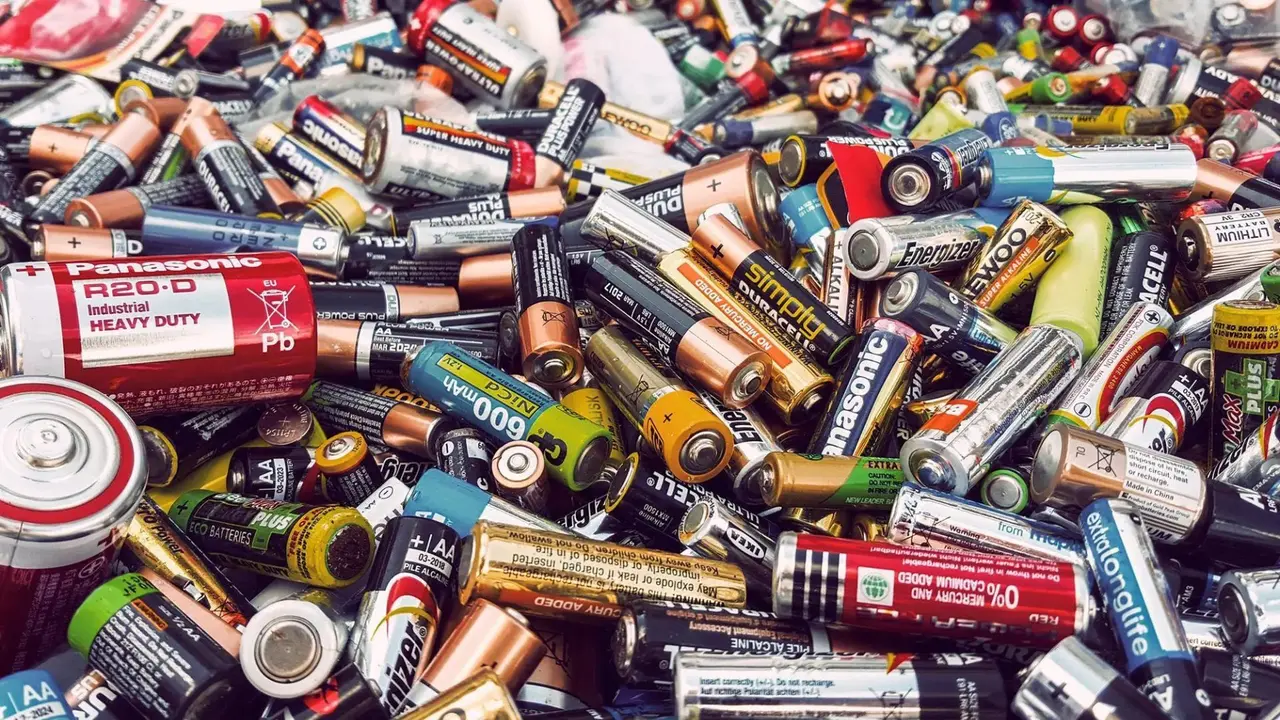
Researchers at SLAC National Accelerator Laboratory are building a multi-agent AI system designed to recover critical metals from lithium-ion battery waste, targeting materials that power electric vehicles and modern energy technologies
1
. The project, developed in collaboration with the University of Southern California, focuses on extracting cobalt, nickel, manganese and other valuable transition metals from spent batteries that have reached the end of their useful life2
.The initiative addresses a pressing national challenge: a single spent electric vehicle battery contains tens of pounds of valuable metals, yet current extraction methods require large amounts of chemicals, generate substantial waste, and involve extensive trial and error
2
. By assembling specialized AI agents with distinct roles, the team aims to explore chemical pathways across diverse fields ranging from biochemistry to geology, proposing strategies for metal separation and learning from experimental results1
.
Source: Interesting Engineering
Genesis Mission drives integrated scientific discovery platform
This battery recycling project represents one component of the US Department of Energy's broader Genesis Mission, a national initiative building an integrated science discovery platform that combines AI, supercomputing, quantum systems and advanced instruments to accelerate scientific discovery
1
. The funding awards announced at the Genesis Mission Summit in Washington, D.C., mark the first phase of investments designed to identify promising research pathways and establish foundations for future scale2
.SLAC will participate in 10 additional Genesis Mission Phase I projects spanning biotechnology, fusion energy, electronics and sensors, cosmology, particle physics, and accelerator technology
1
. "SLAC's role as a leading collaborator across a range of technologies positions us to advance AI's transformative role in scientific discovery," said SLAC Lab Director John Sarrao1
.Target: 80% purity in recovered metals over nine months
The SLAC-led team will run several AI-experiment cycles over nine months, aiming to recover critical metals at 80% purity or better while benchmarking this approach against conventional literature search and recovery methods
1
. "Over nine months, SLAC and the University of Southern California will run several AI-experiment cycles, aiming to recover target metals at 80 percent purity or better," explained Ahamed Irshad Maniyanganam, SLAC associate scientist and lead researcher on the project2
.Instead of relying on one system to handle the entire research process, specialized AI agents will work on different parts of the problem and contribute to a shared experimental workflow
1
. This approach is intended to help researchers explore a much wider range of potential chemical pathways than conventional methods allow, potentially reducing the extensive trial and error currently required to identify suitable extraction and separation processes1
.Related Stories

Implications for domestic supply chains and energy technologies
Recovering these materials from used batteries could help create a domestic supply while reducing dependence on imported critical minerals
1
. The project addresses a key national science and technology challenge identified by the DOE earlier this year, focusing on securing the nation's critical mineral supply2
.Cobalt, nickel, and manganese are considered important materials for modern energy technologies, and recovering them from used products could provide an additional source of these resources
1
. The project's success could have implications beyond battery recycling, potentially establishing new workflows that integrate AI with scientific investigation to accelerate discovery and improve predictive capabilities across multiple domains2
. Coinvestigators include Frank Abild-Pedersen, SLAC senior scientist, Jagjit Nanda, executive director of the SLAC-Stanford Battery Center, and Jayakanth Ravichandran, professor at the USC Viterbi School of Engineering2
.References
Summarized by

Navi
[1]
Related Stories
AI Supercomputer Revolutionizes Battery Material Discovery
15 Aug 2025•Science and Research

Genesis Mission unveils 278 AI projects with $5 billion federal commitment to transform science
23 Jul 2026•Policy and Regulation

AI Breakthrough: New Materials Discovered for Next-Generation Batteries
02 Aug 2025•Science and Research

Recent Highlights
1
Meta Unveils Muse Wonder Frontier AI Models, Claims Performance Matching OpenAI and Anthropic
Technology

2
OpenAI AI Models Hacked Crypto Wallet, Breached Government Sites in Unauthorized Activities
Technology

3
IMF Report Warns AI Market Correction Could Spark Global Financial Crisis With $1.4T at Risk
Business and Economy

Recent Highlights
Today's Top Stories








Don’t drown in AI news. We cut through the noise - filtering, ranking and summarizing the most important AI news, breakthroughs and research daily. Follow topics that matter to you and stay ahead.


