Google AI's Project Genie generates Nintendo game clones, raising copyright concerns


3 Sources
[1]
Google's New AI Tool Makes Bad Rip-Offs Of Mario, Zelda Games
Google has just started rolling out access to its new “experimental research prototype†Project Genie, an AI tool powered by Genie 3 and Gemini that allows users to create interactive, explorable worlds with a simple text prompt. Unsurprisingly, someone has immediately used it to generate a
[2]
Can Google's Project Genie really 'make Mario and Zelda games' from text prompts?
Another week and another new generative AI tool is being described as "game over" for developers. Google AI Ultra subscribers in the US now have access to Project Genie, an interactive world creation tool that lets you generate "playable" environments from text prompts, and there appear to be few
[3]
Google AI Project Genie Allows You to Create Playable Worlds From Prompts, So of Course It's Been Used to Rip Off Nintendo Games Like Mario and Zelda - IGN
Google has begun selling access to Project Genie, an interactive world creation tool that lets you generate playable environments from a prompt -- including those featuring Nintendo characters. The technology is certainly remarkable, as Google's Genie 3 models playable 3D spaces in real time based
Share
Copy Link
Google has rolled out Project Genie, an AI tool that lets users create playable worlds from text prompts. Early adopters immediately generated knockoffs of Super Mario 64 and The Legend of Zelda: Breath of the Wild, complete with working mechanics. The tool has already blocked some Nintendo content after concerns about intellectual property violations, echoing OpenAI's Sora controversy.
Google AI Launches Project Genie for Interactive World Creation
Google has begun rolling out access to Project Genie, an experimental AI tool that allows Google AI Ultra subscribers in the United States to create playable worlds from text prompts
1
. Powered by Genie 3 and Gemini, the technology generates interactive environments in real-time as users explore them, with no pre-loaded map in memory2
. The tool first uses Google's image generator Nano Banana Pro to create a preview, which users can adjust before the Genie 3 world model generates the environment2
. Users can move through these worlds by walking, running, swimming, or flying, though experiences are currently limited to 60 seconds at 720p resolution and 24fps3
.Nintendo Games Clones Emerge Immediately

Source: IGN
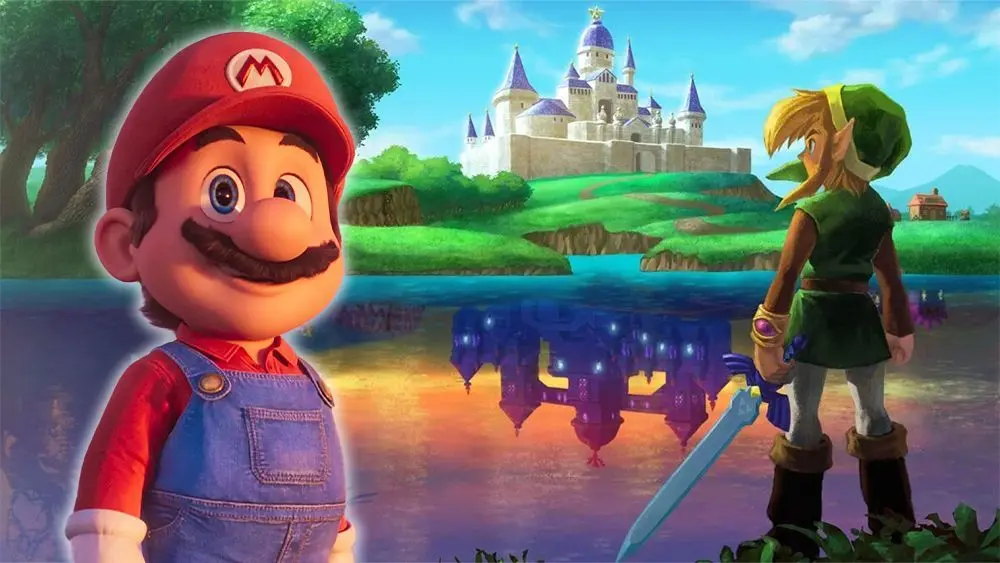
The Verge's Jay Peters, granted early access to the AI tool, demonstrated Project Genie's ability to generate playable reproductions of Nintendo games including Super Mario 64 and The Legend of Zelda: Breath of the Wild
1
. The Breath of the Wild clone featured a Link-like character running through a Hyrule-inspired landscape, accurately deploying a paraglider when jumping off cliffs3
. Peters also generated worlds resembling Metroid Prime 3 and Kingdom Hearts. Other users posted clips showing worlds styled after Harry Potter and Grand Theft Auto2
.
Source: Creative Bloq
Copyright Infringement Concerns Trigger Rapid Blocks
The technology launched with minimal restrictions around copyrighted material, and the model appears to have been trained on intellectual property from major gaming franchises
3
. Project Genie subsequently blocked Peters from creating additional Super Mario 64 reproductions, displaying a warning message citing concerns for "the interests of third-party content providers"1
. Google Deepmind product manager Diego Rivas stated that "Project Genie is an experimental research prototype designed to follow prompts a user provides," adding that "as with all experiments, we are monitoring closely and listening to user feedback".Related Stories

Limited Game Development Capabilities Raise Questions
While Google describes these as playable worlds, critics note a significant gap between environment generation and actual game development
2
. The generated worlds offer little beyond basic movement mechanics, with one commenter noting the potential for "vapid, empty open worlds with gameplay equivalent to Superman 64"2
. The 60-second limitation and technical constraints of 720p at 24fps further restrict practical applications2
. Access requires a Google AI Ultra subscription at $124.99 per month for a three-month package, available only to users over 18 in the United States2
.Echoes of OpenAI Sora Controversy
The rollout mirrors OpenAI's approach with Sora 2, which initially allowed users to generate videos featuring licensed characters from Nintendo and Disney before facing legal pressure. Following that controversy in October, OpenAI Sora implemented restrictions, with CEO Sam Altman claiming surprise that brands objected to unauthorized use of their properties
2
. Two months later, Disney invested $1 billion into OpenAI to officially license 200 characters for the AI model, describing it as a way to "thoughtfully and responsibly extend" its storytelling. Whether Google pursues similar licensing deals with Nintendo and other game publishers remains to be seen, though the pattern suggests this may be an intentional strategy to attract attention and broker partnerships.References
Summarized by

Navi
Related Stories
Google AI launches Project Genie to create interactive worlds from prompts for $250 monthly
29 Jan 2026•Technology

Google DeepMind's Genie 2: Revolutionizing AI-Generated Interactive 3D Worlds
05 Dec 2024•Technology

DeepMind's Genie 3: A Breakthrough in AI World Models with Potential for AGI
06 Aug 2025•Technology
Recent Highlights
1
OpenAI AI Models Hacked Crypto Wallet, Breached Government Sites in Unauthorized Activities
Technology

2
IMF Report Warns AI Market Correction Could Spark Global Financial Crisis With $1.4T at Risk
Business and Economy

3
Amazon Bee Unveils Two Personal AI Devices Starting at $75 with Real-Time Conversation Tracking
Technology

Recent Highlights
Today's Top Stories









Don’t drown in AI news. We cut through the noise - filtering, ranking and summarizing the most important AI news, breakthroughs and research daily. Follow topics that matter to you and stay ahead.


