Google Expands AI-Powered App Builder Opal to 15 New Countries, Enhances Features


3 Sources
[1]
Google launches its AI vibe-coding app Opal in 15 more countries | TechCrunch
Google is expanding access to Opal, its AI vibe-coding app, to 15 more countries. The app, which lets you create mini web apps using text prompts, is now available in Canada, India, Japan, South Korea, Vietnam, Indonesia, Brazil, Singapore, Colombia, El Salvador, Costa Rica, Panamá, Honduras,
[2]
Google Expands No-Code AI Mini-App Builder Opal to India and 14 Other Countries | AIM
Alongside the expansion, Google is rolling out new features aimed at improving workflow transparency and performance. Google on October 7 announced that it is expanding access to Opal, its no-code AI mini-app builder, to India and 14 additional countries, including Canada, Japan, South Korea,
[3]
Google expands its AI vibe-coding app Opal to 15 more countries
Google's AI-powered Opal app, which lets users create mini web apps from text prompts, is expanding to 15 new countries with faster performance and improved debugging tools. Google is expanding the availability of Opal, its AI application that lets users create mini web apps from text prompts, to
Share
Copy Link
Google's no-code AI app builder Opal is now available in 15 additional countries, including India and Canada. The expansion comes with improved performance and debugging tools, positioning Opal as a strong competitor in the no-code app development market.
Google's Opal Expands Global Reach
Google has announced a significant expansion of its AI-powered app builder, Opal, to 15 additional countries. This move comes just two months after its initial launch in the United States, signaling Google's commitment to making AI-driven app development more accessible worldwide
1
.The list of countries now gaining access to Opal includes Canada, India, Japan, South Korea, Vietnam, Indonesia, Brazil, Singapore, Colombia, El Salvador, Costa Rica, Panamá, Honduras, Argentina, and Pakistan
2
. This expansion allows a diverse range of creators and developers to leverage Opal's capabilities in building AI-powered mini web apps using natural language prompts.How Opal Works
Opal is designed to simplify the app creation process for non-technical users. It allows individuals to generate functional web applications by describing their desired outcome through text prompts. The tool then utilizes various Google models to create the app based on the user's description
1
.
Source: TechCrunch
Once an app is generated, users can access an editor panel to view and customize the visual workflow, including inputs, outputs, and generation steps. This feature enables users to refine their apps without needing extensive coding knowledge, making it accessible to a broader audience of creators and innovators.
Enhanced Features and Performance
Alongside the global expansion, Google has introduced several improvements to Opal's functionality and performance:
-
Advanced Debugging: Users can now run their workflow step-by-step in the visual editor or tweak specific steps in the console. Errors are displayed in real-time, providing immediate context and reducing guesswork
2
. -
Improved Core Performance: Google has significantly reduced the time it takes to create a new Opal app, which previously took up to five seconds or more
1
. -
Parallel Execution: Complex workflows with multiple steps can now execute simultaneously, enhancing the efficiency of app creation
1
.
Market Position and Competition
With this expansion and feature enhancements, Google is positioning Opal as a strong competitor in the no-code app development market. The tool now stands alongside other players like Canva, Figma, and Replit, which offer similar solutions for designing app prototypes without traditional coding
3
.Megan Li, a Senior Product Manager at Google Labs, expressed surprise at the sophistication of apps created by early adopters: "We didn't expect the surge of sophisticated, practical and highly creative Opal apps we got instead. The ingenuity of these early adopters made one thing clear: we need to get Opal into the hands of more creators globally"
1
.Accessibility and Community Building
Google is making Opal accessible through opal.withgoogle.com and is fostering a community of builders through its Discord channel
2
. This approach not only provides a platform for app creation but also encourages collaboration and knowledge sharing among users, potentially leading to more innovative applications of the technology.🟡 communicated_value_of_service=🟡### Google's Opal Expands Global ReachGoogle has announced a significant expansion of its AI-powered app builder, Opal, to 15 additional countries. This move comes just two months after its initial launch in the United States, signaling Google's commitment to making AI-driven app development more accessible worldwide
1
.The list of countries now gaining access to Opal includes Canada, India, Japan, South Korea, Vietnam, Indonesia, Brazil, Singapore, Colombia, El Salvador, Costa Rica, Panamá, Honduras, Argentina, and Pakistan
2
. This expansion allows a diverse range of creators and developers to leverage Opal's capabilities in building AI-powered mini web apps using natural language prompts.How Opal Works
Opal is designed to simplify the app creation process for non-technical users. It allows individuals to generate functional web applications by describing their desired outcome through text prompts. The tool then utilizes various Google models to create the app based on the user's description
1
.Source: TechCrunch
Once an app is generated, users can access an editor panel to view and customize the visual workflow, including inputs, outputs, and generation steps. This feature enables users to refine their apps without needing extensive coding knowledge, making it accessible to a broader audience of creators and innovators.
Related Stories

Enhanced Features and Performance
Alongside the global expansion, Google has introduced several improvements to Opal's functionality and performance:
-
Advanced Debugging: Users can now run their workflow step-by-step in the visual editor or tweak specific steps in the console. Errors are displayed in real-time, providing immediate context and reducing guesswork
2
. -
Improved Core Performance: Google has significantly reduced the time it takes to create a new Opal app, which previously took up to five seconds or more
1
. -
Parallel Execution: Complex workflows with multiple steps can now execute simultaneously, enhancing the efficiency of app creation [1](https://techcrunch.com/2025/10/07/google-l aunches-its-ai-vibe-coding-app-opal-in-15-more-countries/).
Market Position and Competition
With this expansion and feature enhancements, Google is positioning Opal as a strong competitor in the no-code app development market. The tool now stands alongside other players like Canva, Figma, and Replit, which offer similar solutions for designing app prototypes without traditional coding
3
.Megan Li, a Senior Product Manager at Google Labs, expressed surprise at the sophistication of apps created by early adopters: "We didn't expect the surge of sophisticated, practical and highly creative Opal apps we got instead. The ingenuity of these early adopters made one thing clear: we need to get Opal into the hands of more creators globally"
1
.Accessibility and Community Building
Google is making Opal accessible through opal.withgoogle.com and is fostering a community of builders through its Discord channel
2
. This approach not only provides a platform for app creation but also encourages collaboration and knowledge sharing among users, potentially leading to more innovative applications of the technology.References
Summarized by

Navi
Related Stories
Google Unveils Opal: AI-Powered No-Code App Development Tool
26 Jul 2025•Technology

Google Opal integrates with Gemini to let anyone build AI mini-apps using natural language
17 Dec 2025•Technology

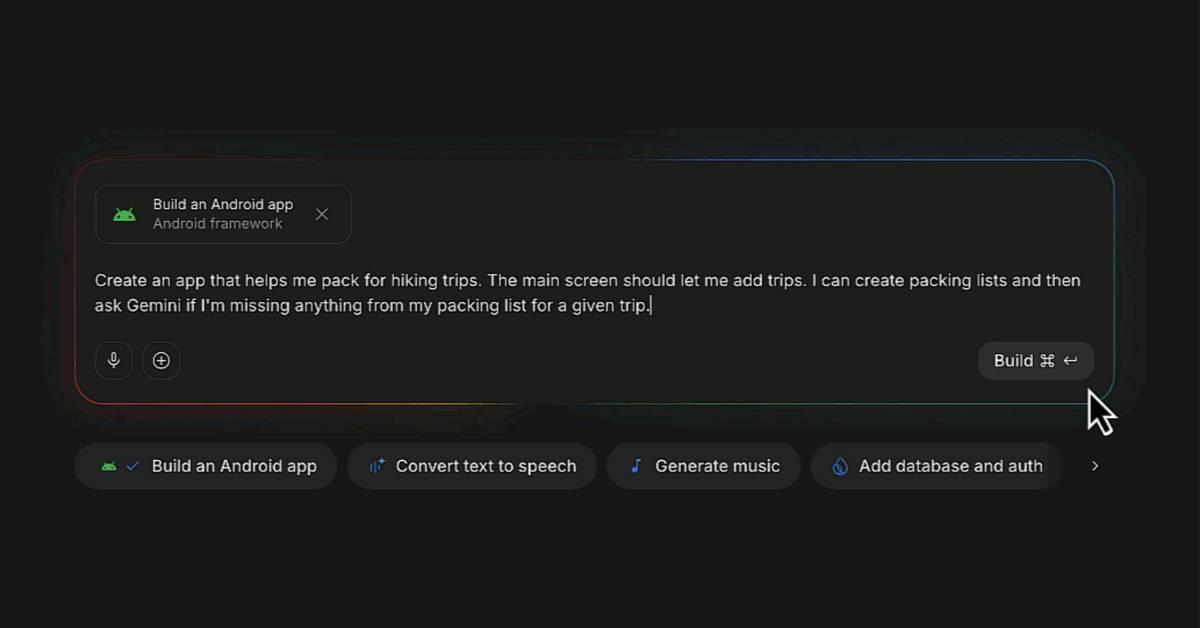
Google AI Studio now lets anyone build Android apps in minutes using just text prompts
19 May 2026•Technology
Recent Highlights
1
OpenAI AI Models Hacked Crypto Wallet, Breached Government Sites in Unauthorized Activities
Technology

2
IMF Report Warns AI Market Correction Could Spark Global Financial Crisis With $1.4T at Risk
Business and Economy

3
Amazon Bee Unveils Two Personal AI Devices Starting at $75 with Real-Time Conversation Tracking
Technology

Recent Highlights
Today's Top Stories











Don’t drown in AI news. We cut through the noise - filtering, ranking and summarizing the most important AI news, breakthroughs and research daily. Follow topics that matter to you and stay ahead.


