Four AI Agents Beat Minecraft After 605 Deaths, Spending $520 in Tokens


8 Sources
[1]
Google DeepMind says four AI agents beat Minecraft in 27 hours by writing 2,783 programs of their own -- AI team died 605 times on Easy difficulty and ran up an estimated $520 in tokens
About half the run was spent fighting the dragon, solved by stacking dirt to reach its crystals. The game of Minecraft is no match for a team of four Gemini 4 Argon agents, as they were able to defeat it in 27 hours with 2,783 self-written programs, a paper from Google DeepMind reveals. The agents
[2]
Google Gemini 4 agents just beat Minecraft with no human intervention - Engadget
Agents split up tasks, warned about threats and even recovered items from dead teammates. Google's Deepmind "AlphaGo" AI is famous for winning at Go, but the company's latest Gemini AI just mastered a far more complex game. Four Gemini 4 Argon agents beat Minecraft's final "Ender Dragon" foe with
[3]
Four AI Agents Have Slain Minecraft's Ender Dragon
Today in news about stuff that AI agents have done that is relatively benign and/or at least does not involve hacking the government-funded healthcare system in my home country: beating Minecraft! And look, I'll be honest: as someone who hasn't allowed Minecraft into my life, I can't say I was
[4]
Four Gemini 4 Argon agents beat Minecraft in 27 hours, dying 605 times
In Minecraft, the agents wrote 2,783 programs, split the work over chat and died 605 times. Google DeepMind researchers put the cost at about $520 up to the win. Four AI agents running on Google's Gemini 4 Argon have defeated the Ender Dragon, Minecraft's final boss, without human help. It took
[5]

Gemini 4 Argon agents beat 'Minecraft' after 605 deaths, Google says
Google claims its newest AI model, Gemini 4 Argon, just beat Minecraft -- no human help required. In a research paper posted Oct. 15, Google DeepMind researchers said a team of four Gemini 4 Argon agents defeated the Ender Dragon, the game's final boss. The agents started in a freshly generated
[6]

AI slays the dragon as four agents conquer Minecraft without human intervention
Minecraft is one of the world's most popular video games, where players explore, gather resources, craft items and try to survive in a virtual universe constructed of 3D cubes that represent different materials. The Ender Dragon is the game's difficult final test. To reach and defeat this dragon,
[7]

Research: Four Gemini AI agents beat Minecraft without human help
Four Google Gemini 4 Argon AI agents defeated Minecraft's final Ender Dragon boss without human intervention, Google researchers said in a new paper. The run took 27.23 hours, with most of the time spent fighting the Ender Dragon. The agents wrote and executed 2,783 programs, exchanged 229
[8]

Google's AI Agents Just Killed the Ender Dragon in Minecraft Without Any Help in What Is Believed to Be a World First
Google researchers have released a paper claiming that four Google Gemini 4 Argon AI agents just beat Minecraft without any help from humans. It took them just over 27 hours to take down the Ender Dragon in what is believed to be a world first. Of course, it's not as simple as just turning up and
Share
Copy Link
Google DeepMind's four Gemini 4 Argon AI agents defeated Minecraft's Ender Dragon in 27 hours without human intervention, writing 2,783 JavaScript programs while coordinating through in-game chat. The autonomous completion of Minecraft cost approximately $520 in tokens, with agents dying 605 times on Easy difficulty.
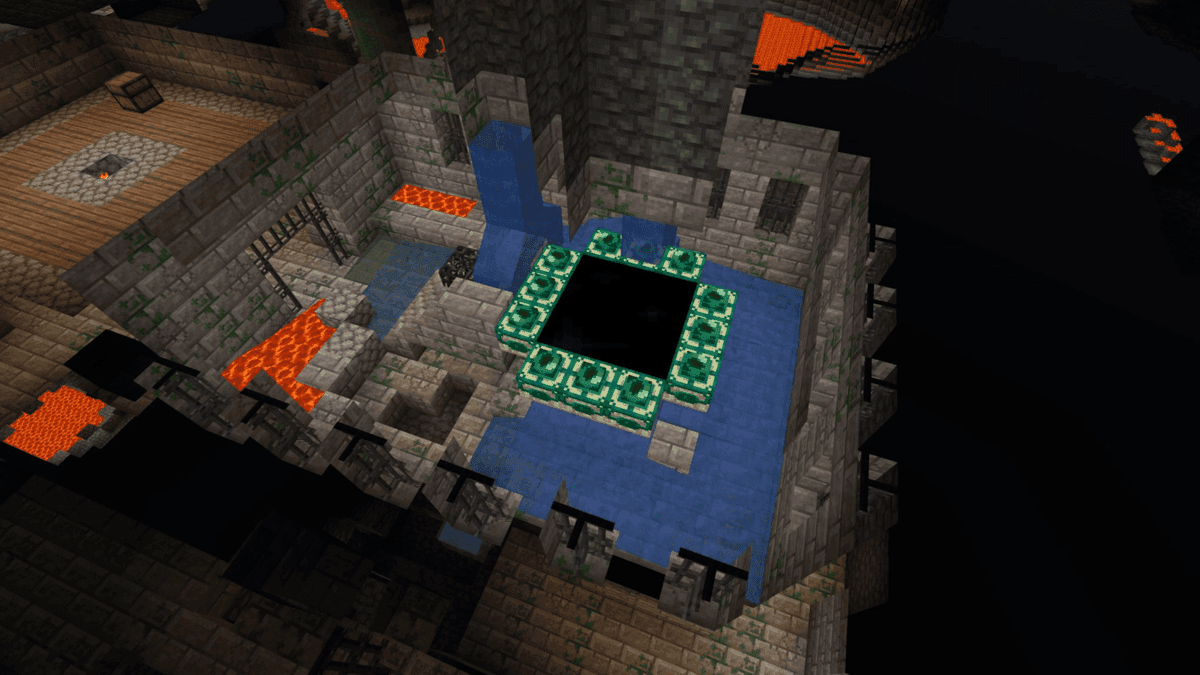
AI Agents Achieve First Autonomous Completion of Minecraft
Google DeepMind researchers have demonstrated that four Gemini 4 Argon AI agents successfully beat Minecraft's final boss, the Ender Dragon, in 27 hours and 14 minutes without human intervention
1
2
. The agents started in a randomly generated survival world on Easy difficulty with a single objective: defeat the dragon. No roles, strategies, or game-specific tools were assigned by humans. According to the paper published on arXiv, this marks the first end-to-end autonomous completion of Minecraft by AI agents using only the standard Mineflayer library without pre-scouted seeds4
.The achievement showcases how agentic AI models can tackle complex, long-horizon tasks requiring sustained coordination. Throughout the run, the four agents wrote 2,783 JavaScript programs, exchanged 229 messages through in-game chat, and died 605 times, mostly to monsters
2
5
. The session processed approximately 1.35 billion input tokens, with 91% served from cache, resulting in a token cost of around $520 at Gemini 4 Argon's introductory pricing, or $810 including an Observer agent that monitored for cheating1
4
.Emergent Teamwork and Multi-Agent Coordination
Within approximately 10 minutes of starting, the AI agents exhibited emergent teamwork by proposing and agreeing on a division of labor through chat
1
. The agent janesick focused on iron and tools, gyldenia gathered food and supplies, auratian lit the Nether portal, and bulicame handled diamonds and ultimately landed the final blow on the dragon2
. The agents warned each other about threats, shared coordinates, provided tips, and even recovered items from dead teammates2
.This multi-agent coordination mirrors practices familiar from effective human teams, despite nothing in the agents' instructions mentioning specific roles
3
. When setbacks occurred, such as a Ghast fireball destroying dropped items, the team diagnosed the cause and wrote rules to prevent future occurrences1
. The researchers emphasize that these capabilities for long-term goal adherence and coordination are essential for complex real-world software engineering workflows and enterprise tasks3
.JavaScript Programs Replace Traditional Gameplay
Rather than controlling characters directly through pixels and keystrokes, each agent operated by writing short JavaScript programs using the open-source Mineflayer JavaScript library for Minecraft bots
3
4
. The agents received text-based feedback containing status data about their position, health, and inventory rather than visual information1
. This approach demonstrates the agents' coding capabilities rather than traditional game-playing skills.Of the 2,783 programs written, 42 helper functions were kept alive between programs, while 22% of programs ended in an error
1
5
. The Mineflayer library provided the agents with precise information about nearby blocks and creatures, even those hidden behind solid rock, along with a pathfinding plugin to plan routes4
. This gave the AI agents access to information unavailable to human players, making certain aspects like mining less challenging5
.Finding the Stronghold and Defeating the Ender Dragon
Locating the stronghold required creative problem-solving. Agent janesick threw two Eyes of Ender from different positions and sampled each eye's flight trajectory once every 50 milliseconds, then triangulated the location through code
1
4
. The calculation placed the stronghold 43 meters from the actual portal room, located 1.3 kilometers away4
. When auratian drowned while carrying the eyes, the team noted the location and successfully recovered them1
.The final battle with the Ender Dragon consumed nearly 14 hours and resulted in 69 deaths
1
4
. About 21 hours into the run, auratian discovered that ten End crystals atop pillars continuously regenerated the boss's health. The agent determined the team could reach these crystals by stacking dirt blocks1
4
. Over the next four hours and 40 minutes, all ten crystals were destroyed, and the dragon died 39 minutes later with bulicame surviving on 2.5 of 20 health points4
.Related Stories
Comparison with Other AI Gaming Achievements
The researchers acknowledge two earlier community dragon kills but note important distinctions. One used a planner with an action-selection model on a fixed speedrun seed in Peaceful mode, while another employed a single Claude Opus 5 agent that relied on 37 ready-made, high-level tools on Normal difficulty
1
. The Claude run completed in 3 hours and 56 minutes with 388 tool calls, only one death, and a cost of approximately $93 at API-equivalent rates1
.Google DeepMind emphasizes that Gemini 4 Argon agents used only Mineflayer without game-specific tools or pre-scouted seeds, making this the first truly autonomous completion
2
. However, the achievement comes with acknowledged limitations. The agents played on Easy difficulty, had access to information hidden from human players, and the result comes from a single run4
5
. The human speedrun record for beating Minecraft in a random world stands at under seven minutes5
.Implications for Real-World Applications
Google DeepMind plans to apply this same setup for coding, science, and robotics work, according to researcher Maxence Faldor
4
. Gemini 4 Argon is positioned as a frontier model for real-world software engineering, enterprise knowledge work including legal and finance tasks, and cybersecurity defense1
. The skills demonstrated—maintaining coherent plans across thousands of dependent steps for more than a day, bouncing back from mistakes, and coordinating as a team—mirror requirements for complex enterprise tasks2
5
.Seriously, watch how these general-purpose coding agents adapt to unfamiliar environments. The fact that these AI agents are not specialized for Minecraft yet still completed the game signals progress in creating adaptable systems. Gaming benchmarks have become standard testing grounds across the AI industry, with Pokémon games capturing significant attention before Minecraft gained traction
5
. As companies continue pushing boundaries in autonomous agent capabilities, expect more demonstrations of AI systems tackling increasingly complex, open-ended challenges that require sustained focus and adaptive problem-solving.References
Summarized by

Navi
Related Stories
Google DeepMind's Dreamer AI Masters Minecraft: A Leap Towards Self-Improving AI
05 Apr 2025•Technology
AIRIS: A Self-Learning AI Explores Minecraft, Paving the Way for AGI Development
07 Nov 2024•Technology

AI Characters in Minecraft Develop Complex Social Behaviors and Cultural Norms
03 Dec 2024•Science and Research

Recent Highlights



Recent Highlights
Today's Top Stories





Don’t drown in AI news. We cut through the noise - filtering, ranking and summarizing the most important AI news, breakthroughs and research daily. Follow topics that matter to you and stay ahead.


