17 Sources
[1]
Google continues its renaming streak by turning NotebookLM to Gemini Notebook
Google might launch an AI product with one name during its experimental phase, but it will eventually tie it all to Gemini. In the latest example of this trend, the company is renaming its AI-powered research product NotebookLM to Gemini Notebook. The company is also adding features to make the tool more interactive by infusing coding execution for data analysis. The company first showed off NotebookLM during Google IO in 2023 as Project Tailwind, and since then, it has made it into a product used by 30 million people and over 600,000 organizations. In the last three years, the company has added capabilities, like interactive podcast generation, curated notebooks, video overviews, support for more file types, and an enterprise plan. Because of NotebookLM, other companies and startups have added capabilities for podcast generation from source material and research tools. Along with renaming, Google is rolling out a new update that makes each notebook its own secure container, in which users can generate code to make outputs interactive. It noted that with code execution ability, users can tap into multiple sources and create complex data analysis directly within the tool. The company said the update is available to Google AI Ultra paid plan users, along with Workspace business customers with AI Ultra Access and AI Expanded Access. Pro users will get access to this feature in the coming weeks. Google said that users can already look at their notebooks within the Gemini app, and soon, they will be able to access them through AI Mode in search.
[2]
Google Renames NotebookLM to Gemini Notebook
Blake has over a decade of experience writing for the web, with a focus on mobile phones, where he covered the smartphone boom of the 2010s and the broader tech scene. When he's not in front of a keyboard, you'll most likely find him playing video games or watching horror movies. NotebookLM is one of the best AI tools available, and it's been renamed the Gemini Notebook to bring it in line with the rest of Google's Gemini AI suite, the tech giant announced in a blog post on Thursday. Despite the name change and further integration into more Google products in the future, it'll continue as a standalone tool. Originally launched as an experiment called Project Tailwind in 2023, Gemini Notebook has since been used by over 30 million people and 600,000 organizations, according to the blog post. The project turned into what's possibly the best AI product the tech giant has produced so far. Gemini Notebook is a research assistant that can help you make sense of your messiest notes or other sources. It's great as a learning tool, but can be used in a variety of ways. What sets it apart from other AI tools is that it only analyzes the sources you feed it (web pages, PDFs, audio files, etc.) and won't search the internet for an answer if the sources don't contain one. For example, if you upload a document about math and then ask it about the biology of dolphins, it'll reply that, based on your sources, it doesn't have the answer. As a part of the rebranding, Google has given the Gemini Notebook some serious under-the-hood upgrades. Google started rolling out an update last month that gives each Notebook a secure cloud computer, enabling the Gemini Notebook to natively write and execute code. This can allow for more in-depth data analysis of your sources. The update also introduced new output formats, including .json and Microsoft PowerPoint (.pptx) files. These updates are available starting Thursday for Google AI Ultra users and Workspace business customers with AI Ultra Access and AI Expanded Access. AI Pro users on the web will gain access in the coming weeks. Google has been adding new features to the Gemini Notebook since day one, and it's become an incredibly robust tool since. Notebooks now sync directly with Google Drive, and you can even create Notebooks directly from the Gemini App. Google says Notebooks will soon be coming to AI Mode in Search, too.
[3]
Google is renaming NotebookLM to Gemini Notebook
Google is giving its AI note-taking app a new name. The company announced on Thursday that NotebookLM is becoming Gemini Notebook, but will remain a standalone app even as it integrates more deeply across Gemini and Google Search. Google first revealed Gemini Notebook -- then called Project Tailwind -- in May 2023 before widely releasing the app just months later. Over the past few years, Google has been adding new features to the app to help organize and make sense of your notes, such as the ability to summarize them as AI podcasts, narrated slideshows, and TikTok-style clips. It recently started letting users connect their notebooks to the Gemini app as well. Google says it plans to bring notebooks to AI Mode, its chatbot-like experience in Search, too. Along with the name change, Google is rolling out an update announced last month that allows Gemini Notebook to connect to a secure cloud computer to write and execute code. This feature is available to Google AI Ultra and Workspace business customers, but will come to Pro users on the web "over the coming weeks."
[4]
Google's NotebookLM is now Gemini Notebook - Engadget
Google's NotebookLM is now Gemini Notebook It's getting some new features to celebrate. Google's deep research tool, NotebookLM, is getting a new name to better sit beside the rest of Google's AI tools. From today, the service will be known as Gemini Notebook, even if it remains a standalone product from the rest of Gemini -- at least for now. Along with the name change, the search giant has made some under-the-hood improvements, such as the ability to write and execute code natively. That way, it's possible to run complex data analysis based solely on the data collected within your own research. In addition, Google says it'll soon add the ability to bring the notebooks made within this system to AI mode in the regular 'ol Google search. The company adds that NotebookLM Gemini Notebook now has more than 30 million individual users, along with more than 600,000 organizations. The move to pull the brand in line with the rest of Gemini isn't much of a surprise, given the Google fully integrated the tool into the Gemini app back in April.
[5]
Google's handy NotebookLM tool is dropping the worst part of its name
Google says notebooks will eventually be accessible via AI Mode in Search, too. Google is folding NotebookLM into the Gemini brand: The company announced today that NotebookLM is now Gemini Notebook. The renamed platform itself isn't changing, but its new branding does make it clearer that the service formerly known as NotebookLM is a part of Google's broader AI ecosystem. If this sounds familiar, you may be remembering a feature Gemini picked up in April called Notebooks. That update let users start research projects inside Gemini and then later continue them inside NotebookLM. That's still possible today; the only aspect of Gemini Notebook that's changed is the name. The branding shakeup might be a little convoluted to explain, but it does make sense in practice. The LM in NotebookLM stands for "language model," an inclusion that seems redundant for a generative AI product. And with Gemini referring to its research projects as "notebooks," it seems natural for the dedicated home for those projects to be called Gemini Notebook. You can still create notebooks from Gemini itself and then access those notebooks from Gemini Notebook, with changes on either platform syncing to the other automatically. There is still some functionality that remains exclusive to the Gemini Notebook platform, though. For example, if you want to create a video overview from the contents of a notebook you created in Gemini, you'll have to use Gemini Notebook for that. You'll eventually be able to access your notebooks from even more locations, too: Google says that it's working to bring Gemini Notebook integration to AI Mode in Search. It didn't provide a timeline for that integration. You should start seeing Gemini Notebook branding replacing NotebookLM today.
[6]
Google renames NotebookLM to Gemini Notebook and expands code execution to Pro users
Google is renaming NotebookLM to Gemini Notebook and expanding its cloud code execution features from Ultra-only to Pro subscribers. Google is renaming NotebookLM to Gemini Notebook, folding one of its most popular AI products into the Gemini brand while keeping it as a standalone tool. The company said on Thursday that the rebrand reflects how deeply the research assistant has been woven into the broader Google ecosystem, including the Gemini app and Google Search. More than 30 million people and over 600,000 organizations now use the tool, which Google first introduced as Project Tailwind at I/O 2023. The name change arrives alongside a significant expansion of the tool's most powerful feature. Last month, Google gave every notebook a secure cloud computer capable of writing and running code against a user's uploaded sources, enabling complex data analysis, charts, and new output formats including spreadsheets and slide decks. That update was limited to Google AI Ultra subscribers and select Workspace business accounts, but with the Gemini Notebook rebrand, Google is rolling it out to AI Pro users on the web over the coming weeks. The cloud computing environment runs Python scripts inside a secure container, processing tables and generating visualizations directly from the documents a user has uploaded. Digital Trends reported that the June update also moved the tool onto a new reasoning engine and added support for generating PDFs and structured data files. Google has not said when or whether free-tier users will gain access to code execution. Beyond the rebrand, Google is pushing notebooks into more surfaces across its product line. Users can already create and access notebooks directly within the Gemini app, with full cross-app syncing between the two experiences. Google said it plans to bring notebooks into AI Mode in Search as well, though it did not share a timeline, a move that would place the research tool inside the same AI-driven search interface that now serves more than one billion monthly users. The rebrand continues a pattern Google has followed across its AI lineup, absorbing experimental products into the Gemini brand once they prove successful. NotebookLM's core proposition, grounding AI responses exclusively in user-provided sources rather than the open web, remains unchanged. Josh Woodward, VP of Google Labs, the Gemini app, and AI Studio, oversees the product and outlined Google's broader AI integration strategy at I/O 2026 in May. Whether the Gemini Notebook name helps or hurts the product's identity is an open question. NotebookLM built its reputation precisely because it felt distinct from the chatbot-style Gemini experience, and some users may see the rebrand as a sign that Google is prioritizing brand consistency over the product's independent character. The tool itself is better than it has ever been, but the name now carries the weight of an AI brand that Google has applied to everything from laptops to smart glasses.
[7]
Google is killing the NotebookLM name in favor of Gemini
NotebookLM has turned out to be one of Google's best AI experiments. Initially demoed as an experimental tool at I/O 2023 as Project Tailwind, Google eventually launched it to the public under the NotebookLM name. Now, three years later, Google is rebranding NotebookLM as Gemini Notebook, bringing it under its ever-expanding Gemini umbrella. In the last year or so, Google has integrated Gemini into almost all its products. NotebookLM itself is Gemini-powered and is now even directly accessible from the Gemini app. Add to that its growing popularity -- Google says it's being used by over 30 million people -- and it's no surprise that the company is rebranding it as Gemini Notebook. It brings all of Google's AI tools under the Gemini name, whether it's the Gemini app, Gemini Live, or now Gemini Notebook. This move will also help strengthen Gemini's identity as Google's all-in-one AI platform. This is only a name (and a colorful logo change), though. Gemini Notebook is still the same NotebookLM we know and love, and the rebranding won't affect your existing notebooks in any way. Just don't be surprised if NotebookLM shows up as Gemini Notebook on your phone or Gemini app in the near future. Cloud computer access expanding to Google's AI Pro plan There's one notable upgrade Google is rolling out alongside the rebranding, though. In June, the company announced that every NotebookLM notebook will gain access to a secure cloud-based computer. This lets the AI tool write and execute code on your behalf, allowing it to analyze data, perform complex calculations, and tackle more advanced research tasks without relying on your local machine. Until now, this feature was only available for Google's AI Ultra and Workspace business customers with the AI Ultra and AI Expanded plans. Over the next few weeks, Google will further expand cloud-based computing access to all Google AI Pro subscribers on the web as well. Lastly, Google continues to further integrate NotebookLM Gemini Notebook across its products and services. After the Gemini app, the company will integrate Gemini Notebook directly into AI Mode in Search.
[8]
NotebookLM is now Gemini Notebook, with 3.5 + Antigravity upgrade coming to AI Pro
Google announced today that NotebookLM is now called "Gemini Notebook" and previewed upcoming features that users can soon expect. At I/O 2023, the research tool was unveiled as Project Tailwind and then became NotebookLM closer to launch. Gemini Notebook is much friendlier than having "language model" in the name, while Google is explicitly tying the app to the main Gemini brand. The current logo will be updated with a blue/purple Gemini gradient. Gemini Notebook remains a "standalone product focused on being your premier research tool," but will now "do more across the Google ecosystem." Notebooks are already available in the Gemini app for chat organization and collecting work. They will soon be available in Google Search's AI Mode. The other announcement today is that the Gemini 3.5 and Antigravity upgrade that began rolling out for AI Ultra users last month is soon coming to AI Pro subscribers. Each notebook gets a secure cloud computer to natively write and execute code in service of "complex data analysis grounded in your sources." Google touts "entirely new output formats and deeper analysis." This upgrade will be available to all Google AI Pro users on the web "over the coming weeks." Google also shared today that Gemini Notebook is now used by over 30 million people and 600,000+ organizations.
[9]
NotebookLM just got a new name and a serious upgrade for Google AI Pro subscribers
Gemini Notebook, as it's now called, will roll out the features that debuted on the Ultra tier last month to Pro users in the coming weeks. Google is retiring the NotebookLM name, and the AI research tool is being rebranded to Gemini Notebook, folding one of the company's most useful products deeper into its main AI brand. Alongside the rebrand, Google is expanding one of the tool's most powerful features to more users, which was previously limited to those on the Google AI Ultra plan. The upgrade Pro users have been waiting on NotebookLM picked up a major update last month, with Google giving every notebook a dedicated cloud computing environment capable of writing and running code against a user's uploaded material. It also moved the tool onto a new reasoning engine and added support for generating a wider range of outputs, including PDFs, spreadsheets, slide decks, and data visualizations. But the update only reached Google AI Ultra subscribers and select Workspace business accounts. With the Gemini Notebook rebrand, Google is now expanding that update to more users, with those on the Google AI Pro plan set to receive it on the web version over the coming weeks. Google hasn't said when these capabilities will reach users on the free tier, if at all. Gemini Notebook will show up in more places too The new name isn't the only way Google is integrating NotebookLM into the Gemini ecosystem. Back in April, the company expanded notebook access to the main Gemini app, letting users easily pull saved research and sources directly into a chat. Now, Google plans to make notebooks accessible through AI Mode in Search, though it hasn't shared a timeline for when that will ship. Recommended Videos From its debut at I/O 2023 as Project Tailwind, NotebookLM has evolved into something Google now treats as part of its core AI lineup. The Gemini Notebook rebrand is the visible part of that shift. The real change is how deeply Google is now weaving it into the rest of its products, from the Gemini app to Search.
[10]
NotebookLM is now Gemini Notebook
We introduced NotebookLM at Google I/O 2023 as Project Tailwind with a simple goal: help people learn. Since then, more than 30 million people and over 600,000 organizations are using it to transform how they work, from business owners creating interactive onboarding materials to students converting notes into audio and video summaries. Today, we're renaming NotebookLM to Gemini Notebook. It remains a standalone product focused on being your premier research tool, but it will now do more across the Google ecosystem, including inside the Gemini app and Google Search. Explore under-the-hood upgrades To make your research more accurate and powerful, we've started to roll out an update that gives every notebook a secure cloud computer. This allows Gemini Notebook to write and execute code natively, helping you conduct complex data analysis grounded in your sources. This is available today for Google AI Ultra users and Workspace business customers with AI Ultra Access and AI Expanded Access. It will roll out to all Pro users on the web over the coming weeks, enabling entirely new output formats and deeper analysis.
[11]
NotebookLM Has a New Name and a Few Other Changes
* NotebookLM is being rebranded as Gemini Notebook. * It will still work closely with the main Gemini AI app. * More features are now rolling out to Google AI Pro accounts. NotebookLM may not be the most well-known of Google's numerous AI products, but having been introduced as Project Tailwind in May 2023, it's actually been around almost as long as the Google Gemini chatbot (originally called Bard, as you might remember). Now, perhaps in a bid to make its suite of AI tools a little less confusing, Google is renaming NotebookLM as Gemini Notebook. If you love the app in its current form, though, don't panic -- not much else is changing. "It remains a standalone product ... but it will now do more across the Google ecosystem, including inside the Gemini app and Google Search," explains Google. That "do more" will start with your notebooks appearing in AI Mode in Google Search for reference, which is rolling out soon. Google's announcement post also mentions that users on the Pro plans ($19.99 a month) will soon be getting the upgrades rolled out last month, which were previously exclusive to Ultra plan users ($99.99 or $199.99 a month). These upgrades include a dedicated cloud computer for each notebook you create, enabling deeper analysis of sources and the ability to write and execute code natively (via Google Antigravity). It also means more capabilities in terms of what the app can do within each of your notebooks, including creating PDFs, charts, and slideshows, and editing them through prompts. Where Gemini ends and Gemini Notebook begins You could be forgiven for getting confused about the difference between the standard Gemini AI chatbot app you find on the web and mobile, and the newly renamed Gemini Notebook -- especially if you've not used the latter much. They run on the same set of Gemini AI models, and can do a lot of the same tasks in terms of looking up information from the web and summarizing documents. When you've created notebooks inside Gemini Notebook, you can then also access them in the main Gemini app, confusing things even further. What makes Gemini Notebook different is that it's very much a research tool. You load up a bunch of sources, from YouTube videos to PDFs, and then get Gemini Notebook to query and summarize those sources, with citations. As we've written about before, you can turn your notes into audio podcasts and video overviews, as well as mind maps, flashcards, infographics and slideshows. Unlike the main Gemini app, though, it can't create images or videos out of a single prompt, without one or more sources to work from. As an addendum: If you're already a seasoned NotebookLM/Gemini Notebook user, you may have missed the latest feature upgrade, rolled out to all users a couple of weeks ago. It's called Short Video Overview, and adds a shorter, vertical video format for your summary options: Click Video Overview then Short to use it.
[12]
Google rebrands NotebookLM as Gemini Notebook, focusing on ecosystem and accessibility
Google rebrands NotebookLM as Gemini Notebook, focusing on ecosystem and accessibility Google LLC today announced that its popular NotebookLM, the company's artificial intelligence-powered research assistant, is being rebranded as Gemini Notebook and is getting upgrades aimed at providing secure cloud computing for every notebook. Launched globally in 2023, NotebookLM, began as an AI note-taking and source understanding application that allowed people to upload large amounts of documentary content in order to have it organize information. As time went on, Google Labs experimented with and added audio and video overviews, infographics, slides, flashcards and more. Notebook will remain a standalone app, even as it is being incorporated within the Gemini app, the web interface for the company's flagship AI models. The company said it also has plans to incorporate its capabilities into AI Mode in Google Search. In addition to the rebrand, the company is expanding the previously announced updates for Pro subscription users, introducing new agentic capabilities and more advanced reasoning. The platform now runs in Gemini 3.5, the company's most powerful model series, and Antigravity, an agentic coding platform. These updates will allow the notebook and thought organization system to generate more reliable and accurate information by tapping into scripting, allowing it to curate large data sources and visualize them, and use the model's built-in reasoning capabilities. Each notebook will also run on a secure cloud computer, allowing Notebook to write and run code for running deeper research and more complex analysis. The company said the system now includes over 100 curated software skills, which will enable it to provide a wider variety of analysis and output formats. The cloud computer update is rolling out to Ultra users, the $100-per-month subscription, and Workspace enterprise customers with Ultra Access and Expanded Access. It will become available to Pro users on the web over the coming weeks. Perplexity AI Inc., a company that began as an AI-enabled search engine, also announced that its AI research agents will receive secure cloud computers this week to increase efficiency and speed. By incorporating the technology, users will be able to tap into coding and analysis capabilities safely without revealing sensitive information such as passwords and access tokens. With the rebrand and new secure cloud computers, Google said Notebook will be more broadly connected to the rest of the company's ecosystem. This includes broader cross-app synchronization between the Gemini app and the standalone Notebook. This will expand even further when the company brings Notebook into AI Mode in Search.
[13]
Google renames NotebookLM to Gemini Notebook
Google has renamed its deep research tool, NotebookLM, to Gemini Notebook. The new name is designed to align the product with Google's broader suite of AI tools while maintaining its status as a standalone offering for now. With the rebranding, Google has introduced improvements to Gemini Notebook, including enhanced capabilities to write and execute code natively. This allows users to conduct complex data analysis based solely on their own research data. The company plans to integrate a feature that will enable users to bring notebooks created within Gemini Notebook into AI mode in regular Google search soon. Gemini Notebook now boasts over 30 million individual users and more than 600,000 organizations. This rebranding aligns with Google's earlier decision to integrate NotebookLM into the Gemini app, which took place in April. The updated name better positions the product within Google's expanding portfolio of AI resources.
[14]
NotebookLM's latest update is its biggest disappointment, and I wish I could say I'm surprised
To date, there's only been one AI tool I've consistently praised and have barely had anything bad to say about: NotebookLM. It's one of those rare tools that has had a unique vision since day one, and it's always felt like the team behind it knew exactly what they were building, and more importantly, what they weren't. Today, Google announced what it's calling NotebookLM's biggest milestone yet and unfortunately, I can only see it as the biggest disappointment yet. NotebookLM is now Gemini Notebook Why Google, why? Today, Google announced via a post on its Keyword blog that NotebookLM is being renamed to Gemini Notebook. The company explained that "Gemini Notebook" will remain a standalone product, and it'll still be focused on being your premier research tool. However, they mentioned that it will now do more across the Google ecosystem, including within the Gemini app and Google Search. As a side note, this isn't the first name change NotebookLM is getting. It was initially launched as an experimental product within Google's experimental playground, Labs, during Google I/O 2023. Back then, it was given the codename Project Tailwind, and once the tool was ready to graduate out of Labs, it became NotebookLM. I've written this in some of my articles before, but I've always felt like NotebookLM's name is extremely fitting for the tool. You create notebooks, add content to them, and a language model works within those notebooks. Notebook, LM. The name told you exactly what the tool was, where its boundaries were, and what it wouldn't do. The drift started long before the rename Google's been doing this for over a year Chances are you might be thinking to yourself, "Hey, a name change really isn't that deep." Typically, I'd agree with you since Google renames things constantly. For instance, Bard became Gemini, and while there might've been people ranting about it back then too, the name change didn't really say much, since the name was never carrying any weight to begin with. This name change is completely different, because the name was never just a label on NotebookLM. It was a perfect description of what the tool did and didn't do. NotebookLM's entire appeal from day one has been the fact that it gives you a grounded workspace to work within. You add your sources to a notebook, and you ask the tool questions about them. Each and every answer you get is tied to your sources, and each response comes with clickable citations you can use to verify where NotebookLM picked up the information from. When you ask a question that isn't answered by the sources within your notebook, the tool won't go ahead and fabricate information like LLMs typically do. Instead, the tool will admit that it can't answer what you're asking since the answer isn't in your sources. It won't guess, it won't reach for the web, and it won't fill the gap with whatever Gemini happens to know. Now, Google's done a fairly good job at maintaining NotebookLM's identity by ensuring the majority of the features it ships are built on top of that foundation instead of around it. For instance, when the team moved past the Chat panel and first introduced Audio Overviews, the feature was still bound by the same exact rules as the Chat panel. The hosts could only talk about what you uploaded to your notebook, and the feature didn't reach outside the notebook for anything. It was merely a new way to consume your resources rather than a new way to get sources. The same held for Video Overviews, Mind Maps, and Slide Decks after it. Unfortunately, while all the output-focused features Google shipped that you'd use once you had populated your notebook with sources stuck to the grounding rule, the team also began to push features that were focused on filling your notebook for you. This is where things started to go sideways. Discover Sources, which launched in April 2025, was the very first crack. It let you describe what you were after and had NotebookLM go find up to 10 sources for you, which you could then choose to import or ignore. Technically, nothing about grounding changed with this feature. You still ticked the boxes, and nothing ended up in your notebook without your green light. However, the finding bit (which is what decides what even enters your field of view), was now being done by Gemini. You weren't building a source list anymore and were simply approving one. The Deep Research feature the team then launched pushed that further. It takes your question, builds a research plan, browses hundreds of sites, and hands you a finished report. Then came June's "massive" update, and the default officially flipped. You don't need a pile of documents to start anymore. You can open a notebook with a vague question and let the tool assemble the whole thing before you've uploaded a single file. Gemini Notebooks was the update that gave it away Close Then, in April, Google announced a feature called Notebooks in Gemini, which essentially merged the two tools together. The idea was to give you a personal knowledge base that lived across both products. You could create a notebook in Gemini, add your files and links to it, and that same notebook would automatically appear in your NotebookLM dashboard, and vice versa. What made this interesting is that the two tools shared a notebook, but not the engine behind it. Inside Gemini, the notebook behaved like Gemini. It browsed the web, went beyond your sources, and did its generalist thing. Open the exact same notebook in NotebookLM, and it plays by NotebookLM's rules again, sticking strictly to what you'd given it. However, your entire Gemini conversation history inside that notebook came along as a source. So NotebookLM still wouldn't go searching the web for you, but it would happily answer questions based on everything Gemini scraped off it. The sources you carefully curated were now sitting next to whatever Gemini pulled from the open internet, and the tool treated both the same way. I wrote about this feature when it launched, and I mentioned that this launch left me questioning whether Google truly knows what made NotebookLM special in the first place. I also mentioned that the update made me wonder if this would lead to a much wider identity crisis, and I was unfortunately proven right three months later. It's never just a name change When you view all of the above features independently, they all look perfectly reasonable. However, once you line them up in order and piece them together, you'll notice there's an underlying pattern: NotebookLM keeps getting better and doing the research for you, and worse at being the tool that only knew what you gave it. It's also, in other words, becoming extremely Gemini-fied with every update. With this name change, Google finally said out loud what it's been doing quietly for a year. In fact, the word order tells you everything: Gemini first, notebook second. I even jokingly wrote in a few of my articles about the above updates that I didn't want a GeminiBookLM. Turns out I should've been careful about what I put in writing because that's precisely what Google went and built.
[15]
Google's NotebookLM Is Now Gemini Notebook
* Google has rebranded NotebookLM to Gemini Notebook * The update also introduces native code execution * Search will soon support AI-mode notebooks, the company said Google is rebranding NotebookLM to Gemini Notebook, the company announced on Thursday. The AI-powered research and note-taking assistant, which was originally announced as Project Tailwind at Google I/O 2023, has evolved into a standalone research platform in recent years. Google claims it is now used by more than 30 million people and over 600,000 organisations worldwide. Alongside the rebranding, the Mountain View-based tech giant announced several other upgrades, including native code execution through a secure cloud computer and deeper integration with the Gemini app and Google Search. NotebookLM Becomes Gemini Notebook Despite the rechristening, Gemini Notebook will continue to function as a standalone product dedicated to research and learning, Google announced in a blog post. As per the company, it will be more deeply integrated across its suite of AI services. Users can already create and access notebooks directly within the Gemini app, taking advantage of full cross-app synchronisation between the standalone Gemini Notebook experience and the Gemini app. The tech giant will soon introduce support for notebooks inside AI Mode in Google Search as well. In addition to the rebranding, Google announced several behind-the-scenes upgrades. As per the company, every notebook will now have access to a secure cloud computer, allowing users to perform complex data analysis directly within notebooks while keeping it grounded in their uploaded sources. The company says this feature will initially be limited to Google AI Ultra subscribers and Google Workspace business customers with AI Ultra Access and AI Expanded Access. It is expected to roll out to Gemini Pro users on the web over the coming weeks. A cloud-based execution environment is claimed to unlock new output formats for users that work with datasets, documents, and other source material. In addition to new features, Google also announced updated usage figures for the platform. Since the launch of Project Tailwind in 2023, the company claims NotebookLM (now Gemini Notebook) has grown to more than 30 million users globally. Further, more than 600,000 organisations are claimed to rely on it for tasks.
[16]
Google renames NotebookLM to Gemini Notebook with cloud computer and Search integration
Google has renamed NotebookLM to Gemini Notebook, while keeping it as a standalone AI-powered research tool. The company said the renamed product will now work across more areas of the Google ecosystem, including the Gemini app and Google Search. Google introduced NotebookLM as Project Tailwind at Google I/O 2023 with the goal of helping users learn using their own sources. The company said more than 30 million people and over 600,000 organizations are using the tool for tasks such as: * Creating interactive onboarding materials * Converting notes into audio and video summaries Gemini Notebook adds cloud computer Google has started rolling out an update that adds a secure cloud computer to every notebook. The feature allows Gemini Notebook to write and execute code natively, enabling users to conduct complex data analysis grounded in their source materials. The cloud computer update enables: * Code writing and execution within notebooks * Complex data analysis based on source materials * New output formats and deeper analysis Gemini Notebook expands to Gemini app and Search Gemini Notebook is expanding across Google services while remaining a standalone product. Users can already access and create notebooks directly within the Gemini app, with full cross-app syncing between the Gemini app and the standalone Gemini Notebook experience. Google will also bring notebooks directly into AI Mode in Search, allowing users to use their notebooks while interacting with Search. Availability The secure cloud computer feature is currently available for: * Google AI Ultra users * Workspace business customers with AI Ultra Access * Workspace business customers with AI Expanded Access Google will roll out the feature to all Pro users on the web in the coming weeks.
[17]
Goodbye to NotebookLM: Google unveils a new name, design, and new features
It becomes Gemini Notebook with app integration and cloud code tools Google has announced that NotebookLM is being renamed Gemini Notebook, a change with which the Mountain View-based company wants to align its reSearch tool more closely with its main AI brand. With the name change, the logo takes on Gemini's characteristic blue-and-purple gradient, but there's much more. A name change that signals closer integration Gemini Notebook will continue to function as an independent product and will remain focused on helping us research, organize sources, and draw conclusions. The new name, however, speaks to greater integration with Google's ecosystem as we're already seeing with Gemini inside Workspace, Gmail, and Search. Notebooks now appear in the Gemini app, which is key to bringing conversations and work together in one place, and they'll soon arrive in Google Search's AI Mode. Beyond the name change, this significantly expands what the platform can do. Beyond being able to turn documents into audio conversations, Gemini Notebook now uses the full power of Gemini 3.5, while Antigravity will roll out to Google AI Pro subscribers first in a few weeks. Each notebook will also have a secure computer in the cloud capable of running code, which will be especially useful for analyzing our sources and will offer new output formats with greater precision, speed, and flexibility, according to Google. With more than 30 million people and 600,000 organizations using the service, the name change and the new features confirm Google's commitment to Gemini. Meanwhile, Google is expanding the possibilities and capabilities of one of the most comprehensive and flexible research tools.
Share
Copy Link
Google is rebranding NotebookLM as Gemini Notebook, aligning its popular AI-powered research tool with the broader Gemini brand. The renamed platform, which has attracted 30 million users and over 600,000 organizations since launching as Project Tailwind in 2023, now includes native code execution capabilities for complex data analysis within secure cloud environments.
Google has officially renamed NotebookLM to Gemini Notebook, marking another step in the company's strategy to unify its AI products under the Gemini brand
1
. The rebranding NotebookLM effort reflects Google's pattern of launching AI experiments independently before eventually integrating them into Google's AI ecosystem4
. Despite the name change, Gemini Notebook will remain a standalone tool even as it integrates more deeply across Gemini and Google Search3
.
Source: TechCrunch
The AI note-taking app first appeared at Google I/O 2023 as Project Tailwind before evolving into one of the company's most successful AI products
1
. Since its launch, the platform has grown to serve 30 million individual users and over 600,000 organizations2
. The language model designation in the original name seemed redundant for a generative AI product, making the transition to Gemini Notebook a natural evolution5
.Alongside the rebranding, Google is rolling out significant technical upgrades that transform how users interact with their research. Each notebook now functions as its own secure cloud computer, enabling native code execution for complex data analysis directly within the tool
1
. This capability allows users to tap into multiple sources and generate code to make outputs interactive, significantly expanding the platform's analytical capabilities2
.
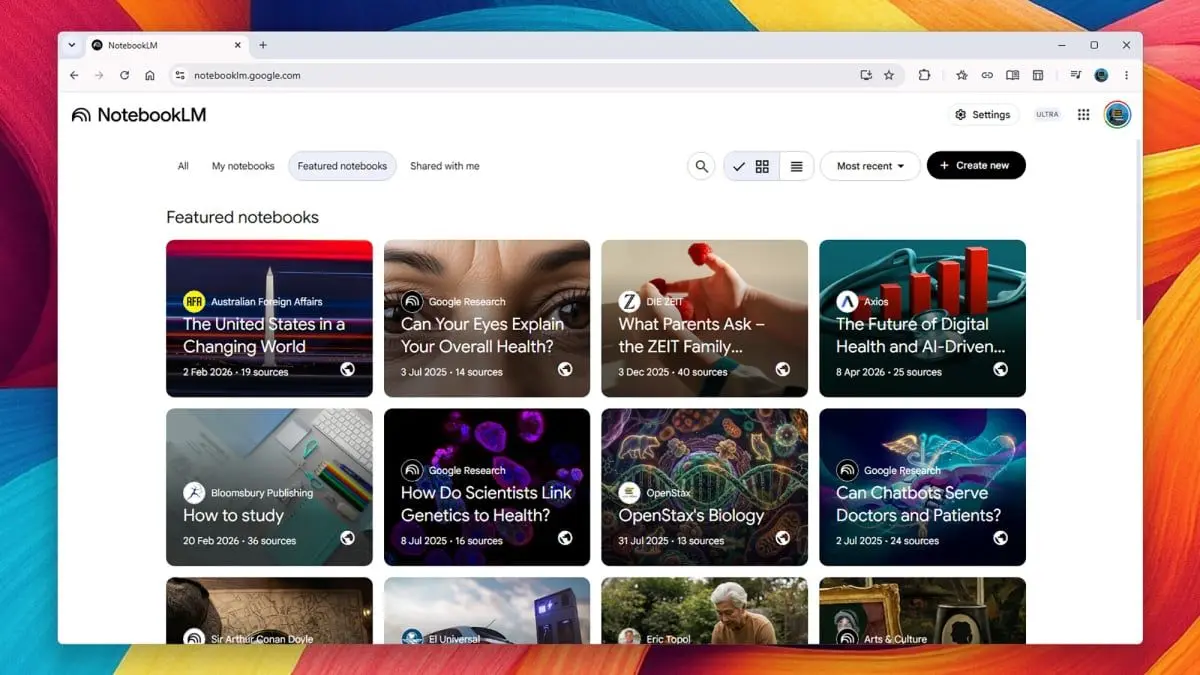
Source: Lifehacker
The update introduces new output formats including .json and Microsoft PowerPoint (.pptx) files, giving users more flexibility in how they present their research findings
2
. These features are currently available to Google AI Ultra subscribers and Workspace business customers with AI Ultra Access and AI Expanded Access, with Pro users gaining access in the coming weeks1
.Related Stories
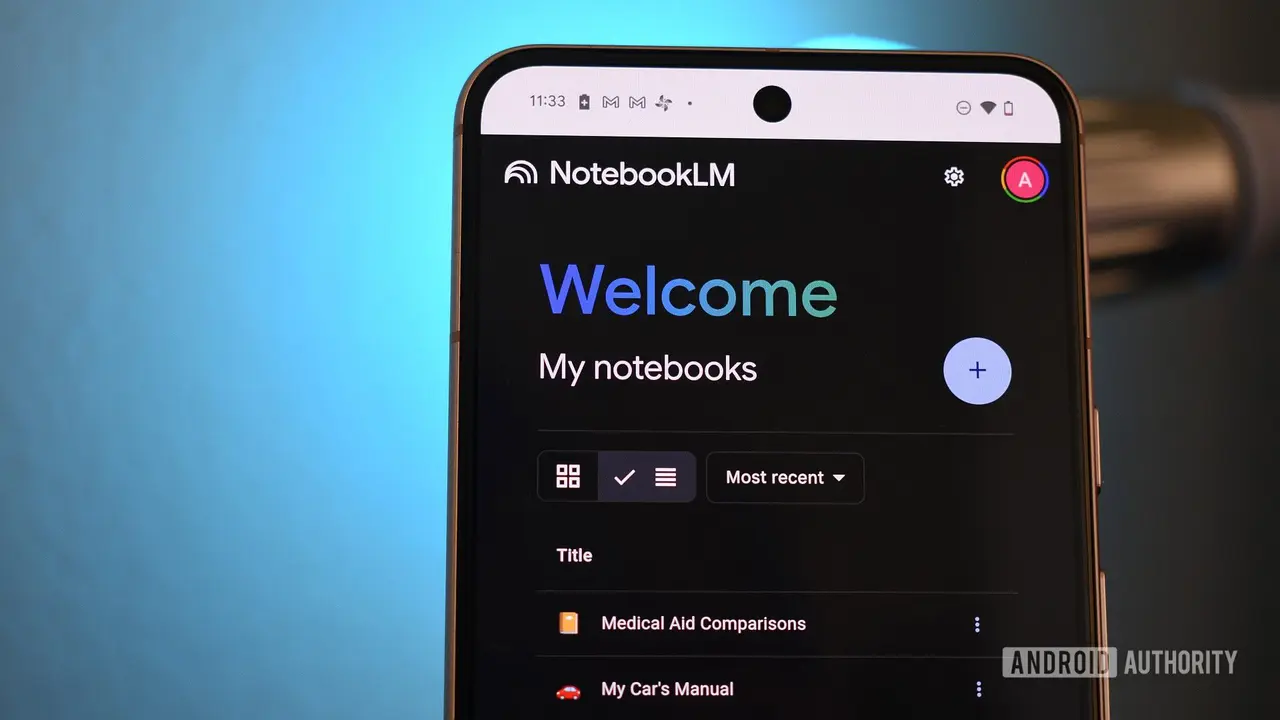
The transition to Gemini Notebook signals deeper integration across Google's product lineup. Users can already create and view notebooks within the Gemini app, with changes syncing automatically between platforms
5
. Google has announced plans to bring notebooks to AI Mode in Google Search, though no specific timeline has been provided3
.

Source: SiliconANGLE
What distinguishes this AI-powered research tool from other AI assistants is its focused approach: it only analyzes sources users provide rather than searching the broader internet
2
. Over the past three years, Google has continuously expanded capabilities, adding features like interactive podcast generation, curated notebooks, video overviews, and support for multiple file types1
. The platform's success has inspired other companies and startups to develop similar podcast generation and research tools based on source material1
.Summarized by
Navi
[3]
[5]
24 Nov 2025•Technology

15 Dec 2025•Technology

04 May 2025•Technology

1
Technology

2
Science and Research

3
Science and Research