Google's Nano Banana Pro sets new AI image generation benchmark but raises troubling questions


6 Sources
[1]
Nano Banana Pro Is the Best AI Image Tool I've Tested. It's Also Deeply Troubling
You can't talk about AI image generation without including Google's nano banana models, for good reason. The two versions, the original (Gemini 2.5 Flash Image) and the new pro (Gemini 3 Pro Image), have only been around for a couple of months, but they've quickly redefined what's possible with AI
[2]
Google's AI model is getting really good at spoofing phone photos
I'm starting to understand where Google's visual AI model gets its name, because after playing around with it for a couple of days, that's how I'd sum it up: bananas. The images it generates are so realistic it's bananas. I feel like I'm going bananas after staring at them for too long. And if I
[3]
Unpeeling Nano Banana Pro: I Put Google's Upgraded AI Image Generator to Work
Google's original Nano Banana image editing and generation tool made a big splash this year, earning our Technical Excellence award for its ability to effortlessly create entirely new images from scratch, remove unwanted objects in photos, and more. Now, the company has unveiled an upgraded
[4]
We found 8 Nano Banana Pro images that show Google is the new benchmark in AI art
Serving tech enthusiasts for over 25 years. TechSpot means tech analysis and advice you can trust. First look: Google's latest generative model comes with a ridiculous name, but it's powered by a surprisingly serious engine. Nano Banana Pro recently debuted inside Gemini bringing a major jump in
[5]

Google's new Nano Banana Pro can turn literally anything into a beautiful infographic
Today's most advanced image generators have slowly improved their text generation. OpenAI's image generator within ChatGPT handles basic text tasks fairly well. And design-centered models like Ideogram are great for simple, practical text tasks like creating video thumbnails. This week, though,
[6]

Nano Banana: The #1 AI Image Editor Dominating 2025
Nano Banana has taken the AI image editing world by storm. Developed by Google DeepMind, this revolutionary model has claimed the top spot on LMArena with over 2.5 million votes -- far surpassing competitors like Flux Kontext. But what makes Nano Banana so special, and why are creators calling it a
Share
Copy Link
Google's latest AI image tool, Nano Banana Pro, generates ultrarealistic images with legible text that blur the line between real and artificial. Multiple reviews praise it as the best generative AI image model tested, but experts warn the technology makes misinformation easier to spread and AI-generated content harder to detect.
Nano Banana Pro Redefines AI Image Generation Capabilities
Google AI has released Nano Banana Pro, an upgraded version of its Gemini-powered image generation tool that's earning recognition as the best AI image tool experts have tested to date. The generative AI image model, which uses Gemini 3 Pro technology compared to the original's Gemini 2.5 Flash, delivers a significant leap in quality that has industry observers declaring Google the new benchmark in AI art
4
. After months of trailing competitors like DALL-E, Midjourney, and OpenAI's offerings, sentiment in the AI community suggests Google has not only caught up but potentially taken the lead in image generation4
.
Source: Analytics Insight
The upgraded AI image generator excels at creating ultrarealistic images that mimic phone camera characteristics with unsettling accuracy. According to testing by The Verge, the images feature bright, flat exposure, generous depth of field, and slightly crunchy details that scream smartphone photography
2
. Ben Sandofsky, cofounder of iPhone camera app Halide, noted the "aggressive image sharpening you encounter on smart phone photos" and realistic texture that feels like it came from a tiny smartphone sensor2
. This capability for spoofing phone photos represents a concerning development in how AI-generated content can masquerade as authentic photography.
Source: The Verge
Flawless Text Generation Marks Industry First
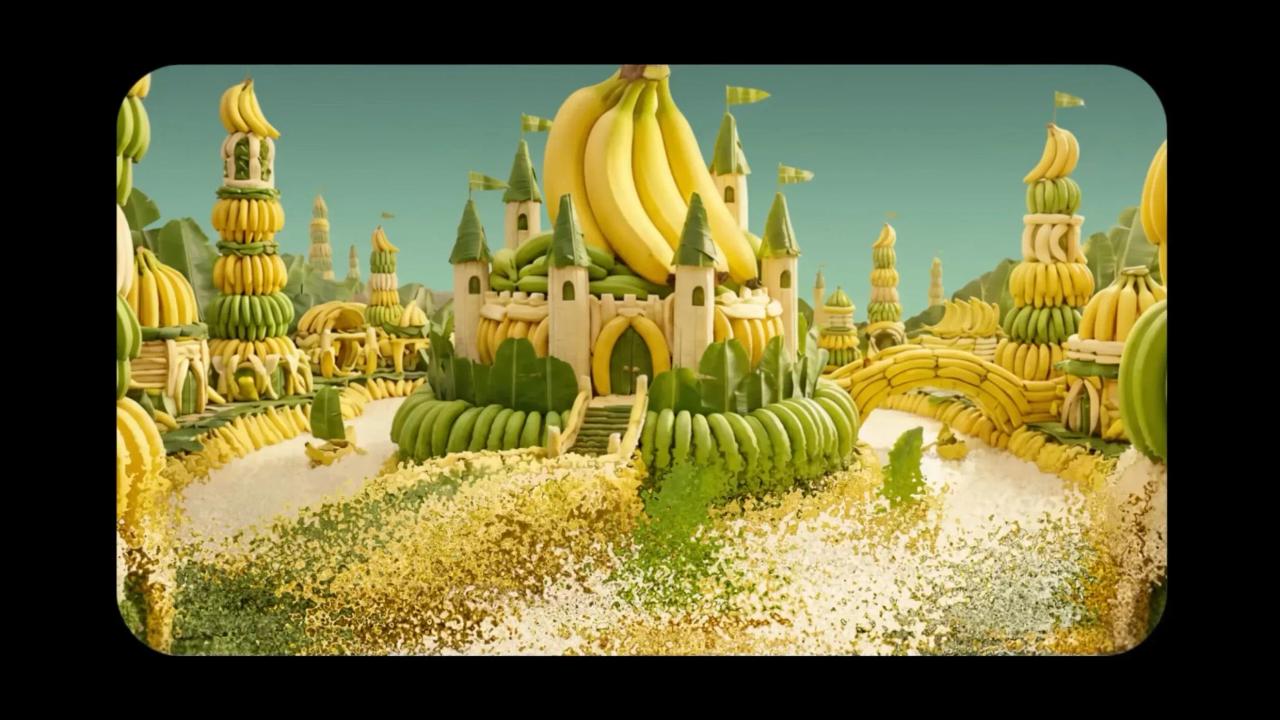
The most significant advancement in Nano Banana Pro is its ability to generate legible text within images, an industry first that addresses a longstanding weakness in AI image generation
1
. Where previous models produced garbled, nonsensical text that served as an obvious tell for AI-generated content, Nano Banana Pro renders typography handling flawlessly. PCMag's testing demonstrated this capability by creating infographics from a tree photo, with Nano Banana Pro producing perfect text while the original Nano Banana showed multiple errors3
. Fast Company declared the model "absolutely amazing at creating beautiful, informative, accurate infographics" and noted it can "turn literally anything into a professional quality infographic in a matter of seconds"5
.
Source: Fast Company
This text generation capability extends beyond simple labels. CNET's testing showed Nano Banana Pro successfully creating ESPN-style graphics with correct logos, intelligible text, and accurate team colors, even adding realistic details like TV screen reflections
1
. The model also demonstrated contextual intelligence by adding period-appropriate elements and even watermarks without explicit prompting, such as including a Northwest Multiple Listing Service watermark on a fake real estate listing2
.Enhanced Editing Controls and Multi-Image Blending
Nano Banana Pro brings substantial improvements in image editing and composition capabilities. The model can merge up to 14 reference images while retaining identifiable features from as many as five individuals for accurate multi-person compositions
4
. Face geometry, color tone, and style motifs carry over consistently from image to image, enabling cohesive sets within a single session. PCMag's testing confirmed these capabilities, successfully blending images of four video game characters with a real person, while the original Nano Banana struggled with character appearances and omitted one entirely3
.The model also offers improved aspect ratio control and higher resolution outputs. Images routinely reach approximately 2K resolution compared to the original's 720p, making outputs sharper and more detailed while reducing subtle blurring effects
3
. Users can edit specific elements like shadows, camera angles, or backgrounds while leaving the rest untouched, a significant departure from typical generative models that reimagine entire scenes with each iteration4
.Misinformation Concerns and Ethical Dilemmas Mount
The same capabilities that make Nano Banana Pro impressive also make it deeply troubling for experts tracking AI's societal impact. CNET's review concluded that while Nano Banana Pro is "the best AI image generation tool CNET has ever tested, hands down," that "isn't necessarily a good thing"
1
. Testing revealed how easily the model creates ultrarealistic images and infographics containing wrong information. When asked to generate graphics about the iPhone 17, Gemini mixed up features between base and pro models and incorrectly rendered device appearances1
.The Verge's assessment was equally stark: "If AI is getting this good at imitating the things that signal a photo is real, then guys: We are cooked"
2
. The publication noted that AI tells are becoming harder to spot, with Nano Banana Pro excelling at mimicking small details that make images seem authentic. For many generated images, reviewers stated they wouldn't immediately identify them as AI-created when scrolling through social media2
.Related Stories

Watermarking Efforts Face Practical Limitations
Google has implemented SynthID, an invisible watermark embedded in all AI-generated images from Nano Banana Pro
1
4
. However, the detector technology in Gemini remains too limited to make a meaningful difference in identifying AI-generated content at scale1
. Google also removes the sparkle-shaped visible watermark from some images, further complicating detection efforts1
. While watermarking represents an important safeguard as image quality improves, current implementation falls short of addressing the fundamental challenge: distinguishing generated photos from real life.Access Through Gemini With Usage Limitations
Nano Banana Pro operates within the Gemini chatbot app, website, and Google Search's AI mode. While available to both free and paid users within Gemini itself, Nano Banana Pro remains exclusive to paid subscribers in Google Search
3
. Paid users receive priority access, while Google restricts the number of generations free users can perform, reverting them to the original Nano Banana upon reaching the cap3
. Users can engage the model by selecting "Thinking with 3 Pro" from the model selector, using natural language prompts to create or edit images3
.Elijah Lawal, global communications manager for the Gemini app, confirmed that Nano Banana doesn't use Google Photos for training and hasn't been specifically steered toward producing a phone camera aesthetic
2
. The model's ability to connect to Google Search for text-based information retrieval helps it add contextually appropriate details without explicit prompting, though this capability remains limited to text search rather than image search2
. The model uses prompt reasoning to understand assignments and incorporate relevant historical or contextual elements automatically, though DeepMind acknowledges that AI hallucinations can still occur2
.References
Summarized by

Navi
Related Stories
Google Launches Nano Banana Pro: Professional-Grade AI Image Generator with 4K Resolution and Enhanced Text Rendering
20 Nov 2025•Technology
Google releases Nano Banana 2 AI image model with Pro quality at Flash speed
26 Feb 2026•Technology
Google DeepMind Unveils 'Nano Banana' AI Model, Revolutionizing Image Editing in Gemini
27 Aug 2025•Technology

Recent Highlights



Recent Highlights
Today's Top Stories



Don’t drown in AI news. We cut through the noise - filtering, ranking and summarizing the most important AI news, breakthroughs and research daily. Follow topics that matter to you and stay ahead.


