Google Unveils SynthID Text: A Breakthrough in AI-Generated Content Watermarking


24 Sources
[1]
Google Devises Watermarking Solution for its AI-Generated Text
Researchers from Google's DeepMind HQ in Britain have invented a new, seamless way to label AI-generated text. Publishing their findings in Nature magazine, the researchers claim it can help identify when writing was first generated by Google's own AI model - Gemini. While it gives some industries
[2]
What is Google's Watermark for AI-Generated Text?
Google is advancing in AI technology and the digital space by developing a watermark specifically for AI-generated written content. This is due to the company's recent efforts to maintain transparency while ensuring users can easily identify whether a human or a machine produced the content they
[3]
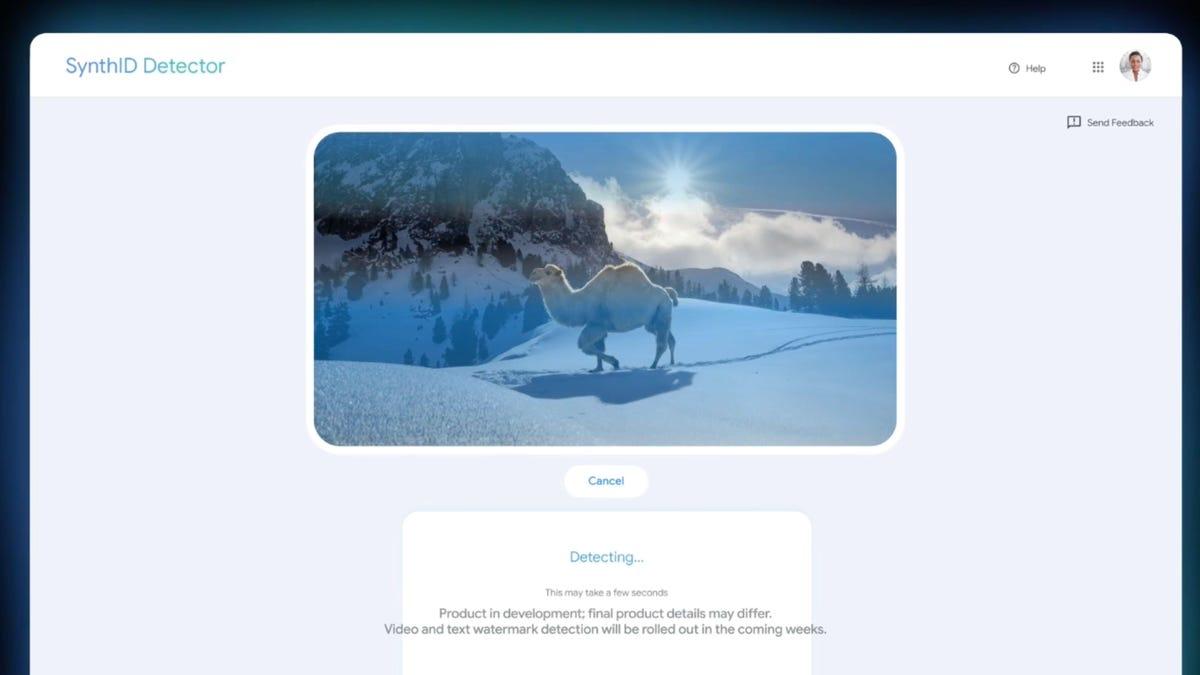
Google unveils invisible 'watermark' for AI-generated text
Researchers at Google DeepMind in London have devised a 'watermark' to invisibly label text that is generated by artificial intelligence (AI) -- and deployed it to millions of chatbot users. The watermark, reported in Nature on 23 October, is not the first to be made for AI-generated text. Nor is
[4]
Google releases tech to watermark AI-generated text
Google is making SynthID Text, its technology that lets developers watermark and detect text generated by generative AI models, generally available. SynthID Text can be downloaded from the AI platform Hugging Face and Google's updated Responsible GenAI Toolkit. "Today, we're open sourcing our
[5]
Google's new AI tool lets developers watermark and detect text generated by AI models
Google is going one step further to protect us from AI-generated content Google has shared details of SynthID Text, a new tool designed to watermark and detect AI-generated text, which has been released as an open-source. Available via Hugging Face, developers and businesses can start using
[6]

Google makes its AI watermarking tool available to all
Developed by Google Deepmind, the algorithm subtly changes the AI generation to make it detectable. Google's technology to watermark text generated by artificial intelligence (AI) is now accessible to all. SynthID is a tool developed by Google Deepmind, the firm's laboratory dedicated to AI and
[7]

Google Open-sources Tech to Watermark AI-generated Text
Disclaimer: This content generated by AI & may have errors or hallucinations. Edit before use. Read our Terms of use Google has announced on X (formerly Twitter) that its SynthID text watermarking technology, designed to help identify AI-generated text, is now available as an open-source tool
[8]

Google Is Now Watermarking Its AI-Generated Text
Eliza Strickland is a Senior Editor at IEEE Spectrum covering AI and biomedical engineering. The chatbot revolution has left our world awash in AI-generated text: It has infiltrated our news feeds, term papers, and inboxes. It's so absurdly abundant that industries have sprung up to provide moves
[9]

Google tool makes AI-generated writing easily detectable
Google DeepMind has been using its AI watermarking method on Gemini chatbot responses for months - and now it's making the tool available to any AI developer Google has been using artificial intelligence watermarking to automatically identify text generated by the company's Gemini chatbot, making
[10]

Google DeepMind open sources its AI text watermarking tool
Why it matters: AI-generated text is fueling plagiarism, copyright violations and misinformation, prompting calls for a way to determine whether material was created by a human or an algorithm. The big picture: A range of tools exist for watermarking images, which contain ample information --
[11]

Google DeepMind is making its AI text watermark open source
Large language models work by breaking down language into "tokens" and then predicting which token is most likely to follow the other. Tokens can be a single character, word, or part of a phrase, and each one gets a percentage score for how likely it is to be the appropriate next word in a
[11]
Google DeepMind is making its AI text watermark open source
Large language models work by breaking down language into "tokens" and then predicting which token is most likely to follow the other. Tokens can be a single character, word, or part of a phrase, and each one gets a percentage score for how likely it is to be the appropriate next word in a
[13]

Google Open-Sources AI Detection, Invisible Watermarking Tool
Google has made its watermarking technology for AI-generated text, called SynthID Text, generally available through its updated Responsible Generative AI Toolkit and Hugging Face, a repository of open-source AI tools. Developers can now use SynthID Text to determine whether text has come from
[14]

Google DeepMind's AI watermarking tool is ready to take on deepfakes
Google tries a questionable new tactic to promote Gemini in Google Messages Key Takeaways SynthID helps identify content generated by Google Gemini and potentially other AI models. The tool subtly alters predictions to watermark text based on minute, measurable differences between predicted and
[15]

Google Is Open-Sourcing This Invisible AI Watermarking Technology
By open-sourcing the technology, Google aims a wider adoption of the tech Google DeepMind open-sourced a new technology to watermark AI-generated text on Wednesday. Dubbed SynthID, the artificial intelligence (AI) watermarking tool can be used across different modalities including text, images,
[16]

Google offers its AI watermarking tech as free, open source toolkit
In addition to watermarking AI-generated images, Google's open source SynthID works on text, audio, and video. Credit: Google Back in May, Google augmented its Gemini AI model with SynthID, a toolkit that embeds AI-generated content with watermarks it says are "imperceptible to humans" but can be
[17]

Google Open-Sources SynthID to Watermark AI-Generated Text
However, SynthID can currently detect output from Google's own AI models. Last year, Google DeepMind announced SynthID, a watermarking technology that can watermark and detect AI-generated content. Now, Google has open-sourced SynthID Text via the Google Responsible Generative AI Toolkit for
[18]

With This 1 Move, Google May Have Solved a Huge AI Content Problem
Google did something extra interesting: it made the watermarking tool open source, so other developers and businesses can build it into their own systems. Considering that AI tech developers are frequently accused of violating other people's intellectual property rights, Google effectively giving
[19]

Google just open-sourced its AI text detection tool for everyone
SynthID can integrate "watermarks" into AI-generated text and detect them in systems that use the same LLM setup. "PCWorld is on a journey to delve into information that resonates with readers and creates a multifaceted tapestry to convey a landscape of profound enrichment." That drivel may sound
[20]
AI watermarking must be watertight to be effective
Scientists are closing in on a tool that can reliably identify AI-generated text without affecting the user's experience. But the technology's robustness remains a challenge. Seldom has a tool or technology erupted so suddenly from the research world and into the public consciousness -- and
[21]

DeepMind and Hugging Face release SynthID to watermark LLM-generated text
Join our daily and weekly newsletters for the latest updates and exclusive content on industry-leading AI coverage. Learn More Google DeepMind and Hugging Face have just released SynthID Text, a tool for marking and detecting text generated by large language models (LLMs). SynthID Text encodes a
[22]

Sampling algorithm can 'watermark' AI-generated text to show where it came from
A tool that can watermark text generated by large language models, improving the ability for it to identify and trace synthetic content, is described in Nature this week. Large language models (LLMs) are widely used artificial intelligence (AI) tools that can generate text for chatbots, writing
[23]

Don't be fooled: Google SynthID watermarks can tag deepfakes
It was April of 2018, and a day like any other until the first text arrived asking "Have you seen this yet?!" with a link to YouTube. Seconds later, former President Barack Obama was on screen delivering a speech in which he proclaimed President Donald Trump "is a total and complete
[24]

Google's AI detection tool can now be tried by anyone | Digital Trends
Google announced via a post on X (formerly Twitter) on Wednesday that SynthID is now available to anybody who wants to try it. The authentication system for AI-generated content embeds imperceptible watermarks into generated images, video, and text, enabling users to verify whether a piece of
Share
Copy Link
Google's DeepMind researchers have developed SynthID Text, an innovative watermarking solution for AI-generated content. This technology, now open-sourced, aims to enhance transparency and detectability of AI-written text without compromising quality.

Google Introduces SynthID Text: A Game-Changer in AI Content Watermarking
In a significant development for the AI industry, researchers from Google's DeepMind have unveiled SynthID Text, an innovative watermarking solution for AI-generated content. This breakthrough, reported in Nature on October 23, 2024, marks a major step towards addressing concerns surrounding the proliferation of AI-written text
3
.How SynthID Text Works
SynthID Text operates by subtly altering the word selection process in AI-generated text. The system uses a cryptographic key to assign random scores to potential tokens (words or word parts) during the text generation process. These tokens then undergo a "tournament" of one-on-one knockouts, with the highest-scoring token being selected for use in the final text
3
.This intricate process creates an invisible watermark that can be detected using the same cryptographic code, making it easier to identify AI-generated content without compromising the quality or readability of the text
3
4
.Deployment and Accessibility
Google has already integrated SynthID Text into its Gemini large language model (LLM), with impressive results. In a massive trial involving 20 million responses, users rated watermarked texts as being of equal quality to unwatermarked ones
3
.The company has now made SynthID Text open-source, allowing developers and businesses to freely access and implement the technology. It is available for download from the AI platform Hugging Face and Google's updated Responsible GenAI Toolkit
4
5
.Implications and Potential Impact
The release of SynthID Text comes at a crucial time, as experts predict that AI could generate more than 50% of internet content by 2030
2
. This technology has several potential applications:- Combating misinformation and fake news
- Deterring academic cheating
- Preventing the degradation of future AI models by avoiding training on AI-generated content
- Ensuring proper attribution of AI-generated text
3
5
Related Stories



Limitations and Challenges
While promising, SynthID Text is not without limitations:
- Less effective with short texts, translations, or responses to factual questions
- Vulnerable to determined removal attempts ("scrubbing") or false application ("spoofing")
- Reduced effectiveness when text is thoroughly rewritten
3
4
5
Industry and Policy Implications
The introduction of SynthID Text raises important questions about the future of AI content detection:
- Will other AI developers adopt similar watermarking techniques?
- How will different watermarking systems interoperate?
- Will legal frameworks eventually mandate the use of such technologies?
5
As AI-generated content becomes increasingly prevalent, the race to develop effective watermarking solutions intensifies. Google's open-sourcing of SynthID Text represents a significant step towards creating a more transparent and accountable AI ecosystem.
References
Summarized by

Navi
[1]
[2]
[4]
Related Stories
Recent Highlights
1
Meta Unveils Muse Wonder Frontier AI Models, Claims Performance Matching OpenAI and Anthropic
Technology

2
IMF Report Warns AI Market Correction Could Spark Global Financial Crisis With $1.4T at Risk
Business and Economy

3
Eight States Sue OpenAI Over ChatGPT Safety Concerns and Unlawful Collection of Children's Data
Policy and Regulation

Recent Highlights
Today's Top Stories








Don’t drown in AI news. We cut through the noise - filtering, ranking and summarizing the most important AI news, breakthroughs and research daily. Follow topics that matter to you and stay ahead.


