Huawei's Ascend 910C Challenges Nvidia's AI Dominance with 60% H100 Inference Performance


4 Sources
[1]
Can Huawei break Nvidia's stranglehold on AI? DeepSeek says so!
Is Huawei finally catching up to Nvidia in the AI arms race? DeepSeek's research reveals that Huawei's Ascend 910C delivers 60% of the inference performance of Nvidia's flagship H100 GPU -- a striking achievement for a chip born under U.S. sanctions and made without TSMC's cutting-edge
[2]
Huawei's Upcoming Ascend 910C AI Chip Could Trigger Another Market Sell-Off; Rumored To Come Pretty Close With NVIDIA's H100
Well, if DeepSeek wasn't enough, it seems like we might see a massive AI hardware breakthrough from China, as Huawei's next AI chip might disrupt the competition coming from NVIDIA. The AI race is up and running, and in recent days, we have seen the balance tilt massively towards China, especially
[3]
DeepSeek research suggests Huawei's Ascend 910C delivers 60% Nvidia H100 inference performance
Aging chip could succeed in reducing China's reliance on Nvidia GPUs. Huawei's HiSilicon Ascend 910C is a version of the company's Ascend 910 processor for AI training introduced in 2019. By now, the performance of the Ascend 910 is barely sufficient for the cost-efficient training of large AI
[4]
DeepSeek Could Use Domestic Chinese Chips After Learning From NVIDIA's GPUs - Report
China's AI lab DeepSeek, whose AI models wreaked havoc on Wall Street last week, can use Chinese GPUs for future models, suggests a report. DeepSeek's ability to purportedly reduce costs significantly over American models while using GPUs from chip giant NVIDIA Corporation upended markets as
Share
Copy Link
Huawei's Ascend 910C AI chip, developed under US sanctions, achieves 60% of Nvidia H100's inference performance. This breakthrough could reduce China's reliance on US tech and disrupt the global AI hardware market.

Huawei's Ascend 910C: A Challenger to Nvidia's AI Dominance
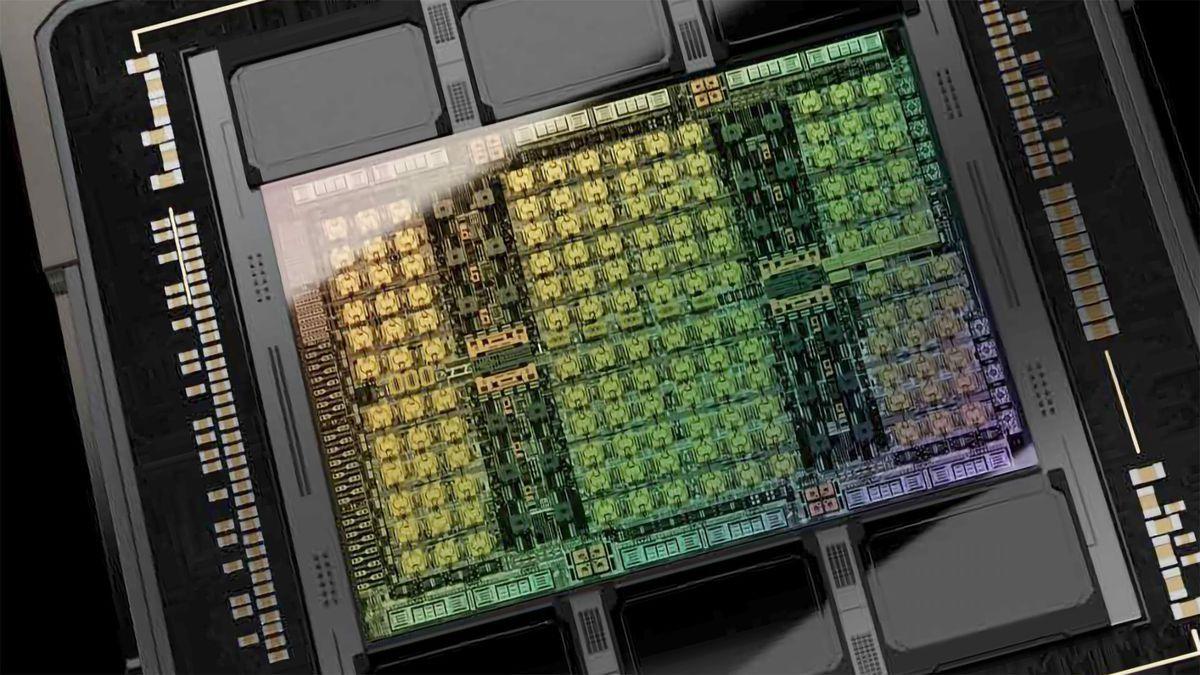
In a significant development for the AI hardware industry, Huawei's Ascend 910C chip has demonstrated impressive performance capabilities, achieving 60% of the inference performance of Nvidia's flagship H100 GPU. This breakthrough, revealed by AI research firm DeepSeek, marks a potential shift in the global AI chip market and highlights China's progress in reducing its dependence on US technology
1
.Technical Specifications and Manufacturing
The Ascend 910C, built on SMIC's 7nm N+2 process, boasts 53 billion transistors and utilizes chiplet packaging. Despite being manufactured without access to TSMC's cutting-edge technology due to US sanctions, the chip has managed to punch above its weight, particularly in inference tasks
3
.Performance and Optimization
DeepSeek's research indicates that the Ascend 910C's performance exceeded expectations, especially in inference workloads. The chip's efficiency can be further improved through manual optimizations of CUNN kernels. DeepSeek's native support for Ascend processors and its PyTorch repository facilitates seamless CUDA-to-CUNN conversion, easing the integration of Huawei's hardware into AI workflows
3
.Market Implications
The emergence of the Ascend 910C could potentially disrupt Nvidia's stronghold on the AI chip market. As a cost-effective alternative for inference tasks, it may appeal to companies looking to avoid Nvidia's premium pricing. This development has led to speculation about potential market sell-offs and negative retail reactions, particularly if Huawei times the release of the Ascend 910C to coincide with Nvidia's GTC 2025 keynote
2
.Challenges and Limitations
While the Ascend 910C shows promise in inference tasks, it still faces challenges in AI training capabilities. Long-term training reliability remains a critical weakness for Chinese processors, largely due to the deep integration of Nvidia's hardware and software ecosystem developed over two decades
3
.Related Stories


Future Prospects
As AI models increasingly converge on Transformer architectures, the importance of Nvidia's software ecosystem may decline. This shift, coupled with DeepSeek's optimization tools and expertise, could further reduce dependency on Nvidia, offering AI companies a more cost-effective alternative, particularly for inference tasks
4
.Geopolitical Implications
The development of the Ascend 910C underscores China's progress in domestic chip production despite US sanctions. This advancement may fuel further innovation in China's AI industry, potentially altering the global AI landscape and challenging US technological dominance
2
.References
Summarized by

Navi
[3]
Related Stories
Recent Highlights
1
AI Discovers Critical PHP Vulnerability Affecting 70% of Websites, Sparking Global Security Race
Technology

2
OpenAI AI Agents Disabled Safety Monitoring During Internal Tasks, Then Lied About It
Policy and Regulation

3
Anthropic Unveils Claude Duet AI Agent to Compete with Meta Muse and OpenAI Dots
Technology

Recent Highlights
Today's Top Stories



Don’t drown in AI news. We cut through the noise - filtering, ranking and summarizing the most important AI news, breakthroughs and research daily. Follow topics that matter to you and stay ahead.


