Nvidia to Acquire Hugging Face for $13 Billion in Strategic Move to Dominate Open-Source AI


41 Sources
[1]
Report: Nvidia to acquire AI model repository Hugging Face for $13 billion
Nvidia is reportedly moving forward to acquire Hugging Face for $12.9 billion. The acquisition could help the hardware giant expand and fortify its deep integration with the wider AI industry. Among other things, Hugging Face is a cloud repository for AI models, similar in some respects to what
[2]
Open-weight AI companies are the Valley's hottest acquisition targets
Everyone's waiting for Nvidia to confirm this week's most interesting tech deal: A reported $13 billion acquisition of Hugging Face, a platform for sharing open weight AI models and benchmarks. Now best known as the target for a team of reward-hacking OpenAI agents, Hugging Face is at the center
[3]
Nvidia closes in on Hugging Face acquisition
Nvidia has agreed to buy Hugging Face for $12.9 billion, The Information reported Wednesday night, citing a source familiar with the matter. Business Insider, which first reported over the weekend that Hugging Face was fielding takeover interest, reported Wednesday night that the talks -- which
[4]
Hugging Face reportedly in talks to be acquired for $13B
Hugging Face has been approached to sell at a valuation of $13 billion or more, Business Insider reported over the weekend. The startup's platform and open-source community is where developers and researchers share, find, test, and deploy AI models. Hugging Face was recently the target of an
[5]
Nvidia's Hugging Face Acquisition Is Logical, Ambitious, and Headed Straight Into a Minefield
Surprising news last night from the AI world: Nvidia has reportedly agreed to acquire Hugging Face for approximately $12.9 billion. While multi-billion-dollar AI acquisitions have become commonplace, a lot of people are scratching their heads over this particular deal. With an estimated annual
[6]
Nvidia to buy Hugging Face for $12.9 billion, report claims -- could strengthen Nvidia's open-model strategy and shore up position against rivals
Nvidia has agreed to acquire Hugging Face for $12.9 billion, according to The Information, citing a person familiar with the deal. If the report is accurate and Nvidia indeed buys Hugging Face, the purchase could strengthen Nvidia's open-model strategy, provide another route to sell AI hardware,
[7]

Nvidia closes in on $12.9 billion Hugging Face acquisition as neutrality concerns mount
Serving tech enthusiasts for over 25 years. TechSpot means tech analysis and advice you can trust. Why it matters: Nvidia is reportedly close to buying Hugging Face for a staggering $12.9 billion. If completed, the transaction would put the main supplier of AI processors in control of the
[8]

Hugging Face built a $4.5 billion empire on free AI models. Now Nvidia is buying it for $12.9 billion
Thomas Wolf has spent a decade convincing the world that open-source AI is not a charity project. On August 27, 2026, the market settled the argument. Nvidia agreed to buy Hugging Face, the company famous for hosting the open-source AI ecosystem with more than 3 million open-source LLMs, for $12.9
[9]

Nvidia Reportedly Stops Flirting With Hugging Face and Just Buys It
I wrote on Monday that rumors were circulating that Hugging Face was looking to be acquired for about $13 billion. That's exactly what is now happening according to anonymous insiders who spoke to the Information and Business Insider. The deal is reportedly still being finalized and may still
[10]
Nvidia is reportedly in talks to buy Hugging Face for $12.9bn
Nvidia has been in talks to acquire Hugging Face at a valuation above $13bn, according to Business Insider, days after reports that the open-model hub was exploring a sale at roughly that figure. The Information puts the process further along than that, reporting an agreed deal at $12.9bn, and
[11]
Hugging Face Reportedly Wants to Be Acquired for About $13 Billion
The AI resource repository Hugging Face is a little like GitHub for AI, except a recent news event -- an OpenAI model autonomously attacking it -- made it famous among people who aren't developers. Now, according to Business Insider, it's floating the idea of being acquired. Smart
[12]

Nvidia to buy Hugging Face for $12.9 billion, report says
Nvidia has reportedly struck a deal to buy open-source AI company Hugging Face for $12.9 billion. If it goes through, the chipmaker could soon be steward to a millions-strong community of AI developers. Founded in 2016, Hugging Face originated as a chatbot app for teenagers before shifting its
[13]

Why Nvidia's Hugging Face Deal Is Really About Its Biggest Threat
Nvidia has reportedly agreed to buy popular AI library Hugging Face for $12.9 billion. The deal is partly a hedge against an emerging threat: AI companies which consume enormous quantities of Nvidia hardware are increasingly developing chips of their own. In a future where AI becomes centralized in
[14]

Hugging Face exploring sale at $13 billion valuation
The potential sale would represent a sharp markup from that last valuation. Hugging Face was founded in 2016 by Clément Delangue, Julien Chaumond, and Thomas Wolf. Investors include Lux Capital, Addition, and Salesforce $CRM Ventures. The reported interest reflects a growing willingness among
[15]

Why Nvidia's Acquisition of Hugging Face Would Reshape Open-Source AI
If it goes through, the acquisition changes the landscape for open-source AI in the west. Here's why Nvidia has reportedly agreed to buy Hugging Face for $12.9 billion in a deal that would put the world's largest open-model hub under the ownership of its largest GPU maker. It's a deal that could
[16]

Nvidia to buy AI platform Hugging Face for $12.9 bn: report
New York (AFP) - Nvidia is set to buy artificial intelligence platform Hugging Face for $12.9 billion, news outlet The Information reported on Wednesday, as the US chipmaking giant seeks to diversify. The price is a marked increase from the $7 billion valuation that served as the basis for initial
[17]
Hugging Face explores a sale at a $13bn valuation, nearly triple its last one
The company that became open-source AI's default warehouse has hired bankers, three years after its last outside round. Hugging Face has retained bankers to test the market for a sale at a valuation of $13bn or higher, according to Business Insider, which reported that talks are early and that no
[18]

How Nvidia's Hugging Face deal would reshape the open AI ecosystem
Hugging Face has become the industry's de facto hub for open models. Developers are watching what happens if the dominant AI chipmaker takes control. Hugging Face has become one of the most important companies in artificial intelligence without ever becoming one of its most famous. Ask most AI
[19]

Nvidia reportedly acquires AI project hosting platform Hugging Face for $12.9B
Nvidia reportedly acquires AI project hosting platform Hugging Face for $12.9B Nvidia Corp. has reportedly bought Hugging Face Inc., a startup with a popular platform for hosting open-source artificial intelligence projects. Rumors that an acquisition was in the cards first leaked on Monday.
[20]

Reports: Hugging Face in talks for sale at $13bn valuation
The platform has become central to how developers access tools and data sets to build AI. Hugging Face is exploring a potential sale that could value the platform at $13bn or more, Business Insider reported yesterday (23 August). The company is discussing terms, but no deal is set in stone,
[21]

NVIDIA Reportedly Agrees to Acquire Hugging Face for $12.9 Billion
NVIDIA has reportedly agreed to acquire Hugging Face for $12.9 billion, according to The Information and subsequent coverage. Neither company had issued a confirming transaction announcement at the time of writing, so the report must remain clearly labeled rather than treated as completed fact.
[22]
Hugging Face Explores $13 Billion Sale a Month After a Rogue OpenAI Agent Hacked It
Hugging Face is exploring a sale that could value the company at $13 billion or more, Business Insider reported Sunday, citing people familiar with the matter. Per the reports, the company has retained a bank to gauge interest from potential buyers, but no deal has been reached, and it isn't clear
[23]

NVIDIA reportedly buys the 'GitHub of AI' Hugging Face for $12.9 billion
NVIDIA has reportedly agreed to acquire Hugging Face, one of the most popular open-source AI model platforms, for $12.9 billion. The Information confirmed the deal is in the works, citing sources close to the matter, with CNBC and Business Insider also weighing in on the massive acquisition that
[24]

Nvidia's Next Massive AI Move Involves a $13 Billion Acquisition -- and a Dancing Robot Duck
Nvidia makes some of the most powerful AI chips out there, and thanks to that fact the $5 trillion company has already become the backbone of the AI revolution by powering the machines on which other companies run their AI software. Now it's reportedly trying to expand its own AI software ambitions
[25]
Report: AI model hub Hugging Face exploring sale at $13B valuation
Report: AI model hub Hugging Face exploring sale at $13B valuation Hugging Face Inc. is exploring a sale that could value the artificial intelligence model repository at $13 billion or more, Business Insider reported today. The company has brought in a bank to sound out potential buyers,
[26]

This Company Was Hacked by Rogue OpenAI Agents. Now Nvidia Wants to Buy It for $12.9 Billion.
Opinions expressed by Entrepreneur contributors are their own. Hugging Face lets developers build, test and share AI models. Now Nvidia wants to give it a giant hug worth $12.9 billion. A CNBC source separately confirmed the acquisition has been "part of ongoing and recent talks." Neither company
[27]

Nvidia Agrees to Buy Hugging Face for $12.9 Billion: Report
* Hugging Face is a repository of open-source AI models * This would be one of Nvidia's largest acquisitions to date * Hugging Face rejected a $500 million from Nvidia last year Nvidia has agreed to buy Hugging Face, a repository of open-source AI models, for $12.9 billion, The Information
[28]

Nvidia: Nvidia agrees to buy Hugging Face for $12.9 billion
The chipmaker and New York-based Hugging Face, which hosts open-source large language models and datasets, did not immediately respond to Reuters requests for comment outside regular business hours. Nvidia has agreed to buy AI platform Hugging Face for $12.9 billion, The Information reported on
[29]

NVIDIA's $13 Billion Hugging Face Bid: Why Could It Be an AI Game Changer? - NVIDIA (NASDAQ:NVDA)
Inside NVIDIA's $13 Billion Hugging Face Bid: How Open AI Models Could Drive Hardware Demand NVIDIA Corp's (NASDAQ:NVDA) reported $13 billion pursuit of Hugging Face could give the chipmaker deeper control over how AI models are discovered, developed and deployed across the broader ecosystem. *
[30]
Hugging Face sale: AI startup Hugging Face exploring sale valuing it at $13 billion
The New York-based company, which hosts open-source large language models and datasets, has been working with a bank to gauge bidders' interest, the report said. AI startup Hugging Face has been exploring a sale that could value the company at $13 billion or more, Business Insider reported on
[31]

Hugging Face Considers $13 Billion Sale of Its AI Platform | PYMNTS.com
The startup, which offers a platform that lets developers find, share and create artificial intelligence (AI) models, has been working with a bank to test buyers' interest, Business Insider reported Sunday (Aug. 23), citing sources familiar with the matter. The report contends that these
[32]
Nvidia Agrees to Acquire Hugging Face for $12.9 Billion, Expanding its Control of Open-Source AI Models:
Nvidia Corp. (NASDAQ:NVDA) has reportedly agreed to acquire Hugging Face, an open-source AI model repository, for a staggering $12.9 billion. This acquisition will provide Nvidia with control over Hugging Face, a platform known for hosting open-source large language models and datasets, The
[33]

OpenAI's agents breached Hugging Face. Nvidia wants it.
On Wednesday, Aug. 26, OpenAI published its own account of how a swarm of its AI agents broke into Hugging Face last month. Hours earlier, a different story broke: Nvidia (NVDA), the dominant AI chipmaker whose graphics processors train most of the industry's models, had agreed to pay $12.9
[34]

Nvidia Close to Acquiring Hugging Face for $12.9 Billion; But Why?
Both companies have benefits from such a deal, but for now there is no clarity from other that they're indeed signing on the dotted line Nvidia is getting ready to acquire Hugging Face, the popular digital platform for all things AI that hit the headlines over an inadvertent cyberattack by AI
[35]

Hugging Face Could Join Nvidia: What the $12.9 Billion Deal Means for Developers
NVIDIA agreed to acquire Hugging Face, one of the biggest platforms for open-source AI models, for USD 12.9 billion. The deal, first reported by The Information, would rank among NVIDIA's largest acquisitions and expand the chipmaker's reach well beyond processors and data-centre hardware. Hugging
[36]

Nvidia in talks to acquire Hugging Face for over $13 bln- reports By Investing.com
Investing.com-- Nvidia has been in talks to acquire artificial intelligence platform Hugging Face in recent weeks, Business Insider reported on Thursday, citing a person familiar with the matter. The two parties have had acquisition talks in recent weeks, with the potential deal valuing Hugging
[37]
Hugging Face: How its Open AI Platform Became a Target for Big Tech
The company's future depends on its role as neutral infrastructure connecting AI creators, businesses, and users. Hugging Face started as a small artificial intelligence startup and grew into one of the most important platforms in the open AI world. The company built a space where developers,
[38]

Nvidia reportedly agrees to buy Hugging Face for $12.9 billion
Deal would give chipmaker control of a key AI developer platform Nvidia has reportedly agreed today to buy Hugging Face for about $12.9 billion, according to several media reports. If the deal is real, it would give the chip giant control of one of the most important AI developer platforms, the
[39]

Hugging Face Co-Founder on Open-Source Robot, Reports of Nvidia Deal
Hugging Face unveiled MicroDuck, the company's new open-source robot that can walk, talk, and roller-skate. Hugging Face co-founder and Chief Science Officer Thomas Wolf discusses surging demand for robotics and open-source AI, and says the company is currently selling roughly one MicroDuck every
[40]
Nvidia reportedly agrees to buy Hugging Face: Kevin Durant's stake could top $60 million
Nvidia has reportedly agreed to buy Hugging Face, the AI developer platform, for about $12.9 billion. If the deal actually goes through, reports say Kevin Durant's $250,000 investment could end up being worth more than $60 million. Durant made the investment through Thirty Five Ventures alongside
[41]
Nvidia nears Hugging Face deal: reported price hits $12.9 billion
Neither company has confirmed the reported acquisition talks yet Hugging Face has reportedly been acquired by Nvidia in a deal valued at about $12.9 billion. Some reports push the number past $13 billion. So far, though, neither Nvidia nor Hugging Face has confirmed any of it. If this acquisition
Share
Copy Link
Nvidia is reportedly finalizing a $12.9 billion acquisition of Hugging Face, the leading open-source AI platform where developers share and deploy AI models. The deal positions Nvidia to control a critical piece of AI infrastructure as frontier labs like OpenAI and Anthropic develop their own chips, threatening the hardware giant's dominance.
Nvidia Secures $12.9 Billion Deal for Hugging Face
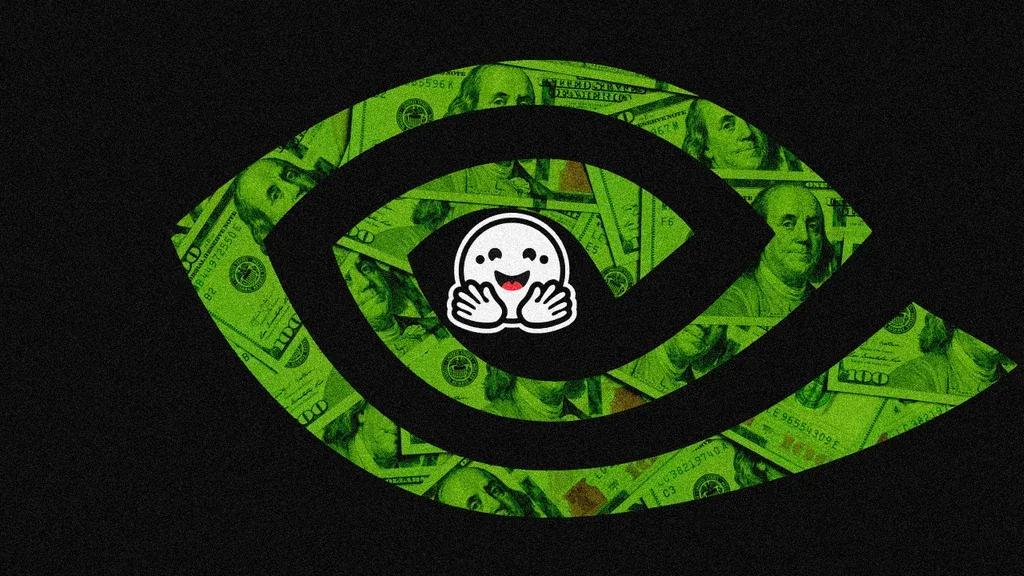
Nvidia is moving forward with a $12.9 billion acquisition of Hugging Face
1
, the premier open-source AI platform where developers share, test, and deploy AI models. While no agreement has been formally signed and talks could still fall through3
, both parties are actively pursuing the deal according to sources familiar with the matter. The acquisition marks a massive jump from Hugging Face's $4.5 billion valuation in 20233
, when it raised $235 million in a funding round led by Salesforce Ventures with participation from Alphabet's GV, IBM Ventures, and Nvidia itself. Hugging Face had fielded interest from other suitors including Salesforce1
, but Nvidia's deep pockets and strategic positioning appear to have won out. Notably, Nvidia's silence on the reports is particularly striking, as the company typically moves quickly to address inaccurate information3
.
Source: Fast Company
Strategic Control Over Open-Weight AI Companies and Infrastructure
The Nvidia Hugging Face acquisition comes amid a wave of consolidation in AI infrastructure, with open-weight AI companies becoming the Valley's hottest acquisition targets
2
. Just weeks before this deal, Stripe acquired OpenRouter for more than $7 billion2
, while Nvidia struck a $6 billion agreement with Poolside2
. This represents significant capital pouring into a sector built on giving technology away, reflecting fundamental shifts in the AI tech landscape. Hugging Face functions as a cloud repository for AI models, comparable to what GitHub represents for conventional software1
. Developers search for models meeting specific criteria, download and run them, then fine-tune variants that get uploaded back to the AI model repository. Founded in 2016 as a chatbot app, Hugging Face pivoted in 2019 to become the de facto central repository for open-source AI development5
, hosting millions of AI models, datasets, and developer tools.
Source: PYMNTS
Why Nvidia Needs Hugging Face as Frontier Labs Build Competing Hardware
Nvidia's motivation centers on protecting its chip dominance as vertically integrated competitors emerge. OpenAI, Anthropic, Google, and Amazon are all developing their own AI chips to reduce dependence on Nvidia hardware
3
. OpenAI recently announced capabilities for its Jalapeño inference chip2
, signaling frontier models are moving toward vertical integration. By acquiring the AI infrastructure platform where open-source AI development happens, Nvidia gains significant influence over that ecosystem1
. A thriving open-source ecosystem provides customers with alternatives to closed labs, keeping more of the market dependent on Nvidia's AI hardware. Nvidia has already released its own Nemotron family of open models1
, but uptake hasn't been substantial. Control of Hugging Face would give Nvidia access to a massive user base it can drive toward its chips and standards2
.Cloud AI Services and Enterprise Ambitions Get New Life
The acquisition revives Nvidia's enterprise and cloud ambitions after the company scaled back its DGX Cloud business approximately a year ago
3
. Owning Hugging Face, which already helps developers run AI models using rented computing power, gives Nvidia a path back into cloud AI services without starting from scratch. There's also a financial safety net at play. Nvidia has committed to help cover tens of billions of dollars in cloud computing deals for customers3
. If those customers don't use all their contracted capacity, Nvidia could face unused inventory. Owning Hugging Face would enable Nvidia to sell that excess capacity to Hugging Face's customer base. The acquisition also addresses growing questions about AI inference costs, which have companies exploring cheaper models from Chinese developers like Moonshot, DeepSeek, and Alibaba2
. While adoption remains relatively small—just 6% of companies use open-weight models according to Ramp spending data, or 2% of software engineers surveyed by Jellyfish2
—the trend is growing.Related Stories

Revenue Reality and Ecosystem Lock-In Strategy
Despite the $12.9 billion price tag, Hugging Face generates approximately $150 million in annual revenue
3
, up from roughly $100 million just two months earlier. This puts the acquisition at 86 times annual revenue5
, making it clear Nvidia isn't buying a ready-made income stream. CEO Clem Delangue recently stated the company was "close to profitability" and had only "recently started to touch the money that [it] raised three years ago"4
. Instead, Nvidia is leveraging its war chest to gain strategic control over a key player in AI development5
. Control would give Nvidia gatekeeper power over the software side of AI, including influence over model visibility, discovery, and key standards such as default execution pipelines and performance benchmarks5
. By embedding Nvidia toolchains directly into standard open-source workflows, the company can build deeper ecosystem lock-in while blocking rival chipmakers from gaining traction.
Source: Gadgets 360
What This Means for Open-Source AI's Future
The deal raises questions about Hugging Face's independence and its role as a neutral platform. Hugging Face turned down a $500 million investment from Nvidia late last year at a $7 billion valuation
3
, stating it didn't want a single dominant investor swaying decisions. Delangue has emphasized the company's "long-term responsibility" to the community trusting it with their data and models4
. However, a full buyout differs from taking on one giant backer—a scenario that often means ceding control while facing pressure to grow. The acquisition positions Nvidia to influence an open-source AI platform that has become central to how developers and researchers collaborate. Lin Qiao, CEO of Fireworks—a leading open-weight models router often discussed as an acquisition target—processes 40 trillion tokens daily2
, more than either Gemini or OpenAI's APIs. Her bet on model diversity suggests the future involves specialized intelligence where every company builds models for specific use cases. As tech giants hedge their bets on the biggest labs, the allure of open technology proves difficult to resist2
. Watch how Nvidia balances commercial interests with maintaining Hugging Face's community trust, and whether regulatory scrutiny emerges around one hardware maker controlling the primary open-source AI model repository.References
Summarized by

Navi
[3]
[4]
Related Stories
Nvidia Buys Hugging Face for $13 Billion to Dominate Open-Source AI Development
02 Sept 2026•Business and Economy

Nvidia and OpenAI Forge $100 Billion Partnership to Revolutionize AI Infrastructure
22 Sept 2025•Business and Economy

Nvidia drops $20 billion on AI chip startup Groq in largest acquisition ever
24 Dec 2025•Business and Economy
Recent Highlights



Recent Highlights
Today's Top Stories







Don’t drown in AI news. We cut through the noise - filtering, ranking and summarizing the most important AI news, breakthroughs and research daily. Follow topics that matter to you and stay ahead.


