India launches SAHI and BODH initiatives to advance safe AI in healthcare at AI Impact Summit


10 Sources
[1]
JP Nadda launches SAHI and BODH initiatives at AI India Summit to promote safe AI in healthcare
New Delhi: Interoperable systems have been enabled across platforms and large-scale, consent-based health-data frameworks are being developed to empower citizens while ensuring data privacy and security, Union Health Minister J P Nadda said on Tuesday. He made the remarks while launching two
[2]
India represents remarkable opportunity in AI transformation in health: Royal Philips CEO
Jakobs said globally healthcare systems, including in India are facing unprecedented pressure due to rising demand, growing complexity, stretched workforces and this pressure would have accelerated the adoption of data and AI-driven innovations. A shift has already begun in that direction for
[3]
Union Health Ministry Leads AI in Public Health Dialogue at India AI Impact Summit 2026
The Government of India is hosting the India AI Impact Summit 2026 from 16th to 20th February 2026 at Bharat Mandapam, New Delhi, marking the first-ever global AI summit to be held in the Global South. The Summit brings together global leaders, policymakers, industry experts, academia, and
[4]
What Do SAHI and BODH Initiatives Mean For AI Use In Healthcare?
The Ministry of Health and Family Welfare (MoHFW) launched two artificial intelligence-related initiatives for the healthcare sector at the India AI Impact Summit 2026 on February 17, namely: The SAHI strategy document aims to set a vision for adopting AI in a way that is safe, ethical,
[5]
Niti Aayog member flags AI as key to healthcare overhaul in India
Artificial Intelligence offers a significant chance to reshape India's healthcare system. It can speed up progress towards universal health coverage. AI integration with digital health infrastructure will improve service delivery and health outcomes. This technology can enhance primary care, aid
[6]
India AI Impact Summit 2026: Centre Sets AI Healthcare Guardrails with SAHI, BODH Rollout
AI is widely used in diagnostic imaging, administrative automation, and patient monitoring. help healthcare providers spend less time on administrative tasks and more time providing direct, in-person patient care. According to authorities, BODH will evaluate systems for accuracy, bias,
[7]
India AI Impact Summit 2026 Day 2: AI-powered healthcare drives speed, scale and affordability
If Day 1 of the India AI Impact Summit 2026 established the architecture of governance and cooperation, Day 2 has turned decisively toward application, and nowhere is that shift more visible than in healthcare. At Bharat Mandapam today, conversations around artificial intelligence are focusing on
[8]
AI can address health inequities, but cannot replace human touch: Union MoS Health Anupriya Patel
New Delhi: Union Minister of State for Health and Family Welfare Anupriya Patel highlighted the transformative role of artificial intelligence (AI) in healthcare on Tuesday. Speaking at the AI Impact Summit in the national capital, Patel asserted that India's governance model positions AI as an
[9]
AI should reduce burden on our health care workforce: MoHFW secretary
The integration of AI into India's healthcare framework is poised to revolutionise service delivery by bridging critical gaps and reducing the burden on the medical workforce. A core objective of the national AI strategy is to support rather than replace human intervention. The integration of
[10]

India AI Impact Summit 2026: SAHI, BODH and latest in Indian AI healthcare
The India AI Impact Summit 2026 at Bharat Mandapam has marked a transition from experimental AI pilots to a unified national framework. While the tech industry often obsesses over general-purpose models, this summit has pivoted the conversation toward "sovereign health intelligence." The
Share
Copy Link
Union Health Minister JP Nadda unveiled two pioneering digital health initiatives—SAHI and BODH—at the India AI Impact Summit 2026 in New Delhi. The launch marks a significant step toward safe, ethical AI deployment in India's healthcare ecosystem. SAHI provides a governance framework for responsible AI use, while BODH offers a platform for testing and validating AI solutions before large-scale deployment.
India Unveils Framework for Safe and Ethical AI in Healthcare
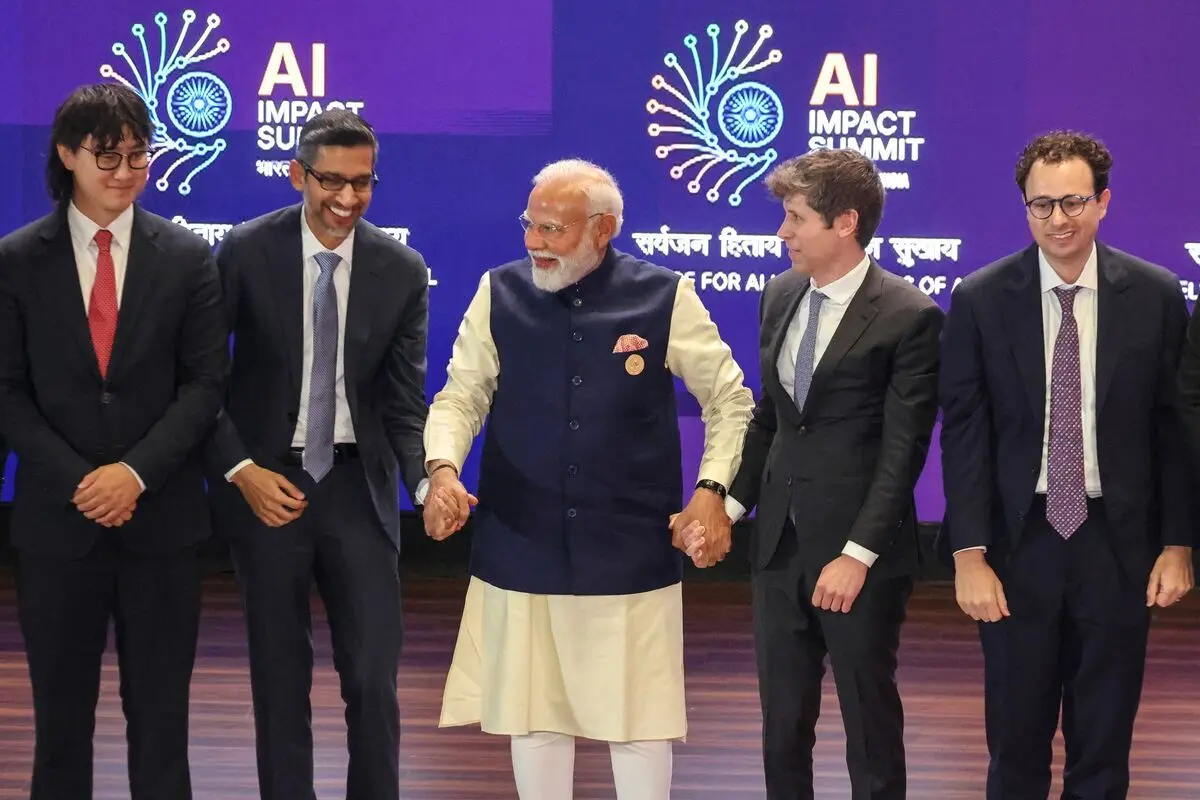
Union Health Minister JP Nadda launched two groundbreaking digital health initiatives at the India AI Impact Summit 2026 held at Bharat Mandapam in New Delhi. The SAHI and BODH initiatives represent India's commitment to advancing safe and ethical AI deployment across its healthcare ecosystem
1
. The India AI Impact Summit, taking place from February 16 to 20, 2026, marks the first-ever global AI summit hosted in the Global South, bringing together policymakers, industry experts, and innovators to explore AI's transformative potential3
.
Source: Digit
SAHI: A Governance Framework for Responsible AI Transformation in Healthcare
The Secure AI for Health Initiative (SAHI) establishes a comprehensive governance framework and policy compass for AI in healthcare. Nadda described SAHI as more than a technology strategy, emphasizing its role in guiding India toward ethical, transparent, and accountable AI use
1
. The strategy document addresses AI applications ranging from low-risk operations like record-keeping to high-impact uses influencing clinical decision-making, diagnosis, treatment, and patient triage4
. SAHI provides 32 specific recommendations across five pillars, ensuring that liability is appropriately allocated among developers, deployers, and users based on technical and clinical considerations assessed case-by-case4
. The Union Health Ministry emphasized that the Digital Personal Data Protection Act provides the legal basis for personal data use, while the National Health Authority's Health Data Management Policy guides healthcare-specific applications4
.
Source: ET
BODH Platform Enables Rigorous Testing of AI-Driven Healthcare Solutions
The Benchmarking Open Data Platform for Health AI (BODH) provides a structured mechanism for testing and validating AI solutions before deployment at scale. Manindra Agrawal, Director of IIT Kanpur, explained that BODH collects and secures medical data, allowing developers to train models on-site without direct access to sensitive information
4
. National Health Authority CEO Sunil Kumar Barnwal stated that BODH addresses the challenge of AI providers claiming 98% or 99% efficacy by enabling trustworthy third-party evaluation against real-world healthcare data4
. Union Health Secretary Punya Salila Srivastava emphasized that BODH ensures AI tools used by clinicians are safe, reliable, and validated before deployment, with trust, safety, and accountability remaining central to India's health-AI journey1
.Building on a Decade of Digital Health Infrastructure
Nadda emphasized that AI thrives on strong digital infrastructure and high-quality data, noting that India began laying digital foundations over 10 years ago. The government launched the Digital India programme in 2015 under Prime Minister Narendra Modi's leadership to transform the country into a digitally-empowered society
1
. The National Health Policy 2017 envisioned creating a comprehensive digital health ecosystem that is interoperable, inclusive, and scalable1
. The Ayushman Bharat Digital Mission, launched in 2020, has evolved into robust digital public infrastructure for health, with over 859 million ABHA accounts linked to more than 878 million health records3
. E-Sanjeevani, powered by AI-assisted Clinical Decision Support Systems, has enabled over 449 million teleconsultations through more than 2.2 lakh registered healthcare providers, making it the world's largest telemedicine initiative in primary care3
.Industry Leaders Highlight India's Strategic Position in AI Transformation in Healthcare
Roy Jakobs, CEO of Royal Philips, stated that healthcare is at an inflection point globally, with India representing a remarkable opportunity in this AI transformation in healthcare
2
. Jakobs noted that India is uniquely positioned to lead this change, armed with its scale, digital infrastructure, and ambition. He emphasized that initiatives like the Ayushman Bharat Digital Mission are laying the groundwork for interoperability and continuity of care at population scale—exactly the foundation AI needs to deliver meaningful impact2
. However, Jakobs cautioned that healthcare runs on trust and stressed the need for a responsible AI ecosystem operating within evolving regulatory frameworks, with human oversight remaining central and AI systems being transparent, continuously validated, and protecting patient data rigorously2
.
Source: ET
Related Stories



Accelerating Universal Health Coverage Through AI Integration
Dr. V K Paul, Member (Health) at NITI Aayog, emphasized that AI presents a strategic opportunity to accelerate progress towards universal health coverage
5
. Given India's scale, diversity, and dual burden of communicable and non-communicable diseases, technology-driven, evidence-based interventions are essential to strengthen service delivery and improve health outcomes. Paul highlighted that AI can significantly enhance primary care, enable early diagnosis, strengthen disease surveillance, and support data-driven policy formulation5
. He called for sustained collaboration between government, academia, and industry to develop scalable, affordable, and indigenous AI solutions capable of delivering measurable impact at population scale, while maintaining robust regulatory frameworks and ethical safeguards5
.Transforming Drug Discovery and Clinical Workflows
Nadda underlined the transformative potential of AI in pharmaceuticals and life sciences, noting that AI-driven tools can accelerate drug discovery, shorten research timelines, enhance clinical-trial precision, and make research processes more cost-effective, thereby strengthening affordable healthcare delivery
1
. The minister also highlighted the critical role of academic institutions in developing a future-ready healthcare AI workforce through collaboration with government. India's private healthcare ecosystem is already deploying AI across various workflows, from administrative operations to clinical applications4
. With more than 1.80 lakh Ayushman Arogya Mandirs operational across the country, digital platforms are being integrated at the primary care level, creating opportunities for AI to support clinicians and nurses in making faster, better decisions3
. The initiatives ensure that innovation flourishes while public interest and patient safety remain paramount, with interoperable systems enabled across platforms and large-scale, consent-based health-data frameworks being developed to empower citizens while ensuring data privacy and security1
.References
Summarized by

Navi
[1]
Related Stories
Recent Highlights
1
Microsoft and Nvidia Launch Surface Laptop Ultra: A $2,599 AI-Ready PC With RTX Spark Chip
Technology

2
Trump Consulted Grok AI Before Ordering Venezuela Invasion and Capture of Nicolás Maduro
Policy and Regulation

3
Scientists Build AI Model That Reconstructs Images From Brain Scans in Record Time
Science and Research

Recent Highlights
Today's Top Stories







Don’t drown in AI news. We cut through the noise - filtering, ranking and summarizing the most important AI news, breakthroughs and research daily. Follow topics that matter to you and stay ahead.


