Intel's Turnaround Strategy: CEO Lip-Bu Tan Urges Patience Amid AI and Manufacturing Challenges


2 Sources
[1]
Intel Stock Has Fallen Nearly 64% In 5 Years, Now CEO Lip-Bu Tan Says 'Clearly, There Are No Quick Fixes,' But Investors Should 'Stay Tuned' - Intel (NASDAQ:INTC), Advanced Micro Devices (NASDAQ:AMD)
As Intel Corporation INTC works to reclaim its position in the semiconductor race, its new CEO is urging patience from investors. What Happened: On Thursday, during Intel's first-quarter financial earnings call, CEO Lip-Bu Tan was asked how long Intel's transformation might take. In response, Tan
[2]
Intel shares fall as dour forecasts overshadow CEO's turnaround promises
(Reuters) -Intel's shares fell 7% in premarket trading on Friday as the company's weak revenue and profit forecasts overshadowed new CEO Lip-Bu Tan's strategy to revitalise the embattled chipmaker. Years of bad decisions have left the struggling American chipmaking icon trailing in the lucrative
Share
Copy Link
Intel's new CEO Lip-Bu Tan outlines plans for revitalization, focusing on AI and manufacturing improvements, as the company faces stiff competition in the semiconductor industry.

Intel's New Leadership and Turnaround Strategy
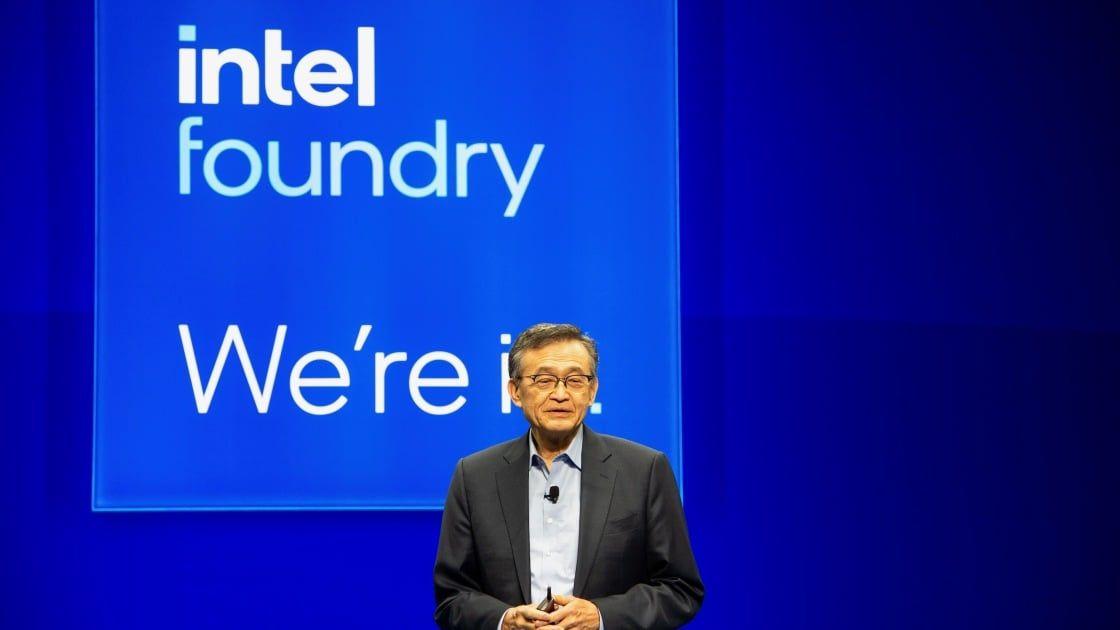
Intel Corporation, once a dominant force in the semiconductor industry, is facing significant challenges as it attempts to reclaim its position in the market. New CEO Lip-Bu Tan, addressing investors during the company's first-quarter financial earnings call, acknowledged the difficulties ahead but urged patience as the company implements its turnaround strategy
1
.Tan admitted, "Clearly, there are no quick fixes," but emphasized that Intel is working on both short- and long-term plans to improve its competitive standing, particularly in AI, GPUs, and edge computing. The CEO is taking a hands-on approach, directly overseeing the company's data center, AI, and personal computer chip divisions
1
.Financial Performance and Market Position
Intel's stock has fallen nearly 64% in the past five years, significantly underperforming compared to competitors like Nvidia and Advanced Micro Devices (AMD), which have capitalized on the AI boom and rising demand for advanced chips
1
. Despite this, Intel posted first-quarter revenue of $12.67 billion, exceeding analyst expectations of $12.3 billion, with adjusted earnings of 13 cents per share1
.However, the company's second-quarter forecast fell short of analyst predictions, projecting revenue between $11.2 billion and $12.4 billion and an adjusted loss of 32 cents per share
1
. This outlook has contributed to a 7% drop in Intel's shares in premarket trading2
.Challenges in AI and Manufacturing
One of Intel's biggest missteps was failing to capitalize on the booming demand for AI chips, allowing Nvidia to dominate the market
2
. The company now faces an uphill battle in challenging AI heavyweights, as it lacks the same level of GPU intellectual property essential for AI workloads2
.Tan's strategy to revitalize Intel includes focusing on core engineering, stripping away unnecessary administrative work, and cutting the workforce
2
. However, analysts note that Tan did not provide much detail on how he plans to restore Intel's leadership position in manufacturing or attract more external customers to the company's foundry2
.Related Stories


Global Trade Tensions and Market Dynamics
The ongoing US-China trade war has created uncertainty in the semiconductor market. Interestingly, Intel's older parts are in demand due to these trade tensions, with an executive noting, "Tariffs have everybody hedging their bets"
1
. This situation could potentially benefit Intel if China introduces certain exemptions on U.S. imports, given the company's large presence in the Asian country2
.Looking Ahead
As Intel navigates these challenges, Tan encourages stakeholders to "stay tuned," indicating that plans are still a work in progress
1
. The CEO is exploring partnerships and embracing disruptive technologies to bring products to market faster1
. Additionally, Tan has recently met with TSMC's CEO to discuss potential collaboration in the contract manufacturing business2
.While Intel's stock has outperformed some competitors year-to-date, the company trades at a higher 12-month forward price-to-earnings ratio compared to Nvidia and AMD
2
. As the semiconductor industry continues to evolve, all eyes will be on Intel's ability to execute its turnaround strategy and regain its competitive edge in the AI-driven market.References
Summarized by

Navi
[2]
Related Stories
Recent Highlights
1
Microsoft and Nvidia Launch Surface Laptop Ultra: A $2,599 AI-Ready PC With RTX Spark Chip
Technology

2
Trump Consulted Grok AI Before Ordering Venezuela Invasion and Capture of Nicolás Maduro
Policy and Regulation

3
Scientists Build AI Model That Reconstructs Images From Brain Scans in Record Time
Science and Research

Recent Highlights
Today's Top Stories






Don’t drown in AI news. We cut through the noise - filtering, ranking and summarizing the most important AI news, breakthroughs and research daily. Follow topics that matter to you and stay ahead.


