Iran Conflict Disrupts AI Industry as Supply Chain Vulnerabilities and Energy Costs Threaten Growth


2 Sources
2 Sources
[1]
The AI Boom Wasn't Built for the Polycrisis
The global economy has become dependent on the AI industry. Trillions of dollars are being invested into the technology and the infrastructure it relies on; in the final months of 2025, functionally all economic growth in the United States came from AI investments. This would be risky even in ideal conditions. And we are very far from ideal conditions. Much of the AI supply chain -- chips, data centers, combustion turbines, and so on -- relies on key materials that are produced in or transported through just a few places on Earth, with little overlap. In particular, the industry is highly dependent on the Middle East, which has been destabilized by the war in Iran. A global energy shock seems all but certain to come soon -- the kind where even the best-case scenario is a disaster. The war could grind the AI build-out to a halt. This would be devastating for the tech firms that have issued historic amounts of debt to race against their highly leveraged competitors, and it would be devastating for the private lenders and banks that have been buying up that debt in the hope of ever bigger returns. For the better part of the past year, Wall Street analysts and tech-industry observers have fretted publicly about an AI bubble. The fear is that too much money is coming in too fast and that generative-AI companies still have not offered anything close to a viable business model. If growth were to stall or the technology were to be seen as failing to deliver on its promises, the bubble might burst, triggering a chain reaction across the financial system. Everyone -- big banks, private-equity firms, people who have no idea what's mixed into their 401(k) -- would be hit by the AI crash. Until recently, that kind of crash felt hypothetical; today, it feels plausible and, to some, almost inevitable. "What's unusual about this, unlike commercial real estate during the global financial crisis," Paul Kedrosky, an investor and financial consultant, told us, "is all of these interlocking points of fragility." Read: Here's how the AI crash happens Perhaps the clearest examples are advanced memory and training chips, which are among the most important -- and are by far the most expensive -- components of training any AI model. Currently, most of them are produced by two companies in South Korea and one in Taiwan. These countries, in turn, get a large majority of their crude oil and much of their liquefied natural gas -- which help fuel semiconductor manufacturing -- from the Persian Gulf. The chip companies also require helium, sulfur, and bromine -- three key inputs to silicon wafers -- largely sourced from the region. In addition, Saudi Arabia, Qatar, the United Arab Emirates, and other regional petrostates have become key investors in the American AI firms that purchase most of those chips. Because of the war in Iran, the Strait of Hormuz is functionally closed to most shipping vessels, stranding one-fifth of the world's exports of natural gas, one-third of the world's exports of crude oil, and significant quantities of the planet's exportable fertilizer, helium, and sulphur. Meanwhile, Iran and Israel have begun bombing much of the fossil-fuel infrastructure in the region, which could take many years to replace. In only a month of war, the price of Brent crude -- a global oil benchmark -- has jumped by 40 percent and could more than double, liquefied-natural-gas prices are soaring in Europe and Asia, and helium spot prices have already doubled. The strait is "critical to basically every aspect of the global economy," Sam Winter-Levy, a technology and national-security researcher at the Carnegie Endowment for International Peace, told us. "The AI supply chain is not insulated." The situation could quickly deteriorate from here. A helium crunch could trigger a shortage of AI chips or cause chip prices to rise. AI companies need ever more advanced chips to fill their data centers -- at higher prices, the massive server farms, already hurting from elevated energy costs caused by the war, would have almost no hope of becoming profitable. Without these chips, new data centers would not be built or would sit empty. Astronomical tech valuations, and in turn the entire stock market, could collapse. One industry's precarious position isn't usually everyone's problem. Unfortunately, AI is different. The biggest data-center players, known as hyperscalers, are among the biggest corporations in the history of capitalism; they include Microsoft, Google, Meta, and Amazon. But even they will be pressed by collectively spending nearly $700 billion on AI in a single year. In order to get the money for these unprecedented projects, data-center providers are beginning to take on colossal amounts of debt. Some of this is done through creative deals with private-equity firms including Blackstone, BlackRock, and Blue Owl Capital -- which themselves operate as sort of shadow banks that, since the most recent financial crisis, have arguably become as powerful and as influential as Bear Stearns and Lehman Brothers were prior to 2008. Endowments, pensions, insurance funds, and other major institutions all trust private equity to invest their money. For a while, it seemed like every time Google or Microsoft announced more data-center investments, their stock prices rose. Now the opposite occurs: The hyperscalers are spending far more, but investors have started to notice that they are not generating anything near the revenue they need to. The data-center boom's top players -- Google, Meta, Microsoft, Amazon, Nvidia, and Oracle -- have all lost 8 to 27 percent of their value since the start of the year, making them a huge drag on the overall stock market. And the $121 billion of debt that hyperscalers issued in 2025, four times more than what they averaged for years prior, is expected to grow dramatically. All of the major players in this investment ecosystem are vulnerable. Private-equity firms are being squeezed on both ends by generative AI: During the coronavirus pandemic, they bought up software companies, which are now plummeting in value because AI is expected to eat their lunch. Meanwhile, private equity's new investment strategy, data centers, is also falling apart because of AI. Blackstone, Blue Owl, and the like are sinking huge sums into data-center construction with the assumption that lease payments from tech companies will pay for their debt. In order to pay for their investments, private-equity companies raised money from major financial institutions -- but now the viability of those lease payments is coming into question as the hyperscalers' cash flow is strained. "There's a reason to think we're seeing some of the same 2008 dynamics now," Brad Lipton, a former senior adviser at the Consumer Financial Protection Bureau and now the director of corporate power and financial regulation at the Roosevelt Institute, told us. "Everyone's getting tied up together. Banks are lending money to private credit, which in turn lends it elsewhere. That amps up the risk." Annie Lowrey: How to guess if your job will exist in five years The way the money moves is concerning, but so is the AI industry's underlying business model. At every layer, the technology appears to decrease the value of its assets. The advanced AI chips that make up the majority of the cost of a data center? Their value rapidly decreases as they are superseded by the next generation of chips, meaning that the ultimate backstop for all of the data-center debt -- selling the data center itself -- is not actually a backstop. The way that AI companies make money when people use their products is also deflationary. OpenAI, Anthropic, and others charge users for using "tokens," the components of words processed by their bots. This means that tokens are an industrial commodity akin to, say, crude oil or steel. But unlike other commodities, the cost of each token is rapidly decreasing owing to advancements in AI's capabilities. Kedrosky called this "a death spiral to zero." As the value of a token plummets, the value of what data centers can produce also falls. The war in Iran affects data-center finances as well. Should energy prices continue to skyrocket, so will the cost of this already very expensive computing equipment, because it needs tremendous amounts of energy to manufacture and operate. And the war has exposed physical risks to these buildings. Janet Egan, a senior fellow at the Center for a New American Security, described data centers to us as "large, juicy targets." It is impossible to hide these facilities, which can cover 1 million square feet. Earlier this month, Iran bombed Amazon data centers in the UAE and Bahrain. American hyperscalers had been planning to build far more data centers in the region, because the Trump administration and the AI industry have sought funding from Saudi Arabia, the UAE, Qatar, and Oman. Now there's a two-way strain on those relationships. The physical security of the data centers is more precarious, and the conflict is damaging the economic health of the petrostates, thereby jeopardizing a major source of further investment in American AI firms. The Trump administration "staked a lot on the Gulf as their close AI partner, and now the war that they've launched poses a huge threat to the viability of the Gulf as that AI partner," Winter-Levy said. Plus, "what's to prevent Iran or a proxy group, or another maligned actor, from tomorrow launching an armed drone against a data center in Northern Virginia?" Chip Usher, the senior director for intelligence at the Special Competitive Studies Project, a national-security and AI think tank, told us. "It could happen. Our defenses are not adequate." State-sponsored cyberattacks of the variety Iran is known for could also knock a data center offline. You can build all manner of defenses -- reinforced concrete, drone-interception systems -- but doing so adds cost and time to already costly and slow construction. Just a few things going a bit wrong could compound, all at once, into a cataclysm. To wit: Qatari and Saudi money dries up. Sustained high oil and natural-gas prices drive up the costs of manufacturing chips and running data centers. Already cash-strapped hyperscalers struggle to make lease payments on their data centers, while similarly strained private lenders suffer as all of the AI bonds become deadweight. Tech valuations fall, taking public markets with them; private-equity firms have to sell and torch their assets, putting intense stress on the institutional investors and banks. The rest of the economy, drained of investment because everything was poured into data centers for years, is already weak. Unemployment goes up, as do interest rates. "Bubbles pop. That's the system," Lipton said. "What isn't supposed to happen is that it takes down the whole financial system. But the concern here is that AI investment isn't confined and may spread to the whole economy." Even if Iran and the Strait of Hormuz don't directly trigger an AI-driven financial crisis, the odds are decent that another vector could. (Remember tariffs?) Energy prices could stay elevated for years, because the targeted fossil-fuel facilities in the Persian Gulf will take a long time to restore. As the U.S. directs huge amounts of attention and military resources toward Iran, it's easy to imagine China launching an invasion of Taiwan -- a scenario that terrifies Silicon Valley, because it would halt the production of chips needed to train frontier models. That's not even considering the single Dutch company that makes the high-tech lithography machines used to print virtually all AI chips, or the German company that makes the mirrors used in those machines. "There are too many ways for it to fail for it not to fail," Kedrosky said of the AI industry's web of risk. "All you can say for sure is this is a fragile and overdetermined system that must break, so it will." There are, of course, possibilities other than a full-blown, AI-driven financial crisis. Data-center spending could cool gradually enough that a crash is avoided. The revenues of Anthropic and OpenAI have been multiplying every year, which proponents argue means that generative-AI products are on track to eventually become profitable. But on the current trajectory, that would still take years, and there are good reasons to think that this growth will slow or halt. Notably, the main draw of AI tools is "efficiency": Rather than growing their overall output and the opportunities available to people, executives are hoping that AI will allow them to make cuts to their business operations. The medium-term success of generative AI would likely involve millions of people being put out of work. The range of options seems to be somewhere from mildly bad to historically so. Should the system break, much of the blame would lie squarely with the technology companies. The stakes of this build-out, from the beginning, have been framed in civilizational terms -- a geopolitical race alongside an existential one. The winners will control the future and reap the rewards. At every step of the way, AI firms have appeared to prioritize speed above the physical security of data centers, supply-chain redundancy, energy efficiency and independence, political stability, even financial returns. And in that quest for unbridled growth, the AI industry has wrested ungodly amounts of capital from investors all looking for the next big thing, ensnaring the entire economy. Simultaneously, these firms have courted and even bent the knee to a presidential administration that has encouraged their "let it rip" ethos, only to watch as that same administration has plunged the industry into this emerging polycrisis. The AI industry was not made for the turbulence its leaders have helped usher in. The situation has grown so ungainly and untenable that, if Silicon Valley is merely forced to slow down, the viability of all this spending will likely be called into question in ways that could be devastating for many. In finance, being early is the same as being wrong. AI firms want the world to think they're right on time. The world may have other plans.
[2]
From oil shock to algo shock: Iran war is shaking AI industry
The Iran conflict is now impacting artificial intelligence development. Rising energy costs and supply chain issues are making AI more expensive. Companies are delaying investments due to uncertainty. This could lead to AI growth slowing down and fragmenting globally. Different regions may develop AI at different paces. This shift highlights AI's dependence on physical resources and stability. The Iran conflict is no longer just a geopolitical crisis playing out in oil markets and shipping lanes. It is increasingly shaping the trajectory of one of the most important technologies of our time, the artificial intelligence. While there was the immediate shock of Iranian strikes on data infrastructure in the Gulf, something more consequential is happening now. The war is beginning to alter the economics, geography and momentum of the global AI industry itself. Energy shock and the cost of intelligence At the heart of the disruption lies energy. Modern AI systems depend on vast data centers that consume enormous amounts of electricity. As per a Reuters report, rising energy prices triggered by the conflict threaten to "derail the AI boom" by increasing the cost of computation. This is not a marginal effect. Training and deploying large models already require massive capital outlays, and even modest increases in power costs can significantly alter project viability. "An energy shock is bad news for the extremely power-hungry AI sector. According to International Energy Agency forecasts from last month, data centres were set to account for almost half of the growth in final electricity consumption in the U.S. between 2025 and 2030. Much of that was meant to be supported by an acceleration in gas generation," says the Reuters report. An FT report similarly points to the vulnerability of AI's growth model to energy shocks, arguing that the war could undermine one of the central assumptions behind the industry's expansion -- abundant and relatively predictable power. A Bloomberg report suggests that energy disruptions could divide the AI world into regions that can sustain large-scale computing and those that cannot. This shift transforms energy from a background input into a strategic constraint. AI is no longer just about algorithms and chips. It is about access to stable, affordable power in a volatile geopolitical environment. Also Read | When clouds get hit by drones: As data centres become target of strikes, there is one more critical infrastructure to protect Supply chains under strain Beyond energy, the conflict is also stressing the physical supply chains that underpin AI development. A Reuters report highlights disruptions in critical inputs such as helium, which is essential for semiconductor manufacturing. The war's impact on shipping routes and industrial logistics compounds these pressures, raising costs and introducing delays across the hardware ecosystem. These disruptions ripple outward. Semiconductor production becomes more expensive, GPU availability tightens and the timelines for building new data centers stretch further. Shocks to the AI sector can spill over into the broader economy, given how central digital infrastructure has become to economic growth. What emerges is a picture of fragility. The AI boom, often framed as a purely digital revolution, is deeply dependent on physical systems that are vulnerable to geopolitical shocks. Investment hesitation and the slowing of momentum If rising costs are one side of the story, declining confidence is the other. Reuters reports that companies are beginning to hold back on investments amid uncertainty. This hesitation is particularly visible in enterprise spending, where AI projects are often large, discretionary and long-term. As per an ET report, global clients are delaying decisions on AI and digital transformation projects, leading to slower growth projections for IT services firms. The dynamic is not one of collapse but of pause. As the report suggests, companies are reassessing timelines and budgets rather than abandoning AI altogether. This distinction matters. The slowdown is driven less by a loss of faith in AI and more by uncertainty about costs, returns and geopolitical risks. In effect, the war is stretching the adoption curve, pushing some investments further into the future. Also Read | Israel-Iran war: Amazon says AWS's Bahrain region 'disrupted' following drone activity Fragmentation of the global AI landscape Perhaps the most far-reaching consequence is the possibility of fragmentation. Bloomberg's analysis argues that the conflict could "split the AI boom in two." This is not simply about uneven growth but about the emergence of distinct regional AI ecosystems shaped by access to energy, capital and political stability. In this scenario, countries with secure infrastructure and strong domestic supply chains consolidate their advantages, while more exposed regions fall behind. The FT report echoes this concern, warning that geopolitical tensions could disrupt the integrated global networks that have enabled rapid AI progress. Fragmentation also has strategic implications. Governments may increasingly prioritise domestic AI capabilities, restrict cross-border data flows or rethink dependencies on foreign technology. The result could be a more divided and competitive global AI order. Markets, signals and the risk Financial markets are already reflecting these concerns. Volatility is being seen in technology and semiconductor stocks as investors react to uncertainty in the Middle East. These movements are not just short-term fluctuations. They signal a reassessment of risk in sectors closely tied to AI growth. The Iran conflict is not merely a temporary disruption. It is exposing structural vulnerabilities in the AI ecosystem. Energy dependence, fragile supply chains and concentrated infrastructure are all being tested simultaneously. If AI is a key engine of future growth, then shocks to its development have consequences far beyond the tech sector. What is emerging is a more complex and less predictable trajectory for AI. Growth will likely continue, but it may be slower, more uneven and more shaped by geopolitics than previously assumed. The prevailing narrative of AI over the past few years has been one of relentless expansion. The Iran conflict introduces a counterpoint. It reveals that the future of AI will not be determined by innovation alone, but also by energy markets, geopolitical stability and strategic competition. The industry may be entering a phase where the AI boom no longer rises uniformly across the world. Instead, it could fracture along geopolitical lines, creating winners and losers in ways that mirror broader global tensions.
Share
Share
Copy Link
The war in Iran is exposing critical vulnerabilities in the AI industry's global supply chain. Rising energy costs, helium shortages, and disrupted shipping routes through the Strait of Hormuz are driving up costs for semiconductor manufacturing and data centers. With oil prices jumping 40% and helium prices doubling, tech companies are delaying AI investments amid mounting uncertainty, threatening to fragment the global AI landscape.
Iran Conflict Exposes AI Industry's Fragile Foundation
The global AI industry faces an unprecedented test as the Iran conflict reveals deep vulnerabilities in the infrastructure underpinning the technology sector's most ambitious expansion. Trillions of dollars flow into AI investments, with functionally all economic growth in the United States during late 2025 coming from this sector
1
. Yet the AI boom now confronts geopolitical instability that threatens to disrupt the entire ecosystem, from chips to data centers.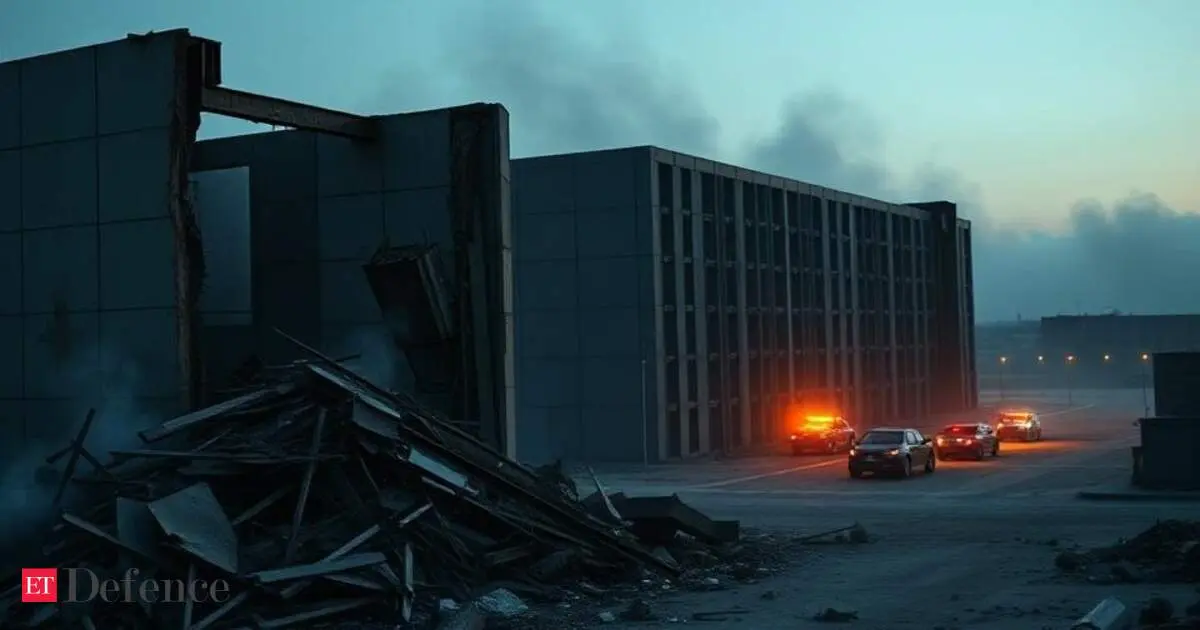
Source: ET
The war has functionally closed the Strait of Hormuz to most shipping vessels, stranding one-fifth of the world's natural gas exports, one-third of crude oil exports, and significant quantities of helium and sulfur
1
. This chokepoint matters immensely because the AI industry depends heavily on materials produced in or transported through the Middle East, with little geographic overlap in the supply chain. As Sam Winter-Levy, a technology and national-security researcher at the Carnegie Endowment for International Peace, notes, the strait is "critical to basically every aspect of the global economy," and "the AI supply chain is not insulated"1
.Rising Energy Costs Threaten Data Centers and Profitability
Energy shock represents one of the most immediate threats to sustained growth. Modern AI systems require vast data centers consuming enormous amounts of electricity, and rising energy costs triggered by the conflict are increasing the cost of computation significantly
2
. Brent crude oil prices have jumped 40% in just one month of war and could more than double, while liquefied natural gas prices are soaring across Europe and Asia1
.
Source: The Atlantic
According to International Energy Agency forecasts, data centers were set to account for almost half of the increase in final electricity consumption in the U.S. between 2025 and 2030, with much of that supported by accelerated gas generation
2
. Elevated energy prices mean massive server farms already struggling with profitability would have almost no hope of becoming viable1
. This transforms energy from a background input into a strategic constraint, making AI less about algorithms and more about access to stable, affordable power in a volatile geopolitical environment2
.Semiconductor Manufacturing Faces Critical Material Shortages
The supply chain for advanced memory and training chips faces severe pressure. Most of these chips—the most expensive components for training any AI model—are produced by two companies in South Korea and one in Taiwan
1
. These countries obtain a large majority of their crude oil and liquefied natural gas from the Persian Gulf, along with helium, sulfur, and bromine—three key inputs for silicon wafers1
.Helium spot prices have already doubled due to the conflict
1
. A helium crunch could trigger shortages of AI chips or drive prices higher, creating cascading effects throughout the industry. Disruptions in critical inputs compound pressures across the hardware ecosystem, raising costs and introducing delays in semiconductor production2
. Without affordable chips, new data centers would not be built or would sit empty, potentially collapsing astronomical tech valuations and the broader stock market1
.Related Stories

Tech Companies and Investors Face Mounting Economic Risks
The biggest data center players, known as hyperscalers—including Microsoft, Google, Meta, and Amazon—are collectively spending nearly $700 billion on AI investments in a single year
1
. To finance these unprecedented projects, data center providers are taking on colossal amounts of debt through creative deals with private equity firms including Blackstone, BlackRock, and Blue Owl Capital1
.Paul Kedrosky, an investor and financial consultant, observes that "what's unusual about this, unlike commercial real estate during the global financial crisis, is all of these interlocking points of fragility"
1
. Companies are now holding back on AI investments amid uncertainty, with global clients delaying decisions on AI and digital transformation projects2
. This hesitation reflects not a loss of faith in AI but uncertainty about costs, returns, and geopolitical risks, effectively stretching the adoption curve2
.Global AI Industry Faces Potential Fragmentation
The most far-reaching consequence may be the fragmentation of the global AI landscape. The conflict could split the AI boom into distinct regional ecosystems shaped by access to energy, capital, and political stability
2
. Countries with secure infrastructure and strong domestic supply chains would consolidate advantages, while more exposed regions fall behind. Additionally, Saudi Arabia, Qatar, the United Arab Emirates, and other regional petrostates have become key investors in American AI firms, adding another layer of complexity to the geopolitics of AI development1
.What emerges is a picture of fragility: the AI boom, often framed as a purely digital revolution, is deeply dependent on physical systems vulnerable to geopolitical shocks
2
. Iran and Israel have begun bombing fossil fuel infrastructure in the region, which could take many years to replace1
. The risk of a financial crash looms as fears of an AI bubble intensify, with concerns that too much money is coming in too fast while generative AI companies still lack viable business models1
. What once felt hypothetical now feels plausible and, to some observers, almost inevitable.References
Summarized by

Navi
[1]
Related Stories
Iran Conflict Threatens Gulf's $300 Billion AI Infrastructure Dreams as Drone Strikes Hit AWS
08 Mar 2026•Business and Economy

AI Infrastructure Bubble Concerns Mount as CoreWeave's Financial Engineering Raises Red Flags
18 Nov 2025•Business and Economy
Iran war exposes AI technology as new weapon in cyber warfare against U.S. and Israel
11 Mar 2026•Technology

Recent Highlights
1
OpenAI shuts down Sora video app after six months, ending Disney's $1 billion investment deal
Technology

2
Apple plans major Siri AI overhaul in iOS 27 with standalone app and third-party chatbot support
Technology

3
Claude AI can now control your computer to complete tasks, but security risks remain
Technology

Recent Highlights
Today's Top Stories










Your Daily Dose of Curated AI News
Don’t drown in AI news. We cut through the noise - filtering, ranking and summarizing the most important AI news, breakthroughs and research daily. Spend less time searching for the latest in AI and get straight to action.

