Iran deploys AI-generated memes and deepfakes to influence US public opinion in information war


2 Sources
2 Sources
[1]
Iran targets US public opinion with online information war
When President Donald Trump announced in a social media video on February 28 that the United States and Israel had launched strikes on Iran, he kickstarted a war that has engulfed the Middle East. But he also sparked an online information war that analysts say has been dominated by the use of AI-generated content to spread fake news about the conflict One study from Clemson University in South Carolina found that, within 24 hours of the US and Israel launching attacks on Iran, dozens of social media accounts affiliated with the Islamic Revolutionary Guard Corps had begun posting Iranian propaganda about the war, some of which reached an audience of millions. Among the most widely viewed content are AI-generated videos mocking Trump - styled to reference Western media including the LEGO movies and the Teletubbies - and AI videos and photographs claiming to show the devastation Iranian strikes have wrought on Israel and the Gulf states. "The propaganda includes memes and cartoons that aren't meant to be perceived as real but are very good at spreading political messaging," said Darren Linvill, author of the study and co-director of Clemson's Media Forensics Hub. "The deepfakes portray a version of reality that [seems] genuine and often paint Iran as more successful in the conflict. Both are being shared widely among communities that are critical of the war and hungry for this messaging." 'Politically divisive' The accounts analysed in the Clemson study had been used previously for Iranian influence operations "designed to exploit regional fault lines to advance Iranian regime interests" in the West by posting "politically divisive" content such as critiques of the recent US immigration crackdown. The switch to posting war propaganda on platforms including X, Instagram and Bluesky suggests that Iran quickly overhauled its social media strategy when the war with the US and Israel began. As the conflict has spiralled over the past month, Iran has relied on both state media outlets and proxies to push its online message as a form of asymmetrical warfare with a view to targeting a US audience. Read moreMiddle East war live: Iran rejects US ceasefire plan and offers counterproposal, state TV says "The Iranian regime wants to make the conflict as painful as possible for the US and Israel, and if they can target what support Trump and [Prime Minister Benjamin] Netanyahu have, it may ultimately shorten the war," Linvill said. There is fertile ground in the United States for messages critiquing military involvement in the Middle East. Ipsos polling from mid-March found that US public opinion was "overwhelmingly" against the war in Iran, with 58 percent opposing US military strikes and 78 percent against the idea of US boots on the ground. In some cases, the Iranian regime does not need to create original or fake content to spread its message. Clips of the former head of the US National Counterterrorism Center, Joe Kent, being interviewed about his resignation in opposition to the war were widely shared online by Iranian state media. 'A ton of lies in a grain of truth' AI videos in particular "travel fast and plug into emotions that people already have", said Tine Munk, senior lecturer in criminology at Nottingham Trent University and a specialist in digital warfare. "They create a lot of noise, even when they are so obviously fake because it is easy to communicate complex ideas through visual storytelling using these shared cultural references," he said. But many of the photos and videos gaining traction online purport to show events on the ground that are harder to identify as fake. Information warfare analyst Tal Hagin has been tracking these on X - a platform where disinformation about the war is rife. Among them are hundreds of examples of videos and images showing Iranian attacks on Israel that are either years old, of attacks on different countries or are AI-generated. "There was a strike in Tel Aviv on February 28th, and the videos and photos of those strikes have been used every single day to allegedly depict new strikes," Hagin said. The strategy is effective, he added, because the initial attack really did happen. "Then they put a ton of lies into that grain of truth, so people don't know what the truth is anymore." In addition, "social media platforms are not fulfilling their commitments on labelling content and removing it if it is provably false", said Melanie Smith, expert in information operations at the Institute for Strategic Dialogue. "We're seeing content get millions of views before it's proven to be AI and labelled as such." 'Information battlefield' The current conflict in the Middle East is not the first time viral videos and memes have been used as a weapon of war - they are an established form of Ukrainian resistance against Russian misinformation. But the use of AI to generate wartime propaganda is a new development. "This conflict is the first time we've really seen AI-generated content be used very intentionally to sow chaos and confusion around what's actually happening on the ground," Smith said. Adding to the confusion are censorship rules restricting the flow of information out of both Israel and Iran. In Israel, wartime censors have prohibited the sharing of information deemed sensitive, such as the location of interceptor missiles. Meanwhile, Iran has imposed a full internet blackout, now in its fourth week, making it extremely difficult for outsiders to know what is happening on the ground. The result is "a big information void that can be filled very quickly with synthetic content, propaganda narratives and generally chaotic information", Smith said. Iran is surging forward on this "information battlefield", said Munk. "It's a broader war strategy where Iran cannot always dominate militarily, so it's focused on shaping perceptions to create doubt and uncertainty." Trump has accused Iran of using AI-generated "fake news" as a "disinformation weapon" -although the White House shared its own heavily critiqued AI video combining real footage of strikes in Iran with clips from action movies and video games. "Iran has been fairly successful, certainly more successful than the US and Israel, in reaching a broad audience and gaining more support than they might otherwise have," Linvill said.
[2]
Memetic warfare: US, Iran, and Israel battle for meme dominance and social media virality
Illustrative image of an Instagram logo appearing on a smartphone screen. In 2026, the psychological front of warfare is fought in memes and videos shared on social media. As the war between the US, Israel, and Iran unfolds on the battlefield, it is also playing out across digital platforms. Now, beyond individual creators, governments are capitalizing on how audiences, particularly younger ones, consume information. This month, the Reuters Institute for the Study of Journalism at the University of Oxford published a study highlighting a growing trend in which younger audiences, more than through traditional outlets, are getting their news from social media and short-form video. In the wake of this trend, the front of memetic warfare continues to expand. Iran's meme and AI campaign Iran's campaign on social media has been particularly prominent, and a number of the Islamic Republic's memes and videos have gone viral. Earlier this month, Islamic Revolutionary Guard Corps-affiliated Tasnim News Agency shared a Lego-style video showing Israeli Prime Minister Benjamin Netanyahu and Satan showing US President Donald Trump a photo album titled "Jeffrey Epstein File." In response, the Lego Trump launches a missile that destroys the Iranian girls' school in Minab, where over 175 people were killed earlier in the war. In response, Lego Iranians launch missile and drone attacks that wreak havoc on Israel, US Gulf allies, and American and British troops. In another example, following Trump's announcement that the US and Iran may share control of the Strait of Hormuz, the Iranian embassy in South Africa shared a picture of the interior of a car with a fake, pink steering wheel attached to the dashboard in front of the passenger's seat. In another video, also directed at the US president, Iranian military spokesperson Ebrahim Zolfaghari mocks Trump's signature line from The Apprentice, "You are fired," by repeating the phrase, adding "thank you for your attention to this matter," referencing the line the president often uses to sign off on announcements posted to his Truth Social account. Meanwhile, accounts affiliated with the Islamic Republic have been posting increasing amounts of AI-generated content. While accusing Israel of using AI to fake videos proving Netanyahu was not killed in an Iranian missile attack, an Iranian-linked account uses the emergent technology to create propaganda videos and fake news. Iran's use of AI to create fake images to boost its perceived military prowess came into the spotlight in June of last year, when accounts associated with the country spread a fake image purporting to show a downed US B-2 bomber. The IDF and the social media battle Israel, for its part, has also openly engaged in social media warfare. Over the course of the war, the IDF has published videos to its Instagram account to capitalize on social media trends. Last week, joining a nostalgic trend where people post images and videos of themselves in the 1990's, the IDF posted a video featuring IDF aircraft, tanks, naval vessels, and personnel from the decade, with the audio playing "Iris" by the Goo Goo Dolls. In another video, the IDF posted a video of a group text chat. In the video, former Iranian supreme leader Ayatollah Ali Khamenei writes, "Death to Israel, death to America, who's in?" A series of successive notifications pop up where Hamas, Hezbollah, and Iranian leaders, including Mohammed Deif, Ismail Haniyeh, Hassan Nasrallah, Yahya Sinwar, Mohammed Sinwar, Hossein Salami, and ultimately Khamenei himself, are shown having "left the chat." The notifications in the video appear with the dates the figures were killed by the IDF. The White House and meme warfare The US too has escalated its use of social media warfare since the start of Operation Epic Fury, with such content being published by accounts associated with Trump. The White House's X/Twitter account has posted several videos designed to go viral. In one, footage from the Wii Sports video game is stitched together with declassified videos of US Central Command (CENTCOM) strikes on Iranian targets. Another video, titled "Justice the American Way," stitches together CENTCOM footage with clips from popular movies and television shows, along with music from the Mortal Kombat video game. Another video posted by the White House switches between footage of CENTCOM strikes and a clip from SpongeBob, in which SpongeBob, dressed as a superhero, asks, "Want to see me do it again?"
Share
Share
Copy Link
Iran has launched a sophisticated online information warfare strategy using AI-generated content to shape US public opinion on the Middle East conflict. Within 24 hours of strikes, Islamic Revolutionary Guard Corps-affiliated accounts posted propaganda reaching millions, including deepfakes and memes referencing Western pop culture like LEGO and Teletubbies.
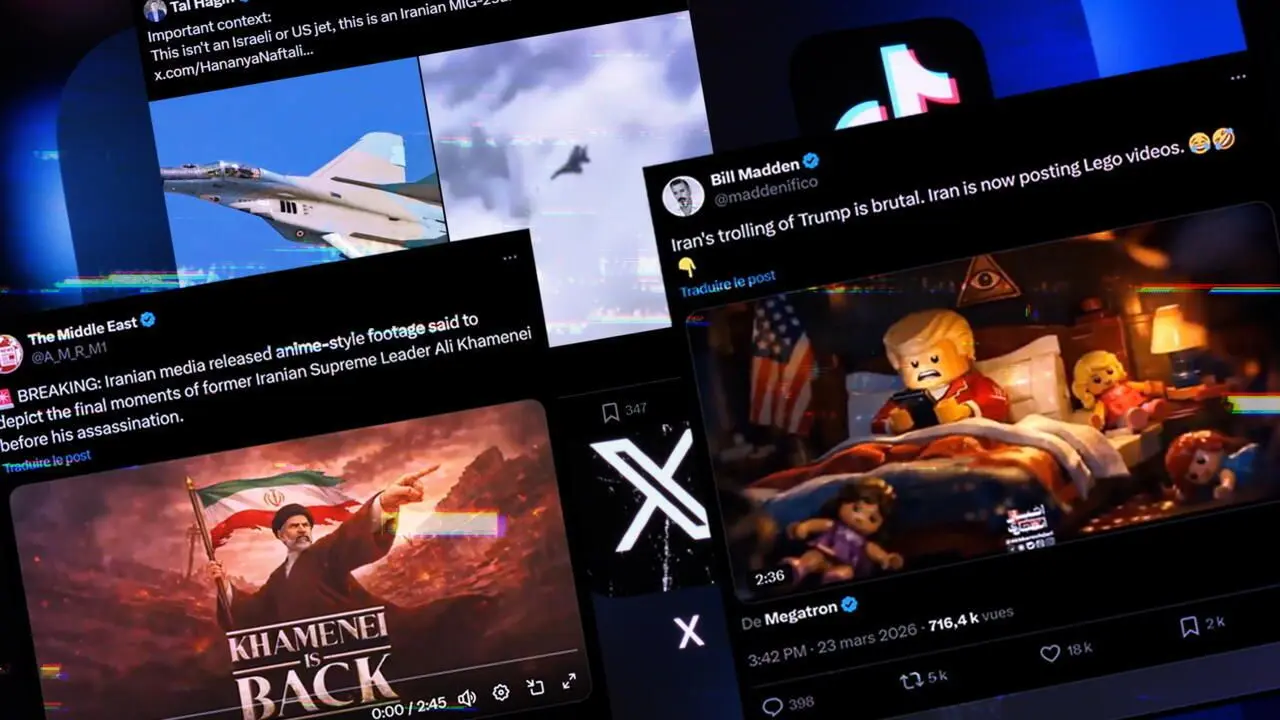
Iran Launches Sophisticated Online Information Warfare Strategy
When Donald Trump announced US and Israel strikes on Iran on February 28, he triggered not just a military conflict but an information war dominated by AI-generated content and propaganda. A Clemson University study revealed that within 24 hours of the attacks, dozens of social media accounts affiliated with the Islamic Revolutionary Guard Corps began posting Iranian propaganda about the war, with some content reaching audiences of millions
1
. This marks the first major conflict where AI-generated wartime propaganda has been deployed at scale to influence US public opinion.AI-Generated Content and Deepfakes Dominate Social Media Warfare
Iran's memetic warfare campaign includes AI-generated videos mocking Trump and deepfakes claiming to show devastation from Iranian strikes on Israel and Gulf states. Among the most viral content is a LEGO-style video showing Benjamin Netanyahu and Satan presenting Trump with a photo album titled "Jeffrey Epstein File," which then depicts attacks on Iranian civilians and retaliatory strikes
2
. "The propaganda includes memes and cartoons that aren't meant to be perceived as real but are very good at spreading political messaging," said Darren Linvill, co-director of Clemson's Media Forensics Hub1
. The deepfakes portray misleading narratives that paint Iran as more successful in the conflict, spreading widely among communities critical of the war.Battle for Meme Dominance Across Multiple Platforms
The accounts analyzed had previously been used for Iranian influence operations designed to exploit regional fault lines by posting politically divisive content, including critiques of US immigration policies. The rapid switch to war propaganda on platforms including X, Instagram, and Bluesky demonstrates Iran's agile online information warfare strategy
1
. Information warfare analyst Tal Hagin has tracked hundreds of examples of videos and images showing Iranian attacks that are either years old, depict attacks on different countries, or are AI-generated. "There was a strike in Tel Aviv on February 28th, and the videos and photos of those strikes have been used every single day to allegedly depict new strikes," Hagin noted, adding that the strategy works by putting "a ton of lies into that grain of truth"1
.United States and Israel Counter with Social Media Warfare
The United States has escalated its own social media warfare since Operation Epic Fury began. The White House's X account posted videos designed for virality, including one stitching together footage from Wii Sports with declassified US Central Command strikes on Iranian targets, and another featuring SpongeBob clips
2
. Israel's IDF has also engaged in social media trends, posting nostalgic 1990s content featuring military assets and a video depicting a group chat where Hamas and Hezbollah leaders progressively "left the chat" on the dates they were killed2
.Related Stories

Propaganda and Fake News Target Fertile Ground in US Opinion
The Iranian regime's focus on targeting US audiences comes as Ipsos polling from mid-March found that 58 percent of Americans oppose US military strikes and 78 percent reject boots on the ground in Iran
1
. "The Iranian regime wants to make the conflict as painful as possible for the US and Israel, and if they can target what support Trump and Netanyahu have, it may ultimately shorten the war," Linvill explained1
. This psychological warfare leverages how younger audiences consume news, with a Reuters Institute study highlighting that younger demographics increasingly get information from social media and short-form video rather than traditional outlets2
.Platform Failures Enable Disinformation to Spread
Experts warn that social media platforms are failing to address the spread of disinformation. "Social media platforms are not fulfilling their commitments on labelling content and removing it if it is provably false," said Melanie Smith, expert in influence operations at the Institute for Strategic Dialogue. "We're seeing content get millions of views before it's proven to be AI and labelled as such"
1
. AI videos travel fast and plug into existing emotions, creating noise even when obviously fake because visual storytelling using shared cultural references effectively communicates complex ideas, according to digital warfare specialist Tine Munk1
. As this conflict demonstrates the power of AI-generated propaganda to achieve social media virality, experts anticipate similar tactics will define future conflicts on the information battlefield.References
Summarized by

Navi
Related Stories
AI Fakes About Iran War Create Unprecedented Crisis of Reality on Social Media Platforms
14 Mar 2026•Technology

AI-Generated Disinformation Escalates Israel-Iran Conflict in Digital Sphere
21 Jun 2025•Technology
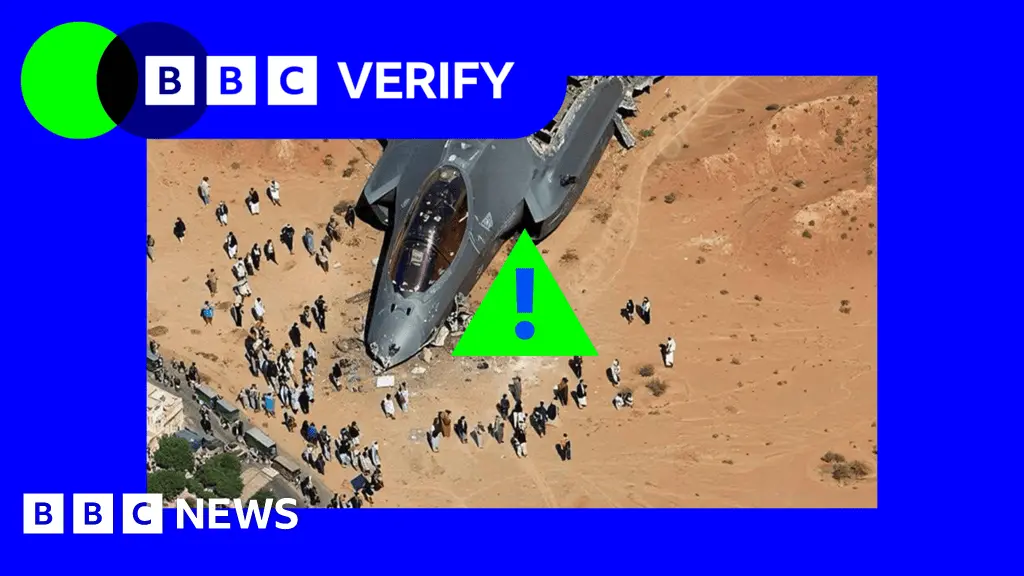
Iran War Disinformation Crisis: AI-Generated Content Floods X With Fake Videos and Images
04 Mar 2026•Technology

Recent Highlights
1
OpenAI shuts down Sora video app after six months, ending Disney's $1 billion investment deal
Technology

2
AI-Generated Val Kilmer to Posthumously Appear in As Deep as the Grave After His Death
Entertainment and Society

3
Supermicro Co-Founder Indicted in $2.5 Billion Nvidia AI Chip Smuggling Scheme to China
Policy and Regulation

Recent Highlights
Today's Top Stories




Your Daily Dose of Curated AI News
Don’t drown in AI news. We cut through the noise - filtering, ranking and summarizing the most important AI news, breakthroughs and research daily. Spend less time searching for the latest in AI and get straight to action.

