Jensen Huang Warns AI Leaders Against Fearmongering as Nvidia Pushes Optimistic Vision


10 Sources
10 Sources
[1]
Nvidia's Jensen Huang Urges AI Leaders to Avoid Fearmongering
Nvidia Corp. Chief Executive Officer Jensen Huang said tech leaders need to be careful not to scare people about artificial intelligence, in response to a question about how Anthropic PBC could have better handled messy contract negotiations with the Pentagon. "The desire to warn people about the capability of the technology is really terrific," Huang said during a panel for the company's technology conference. "Warning is good, scaring is less good, because this technology is too important to us." Underpinning that advice is Huang's belief that the greatest US national security risk with AI is that Americans are so angry, fearful or paranoid that the country adopts the technology slower than its rivals. Anthropic, a major Nvidia customer and the maker of the Claude chatbot, remains entrenched in a conflict with the Trump administration over restrictions the company wanted on military use of its AI tools. Anthropic's relationship with the Pentagon splintered last month over CEO Dario Amodei's insistence on contract terms barring its products from being used for domestic surveillance of Americans and fully autonomous weapons. In response, the Trump administration declared Anthropic a supply-chain risk and moved to drop it from work across the government, steps that the company is now challenging in court. Even with the dispute, Huang remains optimistic about Anthropic's financial prospects. During the panel, which became an episode of the technology-focused All-In podcast, Huang said he believes Anthropic could surpass $1 trillion in revenue by 2030. He added that he thought Amodei has been conservative with his projections. Spokespeople for Anthropic didn't immediately respond to a request for comment. When asked specifically about what he would have done if he were in the boardroom with Anthropic, Huang first expressed his admiration for the company, including its focus on safety and security, and then said that the industry must be careful about stoking unnecessary fear over AI tools. "It is not a biological being. It is not alien. It is not conscious. It is computer software," Huang said. "To say things that are quite extreme, quite catastrophic, that there's no evidence of it happening, could be more damaging than people think." Huang also waded into the topic of Taiwan, a sensitive issue in relations between Washington and Beijing. He urged the US not to provoke the Chinese government, which claims the self-governed island as part of its territory, a view that Taiwan rejects. "Let's demonstrate restraint," said Huang, a US citizen who was born in Taiwan. "Let's not push." When asked about the strategic risks of concentrating advanced chip production in Taiwan, Huang said the AI manufacturing supply chain should be diversified, citing South Korea and Japan, along with locations in the US. "We have to make sure we reindustrialize the US as fast as we can," he said. Huang said that Taiwanese expertise, on display with the construction of Taiwan Semiconductor Manufacturing Co. factories in Arizona, "deserves our friendship, our support." TSMC is the biggest maker of Nvidia-designed chips.
[2]
Nvidia CEO Wants Tech Execs to Stop Laying Off Workers and Scaring People
AI is having a major PR crisis, and Nvidia CEO Jensen Huang is really worried about it. As AI technology improves and leverages the underregulated space it inhabits to creep further into modern society, the risks it brings have become a major topic of public discussion over the past year or so. Due to the increased visibility of the risks of AI, from addiction to the technology's role in warfare, there's been a growing resentment of the technology, even leading to calls for AI chatbot boycotts and data center moratoriums. Speaking to the press at the company's GPU Technology Conference in California this week, Huang's goal seemed to be to do some damage control for AI, while cautioning against AI doomerism and increased regulatory action. "We have to make sure that we continue to inform the policymakers and not allow doomerism and extremism to affect how policymakers think and understand about this technology," Huang told the All In podcast. While "the desire to warn people about the capability of the technology is also really terrific," Huang said that he does not want people to be scared of the proliferation of AI. "The risk that we run as a nation, our greatest source of national security concern with respect to AI, is other countries adopt this technology while we are so angry at it, or afraid of it, or somehow paranoid of it, that our industries, our society, don't take advantage of AI," Huang said. "So I'm mostly worried about the diffusion of AI in the United States." Technologists need to be "more moderate," "balanced," and "thoughtful" in their predictions about AI's impact on society, Huang said. One area where he seems to believe we surely need more moderate predictions is the impact AI is expected to have on the job market. At the dawn of the technology, AI was promised to be a tool that could cut workload dramatically for the average worker, giving back precious time lost and perhaps facilitating a future where a 4-day workweek could be possible. Now, a couple of years down the road, the actual returns on productivity or on the quality of life for the average worker are still heavily debated. Some companies are just not seeing as big a bump to productivity as expected, with the tools often hallucinating and requiring heavy vetting. In the companies that do see an increase in productivity thanks to AI agents, executives eager to maximize profit margins are using that as an excuse to reduce hiring or lay off workers. Experts have long argued that widespread AI adoption in the business world could bring about a white-collar unemployment catastrophe. Some say the early signs of that impact are already visible in some parts of the labor market, with early-career workers in vulnerable sectors as clear victims. But Huang is careful to weave a more optimistic view of AI's impact on the labor market. In a conversation with CNBC's Jim Cramer earlier this week, Huang said that the companies that are laying people off to automate their tasks with agents are "out of imagination." Companies should instead use AI to "do more with less," he said. What that looks like, according to his comments on the All-In podcast, is AI agents automating mundane tasks and changing the nature of jobs rather than replacing them. In the end, he wants every worker to "be the expert of using AI." "Let's say you have a software engineer or an AI researcher, and you pay them $500,000 a year," Huang said. "If that $500,000 engineer did not consume at least $250,000 worth of tokens, I'm going to be deeply alarmed." This reliance on AI will go beyond the tech world in Huang's vision, and workers across sectors will use AI to "elevate" the capabilities of their jobs. "Every carpenter could now be an architect. Every plumber will become an architect," Huang said. "I wouldn't be surprised, actually, if the chauffeurs of the future become your mobility assistant and help you do a whole bunch of stuff while the car is driving by itself." But one question that Huang is not addressing is whether every carpenter or plumber actually wants to be an architect. Is it really that outrageous for a driver to want to drive a car rather than become the personal assistant of their passengers?
[3]
'A lot of people are saying AI is coming, we're going to run out of jobs - I think the opposite': Nvidia CEO Jensen Huang says we don't need to fear AI
* Nvidia CEO Jensen Huang predicts AI will make us "feel superhuman" * Says he is "getting busier and busier" due to increased AI usage * Huang also warns of "scaring" people about AI, says we need to be "a little bit more humble" Jensen Huang has once again outlined his belief that harnessing the power of AI will help make humanity more effective, productive, and efficient. Speaking at a Q&A session for media at Nvidia GTC 2026, the CEO and co-founder spoke on what AI can do for us, as well as his own personal experiences utilizing AI at work. Huang revealed that he finds himself "getting busier and busier", as AI processes speed up workflows across his business - but that he is positive about the long-term future for both the technology, and Nvidia as a whole. Busier and faster Asked about how his company is using AI in day-to-day work, Huang was unsurprisingly effusive in his praise for the technology - despite the burden it is putting on his inbox. "Nvidia is moving faster than ever, but that's because we use more and more AI and so work gets done faster, all of the projects are moving faster," he said. "I feel like I'm getting busier and busier to be honest...my experience with Nvidia today is that it's making me busier than it was six months ago - and the reason for that is because results work is coming back to you much faster, work is coming back to you much faster, and the number of projects are growing much faster" "I think this is the experience for everybody - a lot of people are saying AI is coming, we're going to run out of jobs - but it's exactly the opposite. The fact of the matter is PCs made us more busy, the internet made us more busy, mobile devices made us super busy...AI is going to get tasks done super fast...my sense is that AI is going to cause us to be able to do things so fast we're going to end up doing more." "When was the last time you sat on a porch and drank lemonade? Are you kidding me? I don't remember the last time except when I saw it in a movie about 100 years ago...so we're busier than ever." AI safety Given the incredible and often unchecked growth of AI, Huang was also asked about what we shouldn't want the technology to do. "AI shouldn't break the law...or promise functionality it shouldn't have," he answered. "For example, if a car says it could drive safely at 65 miles per hour, we'd like it not to blow out at 50 - these are very sensible things that humanity has learned over time." "I think we have to continuously learn and be a little bit more humble about what we know and don't know - scaring everybody about a science fiction version of AI is a little bit too arrangement, too much of a risk for my taste - I prefer to learn my way into life, instead of scaring everybody else...warning people is one thing, scaring people is a completely different thing...I think human judgement would tell us there's a difference between warning and scaring" "We need AI to do a lot of great things for us...we need AI agentic systems to be in cybersecurity - week one, our companies need to be surrounded by white blood cells, just in case there's an intruder, our cyber security agents could respond instantly and swarm the intrusion, just like white blood cells." Looking ahead Finishing off, Huang was asked where he sees Nvidia in 10 years, a big question for any CEO. "We're going to be super busy - we will have hopefully have 75,000 employees, as small as possible, as big as necessary, (who will be) working with 7.5 million agents, working around the clock so hopefully our people don't have to to keep up with them" "We're going to solve some really important problems - the things that we are thinking about today to solve - 10 years ago, nobody would even imagine that it would be solvable." "The impossible is actually quite practical - anything that takes millions of x factors of energy or cost, or time, you can shrink by billions of times - and so distances will be shorter, everything will be wired because of robotics...and the amount of energy we use for anything will be reduced tremendously...and we will all feel superhuman." Follow TechRadar on Google News and add us as a preferred source to get our expert news, reviews, and opinion in your feeds. Make sure to click the Follow button! And of course you can also follow TechRadar on TikTok for news, reviews, unboxings in video form, and get regular updates from us on WhatsApp too.
[4]
NVIDIA GTC keynote: AI gaming, agents, robots, and more
Do you want to build a snowman? Go to space? Construct a workforce out of 110 kinds of robot? Accelerate the entire timeline of Artificial Intelligence? If so, there was plenty of sizzle on offer from Jensen Huang, CEO of NVIDIA, at the company's two hour-long GTC keynote event in San Jose Monday. NVIDIA, the world's leading purveyor of AI-friendly GPU chips, has 4.4 trillion reasons to dazzle us with potential futures allegedly brought to you by ever-accelerating AI technology. In other words, Huang needs to protect NVIDIA's current $4.4 trillion market cap, double what it was two years ago, by proving it isn't a bubble. Result: Huang peppered a presentation of impenetrable charts with dazzling visions of data centers in orbit, and awkwardly extra interactions with a robot version of Olaf from Frozen. But beneath the future sizzle, the actual steak of present-day practical announcements -- for consumers, at least -- was limited to an AI gaming software update that got a thumbs down from gamers, plus NVIDIA muscling in on the OpenClaw AI agent action. Here's a summary of everything Huang had to say: Huang's first reveal: NVIDIA DLSS 5, the next iteration of the company's DLSS AI upscaling software, coming this fall. NVIDIA describes it as a "breakthrough in visual fidelity" that "infuses pixels with photorealistic lighting and materials, bridging the gap between rendering and reality." Huang showed off before and after comparisons using Resident Evil: Requiem, Hogwarts Legacy, and Starfield. Trouble is, Resident Evil: Requiem, released two weeks ago (here's our review), has already won the hearts of gamers for its graphics -- so many took to social media, furious that NVIDIA was trying to fix what wasn't broken. This Tweet is currently unavailable. It might be loading or has been removed. So claims Huang, who showcased a chart highlighting AI developments of recent years. It began in 2023 with OpenAI's ChatGPT. It continued in 2024 with OpenAI's first reasoning model, o1, and in 2025 with Anthropic's coding assistant, Claude Code (which, Huang was proud to boast, is now used by 100% of his company). Now, in 2026, Huang sees NVIDIA and the entire AI industry reaching an "inflection point for inference." What does that mean? Huang says the value of his chips isn't so much in training large language models any more. NVIDIA's customers have tipped over into deploying those AI models in more novel ways, growing the ecosystem for AI agents. Speaking of which ... "Claude Code and OpenClaw have sparked the agent inflection point," Huang pronounced. (OpenClaw, formerly Clawdbot, is a popular AI assistant with some security issues.) NVIDIA adds a protective layer of security and stability that it's calling Nemo Claw; you can try it now, in a preview version. Beyond that, it makes sense for NVIDIA to grow the entire agentic ecosystem as soon as possible, whether or not those agents are actually working reliably. So the company is offering an expansive new NVIDIA AI Agent Toolkit for companies that want to build their own models. The company is also offering a complex reasoning AI model of its own, one with what is possibly the most grandiose sci-fi name in tech today: the Nemotron 3 omni-understanding model. Huang accelerated his cosmic vision towards the end of the keynote. We're not talking NVIDIA Cosmos 3, another grandly-named AI model, but a vision of Vera Rubin Space-1 -- which Huang says will be the first data center in space. There's no timeline for development, let alone launch, but NVIDIA apparently has a "lot of great engineers" working on it. A lot of great Imagineers worked on Olaf the snowman from Frozen, too. And they could be forgiven for cringing a little when Huang closed the keynote having a conversation with Olaf the snowman robot -- one of 110 AI-powered robots on display in San Jose, all from NVIDIA-partnered companies (in this case, Disney). Olaf is pretty cool, and I wouldn't mind running into one in a Disney park in the future. But Huang repeatedly tripped over Olaf's lines, and the fact that our favorite feisty snowman didn't adjust to the conversational situation made him seem ... well, a little less than artificially intelligent. At the two-hour mark, Huang exited to the bizarre accompaniment of AI-generated country music, apparently coming from his own avatar and a bunch of robots sitting around a campfire on screen. And the audience was left with two possible futures. In one, the AI agents NVIDIA is championing help launch the company into the stratosphere. In the other, AI agents act like a bunch of bumbling Olafs, and continue to deliver little ROI for companies -- in which case NVIDIA's market position may melt like a snowman in spring.
[5]

Nvidia's CEO says AI adoption will be gradual, but when it does hit, we may all end up making robot clothing | Fortune
Nvidia CEO Jensen Huang doesn't foresee a sudden spike of AI-related layoffs, but that doesn't mean the technology won't drastically change the job market -- or even create new roles like robot tailors. The jobs that will be the most resistant to AI's creeping effect will be those that consist of more than just routine tasks, Huang said during a December interview with podcast host Joe Rogan. "If your job is just to chop vegetables, Cuisinart's gonna replace you," Huang said. On the other hand, some jobs, such as radiologists, may be safe because their role isn't just about taking scans, but rather interpreting those images to diagnose people. "The image studying is simply a task in service of diagnosing the disease," he said. Huang allowed that some jobs will indeed go away, although he stopped short of using the drastic language from others like Geoffrey Hinton, a.k.a. "the Godfather of AI" and Anthropic CEO Dario Amodei, both of whom have previously predicted massive unemployment thanks to the improvement of AI tools. Yet, the potential AI-dominated job market Huang imagines may also add some new jobs, he theorized. This includes the possibility that there will be a newfound demand for technicians to help build and maintain future AI assistants, Huang said, but also other industries that are harder to imagine. "You're gonna have robot apparel, so a whole industry of -- isn't that right? Because I want my robot to look different than your robot," Huang said. "So you're gonna have a whole apparel industry for robots." The idea of AI-powered robots dominating jobs once held by humans may sound like science fiction, and yet, some of the world's most important tech companies are already trying to make it a reality. At Nvidia's GTC (GPU Technology Conference) this week, Huang said so-called "physical AI," especially robotics, is the company's next trillion-dollar-plus market. Tesla CEO Elon Musk has also made the company's Optimus robot a central tenet of its future business strategy. Musk last year predicted money will no longer exist in the future and work will be optional within the next 10 to 20 years thanks to a fully-fledged robotic workforce. In a January podcast interview with XPRIZE founder Peter Diamandis, Musk went further, predicting the cost of labor will eventually fall to zero, and claiming there was no need for people to "squirrel away" money for decades to be able to retire. AI technology is advancing so rapidly that it already has the potential to replace millions of jobs. AI can adequately complete work equating to about 12% of U.S. jobs, according to a Massachusetts Institute of Technology (MIT) report. This represents about 151 million workers representing more than $1 trillion in pay, which is on the hook thanks to potential AI disruption, according to the study. Even Huang's potentially new job of AI robot clothesmaker may not last. When asked by Rogan whether robots could eventually make apparel for other robots, Huang replied: "Eventually. And then there'll be something else."
[6]

Nvidia CEO Jensen Huang says the next AI boom belongs to inference
Jensen Huang walked onto the SAP Center stage Monday for his GTC keynote address and did what he does best: turning a product keynote into a zoning hearing for the future. The Nvidia $NVDA founder and CEO opened the company's closely watched developers' conference by promising a tour through "every single layer" of AI, then spent the next stretch arguing that the company isn't just selling chips into a hot market. Nope. The company wants to define the whole physical plant of the AI economy: the compute, the networking, the storage, the software, the models, the factories, and -- because subtlety is clearly out of season -- maybe even the orbital data centers. The keynote sprayed announcements in every direction, but the real message was tighter than the confetti cannon made it look. Huang wanted investors, customers, and rivals to hear four things clearly: AI demand is still climbing fast enough to justify indecent amounts of spending; inference is now the center of the battlefield; agents are supposed to spill out of chatbots and into the daily machinery of office work; and the next gold rush after digital AI could be physical AI, where robots, autonomous systems and industrial software burn through even more data and infrastructure. That number also did some quiet cleanup work. Nvidia has spent months fielding the usual questions that arrive whenever a company becomes the main cashier at a capital-spending frenzy: How long can this last, what happens when hyperscalers get religion on costs, and how much of the next phase leaks to custom chips and cheaper alternatives? Huang's answer was to widen the lens. The token, GTC's opening video declared, is the building block of the new AI era. Huang's point was that the business tied to those tokens won't stop at training giant models and admiring them in benchmarks. It moves into production, where the meter never stops running. So Huang's answer was classic Nvidia. Don't defend the GPU in isolation, swallow the whole stack. He described Vera Rubin as "a generational leap" built around seven chips and five rack-scale systems, with Nvidia claiming the platform can train large mixture-of-experts models with one-fourth the number of GPUs versus Blackwell and deliver up to 10 times higher inference throughput per watt at one-tenth the cost per token. He also used the keynote to look beyond Rubin to the future platform Feynman, because in Nvidia-land the next generation is already standing in the wings before the current one finishes taking its bow. That was the deeper tell from San Jose. Huang wasn't pitching a faster part so much as a bigger dependency. Nvidia announced a Vera Rubin DSX AI factory reference design, DSX simulation tools for planning AI factories before they're built, and a broader menu of storage, networking, and system components meant to operate as one vertically integrated machine. The message was hard to miss: Stop thinking about servers, start thinking about campuses. Or, if you're Nvidia, start sending invoices like a utility. Nvidia paired that rhetoric with its Agent Toolkit, OpenShell runtime, and AI-Q blueprint -- software it says can help enterprises build autonomous agents with policy guardrails and, in AI-Q's case, cut query costs by more than 50% through a hybrid mix of frontier and Nvidia's own open models. There was a strategic hedge tucked inside all that openness. Nvidia unveiled the Nemotron Coalition with Black Forest Labs, Cursor, LangChain, Mistral, Perplexity, Reflection AI, Sarvam, and Thinking Machines Lab, with the first project set to underpin the coming Nemotron 4 model family. Read the subtext, and it's pretty clear that Nvidia doesn't want the future of AI software split neatly between a few giant closed-model vendors and a pile of commodity hardware underneath. It wants a hand in the open-model layer, too -- the piece that shapes who gets to build, tune, and own AI outside the walls of the biggest labs. Huang also previewed GR00T N2, a next-generation robot foundation model based on DreamZero research that the company says more than doubles success versus leading VLA models on new tasks in new environments. That section of the keynote may wind up aging best. Chatbots got Wall Street excited. Physical AI is the part that could keep the infrastructure binge going for years, because robots, industrial systems, and autonomous machines don't just need models -- they need endless training data, simulation, networking, sensors, and edge compute. Huang even took the story a step further and said Nvidia is going to space, with future Vera Rubin-based systems aimed at orbital data centers and autonomous space operations. Sure, that sounds a little like a man who has discovered there are still a few untouched sectors left on the bingo card. But it also sounds like a company determined to make "AI infrastructure" mean nearly every expensive machine in sight. By the time Huang was done, the keynote felt bigger than a launch calendar. It read like an empire map. Yes, there was DLSS 5 for graphics, new industrial software tie-ins, telecom edge partnerships, and an avalanche of developer plumbing. But the durable takeaway was simpler and much bigger: Nvidia wants AI to stop being understood as a category of software and start being treated as a utility-scale infrastructure project, with Nvidia's hardware and software embedded at every layer. That's a very Jensen Huang message -- neatly merchandised and only slightly modest. The unnerving part for rivals is that, for now at least, he still has plenty of customers willing to build around it.
[7]

Nvidia GTC 2026: Jensen Huang's Groq 'Mellanox moment' and the inference land grab - SiliconANGLE
Nvidia GTC 2026: Jensen Huang's Groq 'Mellanox moment' and the inference land grab Ahead of Nvidia Corp.'s GTC 2026, we reiterate our thesis that the center of gravity in AI is shifting from "how fast can you train?" to "how well can you serve?" Training has ushered in the modern AI era. Inference is where the monetization rubber meets the proverbial payback road. Token economics, latency requirements, power constraints, memory bottlenecks, NAND prices and ultimately end customer willingness to pay, will determine how fast and how much AI adopters can benefit. In his remarks on the last Nvidia earnings call, Jensen Huang hinted that NVIDIA intends to push harder into low-latency inference with Groq's decoder technology - and he's telegraphing that we'll see the specifics today at GTC. Low-latency inference is where the edge lights up, where agentic systems deliver value, and where infrastructure investments start to pay off. Jensen essentially told investors two things on his last earnings call. First, he referenced Nvidia's non-exclusive $20B licensing agreement with Groq for low-latency inference technology and said it will "extend Nvidia's architecture with Groq's innovations" the way it extended the architecture with Mellanox - and he explicitly said "we look forward to sharing more at GTC next month." Second, he reinforced the logic of his recent move in that CUDA plus architectural compatibility lets Nvidia package software optimization into one stack and have it benefit Hopper, Blackwell, Ampere - extending useful life, improving performance per dollar and per watt, and giving customers an onramp to a new flywheel. Jensen hinted on his earnings call that Groq becomes an "accelerator" inside that broader architecture - alluding to the Mellanox playbook, but aimed at the inference/decoder opportunity. With that as the setup, we hosted a theCUBE + NYSE Wired panel - The Inference Engine: Building AI That Performs at Scale - to test what "inference at scale" really means when you look at the reality of the many constraints technologists face. The panel, hosted at theCUBE's Palo Alto studio, underscored that the inference market is rapidly expanding, but it is not a single market. It's a fragmented portfolio of workloads with different success metrics, different bottlenecks, and varying economics. Identifying clear horizontal monetization opportunities at scale remains elusive. We are still in the "build it and they will come" phase of inference in our view. In our panel, Sid Sheth (d-Matrix) summarized sentiment saying inference "isn't that much of a secret anymore," especially "after the Nvidia Groq deal" - the industry now acknowledges "the next big wave of AI computing is going to be around inference." We agree with his second point even more than the first in that inference is not one-size-fits-all. It runs in big data centers, small data centers, and edge environments - with big models and small models - and "different metrics of success." That's the real market dynamic, which makes granular sizing difficult. The "training winner-take-most" era was created by a default stack owned by Nvidia. The key question is will that same dynamic carry through to inference. In other words, does the Nvidia/Groq deal validate alternatives or will it blow them out of the market. The key determinants will be latency, context length, cost, throughput, and power; and how these metrics present themselves differently by workload. The assumption is the market is so large and fragmented that while a leader like Nvidia will do well and perhaps take most, there will be enough white space left for competitors. Mitesh Agrawal (Positron) posed inference as "yes and no" on whether every deployment is a "snowflake," meaning the workload definition changes by buyer priorities, time to first token, latency, time to last token, context length, memory, and throughput. He also made a point that sometimes gets lost in the market'a narrative in that Nvidia GPUs have been the default for inference workloads because they've been the best "on a dollar basis," but significant opportunities exist for alternatives that can deliver fast speeds and optimize expensive memory resources, especially as KV caches expand with code generation and video generation. This ties directly to why Jensen's Groq hints we mentioned up front are so important. Specifically, inference at the edge was the one glaring gap in Nvidia's massive portfolio. The Groq deal closes that gap. If Nvidia is about to put a low-latency decoder path inside the Nvidia stack, that's an attempt to collapse one of the highest-value inference opportunities back into the CUDA ecosystem - the same way Mellanox collapsed networking advantage into the Nvidia platform. Jensen is essentially saying "we're not passing on the low-latency opportunity and the best path is inside our control plane." As observers often argue about model benchmarks, the infrastructure builders are staring at glaring energy deficiency. Felix Ejeckam (Akash Systems) explained that there isn't enough power in the grid to support the compute trajectory, and the stress increases as inference deployments ramp up. Akash's pitch is that reducing the cooling load with lab-grown diamond applied directly on GPUs, dropping temperatures by ~10-15°C and pushes PUE closer to 1.0, without having to rebuild the facility. We haven't validated the exact economics but believe the claims are directionally correct. The point is inference economics rely on solving for power and cooling story as much as silicon. We also note the investor commentary from Sam Awrabi (Banyan Ventures) who said the idea that "hardware costs all the money" misses that power can be a meaningful component of total cost. That's a major reason inference is becoming the new battleground - i.e. as inference scales with usage, usage scales power, power scales the bill. So reducing power enables more tokens to be generated at lower costs. The panel conversation turned to memory as pricing pressure becomes a gating factor. Sid Sheth emphasized d-Matrix intentionally avoided CoWoS and HBM, using stacked custom DRAM and LPDDR tiers to reduce exposure to the most constrained parts of the Nvidia-centric supply chain. Mitesh added a broader point that memory pricing increases flow through the whole stack (HBM to DRAM to LP5X), and even beyond price, allocation is the real bottleneck - "good luck getting allocation for CoWos and HBM ahead of Nvidia... then Broadcom ecosystem... then AMD... then Amazon... then Microsoft... then Meta." Our perspective on this is fabrication capacity is a key constraint that is often overlooked. Datacenter accelerators are sucking up fab capacity from TSMC these days as suppliers like Nvidia (GPUs), Broadcom (TPUs, etc.) and others are making much more aggressive volume growth commitments to TSMC relative to consumer product chip designers. At a high level, there are two main constraints we're monitoring - the front end and back end of the semiconductor manufacturing process. Front end capacity refers to the upstream wafer fabrication capacity - i.e. advanced logic process nodes - where the silicon and logic circuits are placed on the wafers. Back end (or sometimes called mid step) is where CoWoS (Chip-on-Wafer-on-Substrate) that our two guests mentioned comes into play. CoWos is a form of advanced packaging where the fabricated chips are integrated with high-bandwidth memory (HBM), substrates, etc. to create the final accelerator packages. Fabs like TSMC have to balance the front end and backend capacity. Last year the backend was a major constraint and while still acute, the bottleneck is shifting to the front end of the process. The point is AI demand is exploding, but silicon wafer production isn't keeping." The relevance for GTC is Jensen's architectural-compatibility argument is also a supply chain argument. When the same CUDA-optimized work benefits a large installed base for years, older installed bases keep producing revenue - and customers can more easily tolerate upgrades on Nvidia's cadence because the stack remains current. That reduces churn, raises switching costs and creates lock-in, underscoring a subtle but powerful inference moat. The panel gave us a look at what the inference era looks like: If Jensen's Mellanox analogy comes to fruition, we expect Nvidia to present Groq as a platform extension that will most definitely not be a bolt-on to its impressive product line. It likely presents itself as a capability that preserves CUDA's "write once, run everywhere advantage while improving latency-sensitive inference workloads. That is how Nvidia keeps its edge and inference story inside its architecture - even when the Groq deal is technically non-exclusive. We believe GTC 2026 will be remembered as the moment Nvidia brings a much stronger inference story into its platform. Jensen's "we'll share more at GTC" hints suggest the unveiling of a Groq roadmap that is likely to reset the narrative around inference. Putting a low-latency decoder path inside Nvidia's stack will extend the useful life of the installed base in our view. Organizations that align with Nvidia's strategy will likely see the best performance per watt per dollar improvements at a fast pace. That said, the market for inference is so large that alternatives will find success where ultra-low latency needs, niche workloads and supply constraints create opportunities. Inference is where revenue growth meets physical constraints - and the winners will be the companies that translate the nuances of the inference market into predictable performance, lower operating cost, and deployable systems across data centers and edge environments. What are your thoughts on the opportunity for AI inference at the edge? Where are the opportunities? What are the risks you see and how can they be mitigated?
[8]
Nvidia just forecast $1 trillion in AI demand. So why isn't Jensen Huang a target of AI backlash? | Fortune
Clad in his trademark leather jacket, Nvidia CEO Jensen Huang took the stage yesterday at San Jose's SAP Center before nearly 20,000 people at the company's annual GTC conference, known in recent years as the Super Bowl of AI. Once again, Huang essentially declared a blowout, forecasting a staggering $1 trillion in orders for Nvidia's most sophisticated AI chips through 2027, driven by the explosion of AI infrastructure now being built around the world. Yet for someone whose company has become the world's most valuable -- with a roughly $4 trillion market cap -- by powering the global AI buildout, Huang has somehow avoided the kind of public criticism that has been leveled at other prominent AI CEOs. It takes only a cursory glance at social media to find posts calling OpenAI CEO Sam Altman "evil," while companies like Anthropic, Meta, and Google increasingly face criticism over AI's risks -- from job losses and copyright lawsuits to misinformation and the growing push to deploy AI in military systems. Nvidia's CEO, by contrast, remains largely celebrated as the engineer-builder behind the boom. That's been true even though the massive AI data centers now rising across the country and generating a good deal of local opposition are packed with Nvidia chips. In fact, every major move in AI -- from chatbots and agents to applications in the workplace, schools, and the military -- runs on Nvidia hardware, software, and systems. Nvidia has also invested billions to support the AI ecosystem, partnering with both OpenAI and Anthropic, as well as funding data center companies and AI startups. So why isn't Huang -- and Nvidia as a whole -- a target of the AI backlash? The answer is that the companies supplying the "picks and shovels" of technological booms rarely attract the same scrutiny as the miners. Oil companies drew criticism during the fossil fuel era, not the manufacturers of drilling equipment. Railroad barons faced public backlash, not the companies supplying steel rails. And in the internet era, cloud providers like Amazon Web Services powered companies such as Airbnb and Uber that reshaped entire industries -- yet the criticism largely focused on the platforms, not the infrastructure behind them. Still, Nvidia made it clear at GTC that it is positioning itself not just as a chipmaker but as the provider of entire AI computing systems powering the new "inference" phase of AI. (Inference is about powering AI outputs, not just training, and it will require an enormous new round of infrastructure investment.) That ambition goes beyond Nvidia's traditional "picks and shovels" role. These days, Nvidia is increasingly trying to control the entire swath of systems, software and platforms that power the AI economy. The centerpiece of Huang's keynote was the launch of the company's Vera Rubin platform, which combines multiple chips and system components designed to run large AI models and "agentic AI" systems. The platform includes seven new chips and several rack-scale systems intended to power extremely large AI clusters containing hundreds of thousands of GPUs. Nvidia also introduced NemoClaw, an open-source platform for building enterprise AI agents, allowing companies to create agents, connect them to corporate data, and deploy them on Nvidia hardware. At the same time, Nvidia is continuing to invest aggressively across the AI ecosystem. The company has poured billions into dozens of AI startups over the past year. Most recently it invested $2 billion in AI cloud company Nebius and is backing former OpenAI CTO Mira Murati's new venture, Thinking Machines, with plans for more than 1 gigawatt of Nvidia-powered compute capacity. The company is also continuing its push into autonomous vehicles, where Nvidia chips and software platforms are increasingly being adopted by carmakers building self-driving systems. Finally, Huang used GTC to promote what he called AI's "five-layer cake." The AI economy, he argued, depends on five layers -- energy, chips, infrastructure, models, and applications -- all of which must scale together to support the massive buildout now underway. Nvidia, not coincidentally, sits squarely in the middle of that stack -- connecting most of those layers together. For now, Nvidia still benefits from the traditional insulation of a picks-and-shovels supplier. But as the sprawling AI data centers rising across the country fill with Nvidia hardware -- and as the company pushes deeper into the systems powering them -- the company may find itself far more exposed to the debate over AI's consequences.
[9]

Nvidia's Huang says AI will create jobs, not cut them
STORY: :: Nvidia CEO Jensen Huang says AI will create more jobs, not eliminate them :: San Jose, California / March 17, 2026 "A lot of people say AI's coming, we're going to run out of our work, our jobs. It's exactly the opposite. The fact of the matter is PCs made us more busy. The internet made us more busy, mobile devices made us super busy." "We are millions of truck drivers short. We are tens of millions of manufacturing workers short. Employment is very high and yet many companies don't have enough labor, most companies don't have enough labor. Robots will fill in that gap, number one. As a result of filling that gap, all of our countries' economy will grow. And when the economy grows most companies tend to hire more people. They'll hire more people, to manage more robots. Hire more people to manage more agents." :: Huang also pledged his support for Nvidia teams in Israel and Taiwan "We have 6000 families in Israel and I'm quite worried about them. I know that they're worried about themselves. I'm 100% committed to Israel where we are going to be there for a very long time and 100% of our employees there, they have 100% of our love and support. That is 100% also true about Taiwan. We have several thousand employees there. They've been there a very long time. Huang said AI systems, including autonomous agents, will require human oversight and management, ultimately driving hiring rather than reducing it. Huang outlined a future in which Nvidia's workforce operates alongside millions of AI agents working continuously. Huang also addressed geopolitical concerns affecting Nvidia's global workforce, particularly in Israel and Taiwan. During the Q&A, Huang also received the 2026 MotorTrend Person of the Year award, an honor previously given to Elon Musk.
[10]

GTC 2026: Jensen Huang's AI future goes beyond just chat
Structured data will define trustworthy, enterprise-ready AI system Every year, like clock work, GTC keynotes are usually judged by NVIDIA's hardware flex. More CUDA, more cores, and more things named after scientists who definitely didn't imagine being turned into GPU roadmaps. However, at GTC 2026, Jensen Huang's real message wasn't about silicon alone, but where AI is going next, and why NVIDIA believes it's building the industrial plumbing for that future. At the heart of Huang's argument is that AI is no longer just learning to speak - that ship sailed long ago. Starting 2026, AI is learning to reason, act, and starting to become useful inside the messy structure of real business - and the even messier chaos of the real world. "Computing used to be retrieval-based, now it's generative," as Jensen Huang, CEO of NVIDIA, put it from his keynote at GTC 2026. Jensen Huang and NVIDIA are signalling that AI is a core computing shift, not just a new software feature. Search and retrieval of information defined the old way of digital transformation, whereas AI-based generation and decision-making will define the new paradigm currently underway in computing. Huang laid out AI's recent evolution almost like a staircase. "An AI that was able to perceive became an AI that could generate. An AI that could generate became an AI that could reason. An AI that could reason now became an AI that can actually do work, very productive work." Now, he argues, they are crossing into something more consequential - not just chatbots that answer, but systems that execute. Huang's description of agentic AI made that abundantly clear. "For the first time, you don't ask AI what, where, when, how. You ask it to create, do, build. It's able to solve problems and actually perform tasks." Also read: NVIDIA GTC 2026 conference: 5 things you should expect If generative AI was the era of amazement, then Huang argues that agentic AI is supposed to be the era of labour. Digital labour, where humans supervise over systems and machines. Huang's keynote's most revealing lines had nothing to do with chips and everything to do with data. "This concept of fusing structured information and generative AI will repeat itself in one industry after another industry after another industry. Structured data is the foundation of trustworthy AI." It is an important point. After all, enterprises don't run on vibes, do they? They are grounded in data, records, processes, workflows and governance rules. AI that wants to operate inside business will have to plug into those structures without hallucinating its way into a compliance disaster. Huang pushed the point further by arguing that AI is finally becoming useful against the vast swamp of data businesses barely use. "About 90% of what's generated every single year is unstructured data. Until now, this data has been completely useless to the world. You can use that same technology... to go read a PDF to understand its meaning. And from that meaning, embed it into a larger structure that we can search into, we can query into." That, in a nutshell, is Huang's vision for enterprise AI - not merely generating answers, but making passive data computable. "Finally, AI is able to do productive work, and therefore, the inflection point of inference has arrived," Huang said, without mincing any words. If training built the AI boom, Huang believes inference will define its economics going forward. Also read: NVIDIA Vera CPU: Performance compared to AMD and Intel x86 chips It also revealed NVIDIA's strategic ambition. If AI must think and reason to act continuously, then inference becomes the main event - not just a side act. That is why Huang's language kept drifting away from data centres as storage and toward factories as production systems. "Your data centre, it used to be a data centre for files. It's now a factory to generate tokens." Huang effectively gave us the phrase that may define NVIDIA's next decade - token factory. Not a datacentre or the cloud, but a token factory. This is where GTC 2026 started to feel like a declaration of industrial intent. NVIDIA CEO Jensen Huang isn't just saying AI will get smarter. He is saying AI will become infrastructure, and that infrastructure will be measured in cost per token and usefulness per watt, as much as it will be about throughput. So yes, NVIDIA still sells the CPUs, GPUs, AI accelerators, server racks, as Huang showcased on the keynote stage of GTC 2026. But Huang's bigger claim is that AI is heading toward systems that reason, act, and work across structured and unstructured knowledge. And to enable that future, NVIDIA wants to be the factory behind the factories.
Share
Share
Copy Link
Nvidia CEO Jensen Huang used the company's GPU Technology Conference to push back against AI doomerism, arguing that fear-based messaging poses the greatest national security risk. While defending AI's role in transforming jobs rather than eliminating them, Huang also predicted Anthropic could surpass $1 trillion in revenue by 2030 and unveiled plans for data centers in space.
Nvidia CEO Challenges AI Fearmongering at Major Tech Conference
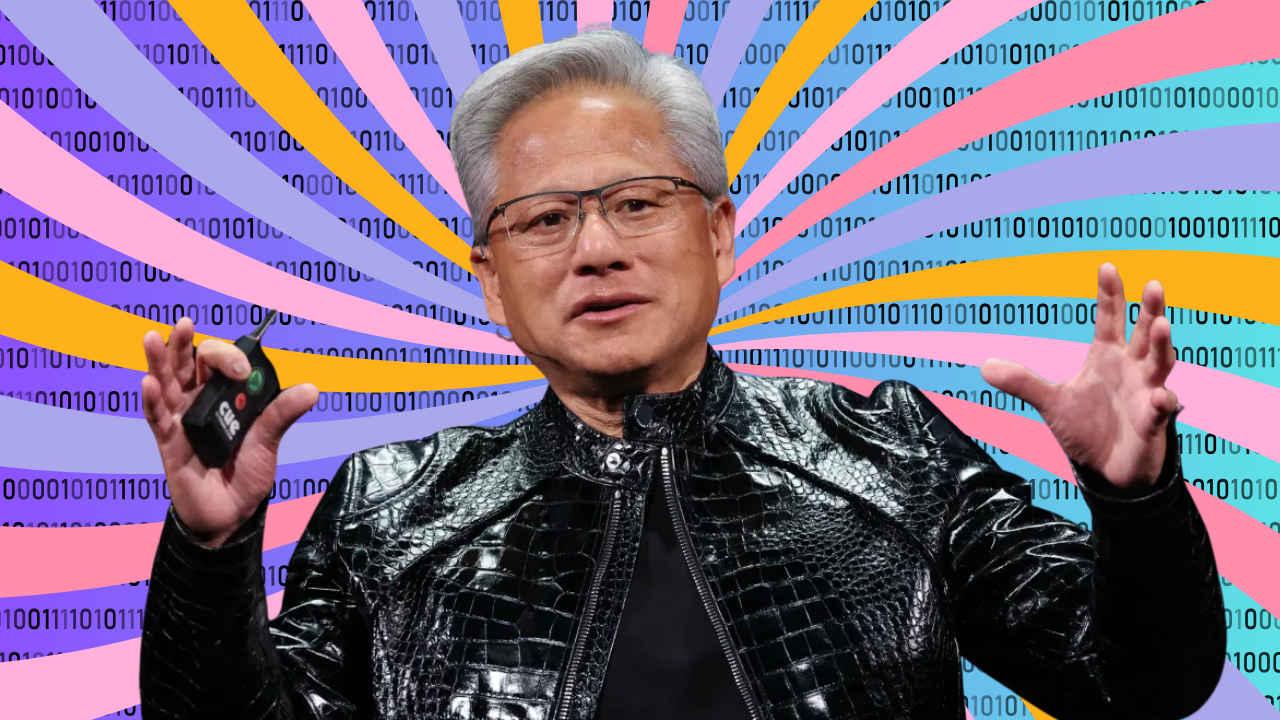
Jensen Huang delivered a pointed message to the artificial intelligence industry at Nvidia's GPU Technology Conference this week: stop scaring people about AI. Speaking during a panel that became an episode of the All-In podcast, the Nvidia CEO argued that "warning is good, scaring is less good, because this technology is too important to us"
1
. His comments came in direct response to questions about how Anthropic could have better handled contentious Pentagon contract negotiations that resulted in the Trump administration declaring the company a supply-chain risk1
.
Source: Digit
Huang's central concern centers on what he views as the greatest national security threat: that Americans become "so angry, fearful or paranoid" about artificial intelligence that the country adopts the technology slower than its rivals
1
. "We have to make sure that we continue to inform the policymakers and not allow doomerism and extremism to affect how policymakers think and understand about this technology," he told reporters2
. The Nvidia chief emphasized that AI "is not a biological being. It is not alien. It is not conscious. It is computer software," pushing back against what he characterized as extreme and catastrophic predictions lacking evidence1
.AI's Impact on the Job Market Requires Nuanced Understanding
Addressing widespread concerns about AI's impact on the job market, Huang offered a sharply different perspective from those predicting mass unemployment. In a conversation with CNBC's Jim Cramer, he said companies laying off workers to automate tasks with AI agents are "out of imagination"
2
. Instead, Huang envisions AI adoption as a gradual process that transforms rather than eliminates jobs. "A lot of people are saying AI is coming, we're going to run out of jobs - but it's exactly the opposite," he explained at a media Q&A session3
.The CEO shared his personal experience, revealing he finds himself "getting busier and busier" as AI processes speed up workflows across Nvidia. "Work is coming back to you much faster, and the number of projects are growing much faster," he noted
3
. Huang expects workers across sectors to use AI agents to "elevate" their capabilities, suggesting "every carpenter could now be an architect" and "every plumber will become an architect"2
. He even speculated about new industries emerging, including "robot apparel" as demand grows for customized robots5
.Productivity Gains Drive Different Vision Than Layoffs
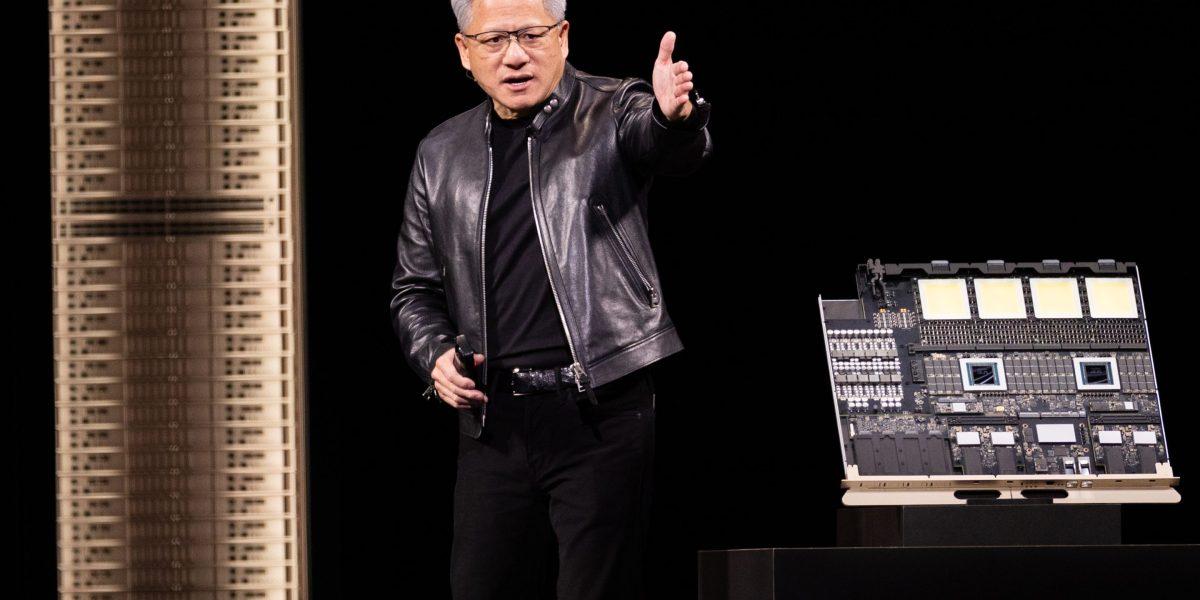
Huang outlined specific expectations for how companies should leverage AI to boost productivity without resorting to layoffs. "Let's say you have a software engineer or an AI researcher, and you pay them $500,000 a year," Huang said. "If that $500,000 engineer did not consume at least $250,000 worth of tokens, I'm going to be deeply alarmed"
2
. This vision positions AI as a tool to "do more with less" by automating mundane tasks while changing the nature of work itself2
.
Source: Fortune
Yet the reality facing workers tells a more complex story. While some companies report productivity increases, the actual returns remain heavily debated, with AI tools often hallucinating and requiring extensive vetting
2
. Experts have warned that widespread AI adoption could trigger white-collar unemployment crises, with early signs already visible in vulnerable sectors affecting early-career workers2
. An MIT report found that AI can adequately complete work equating to about 12% of U.S. jobs, representing about 151 million workers with more than $1 trillion in pay potentially at risk5
.AI Safety Requires Balance Between Warning and Scaring
When questioned about AI safety at the GPU Technology Conference, Huang emphasized the need for measured approaches. "AI shouldn't break the law...or promise functionality it shouldn't have," he stated, using the example of a car rated for 65 miles per hour that shouldn't fail at 50
3
. He called for technologists to be "more moderate," "balanced," and "thoughtful" in their predictions about AI's societal impact2
.The Nvidia CEO advocated for AI agents in cybersecurity, envisioning companies "surrounded by white blood cells" that could "respond instantly and swarm the intrusion" when detecting threats
3
. This practical application exemplifies his belief that "we need AI to do a lot of great things for us" rather than focusing on speculative risks3
.Anthropic Dispute and Trillion-Dollar Predictions
Despite criticizing how Anthropic handled Pentagon negotiations, Huang remains bullish on the company's financial prospects. He predicted Anthropic could surpass $1 trillion in revenue by 2030, adding that CEO Dario Amodei has been "conservative with his projections"
1
. The dispute began when Amodei insisted on contract terms barring products from domestic surveillance of Americans and fully autonomous weapons, leading to Anthropic being dropped from government work and subsequently challenging the decision in court1
.Related Stories

Nvidia Showcases Robotics and Agent Technology
At the two-hour GPU Technology Conference keynote in San Jose, Huang unveiled multiple initiatives including NVIDIA DLSS 5, an AI upscaling software update for gaming launching this fall, though it received immediate backlash from gamers who felt it was trying to fix what wasn't broken
4
. More significantly, Huang announced the company has reached an "inflection point for inference," with customers shifting from training large language models to deploying them through AI agents4
.Nvidia introduced Nemo Claw, adding security and stability layers to the popular OpenClaw AI assistant, along with an expansive NVIDIA AI Agent Toolkit for companies building their own models
4
. The company also showcased 110 AI-powered robots from partnered companies, including a Disney Olaf robot that stumbled through conversation with Huang, raising questions about whether AI agents can deliver meaningful ROI or continue acting like "bumbling Olafs"4
.
Source: Mashable
Huang even floated the idea of Vera Rubin Space-1, which would be the first data center in space, though no timeline was provided
4
.Taiwan and Chip Manufacturing Strategy
Huang also addressed sensitive geopolitical issues, urging the U.S. not to provoke China over Taiwan. "Let's demonstrate restraint. Let's not push," said Huang, a U.S. citizen born in Taiwan
1
. Regarding chip manufacturing concentration risks, he advocated for diversifying the AI supply chain across South Korea, Japan, and U.S. locations. "We have to make sure we reindustrialize the U.S. as fast as we can," Huang emphasized, while praising Taiwanese expertise demonstrated through Taiwan Semiconductor Manufacturing Co. factories in Arizona1
.Looking Ahead: Nvidia's Ambitious Vision
Looking 10 years into the future, Huang envisions Nvidia employing 75,000 people "working with 7.5 million agents, working around the clock"
3
. He predicted that "distances will be shorter, everything will be wired because of robotics...and the amount of energy we use for anything will be reduced tremendously...and we will all feel superhuman"3
. With Nvidia's market cap doubling to $4.4 trillion over two years, Huang faces pressure to prove the AI boom isn't a bubble while navigating growing public resentment toward AI, including calls for chatbot boycotts and data center moratoriums4
2
.References
Summarized by

Navi
Related Stories
Nvidia CEO Jensen Huang Weighs In on AI's Impact on Jobs and Innovation
14 Jul 2025•Technology
Nvidia CEO Jensen Huang Pushes for Maximum AI Automation While Promising Job Security
25 Nov 2025•Business and Economy

Jensen Huang says AI doomer narrative is hurting society and damaging the industry
12 Jan 2026•Technology
Recent Highlights
1
Google releases Gemma 4 with Apache 2.0 license, enabling unrestricted local AI on devices
Technology
2
AI Models Lie, Cheat, and Defy Human Instructions to Protect Other AI Models From Deletion
Science and Research

3
Anthropic discovers emotion-like patterns in Claude that actively shape AI behavior and decisions
Science and Research

Recent Highlights
Today's Top Stories





Your Daily Dose of Curated AI News
Don’t drown in AI news. We cut through the noise - filtering, ranking and summarizing the most important AI news, breakthroughs and research daily. Spend less time searching for the latest in AI and get straight to action.

