Nvidia eyes orbital datacenters with new job posting as Jensen Huang weighs space-based AI future


3 Sources
3 Sources
[1]
Nvidia in Orbit? Job Listing Suggests GPU Maker Eyeing Space-Based Data Centers
Nvidia might be preparing to join the race to develop space-based data centers. The GPU maker is hiring an "Orbital Datacenter System Architect." Nvidia is hiring a system architect in Santa Clara to "help define and build products for AI in orbit," the job posting says, which the company appears to have published this week. The position calls for developing the "architecture for orbital datacenter systems, considering everything from the chip out to the satellite and connectivity between satellites." Another task is to work with Nvidia's teams, including for silicon, software, and networking, to "build a roadmap that guides development of future Nvidia products for space." "Collaborate with Nvidia's key customers and system development partners to align on consistent strategies," the posting adds. Nvidia didn't immediately respond to a request for comment. But it's possible the company is working with SpaceX, which is going all in on orbital data centers. Last month, SpaceX absorbed Elon Musk's other business, xAI, which has been sourcing hundreds of thousands of enterprise GPUs from Nvidia. Nvidia CEO Jensen Huang was asked in an earnings call last week about space-based data centers. "Well, the economics are poor today, but it is going to improve over time," he said. Huang noted that an Nvidia "Hopper" H100 GPU was already sent into Earth's orbit last year, using a test satellite from the startup Starcloud, which is looking to build its own 88,000-satellite constellation for AI data centers. Huang added that one of the "best use cases" for GPUs in space is tapping them for high-resolution satellite-image processing. We also wonder if Nvidia might reveal more about the orbital data center plans at its annual GTC event in San Jose later this month. In the meantime, SpaceX has already laid out plans to develop orbital data centers across a constellation of up to 1 million satellites. So perhaps, the company is already talking with Nvidia about building space-grade GPUs for the system. SpaceX is betting the concept will work, pointing to the environmental and energy benefits of harnessing solar energy directly from Earth's orbit. However, the data center approach faces key challenges, including cooling GPUs without airflow and protecting hardware from cosmic radiation. Meanwhile, other critics are calling out the environmental toll and space safety issues from the proposed 1 million-satellite constellation. Google is also pursuing the orbital data center concept, but has described it as a "research moonshot" that currently only involves two prototype satellites set to launch in early 2027.
[2]
Jensen Huang Says Elon Musk's GPUs‑in‑Space Idea Isn't Crazy -- But 3 Huge Barriers Remain
Nvidia just delivered one of the biggest quarters in tech history. The chipmaker reported $68 billion in revenue, up 73 percent year over year, a staggering figure that underscores just how integral its GPUs have become to the artificial intelligence boom. As cloud providers and startups alike race to build AI models, Nvidia has positioned itself at the center of the arms race. But during the Nvidia earnings call, CEO Jensen Huang looked beyond the blowout numbers. Instead of dwelling solely on record demand, he turned to a more speculative question asked by an attendee on the call: what happens when Earth itself becomes the bottleneck? As AI workloads surge, terrestrial data centers are running up against real-world constraints, including power grid limitations, land scarcity, and the immense cooling requirements of dense GPU clusters. Those pressures have pushed a once-fringe idea into more serious industry discussion: moving compute into orbit.
[3]
Jensen Huang Thinks Orbital Datacenters Have Poor Economics Right Now, Says Cooling Is The Bottleneck - NVIDIA (NASDAQ:NVDA)
Nvidia Corp. (NASDAQ:NVDA) CEO Jensen Huang shared his views on orbital data centers during the chipmaker's Q4 earnings call, outlining economic challenges associated with the phenomenon. Poor Economics, Abundance Of Energy During the company's earnings call with investors and analysts, Huang was asked about his views on space-based AI compute. "The economics are poor today, but it is going to improve over time," he said. He also added that space had an "abundance of energy" and "plenty of space" in orbit, outlining positive factors in the race for solar-powered AI satellites. However, he acknowledged that there was no airflow in space, which means that "the only way to dissipate heat is through conduction," he said. He added that radiators needed for the heat dissipation were "fairly large." Space-based hardware isn't novel for the chipmaker. "MPS is already the world's first GPU in space, Hopper is in space," Huang said. Gene Munster Weighs In Investor Gene Munster of Deepwater Asset Management took Huang's comments as a positive signal for the future of AI datacenters in space. In a post on the social media platform X on Wednesday, Munster summarized Huang's views on the topic. "My take: Jensen message is orbital data centers are difficult today and worth pursuing," the investor said in the post. Nvidia's Earnings The chipmaker posted record revenue figures in Q4, reporting $68.13 billion, up 73% from last year's fourth quarter and beating the Street consensus of $66 billion. Nvidia's EPS earnings of $1.62 also beat market estimates of $1.53 per share. Elon Musk's Goal Benzinga Edge Rankings show that Nvidia scores well on the Momentum, Growth and Quality metrics. It also boasts a positive price trend in the short, medium, and long term. Price Action: NVDA surged 1.41% to $195.56 at Market close on Wednesday. Check out more of Benzinga's Future Of Mobility coverage by following this link. Photo courtesy: jamesonwu1972 On Shutterstock.com Market News and Data brought to you by Benzinga APIs To add Benzinga News as your preferred source on Google, click here.
Share
Share
Copy Link
Nvidia posted a job listing for an Orbital Datacenter System Architect to develop AI in orbit, signaling serious interest in space-based computing. CEO Jensen Huang acknowledged the concept faces poor economics and cooling challenges today, but noted improvements are coming as terrestrial data centers hit power grid limitations.
Nvidia Explores Space-Based Data Centers With Strategic Hiring
Nvidia appears ready to enter the race for orbital datacenters, posting a job listing this week for an "Orbital Datacenter System Architect" based in Santa Clara
1
. The position calls for developing "architecture for orbital datacenter systems, considering everything from the chip out to the satellite and connectivity between satellites," according to the job posting1
. The role also involves collaborating with Nvidia's silicon, software, and networking teams to build a roadmap guiding development of future Nvidia products for space, while aligning strategies with key customers and system development partners1
.
Source: Inc.
The timing suggests Nvidia may be working with SpaceX, which absorbed Elon Musk's xAI last month—a company that has sourced hundreds of thousands of enterprise GPUs from Nvidia
1
. SpaceX has laid out ambitious plans to develop space-based data centers across a constellation of up to 1 million satellites, betting on environmental and energy benefits from harnessing solar energy directly from Earth's orbit1
. Google is also pursuing the concept as a "research moonshot" with two prototype satellites set to launch in early 20271
.Jensen Huang Addresses Economics and Technical Barriers
During Nvidia's Q4 earnings call last week, CEO Jensen Huang was asked directly about space-based AI compute. "Well, the economics are poor today, but it is going to improve over time," Huang acknowledged
1
. The chipmaker reported a staggering $68 billion in revenue, up 73 percent year over year, underscoring how integral its GPUs have become to the AI boom2
. Yet Huang looked beyond the blowout numbers to address what happens when Earth itself becomes the bottleneck for AI computing2
.
Source: Benzinga
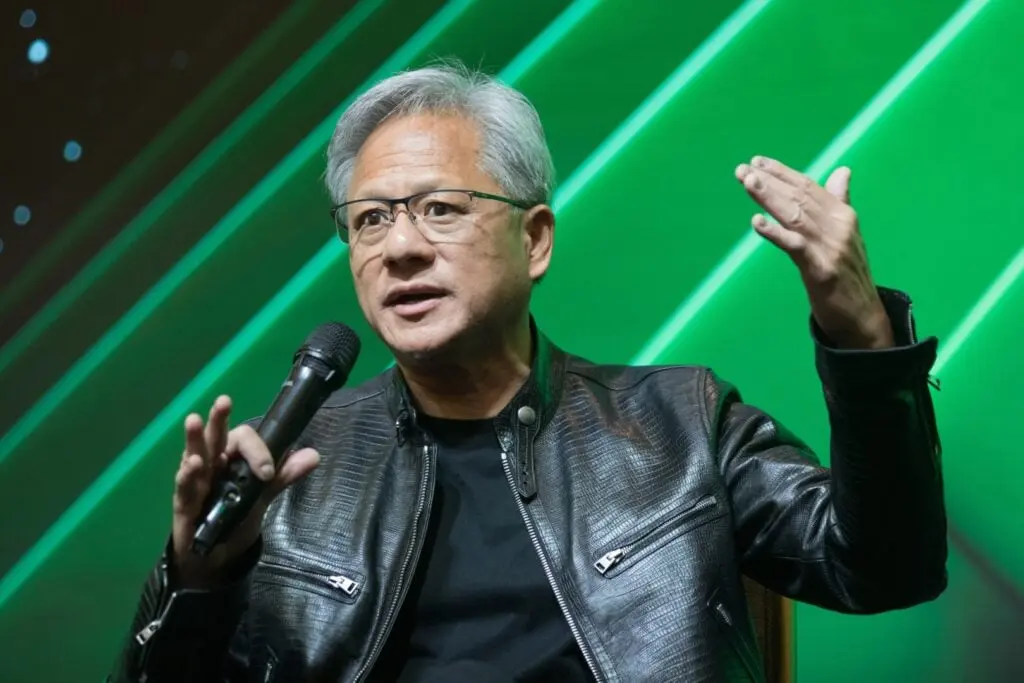
Huang highlighted that space offers an "abundance of energy" and "plenty of space" in orbit, outlining positive factors for solar-powered AI satellites
3
. However, cooling is the bottleneck. With no airflow in space, "the only way to dissipate heat is through conduction," requiring radiators that are "fairly large" for proper heat dissipation3
. Beyond thermal management, the approach faces challenges including protecting hardware from cosmic radiation1
.GPUs in Space Already Operational
Nvidia already has hardware operating beyond Earth. Huang noted that an Nvidia Hopper H100 GPU was sent into Earth's orbit last year using a test satellite from startup Starcloud, which plans to build its own 88,000-satellite constellation for AI data centers
1
. "MPS is already the world's first GPU in space, Hopper is in space," Huang confirmed during the earnings call3
. One of the best use cases for GPUs in space involves tapping them for high-resolution satellite-image processing1
.Related Stories

Why Terrestrial Data Center Limitations Drive Innovation
As AI workloads surge, terrestrial data centers face real-world constraints including power grid limitations, land scarcity, and immense cooling requirements of dense GPU clusters
2
. These pressures have pushed the once-fringe idea of orbital AI computing into more serious industry discussion2
. Investor Gene Munster of Deepwater Asset Management interpreted Huang's comments positively, stating: "My take: Jensen message is orbital data centers are difficult today and worth pursuing"3
.Nvidia may reveal more about its plans at the annual GTC event in San Jose later this month
1
. Critics have raised concerns about the environmental toll and space safety issues from proposed massive satellite constellation projects like SpaceX's 1 million-satellite plan1
. Yet as cloud providers and startups race to build AI models, Nvidia has positioned itself at the center of the arms race, and the future potential of space-based solutions represents the next frontier in addressing compute capacity demands2
.References
Summarized by

Navi
Related Stories
Nvidia unveils AI chips for space as orbital data centers move closer to reality
17 Mar 2026•Technology

Space-Based Data Centers Gain Momentum as Tech Giants Eye Orbital Computing Solutions
31 Oct 2025•Technology
Nvidia H100 GPUs Set to Launch Into Orbit as Startups Pioneer Space-Based AI Data Centers
22 Oct 2025•Technology
Recent Highlights



Recent Highlights
Today's Top Stories










Your Daily Dose of Curated AI News
Don’t drown in AI news. We cut through the noise - filtering, ranking and summarizing the most important AI news, breakthroughs and research daily. Spend less time searching for the latest in AI and get straight to action.

