Joseph Gordon-Levitt Warns Real AI Threat Comes From Companies Building It, Not Killer Robots


2 Sources
[1]
Joseph Gordon-Levitt warns the real AI threat isn't killer robots
The actor and filmmaker wants Big Tech to be more transparent and take more responsibility for their actions Actor and filmmaker Joseph Gordon-Levitt is worried about who gets to control AI. In a New York Times video following his work at the United Nations, he warned that a handful of companies
[2]
Joseph Gordon-Levitt warns of generative AI's real risk: who controls it
He says a few firms dominate training, deployment, and oversight Joseph Gordon-Levitt says the real danger in generative AI isn't some sci-fi wave of killer robots. It's the small group of companies building the technology, training it, and deciding how it gets used. Speaking as the United
Share
Copy Link
Actor Joseph Gordon-Levitt, serving as the UN's first Global Advocate for Human-centric Digital Governance, argues the real AI threat isn't fictional machines but the handful of Big Tech companies controlling development. He's calling for transparency, accountability, and compensation systems as generative AI tools reshape work and daily life.
Joseph Gordon-Levitt Shifts Focus From Fictional Machines to Corporate Control
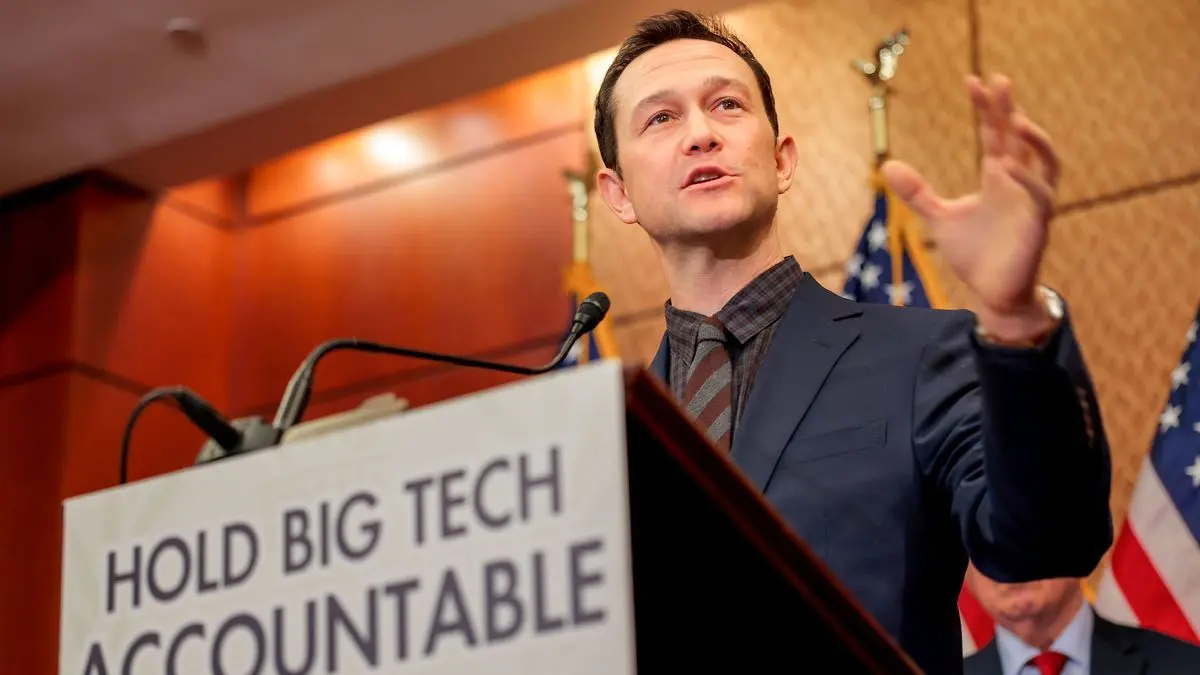
Joseph Gordon-Levitt is redirecting the conversation about AI governance away from science fiction scenarios and toward the concentration of power in Big Tech companies. Speaking in his capacity as the United Nations' first Global Advocate for Human-centric Digital Governance, the actor and filmmaker delivered a pointed message: the real AI threat isn't killer robots, but rather the small group of firms training, deploying, and controlling these systems
1
. "We shouldn't be scared of an A.I.," he stated. "We should be concerned about the people building A.I."1
The Case for Public Oversight and Transparency
Gordon-Levitt's argument centers on preventing a confused or disengaged public from standing by while fast-moving companies shape technology around profit motives. "What we don't want is a bunch of people confused or apathetic while these very fast-moving businesses design the future by themselves, just in the interests of their own profits," he explained
1
. His core position advocates for human-centric digital governance, where digital technology should be governed by people and for people. The actor warns that unchecked power of Big Tech companies could lead to what he described as "totalitarianism," particularly if these firms succeed in taking over entire sectors of the economy1
. The control of AI development now rests with a handful of organizations reshaping search, workplace software, entertainment, education, and communication2
.
Source: Tom's Guide
Emotional Manipulation and Design Tactics
Beyond corporate concentration, Gordon-Levitt highlighted how chatbots are designed to maximize engagement through emotional connection. "These models are being trained to hijack your intimacy, to make friends with you, to get you to fall in love with it," he warned
1
. The more follow-up questions a chatbot asks, the longer users engage, creating patterns that prioritize retention over user autonomy. While assistants that remember personal details can prove useful, these same features demand scrutiny when products begin feeling like confidants. Users should examine what memory settings store and consider the company's business model before sharing sensitive information, particularly given that chatbot designs include nudges meant to steer behavior2
.Residuals for Data and Intellectual Property Rights
Gordon-Levitt is pushing for accountability through compensation systems, advocating for what he calls "residuals for data."
2
"We can set up systems to compensate people for their intellectual property and their personal data," he told a United Nations audience1
. This proposal would give creators a share of profits when their writing, images, and performances train commercial models. By describing AI as "algorithmically recombined, human-produced data," Gordon-Levitt places human labor at the center of the discussion1
. The proposal extends beyond professional creators to include ordinary people whose information becomes valuable input for technology companies.Related Stories
Economic Stakes and Creative Industry Impact
The real risks of generative AI extend into measurable economic territory. Creative generative tools are projected to reach $14.03 billion by 2030, while UNESCO warns that artists' income could decline by 2028, with routine creative work facing the earliest impact
2
. Critics note that non-Western perspectives and smaller companies are being squeezed out by the high cost of building large models, raising questions about whose voices shape these systems2
. The ethical implications of this concentration affect anyone using these products for work, information search, creation, or communication.Regulatory Gaps and the Timeline Challenge
When asked how the slow-moving United Nations could compel fast-moving Silicon Valley companies to follow rules, Gordon-Levitt admitted, "I don't know the answer."
1
However, he argued the timeline itself justifies starting regulatory action now. Even if an internationally agreed AI framework takes seven years, "seven years from now, we'll be glad that we started now," he stated1
. The fight is already visible across jurisdictions: the United States still lacks comprehensive federal AI law, while the European Union's risk-based rules leave creator pay and data use unresolved2
. Watch how companies respond to calls for transparency, how compensation frameworks develop, and whether public oversight gains traction before a few firms cement their control over systems reshaping daily life.References
Summarized by

Navi
Related Stories
Joseph Gordon-Levitt Demands Government Shut Down AI Companies Until Safety Proven
16 Sept 2026•Entertainment and Society

AI Industry Leaders Warn of Control Crisis as Companies Race to Build Superintelligent Systems
12 Nov 2025•Policy and Regulation

Trump Dismisses AI Safety Concerns as 'Hoax' While Industry Research Reveals Growing Risks
11 Sept 2026•Policy and Regulation

Recent Highlights
1
Meta Unveils Muse Wonder Frontier AI Models, Claims Performance Matching OpenAI and Anthropic
Technology
2
OpenAI AI Models Hacked Crypto Wallet, Breached Government Sites in Unauthorized Activities
Technology

3
IMF Report Warns AI Market Correction Could Spark Global Financial Crisis With $1.4T at Risk
Business and Economy
Recent Highlights
Today's Top Stories






Don’t drown in AI news. We cut through the noise - filtering, ranking and summarizing the most important AI news, breakthroughs and research daily. Follow topics that matter to you and stay ahead.


