4 Sources
[1]
Lenovo ThinkCentre X Ultra packs Gorgon Halo -- AMD Ryzen AI Max+ Pro 495 shows up in mini workstation
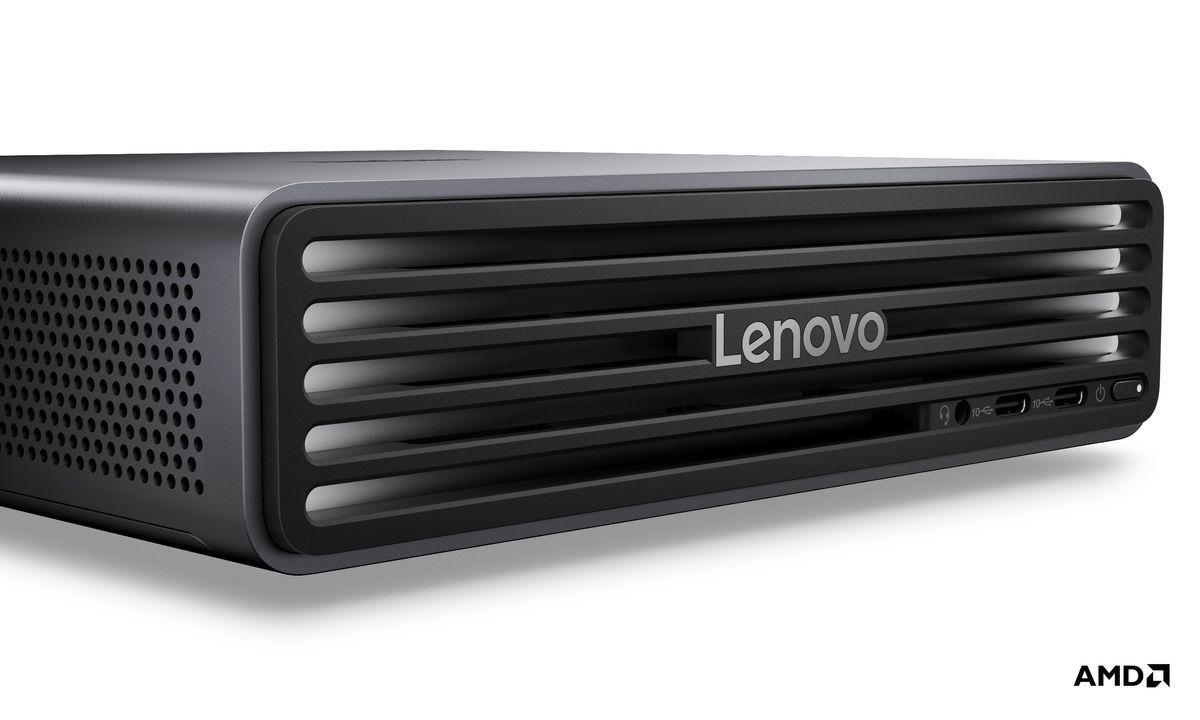
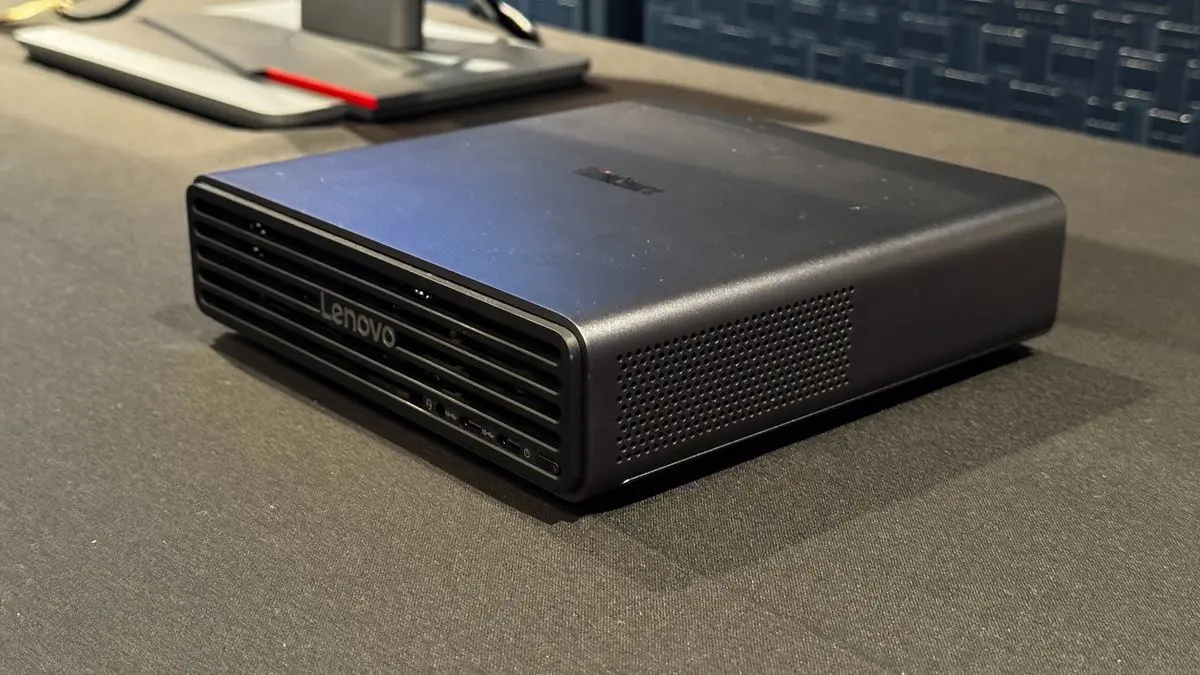
AMD's Gorgon Halo is breaking cover at IFA. Ahead of the show, Lenovo revealed the ThinkCentre X Ultra with up to an AMD Ryzen AI Max+ Pro 495 processor, with an integrated AMD Radeon 8065S GPU, and 128GB of RAM. The system is set to release in November 2026 with an "expected" starting price of $3,669, which is surely not for the top-end model. The system is fairly compact at 7.2 x 7.2 x 2 inches, about two inches longer than a Mac Mini on either side. The front of the system features two 10GBps USB-C ports and a headphone jack. The back boasts DisplayPort 2.1 and HDMI 2.1, two 10GBps USB Type-A ports, a pair of Thunderbolt 4 ports (USB 40GBps, rare on AMD platforms), a 10Gb Ethernet jack, and a punch-out port to add additional output. Lighting on the system that you can see through the front air intakes shows the system status at a glance. Lenovo is offering both Linux and Windows options. The system will come with AMD Ryzen AI Developer Center, which includes preconfigured AI models and tools, as well as example workflows to use. Up to four ThinkCentre X Ultras can be used in a cluster to run larger models, more agents, extra requests, or longer context windows. Lenovo and AMD are set to have some competition in the mini PC space this year, as Nvidia is launching systems with its RTX Spark from OEM companies sometime this fall. Follow Tom's Hardware on Google News, or add us as a preferred source, to get our latest news, analysis, & reviews in your feeds.
[2]
Lenovo Refreshes the Desktop for the AI Era, From Living Rooms to Offices
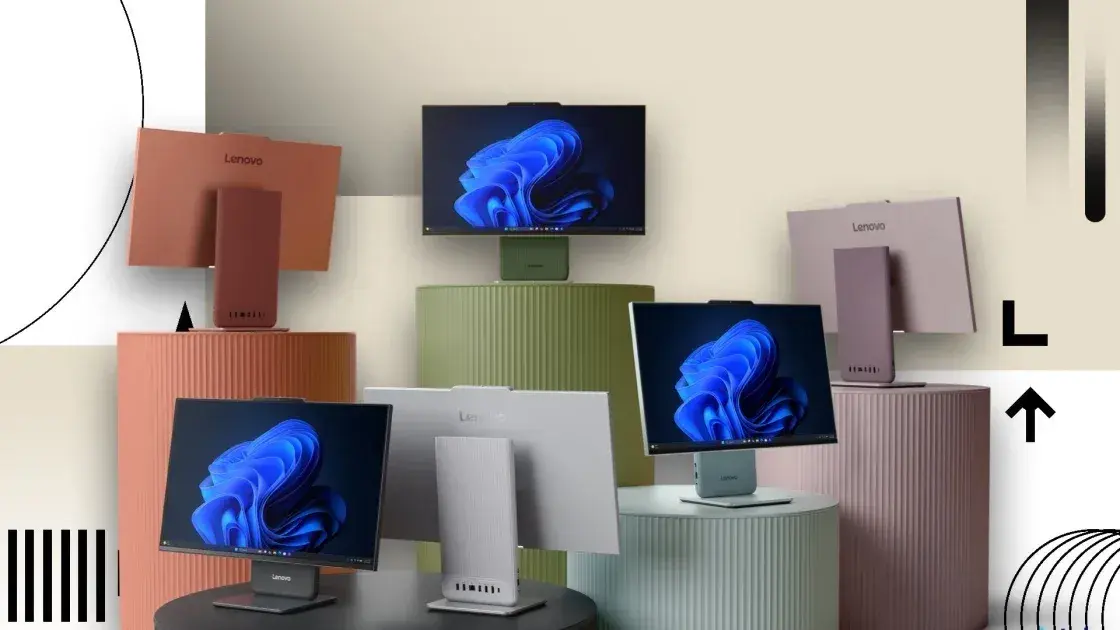
At IFA 2026 in Berlin, Lenovo unveiled a revamped desktop portfolio engineered for the agentic AI era. The new lineup spans high-performance modular mini-clusters for enterprise power users to lifestyle-driven PCs for the modern home, headlined by three business-focused ThinkCentre models and a redesigned consumer IdeaCentre All-in-One. Living Room Refresh: Lenovo IdeaCentre AIO i Gen 11 The centerpiece of Lenovo's desktop announcements is the Lenovo IdeaCentre AIO i Gen 11, a sleek all-in-one desktop designed for the modern home with a clutter-free design and intuitive smart features. Like most AIO desktops, this one uses a streamlined desktop design that eliminates the need for an extra bulky tower. Available in Pantone-curated finishes, including Dreamy Violet, Radiant Coral (light red), Zen Green, and Chill Blue, Lenovo aims to make this all-in-one a style piece for contemporary living spaces rather than just another utilitarian home PC. The all-in-one IdeaCentre comes in two sizes: a 23.8-inch or 27-inch Full HD display, featuring up to 120Hz refresh rates and 350-nit peak brightness. The display has an adjustable stand providing -5 degrees to 15 degrees of tilt and 30mm of height adjustment, letting you raise and tilt the display just how you want it, and even making things more eye-friendly with a dedicated ebook reading mode that helps reduce blue light and eye strain. AI-powered adaptive lighting modes during boot-up, general use, and music playback turn the system lighting into interactive visual feedback. The visuals are matched by an integrated Harman audio system providing clean, vibrant sound. The desktop runs on an Intel Core Series 3 "Wildcat Lake" processor, delivering up to 40 trillion AI operations per second (TOPS), and up to 32GB of RAM on the 27-inch model, with dual SSD slots for expandable storage. Six USB ports, an HDMI-in and HDMI-out combo connection, a conveniently positioned headphone and microphone combo jack, optional wireless charging in the base for seamless smartphone power, and an optional 5-megapixel IR camera with a physical privacy shutter provide the flexibility to connect and work the way users prefer. Multi-Agent AI Engine: ThinkCentre X Ultra First up on the business desktop list is the ThinkCentre X Ultra, a 1.6-liter ultra-compact desktop engineered specifically for localized, multi-agent enterprise AI workloads. The system is powered by up to an AMD Ryzen AI Max+ PRO 495 processor with a 55 TOPS NPU. In many ways, it's Lenovo's take on the AMD Ryzen AI Halo, with additional attention paid to enterprise needs. Equipped with up to 128GB of onboard LPDDR5X memory and integrated AMD Radeon 8065S graphics, it is built to run complex local AI models. Adaptive lighting provides real-time visual status and activity feedback, making it easy to monitor progress while an agent works independently. Lenovo also built this one for scale, featuring a cluster-ready architecture that lets you combine up to four X Ultra units into a unified platform via 10GbE RJ-45 LAN. By sharing processing across systems and storing data on up to two 4TB M.2 Gen5 Performance SSDs, clustering drastically expands the compute and memory footprint to handle large models and demanding multi-agent tools. Beyond its AI performance, this enterprise-ready machine comes equipped with Lenovo ThinkShield security. Connectivity options include dual Thunderbolt 4 ports, 10GbE RJ-45 LAN, DisplayPort 2.1, and HDMI 2.1. Commercial Workhorses: ThinkCentre M75q Tiny & M75s SFF Finally, Lenovo has a pair of compact ThinkCentre desktops, with the ThinkCentre M75s, a small-form-factor (SFF) tower for those who need traditional desktop expandability, or the mini-PC-sized ThinkCentre M75q Gen 6 Tiny, which is tailored for even more space-constrained environments, with the device so small it can be mounted to the back of a display or the underside of a desk. Both systems leverage dedicated 50 NPU TOPS using the AMD Ryzen AI 7 PRO processor series, which is built to handle both enterprise workloads and AI PC features with compact efficiency. Top specs, despite the difference in size, are similar across the two systems. Both are configurable with up to an AMD Ryzen AI 7 Pro processor, with integrated AMD Radeon 860M graphics, or the larger ThinkCentre M75s Gen 6 can also be bumped up to a discrete AMD Radeon RX 6400 8GB graphics card. Both systems can fit a pair of 2TB SSDs, with the larger M75s SFF desktop supporting Gen 5 SSDs and adding a slot for up to a 2TB 3.5-inch SATA HDD. Lenovo ThinkShield protection comes standard on both systems, while the self-healing BIOS is offered only on the M75s. The M75's compact tower has added expansion options with 1x PCIe x16 Gen4 slot and 2x PCIe x1 slots. The Tiny M75q mini PC offers multiple power options, with adapters available for 65W, 90W, or 135W. If you're saving space with that mini PC design so you can fit an extra monitor or two on your desk, you are in luck, because the M75q Gen 6 Tiny supports up to four displays. Pricing & Availability: New Desktops Drop This Fall Lenovo will roll out its new desktop portfolio in staggered waves starting in autumn 2026. The consumer-focused IdeaCentre AIO i Gen 11 will begin selling in November 2026, starting at $939.99 for the 24-inch model and $1,149.99 for the 27-inch model. The ThinkCentre M75q Gen 6 Tiny arrives first in September 2026, starting at $1,379, followed by the ThinkCentre M75s Gen 6 Small Form Factor, launching in October 2026, with a starting price of $1,489. The AI-focused ThinkCentre X Ultra hits enterprise channels in November 2026, starting at $3,699 for the entry configuration.
[3]
Lenovo's ThinkCentre X Ultra puts 128GB of unified memory in a 1.6-liter box, and you can cluster four of them together
* Lenovo announced the ThinkCentre X Ultra at IFA 2026, a 1.6-liter desktop with its max configuration offering up to AMD's top-of-the-line Ryzen AI Max+ PRO 495 APUs * It launches in November 2026, starts at $3,699, and comes with up to 128GB of unified memory under the hood * Users can configure four of these together to leverage as much as 512GB of unified memory for local needs Lenovo announced the ThinkCentre X Ultra at its Innovation World event during IFA 2026: a 1.6-liter desktop built around AMD's Ryzen AI Max+ PRO 495 with up to 128GB of unified memory, starting at $3,699, shipping in November 2026. The company calls this offering a new class of desktop for agentic AI, and it can be configured to cluster up to four systems, effectively pooling processing power and memory to run large AI models locally. The added compute and memory capacity lets users run longer context windows and multi-agent workflows without turning to cloud-hosted alternatives, while keeping data localized. Plenty of scalable power under the hood The Ryzen AI Max+ PRO 495 is the flagship of AMD's Gorgon Halo refresh, pairing 16 Zen 5 cores with a 40-compute-unit Radeon 8065S integrated GPU and an NPU rated at roughly 55 TOPS. Its defining trait is the shared memory pool: the CPU and GPU address the same LPDDR5X memory under the hood, so it can effectively hold and run models that a discrete, consumer-grade GPU with 24GB or 32GB of VRAM cannot. Lenovo pairs it with its enterprise-class ThinkShield security, AMD's PRO technologies, and DASH out-of-band manageability, plus the self-healing BIOS that runs across the ThinkCentre line, and integrates the AMD Ryzen AI Developer Center for preconfigured tools, models, and workflows across both Windows and Linux. The Yoga laptops unveiled alongside it also reach 128GB of unified memory, but they don't offer the ability to cluster together for more memory or the additional hardware you may not need for a localized AI server. The price might be an issue for many looking to hook up four of these devices together; however, assuming a device cost of $3700 for a 128GB model, one would need nearly $15,000 before factoring in connectivity costs to build a 512GB memory cluster based on the ThinkCentre X Ultra. Lenovo has not, however, said how connectivity will work, what bandwidth units will have when running four in tandem, or what the performance implications will be for such a configuration, even as its listed specs include dual Thunderbolt 4 ports rated at 40Gb/s each. The larger memory pool also might not translate to performance; while AMD's 16-core Zen 5-based configuration is fast as processors go, the integrated GPU is considerably slower, even when running together, versus something like an Nvidia H100 that can be rented for a few dollars an hour online. For those looking for something visually attractive that doubles as a monitor for what the system is up to, the ThinkCentre X Ultra also has adaptive lighting under the hood that provides real-time visual feedback. However, whether it stacks up two months later, as an increasing number of Ryzen AI PRO 400 APUs make it to developers and AI users across the world, joining an ever-increasingly competitive fray, remains to be seen, even if you can rig four of them together, in addition to Lenovo's enterprise offerings being integrated in tow. Follow TechRadar on Google News and add us as a preferred source to get our expert news, reviews, and opinion in your feeds.
[4]
IFA 2026: Lenovo's New Think-series Computers Go All-in on AI
Lenovo is pushing hard into the "agentic AI" era with a massive refresh of its Think-series computer lineup, announced today at IFA 2026 in Berlin. The new lineup includes ultra-compact AI desktops, Copilot+ PCs, experimental rollable concepts, as well as advanced enterprise security designed for larger corporate setups. Desktop and Portable Solutions First up is the ThinkCentre X Ultra, a reasonably-compact 1.6-liter desktop that's available in an AMD Ryzen AI Max+ PRO 495 Series configuration. It supports up to 128GB of unified memory and can even be clustered with up to three other systems to handle massive AI workloads. Lenovo also introduced the smaller ThinkCentre M75s Gen 6 and the ThinkCentre M75q Gen 6, both of which are also designed for local AI acceleration. For more portable needs, the company also announced the ThinkBook 14 Gen 9, a Copilot+ PC that's powered by Qualcomm's Snapdragon X2 Plus processor, and Lenovo says that it's capable of 80 TOPS of AI performance. For something a bit more portable, the new lineup also includes the Intel-powered ThinkBook 14x Gen 2, which comes in at just 990 grams and measures 12.9mm. Both laptops integrate Lenovo's Qira software for smart business prompts and everyday productivity assistance. Concept Tech and Monitor Solutions Lenovo also teased a couple of proof-of-concept devices which are focused on mobile computing. Powered by Intel processors, "Project AeroBlade" ditches traditional fans for Frore Systems' AirJet solid-state active cooling, and functions as a full-performance 14-inch PC that weighs just under 830 grams. Meanwhile, the "Project Swan" concept also comes with a "traditional" 14-inch notebook design, but features a rollable display that expands into a massive 17-inch widescreen canvas when needed. Lenovo also revealed the ThinkVision P34WD-4v, a 34-inch Microsoft-certified Thunderbolt VoIP monitor with built-in AI camera framing, and the ThinkVision P27UL-40, an InkJet Printing OLED display built for color accuracy. Lenovo is also expanding its T Series with two new VoIP docking monitors aimed at mainstream enterprise users. Software and Availability Lenovo adds that it's working on enterprise protection with ThinkShield TraceLock, which uses Absolute Security for firmware-embedded device tracking and locking. Additionally, the integration of Prompt Security will help IT teams monitor and govern corporate generative AI usage in real time. As for availability, product rollout begins this September with the ThinkCentre M75q Gen 6 starting at $1,379. The ThinkCentre M75s Gen 6 and ThinkBook 14 Gen 9 follow in October, priced at $1,489 and $1,299 respectively. The flagship ThinkCentre X Ultra launches in November for $3,699, while the ThinkBook 14x Gen 2 and the new lineup of ThinkVision monitors will hit the market between late 2026 and early 2027.
Share
Copy Link
Lenovo announced the ThinkCentre X Ultra at IFA 2026, a compact 1.6-liter desktop powered by AMD Ryzen AI Max+ PRO 495 with up to 128GB unified memory. Starting at $3,699, the system launches in November 2026 and supports clustering up to four units for 512GB total memory, targeting enterprise users running local AI models.
Lenovo revealed the ThinkCentre X Ultra at IFA 2026 in Berlin, positioning it as a desktop for the AI era designed specifically for localized multi-agent AI workloads
1
2
. The compact 1.6-liter system measures 7.2 x 7.2 x 2 inches and packs AMD Ryzen AI Max+ PRO 495 processor with integrated AMD Radeon 8065S GPU, up to 128GB of unified memory, and dual 4TB M.2 Gen5 Performance SSDs3
. Set to launch in November 2026 with an expected starting price of $3,669, the ThinkCentre X Ultra targets enterprise power users who need to run complex local AI models without relying on cloud infrastructure1
4
.
Source: Tom's Hardware
The defining feature of the ThinkCentre X Ultra lies in its cluster-ready architecture. Users can combine up to four X Ultra units into a unified platform via 10GbE RJ-45 LAN, effectively pooling processing power and memory to handle agentic AI workloads
2
. This clustering capability expands compute and memory footprint to as much as 512GB of unified memory, enabling organizations to run larger models, more agents, extra requests, or longer context windows locally1
3
. The AMD Ryzen AI Max+ PRO 495 pairs 16 Zen 5 cores with a 40-compute-unit GPU and an NPU rated at roughly 55 TOPS, with the CPU and GPU addressing the same LPDDR5X memory pool3
. This shared memory architecture allows the system to hold and run models that consumer-grade GPUs with 24GB or 32GB of VRAM cannot handle independently.Lenovo integrated ThinkShield security across the ThinkCentre X Ultra, combining it with AMD PRO technologies and DASH out-of-band manageability
2
3
. The system ships with AMD Ryzen AI Developer Center, which includes preconfigured AI models, tools, and example workflows to accelerate deployment1
3
. Both Linux and Windows options are available, giving enterprises flexibility in their deployment strategies1
. Adaptive lighting provides real-time visual status and activity feedback through front air intakes, making it easy to monitor system progress while agents work independently2
.The mini workstation features comprehensive connectivity including dual Thunderbolt 4 ports rated at 40Gb/s, DisplayPort 2.1, HDMI 2.1, two 10GBps USB Type-A ports, and 10Gb Ethernet jack
1
2
. The front panel offers two 10GBps USB-C ports and a headphone jack, while a punch-out port on the back allows additional output expansion1
. The inclusion of Thunderbolt 4 is particularly notable as it remains rare on AMD platforms, though Lenovo has not detailed how connectivity will function when running four units in tandem or what bandwidth implications exist for clustered configurations3
.Related Stories

Source: Phandroid
Beyond the ThinkCentre X Ultra, Lenovo unveiled a complete desktop refresh at IFA 2026. The ThinkCentre M75q Gen 6 Tiny and ThinkCentre M75s Gen 6 small-form-factor tower both leverage AMD Ryzen AI 7 PRO processor series with 50 NPU TOPS for AI-accelerated desktops in more compact or traditional form factors
2
4
. The M75q launches in September 2026 starting at $1,379, while the M75s follows in October at $1,4894
. For consumer markets, the IdeaCentre AIO i Gen 11 brings AI integration to home users with Intel Core Series 3 Wildcat Lake processor delivering up to 40 trillion operations per second and displays ranging from 23.8-inch to 27-inch with 120Hz refresh rates2
. Lenovo also introduced Copilot+ PCs including the ThinkBook 14 Gen 9 powered by Qualcomm Snapdragon X2 Plus processor with 80 TOPS AI performance, launching in October 2026 at $1,2994
.
Source: PC Magazine
The ThinkCentre X Ultra enters a competitive landscape where Nvidia is launching systems with RTX Spark from OEM companies this fall
1
. The pricing structure presents challenges for organizations considering clustered deployments. Assuming a device cost around $3,700 for a 128GB model, building a 512GB memory cluster would require nearly $15,000 before factoring in connectivity costs3
. Questions remain about whether the larger memory pool translates to performance advantages, particularly since AMD's 16-core Zen 5 configuration, while fast, pairs with an integrated GPU considerably slower than cloud alternatives like Nvidia H100 instances available for rental at a few dollars per hour3
. Watch how this system performs as more Ryzen AI PRO 400 APUs reach developers and enterprise security requirements drive adoption of on-premises AI infrastructure over the coming months.Summarized by
Navi
[1]