Manus 2.0 Launches AI Agent Platform With Cue App, Cutting Costs by 32% After Meta Split


3 Sources
[1]
Meta's ex launches agent rival to Meta's Muse
Manus 2.0 adds a new "agent harness," persistent execution environment, and workflow automation tools aimed at developers and enterprise use cases. endif; ?> Manus's relationship with Meta? It's complicated. Just months after they called off their merger, they find themselves competing in the
[2]
Manus 2.0 and Cue give AI agents their own email, phone and wallet
Manus 2.0 is out, and its new Cue app gives each AI agent a phone, an email and a wallet. The launch comes five months after Beijing ordered Meta's $2bn deal for Manus cancelled. Manus, the AI agent startup founded in China and now based in Singapore, launched Manus 2.0 on Monday. It also released
[3]
Manus launches AI agent platform as startup expands tools By Investing.com
Investing.com - Manus, an artificial intelligence startup founded in China, launched its latest multipurpose AI agent and a new platform for creating personal agents on Monday. The company introduced Manus 2.0 and Cue, a standalone app that lets users create and deploy personal agents. Manus 2.0
Share
Copy Link
Manus released its rebuilt AI agent platform, Manus 2.0, featuring the Cascade orchestration system and Cue app. Each personal AI agent gets its own email, phone number, and wallet to operate independently. The launch follows Beijing's block of Meta's $2bn acquisition deal.
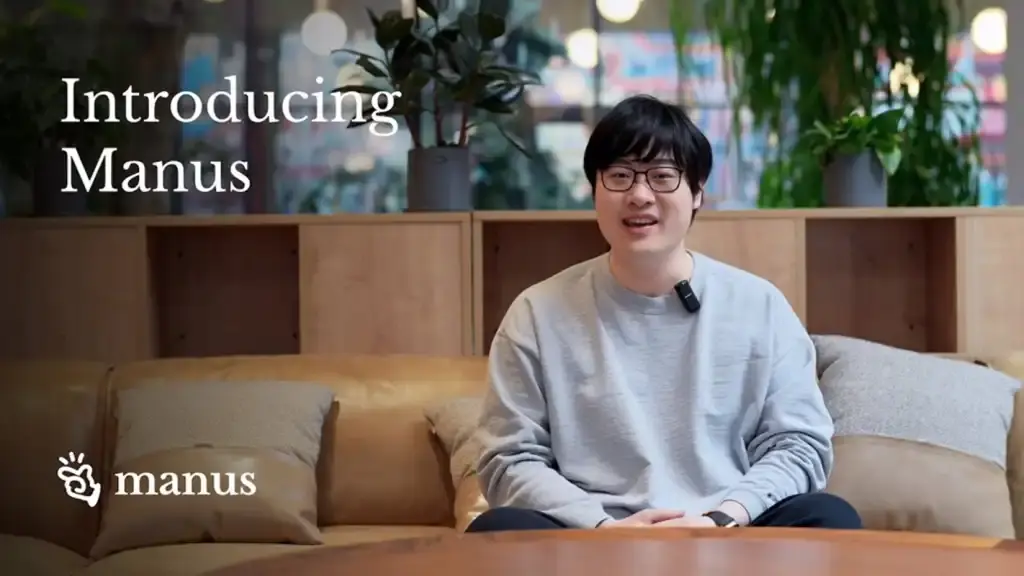
Manus 2.0 Rebuilds AI Agent Platform With New Architecture
Manus, the Singapore-based AI startup, released Manus 2.0 on Monday, marking a complete architectural overhaul rather than an incremental update
1
. The release introduces Cascade, a new agent harness that manages how agents are invoked and coordinated within projects, alongside Cloud Computer for persistent execution environments and expanded workflow automation tools1
. This launch comes five months after China's National Development and Reform Commission blocked Meta's $2bn acquisition of Manus, forcing the startup to continue as an independent entity2
.Cascade System Cuts Token Usage by 23.2% and Costs by 32%
The Cascade agent harness represents a significant efficiency gain for the AI agent platform. In one tested configuration, Cascade used 23.2% fewer tokens, finished tasks in 28.2% less time, and cost 32% less to run than Manus's previous system
3
. The orchestration layer keeps projects lightweight by bringing in specialized capabilities only when required, helping enterprises manage operational costs more effectively1
. Gartner Senior Director Analyst Anushree Verma noted that orchestration layers are becoming central differentiators for enterprise AI deployments, though they complement rather than replace underlying models1
.Cue App Gives Personal AI Agents Email, Phone, and Wallet
Manus simultaneously launched Cue, a standalone app for personal agents that directly competes with Meta's Muse app
1
. Each agent in Cue operates with its own identity and resources, including an email address, phone number, wallet, and computer2
. These autonomous systems can send messages, make payments within user-defined budgets, and complete tasks independently on their own machines2
. Users can create groups of agents that share a common goal and hand work to each other—for example, one agent researches venues for a New York launch while another makes a shortlist and a third drafts the presentation deck2
.Cloud Computer Enables Persistent Execution Environments
Manus 2.0 introduces Cloud Computer, a dedicated environment designed for projects requiring continuous operation
1
. This persistent execution environment provides a permanent home for automations or services that need to remain active even when a user's laptop is closed2
. The feature addresses enterprise needs for always-on AI agent capabilities and infrastructure, particularly for workflow automation tools that must respond to events around the clock3
.Automations Add Event-Triggered Workflow Capabilities
Expanding beyond scheduled tasks, Manus 2.0 introduces Automations that enable event-driven workflows
1
. Tasks can now begin when something happens in connected services such as the arrival of new email, a Slack message, changes in ad performance, calendar events, or Notion updates3
. This shift from time-based to event-based triggers makes the AI agent platform more responsive to real-world business conditions and user needs2
.Related Stories

Manus Studio Integrates Video Editor and Game Dev Environments
The desktop app has been upgraded to Manus Studio, a shared workspace combining documents, spreadsheets, PDFs, slides, websites, code, games, and video
1
. Two new environments stand out: Video Editor, designed for short product ads of 30 to 60 seconds, tutorials, and vlogs, provides a timeline of clips, images, text, and audio that users can manually swap2
. Game Dev allows users to build and publish multiplayer games as websites, with servers running on Cloud Computer2
. Both tools let users edit AI-generated content by hand, maintaining human oversight over autonomous systems3
.Governance Challenges Emerge With Remote Control Features
Manus 2.0 introduces remote control capabilities that enable the system to operate within a user's computing environment
1
. In authorized sessions, Manus works in its own visible workspace on the user's computer, accessing approved files, browsers, and apps to retrieve files, test applications, or continue work while the user is offline1
. However, Verma cautioned that "the autonomy is ahead of the governance," recommending enterprises treat such systems as untrusted or semi-trusted automation with strong isolation, approval gates, detailed telemetry, and narrowly defined authority1
. These governance challenges will shape how organizations deploy personal AI agents at scale.Availability and China Market Expansion
Manus 2.0 is available now on web, desktop, and mobile platforms
3
. Cue is free to use in early access with the invite code MEETCUE on a first-come, first-served basis, with iOS availability coming after App Store review2
. Following its split from Meta, Manus is building a team to develop products for the Chinese market and is in talks with local model makers and ecosystem partners2
. This positions the company to compete in both Western and Chinese markets as the race for AI agent dominance intensifies.References
Summarized by

Navi
[1]
Related Stories
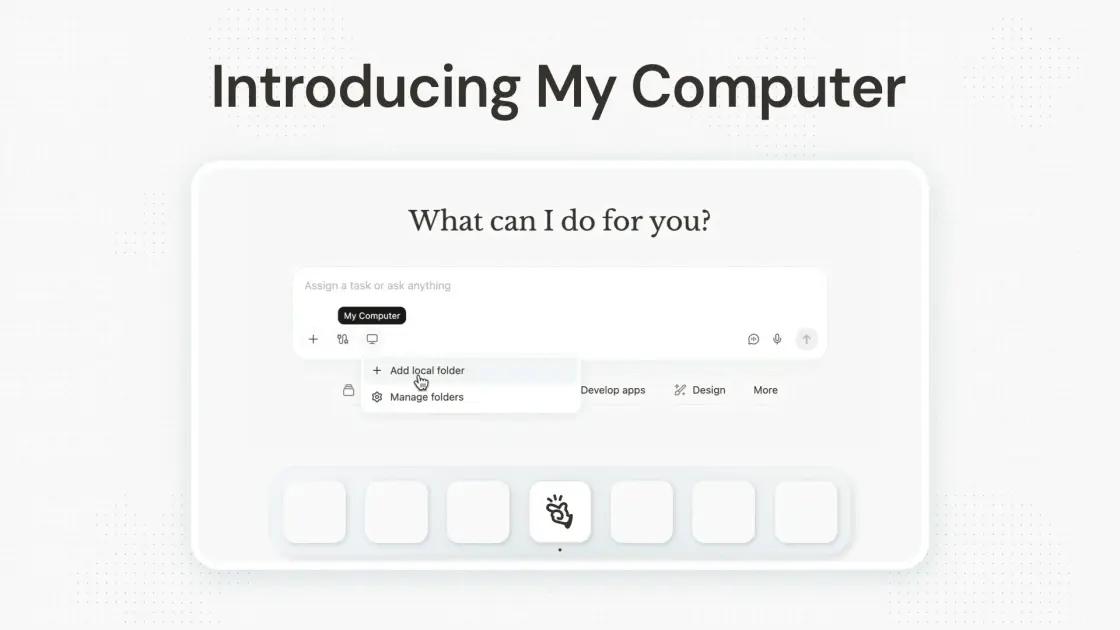
Meta's Manus launches desktop app with AI agent to automate tasks on Mac and Windows
18 Mar 2026•Technology
Manus Raises $500M in First Funding Round After China Blocked Meta's $2B Acquisition
08 Oct 2026•Startups
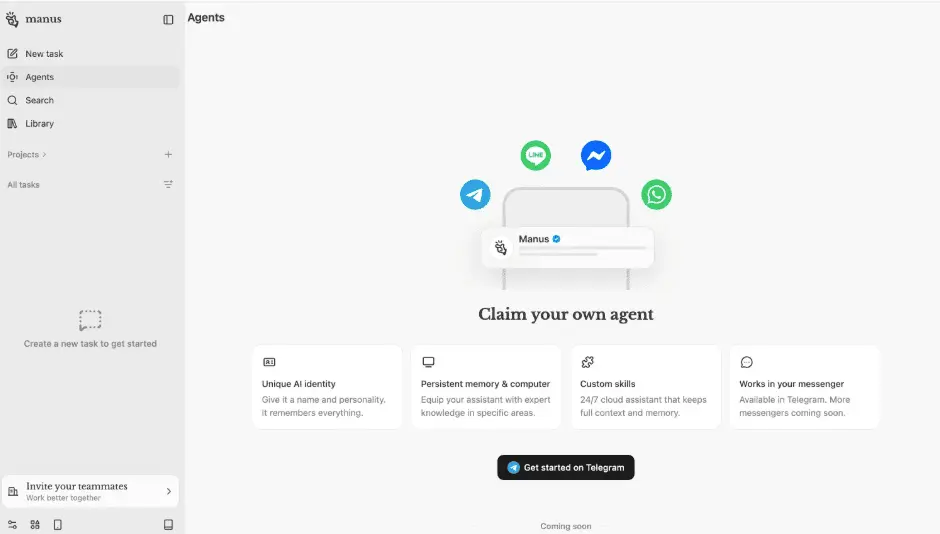
Manus launches personal AI agents on Telegram, with WhatsApp and Slack support coming soon
17 Feb 2026•Technology
Recent Highlights
1
Meta Unveils Muse Wonder Frontier AI Models, Claims Performance Matching OpenAI and Anthropic
Technology

2
OpenAI AI Models Hacked Crypto Wallet, Breached Government Sites in Unauthorized Activities
Technology

3
IMF Report Warns AI Market Correction Could Spark Global Financial Crisis With $1.4T at Risk
Business and Economy

Recent Highlights
Today's Top Stories







Don’t drown in AI news. We cut through the noise - filtering, ranking and summarizing the most important AI news, breakthroughs and research daily. Follow topics that matter to you and stay ahead.


