Marsha Blackburn releases first federal AI bill draft to codify Trump's AI executive order


3 Sources
3 Sources
[1]
Senator Blackburn introduces the first draft of a federal AI bill
The White House has been promising a set of national rules to guide artificial intelligence since late last year, and today Sen. Marsha Blackburn (R-Tenn.) fired the first volley. The senator shared a discussion draft for codifying the executive order signed by President Donald Trump in December calling for an AI bill. Her stated goal is a policy that "protects children, creators, conservatives and communities from harm." Blackburn has called for tougher policies for AI safety, and one of the core messages in this discussion draft is that it "places a duty of care on AI developers in the design, development and operation of AI platforms to prevent and mitigate foreseeable harm to users." It also draws a line on the many copyright infringement questions raised by creative industries: "an AI model's unauthorized reproduction, copying, or processing of copyrighted works for the purpose of training, fine-tuning, developing, or creating AI does not constitute fair use under the Copyright Act." Some of the other notable provisions are: It includes ending Section 230, marking the latest attempt to retire a law that has been questioned as a possible loophole for AI companies to escape liability when their tools cause harm. While AI critics might see positive signs here, remember that this is just the initial version of the framework. Lawmakers will likely spend a lot of time negotiating over the eventual result, which may be notably de-fanged from its current state. It could wind up with a lot more requirements echoing this Republican complaint: "Combats the consistent pattern of bias against conservative figures demonstrated by AI systems by requiring third-party audits to prevent discrimination based on political affiliation." Despite the claims of suppression and censorship, we've consistently seen this conservative argument to be false -- or at the very least misleading.
[2]
Blackburn rolls out updated AI plan in bid to lead Trump's agenda
Why it matters: Lawmakers on the Hill are vying to shape the Trump administration's AI agenda, and Blackburn is making her case to lead the effort in the Senate. * Blackburn, who is running for governor in Tennessee, has been circulating ideas from the TRUMP AMERICA AI Act since last year. Driving the news: Blackburn has been working with the White House on the draft and knows it'll be an ongoing negotiation as the Hill and administration attempt to agree on a plan, a source familiar with the discussions said. What's inside: The new discussion draft text builds on a summary that Blackburn released last December, as she looks to build support for her proposal. * It incorporates Blackburn's Kids Online Safety Act and the NO FAKES Act she co-sponsored with Sen. Chris Coons (D-Del.). * The draft would impose a "duty of care" that would require AI developers to take reasonable steps to mitigate harms stemming from design features, along with chatbot safety provisions. * It would also sunset Section 230 of the Communications Decency Act -- a step further from the previous version, which called for reforms. What they're saying: "Congress must answer [Trump's] call to establish one federal rulebook for AI to protect children, creators, conservatives, and communities across the country and ensure America triumphs over foreign adversaries in the global race for AI dominance," Blackburn said in a release. Blackburn's draft is aimed at protecting what she and some conservatives call the "4 Cs" -- children, creators, conservatives and communities. * Trump's executive order calling for a federal AI policy framework mentions children, censorship, copyrights and communities. * The draft bill adds provisions to codify Trump's "woke" AI executive order and his ratepayer protection pledge. Context: Trump's order directs advisers to propose a "uniform" federal framework that would preempt conflicting state AI laws. What we're watching: Rep. Jay Obernolte (R-Calif.) has also been working on federal AI legislation in the House. Friction point: It will be important for Senate Commerce Chair Ted Cruz (R-Texas) to get on board with any plan.
[3]
Sen. Blackburn Releases Discussion Draft of Bill to Set Federal 'Framework' for AI Policy | PYMNTS.com
By completing this form, you agree to receive marketing communications from PYMNTS and to the sharing of your information with our sponsor, if applicable, in accordance with our Privacy Policy and Terms and Conditions. Blackburn's 300-page draft also includes language stipulating that the unauthorized use of copyrighted works by AI developers to train their models does not constitute fair use under the Copyright Act. That issue is currently being litigated in dozens of cases around the country, in which AI companies, including many aligned with the Trump administration, have raised fair use as a defense against copyright infringement claims brought by artists and rightsholders. Blackburn, who previously represented Nashville in the House and is now running for governor of Tennessee, has been a strong supporter of artists' rights in debates around AI. Despite her draft's differences from the purported White House version, Blackburn is at pains to avoid openly clashing with the administration, going so far as to call her bill the Trump America AI Act. Read more: Proposal Calls for Treating Digital Platform Design Standards Like Physical Infrastructure "Instead of pushing AI amnesty, President Trump rightfully called on Congress to pass federal standards and protections to solve the patchwork of state laws that has hindered AI innovation," she said in a statement. "Now, Congress must answer his call to establish one federal rulebook for AI to protect children, creators, conservatives, and communities across the country and ensure America triumphs over foreign adversaries in the global race for AI dominance." In a bid for bipartisan support, Blackburn's draft incorporates a number of ideas that have been floated by senators from both parties: Like the White House draft, Blackburn's version would require AI systems to undergo third-party audits prevent discrimination based on political affiliation -- a measure meant to address concerns over alleged anti-conservative bias by tech companies. It would further codify Trump's December executive order barring "woke" AI from the federal government by limiting agency heads to acquiring only those large language models deemed to be "truthful" in responding to user prompts and so not manipulate responses in favor of ideological "biases." Blackburn's draft would also sunset Section 230 of the Communications Act, which shields platforms from liability for content posted by users, but has long been a target of conservative critics who claim it allows platforms to "censor" conservative speech.
Share
Share
Copy Link
Sen. Marsha Blackburn (R-Tenn.) unveiled a 300-page discussion draft for federal AI legislation, marking the first concrete attempt to codify President Trump's December executive order. The TRUMP AMERICA AI Act imposes a duty of care on AI developers, addresses copyright concerns for model training, and proposes sunsetting Section 230—setting the stage for contentious debates over AI regulation in Congress.
Marsha Blackburn Takes First Step Toward Federal AI Framework
Sen. Marsha Blackburn (R-Tenn.) has released a 300-page discussion draft of what she calls the TRUMP AMERICA AI Act, marking the first legislative attempt to establish a federal AI framework following President Donald Trump's December executive order
1
. The Tennessee senator, currently running for governor, aims to create what she describes as "one federal rulebook for AI" to address concerns around children, creators, conservatives, and communities2
. This represents a significant moment as lawmakers on Capitol Hill compete to shape the administration's AI policy direction and establish unified standards that would preempt the growing patchwork of state AI laws.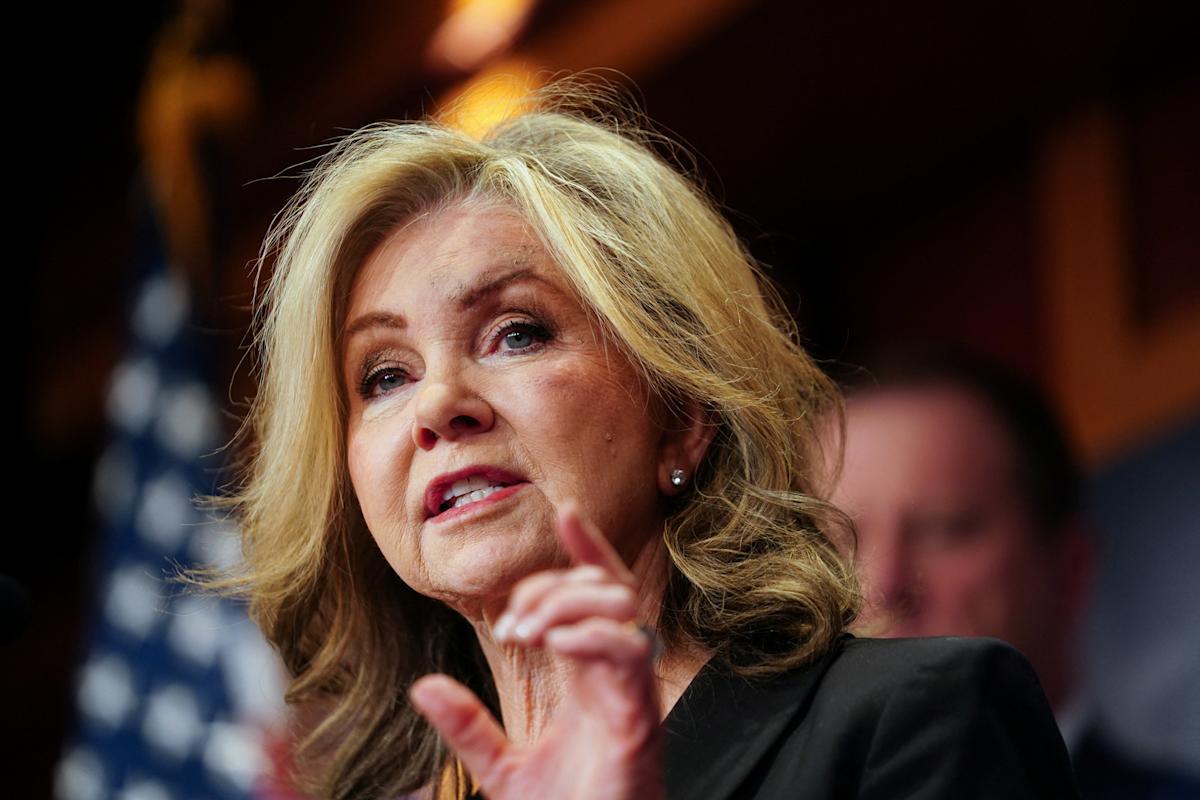
Source: Engadget
Duty of Care for AI Developers and Copyright Protections
At the heart of Blackburn's proposal lies a duty of care for AI developers that would require them to take reasonable steps to prevent and mitigate foreseeable harm during the design, development, and operation of AI platforms
1
. The draft also tackles one of the industry's most contentious issues: AI model training using copyrighted materials. The legislation explicitly states that unauthorized reproduction, copying, or processing of copyrighted works for training, fine-tuning, developing, or creating AI does not constitute fair use under the Copyright Act3
. This provision directly addresses copyright infringement concerns raised by artists and rightsholders in dozens of ongoing lawsuits against AI companies.
Source: PYMNTS
Sunsetting Section 230 and Political Bias Provisions
Perhaps the most controversial element involves sunsetting Section 230 of the Communications Decency Act, which currently shields platforms from liability for user-generated content
2
. This represents a step further from earlier versions that merely called for reforms. The draft also requires third-party audits to prevent discrimination based on political affiliation, addressing what conservatives claim is political bias in AI systems3
. It would codify Trump's executive order barring what he termed "woke" AI from federal government use, limiting agency heads to acquiring only large language models deemed "truthful" and free from ideological biases.Related Stories
Building Bipartisan Support Through Existing Proposals
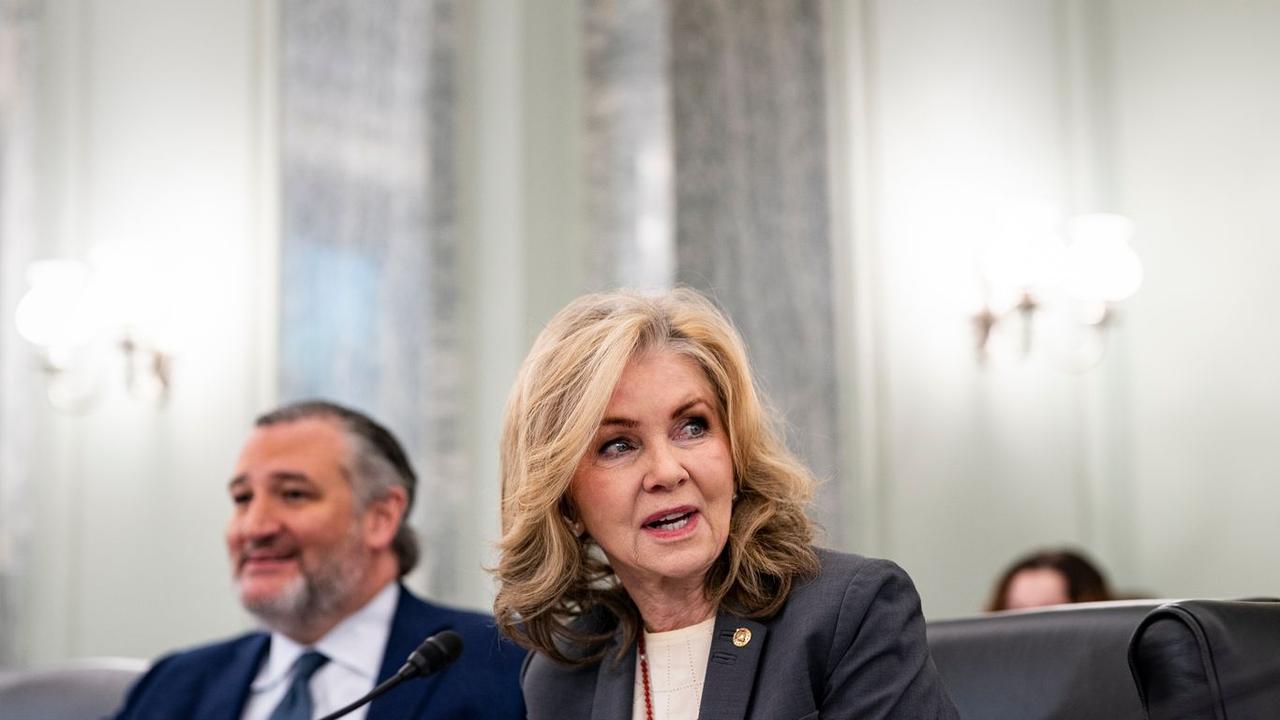
Blackburn has strategically incorporated provisions from bills with bipartisan backing, including her Kids Online Safety Act and the NO FAKES Act, which she co-sponsored with Sen. Chris Coons (D-Del.)
2
. The draft includes chatbot safety provisions aimed at protecting users from potential harms. A source familiar with discussions indicated that Blackburn has been working with the White House on the draft and understands it will require ongoing negotiation as Congress and the administration work toward agreement2
.
Source: Axios
What Comes Next for AI Legislation
The path forward remains uncertain. Senate Commerce Chair Ted Cruz (R-Texas) will need to support any plan for it to advance, while Rep. Jay Obernolte (R-Calif.) has been working on parallel federal AI legislation in the House
2
. Lawmakers will likely spend considerable time negotiating over the eventual result, which may look notably different from this initial version. The discussion draft's stance on AI safety, censorship concerns, and its aim to ensure America maintains AI dominance over foreign adversaries will all face scrutiny. For the AI industry, creators, and platforms alike, the coming months will determine whether this ambitious attempt at a unified federal AI framework can survive the legislative process or become significantly weakened through compromise.References
Summarized by

Navi
Related Stories
Trump AI Framework Seeks Federal Control While Shifting Child Safety Burden to Parents
20 Mar 2026•Policy and Regulation

Proposed Moratorium on State AI Regulations Sparks Debate in US Congress
22 May 2025•Policy and Regulation

Republican Push for Federal AI Regulation Moratorium Faces Opposition and Controversy
18 Jun 2025•Policy and Regulation

Recent Highlights

Recent Highlights
Today's Top Stories







Your Daily Dose of Curated AI News
Don’t drown in AI news. We cut through the noise - filtering, ranking and summarizing the most important AI news, breakthroughs and research daily. Spend less time searching for the latest in AI and get straight to action.

