Mayo Clinic Platform Launches AI-Enabled Tool to Streamline Clinical Decision Support Across 35+ Specialties


2 Sources
[1]
AI-enabled Mayo Clinic tool supports individualized patient care decisions
Mayo Clinic Platform announced today the launch of a new Clinical Decision Support (CDS) solution that brings Mayo Clinic knowledge and evidence-informed guidance directly into clinicians' workflows, helping them access trusted, relevant information when and where they are making patient care
[2]
Mayo Clinic Platform's New Clinical Decision Support Solution Provides Trusted Medical Information to Enhance Individualized Patient Care | Newswise
Newswise -- ROCHESTER, Minn. -- Mayo Clinic Platform announced today the launch of a new Clinical Decision Support (CDS) solution that brings Mayo Clinic knowledge and evidence-informed guidance directly into clinicians' workflows, helping them access trusted, relevant information when and where
Share
Copy Link
Mayo Clinic Platform has launched an AI-enabled Clinical Decision Support solution that integrates trusted medical information directly into electronic health record systems. The tool features specialty-specific chat across more than 35 specialties and 22 clinical calculators, helping clinicians make individualized patient care decisions faster while reducing time spent searching multiple resources.
Mayo Clinic Platform Integrates AI-Enabled Clinical Decision Support Into Physician Workflows
Mayo Clinic Platform has launched a new Clinical Decision Support solution that embeds trusted medical information directly into clinician workflow, addressing a critical challenge in modern healthcare where physicians spend valuable time navigating multiple resources to find relevant clinical guidance
1
2
. The AI-enabled tool is now available to Mayo Clinic clinicians and healthcare professionals at organizations participating in Mayo Clinic Platform's healthcare provider programs, marking a significant step in bringing evidence-based decision-making capabilities to the point of care.The Clinical Decision Support solution integrates directly within electronic health record systems, consolidating multiple clinical tools into a unified interface that supports individualized patient care decisions
1
. According to Maneesh Goyal, chief operating officer of Mayo Clinic Platform, clinicians have access to vast amounts of medical knowledge, but finding relevant information takes valuable time away from patient care2
. This new solution aims to reduce the need for clinicians to navigate multiple independent resources while ensuring they receive trusted Mayo Clinic knowledge when making critical decisions.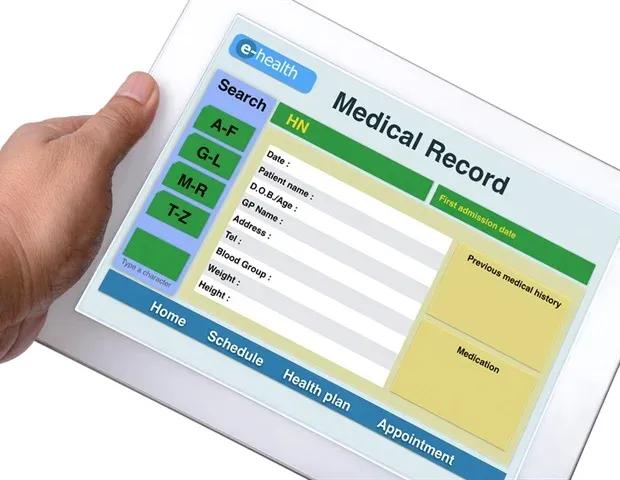
Source: News-Medical
Specialty-Specific Chat Powered by Large Language Model Covers 35+ Medical Disciplines
Beginning in November 2026, participating clinicians will gain access to a specialty-specific chat tool that can be integrated within EHR environments to provide guidance for individualized patient care decisions across more than 35 specialties
1
2
. The tool reflects Mayo Clinic's subspecialty model of care and is powered by a large language model that surfaces relevant information to help clinicians reason through complex cases. Importantly, the LLM cites responses from peer-reviewed literature, ensuring that recommendations are grounded in established medical evidence.The specialty-specific chat receives daily updates, giving clinicians access to relevant emerging evidence alongside established medical knowledge
2
. This frequent refresh cycle addresses a longstanding challenge in healthcare where clinical guidelines and evidence evolve rapidly, often outpacing traditional reference materials. The tool's ability to synthesize new findings with established protocols positions it as a dynamic resource that adapts to the changing landscape of medical knowledge.Proprietary Clinical Calculators Provide Evidence-Based Decision Support
Alongside the chat interface, the Clinical Decision Support solution includes 22 clinical calculators accessible via chat or voice dictation
1
. These proprietary clinical calculators provide industry-standard medical information and evidence-based decision support on clinical questions and patient care context. The inclusion of Mayo Clinic-developed calculators means clinicians gain access to tools refined through the institution's extensive clinical experience and research.The voice dictation capability represents a practical consideration for busy clinical environments where hands-free operation can streamline workflow. By making these calculators accessible through multiple input methods, Mayo Clinic Platform has designed the tool to fit naturally into existing clinician workflow patterns rather than requiring physicians to adapt to new interaction paradigms.
Related Stories

Responsible AI Framework Emphasizes Human Oversight and Clinical Judgment
Dr. Gelareh Zadeh, chair of the Department of Neurosurgery at Mayo Clinic in Rochester and Chief Medical Officer for Mayo Clinic Platform, emphasized that the Clinical Decision Support solution is designed to assist healthcare professionals as they make patient care decisions, not replace clinical judgment
2
. Mayo Clinic physicians have provided feedback on the different tools to ensure the solution supports clinicians and reflects Mayo Clinic's approach to patient care.Mayo Clinic's approach to responsible AI includes evaluation for safety, effectiveness, privacy, security and clinical value, with appropriate human oversight and ongoing monitoring
1
. This framework addresses growing concerns about AI deployment in healthcare settings, where errors can have serious consequences for patient outcomes. The emphasis on human oversight signals that Mayo Clinic Platform views AI as an augmentation tool rather than an autonomous decision-maker.Implications for Healthcare Delivery and Clinical Efficiency
The launch of this AI-enabled tool matters because it tackles a fundamental inefficiency in modern healthcare: information overload. Physicians today have access to more medical knowledge than ever before, yet the fragmentation of that knowledge across multiple platforms creates friction in clinical workflows. By consolidating trusted medical information into electronic health record systems where physicians already work, Mayo Clinic Platform removes barriers between knowledge and action.
The solution's design to evolve as more tools are added suggests Mayo Clinic Platform is building an expandable ecosystem rather than a static product
2
. This approach positions the Clinical Decision Support solution to incorporate future medical advances and additional specialties as they become available. Healthcare organizations participating in Mayo Clinic Platform's provider programs will need to monitor how the tool impacts clinical efficiency metrics and whether it reduces documentation burden or consultation delays.Watch for how this deployment influences broader adoption of AI-enabled clinical tools across healthcare systems, particularly as evidence emerges about its impact on patient outcomes and clinician satisfaction. The integration of trusted medical information from a prestigious institution like Mayo Clinic may accelerate acceptance of AI assistance in clinical settings where skepticism about algorithmic recommendations remains high.
References
Summarized by

Navi
Related Stories
Mayo Clinic AI Agent Delivers Personalized Prostate Cancer Education Through Electronic Health Records
08 Jan 2026•Health

Mayo Clinic Partners with Microsoft and Cerebras to Revolutionize AI in Healthcare
15 Jan 2025•Health

Microsoft and Mayo Clinic Partner to Build Frontier AI Model for Healthcare Transformation
03 Jun 2026•Technology

Recent Highlights



Recent Highlights
Today's Top Stories








Don’t drown in AI news. We cut through the noise - filtering, ranking and summarizing the most important AI news, breakthroughs and research daily. Follow topics that matter to you and stay ahead.


