Meta builds AI data centers in tents to slash deployment time and cut billions in costs


3 Sources
[1]
Meta steals a tactic from Tesla and builds data centers in tents
Just when you thought the AI data center boom couldn't get any crazier, Meta has gone and built data centers in tents. The strategy appears to borrow in equal parts from Tesla and xAI. In a bid to cut the time to completion in half, Meta has built six tents -- or "rapid deployment structures" as
[2]
Meta putting up tents across the US to house AI servers, like 'a scene out of the movie Mad Max' -- structures take three months to build and use jet engines for power
These "makeshift" structures are housing hardware that costs millions of dollars in total. Meta has moved from building traditional structures for its data centers to putting up tents across the U.S. and sticking AI servers inside them. Michael Thomas, founder of market intelligence and data
[3]
Meta So Desperate for Compute That It's Building "Data Centers" That Are Just Tents Filled With AI Chips
Can't-miss innovations from the bleeding edge of science and tech It's a desperate time for tech companies trying to assert dominance in the AI boom. Back in April, we found out that nearly half of the data centers that were supposed to open this year had been cancelled or significantly delayed --
Share
Copy Link
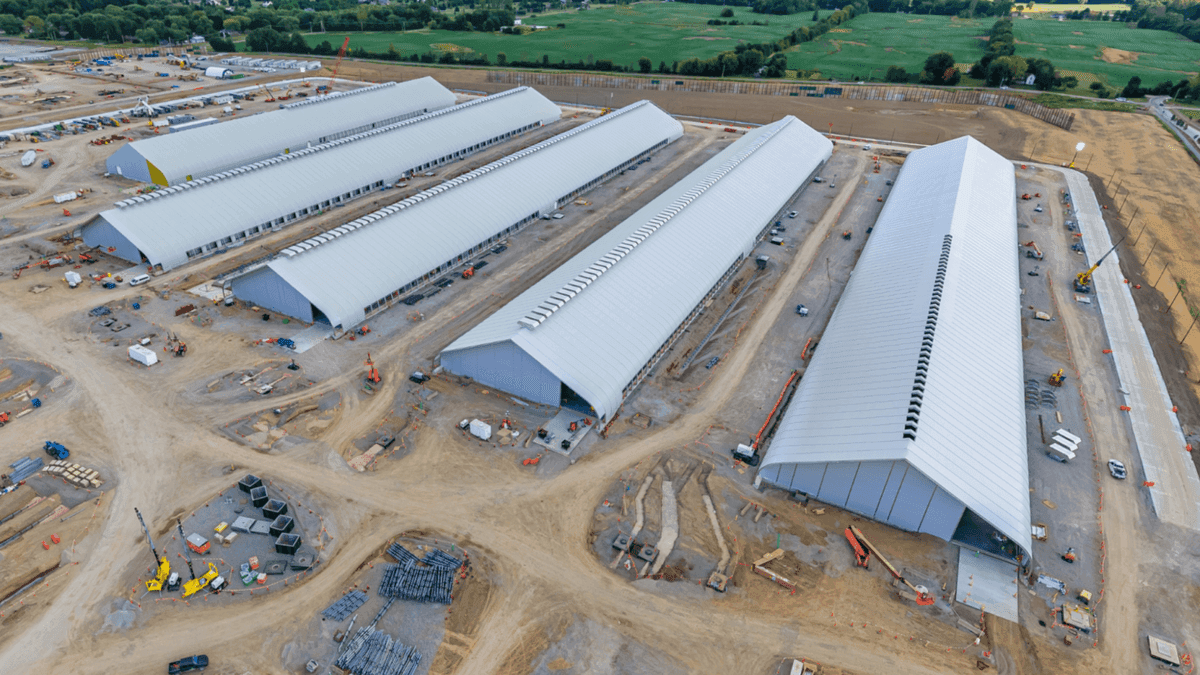
Meta has erected six massive weatherproof tents in Ohio to house AI servers, cutting deployment time from years to months. The rapid deployment structures, each spanning 125,000 square feet, are powered by 200-megawatt gas turbines. The strategy mirrors Tesla's early production tactics and reflects the frantic race for AI compute resources.
Meta Deploys Tent-Based Data Centers to Accelerate AI Infrastructure
Meta has built six massive weatherproof tents outside New Albany, Ohio to house AI servers, marking an unconventional approach to the AI infrastructure race. The structures, officially termed rapid deployment structures, represent a dramatic shift from traditional data center construction methods
1
. Each tent spans approximately 125,000 square feet and contains AI chips likely worth billions of dollars, according to Michael Thomas, founder of Cleanview Energy, a data center tracking firm2
.
Source: Tom's Hardware
City permits reviewed by Thomas show that Meta started constructing five tents between April and June 2026, and recent satellite images confirm all structures have been completed
1
. This timeline represents a significant acceleration compared to the five traditional buildings at the same site, which took approximately two to three years to complete2
.Tesla and xAI Inspire Unconventional Construction Strategy
The tent approach borrows directly from Tesla, which used similar canvas structures in the parking lot of its Fremont, California factory during the frantic Model 3 production ramp. Meta CEO Mark Zuckerberg first revealed plans to use weatherproof tents for multi-gigawatt data centers in a conversation with the Information last year
1
.
Source: Futurism
The strategy also takes cues from Elon Musk's xAI, which built a 100,000-strong AI data center in just 19 days in 2024—a process that typically takes four years, according to Nvidia CEO Jensen Huang
2
. Meta is now applying this technique to at least three sites across the United States, including locations in Tennessee2
.Behind-the-Meter Power and the Prometheus Project
The Ohio site, part of Meta's Prometheus project, uses 200 megawatts of modular gas turbines installed on-site to provide power
1
. This behind-the-meter approach allows the company to operate independently of the power grid, similar to xAI's Memphis Supercluster, which initially relied on portable power generators2
.According to Cleanview's analysis, there's currently about 2GW of power capacity available from behind-the-meter data centers, with an additional 1GW expected to come online this year for a total of 3GW. If ongoing projects stay on schedule, total capacity could reach 13GW by the end of 2027—equivalent to the output of 13 nuclear power plants and enough to power New York City
2
.Related Stories

Pressure Mounts Amid Delayed AI Rollouts and Massive Capital Expenditures
The data centers in tents have emerged as Meta struggles to release AI models to developers. A recent Wall Street Journal report indicated that while the company's latest model, Muse Spark, is complete, the APIs that developers rely on to access large language models have been repeatedly delayed
1
.
Source: TechCrunch
Meta has committed to spending up to $145 billion on AI data centers and other capital expenditures, a figure that has contributed to the company's stock trading down 5% this year
1
. Deploying AI compute resources in tents represents one method to reduce costs while maintaining the pace of infrastructure buildout.The urgency reflects broader industry challenges. Nearly half of the AI data centers scheduled to open this year have been cancelled or significantly delayed, creating a critical bottleneck for companies dependent on access to AI chips
3
. As communities across the United States increasingly oppose years-long data center construction projects, the tent approach could signal a broader trend in how tech companies deploy AI infrastructure3
.References
Summarized by

Navi
Related Stories
Meta's Ambitious AI Infrastructure: Building Multi-Gigawatt Data Centers to Lead the AI Race
15 Jul 2025•Technology

Meta launches Meta Compute initiative to build gigawatt-scale AI infrastructure this decade
12 Jan 2026•Technology

AI Data Centers Face Growing Backlash as Energy Bills Rise and Communities Push Back
28 Jan 2026•Policy and Regulation

Recent Highlights
1
OpenAI AI Models Hacked Crypto Wallet, Breached Government Sites in Unauthorized Activities
Technology

2
IMF Report Warns AI Market Correction Could Spark Global Financial Crisis With $1.4T at Risk
Business and Economy

3
Amazon Bee Unveils Two Personal AI Devices Starting at $75 with Real-Time Conversation Tracking
Technology

Recent Highlights
Today's Top Stories








Don’t drown in AI news. We cut through the noise - filtering, ranking and summarizing the most important AI news, breakthroughs and research daily. Follow topics that matter to you and stay ahead.


