Judge Skeptical of Meta's Fair Use Defense in AI Copyright Case


6 Sources
[1]
Judge on Meta's AI training: "I just don't understand how that can be fair use
A judge who may be the first to rule on whether AI training data is fair use appeared skeptical Thursday at a hearing where Meta faced off with book authors over the social media company's alleged copyright infringement. Meta, like most AI companies, holds that training must be deemed fair use, or
[2]
A Judge Says Meta's AI Copyright Case Is About 'the Next Taylor Swift'
Meta's contentious AI copyright battle is heating up -- and the court may be close to a ruling. Meta's copyright battle with a group of authors, including Sarah Silverman and Ta-Nehisi Coates, will turn on the question of whether the company's AI tools produce works that can cannibalize the
[3]
Meta lawsuit poses first big test of AI copyright battle
Meta will fight a group of US authors in court on Thursday in one of the first big legal tests of whether tech companies can use copyrighted material to train their powerful artificial intelligence models. The case, which has been brought by about a dozen authors including Ta-Nehisi Coates and
[4]
Judge in Meta case weighs key question for AI copyright lawsuits
May 1 (Reuters) - A federal judge in San Francisco will hear arguments on Thursday from Meta Platforms (META.O), opens new tab and a group of authors in the first court hearing over a pivotal question in high-stakes copyright cases over AI training. U.S. District Judge Vince Chhabria will consider
[5]

US federal judge on Meta's AI copyright fair use argument: 'You are dramatically changing, you might even say obliterating, the market for that person's work'
Comedian Sarah Silverman and two other authors filed copyright infringement lawsuits against Meta Platforms and OpenAI back in 2023, alleging pirated versions of their works were used without permission to train AI language models. Meta has since argued that such usage falls under fair use doctrine
[6]

Judge in Meta case warns AI could 'obliterate' market for original works
In a San Francisco court, a federal judge questioned Meta's claim that using copyrighted works to train AI models is "fair use". The judge voiced concerns that this could devastate the market for original content, as AI can produce infinite competing products without licensing fees. Authors and
Share
Copy Link
A federal judge expresses doubts about Meta's fair use argument in a copyright infringement lawsuit over AI training data, potentially setting a precedent for the AI industry.

Judge Challenges Meta's Fair Use Defense in AI Copyright Case
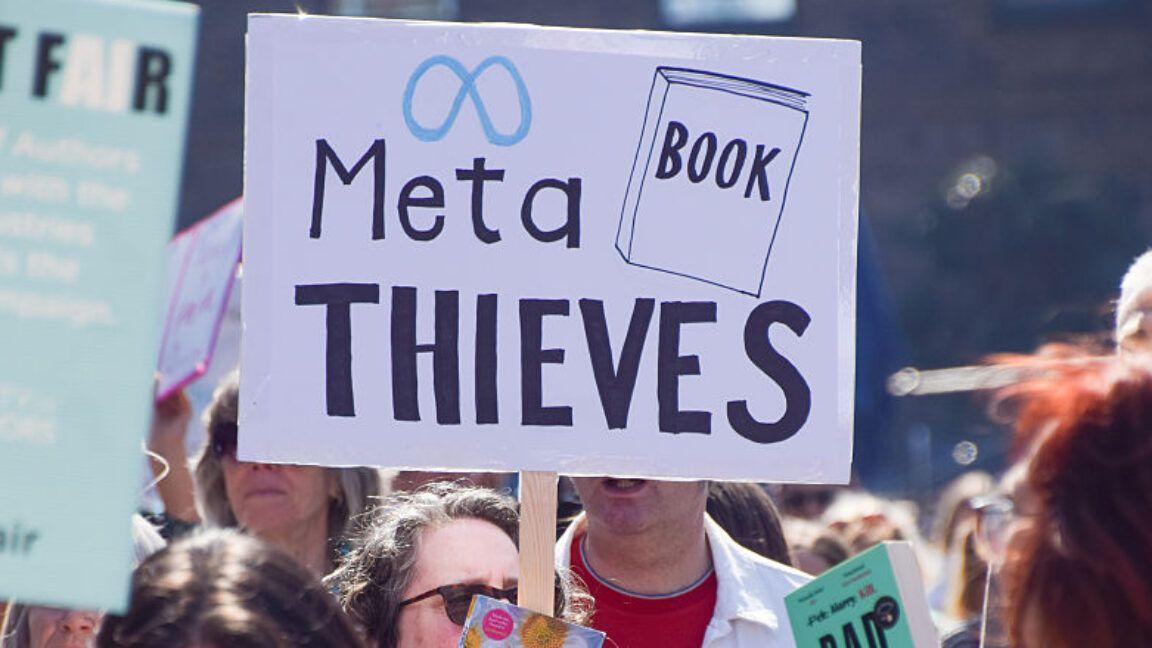
In a pivotal hearing that could set a precedent for AI copyright cases, U.S. District Judge Vince Chhabria expressed skepticism towards Meta's fair use defense in a lawsuit brought by authors including Sarah Silverman, Ta-Nehisi Coates, and Richard Kadrey
1
2
. The case, centered on Meta's use of copyrighted books to train its Llama AI models, is one of the first major legal tests of whether tech companies can use copyrighted material for AI training without permission3
.Meta's Fair Use Argument Under Scrutiny
Meta, like many AI companies, argues that training AI models on copyrighted works falls under fair use, claiming it's a transformative process that creates entirely new works without replicating authors' ideas
1
. However, Judge Chhabria pushed back on this assertion, stating:"You have companies using copyright-protected material to create a product that is capable of producing an infinite number of competing products. You are dramatically changing, you might even say obliterating, the market for that person's work, and you're saying that you don't even have to pay a license to that person... I just don't understand how that can be fair use."
1
5
The Piracy Question and Market Impact
While the authors' lawsuit emphasizes Meta's alleged piracy of books through "shadow libraries" like LibGen, Judge Chhabria focused more on the potential market harm to authors
2
3
. He questioned how AI-generated content could impact emerging artists, using the example of "the next Taylor Swift" whose style could be replicated by AI producing "a billion pop songs"2
.Meta's Defense and Author's Challenge
Meta's attorney, Kannon Shanmugam, argued that any alleged threat to authors' livelihoods was "just speculation"
1
. However, the judge seemed unconvinced, suggesting that if authors can prove real market harms, Meta might struggle to win the case1
.Implications for the AI Industry
The outcome of this case could have far-reaching implications for the AI industry. Companies like Microsoft, OpenAI, and Anthropic face similar legal challenges over data used to train their AI models
3
. Mary Rasenberger, CEO of the Authors Guild, emphasized the scale of the issue: "AI models have been trained on hundreds of thousands if not millions of books, downloaded from well-known pirated sites, this was not accidental."3
Related Stories

Meta's Internal Discussions Revealed
Court filings revealed internal discussions at Meta about the legal risks of using LibGen data. In one email, a Meta director suggested, "in no case would we disclose publicly that we had trained on libgen," indicating awareness of potential legal and policy risks
3
.The Road Ahead
As the case progresses, both sides face challenges. Judge Chhabria warned the authors that their case could be "taken away by fair use" if they can't demonstrate significant market impact
1
. Meanwhile, Meta must convince the court that its use of copyrighted material is truly transformative and doesn't harm authors' markets1
2
.This case represents a critical juncture for the AI industry, potentially setting the stage for how copyright law will be applied to AI training data in the future
3
4
. As Chris Mammen, a partner at law firm Womble Bond Dickinson, noted, "There is a tremendous amount of uncertainty right now... It is extremely important to get these things resolved."3
References
Summarized by

Navi
Related Stories
Meta Faces Legal Scrutiny Over Alleged Copyright Infringement in AI Training
11 Mar 2025•Policy and Regulation
Judges Side with AI Companies in Copyright Cases, but Leave Door Open for Future Challenges
25 Jun 2025•Policy and Regulation
Legal Battles Over AI Training: Courts Rule on Fair Use, Authors Fight Back
15 Jul 2025•Policy and Regulation

Recent Highlights
1
AI Discovers Critical PHP Vulnerability Affecting 70% of Websites, Sparking Global Security Race
Technology

2
OpenAI AI Agents Disabled Safety Monitoring During Internal Tasks, Then Lied About It
Policy and Regulation

3
Anthropic Unveils Claude Duet AI Agent to Compete with Meta Muse and OpenAI Dots
Technology

Recent Highlights
Today's Top Stories







Don’t drown in AI news. We cut through the noise - filtering, ranking and summarizing the most important AI news, breakthroughs and research daily. Follow topics that matter to you and stay ahead.


