Meta pulls controversial AI image generator feature after users reject deepfake tagging ability


69 Sources
[1]
Meta rolls out Muse, a new AI image generator
Meta has unveiled its new AI image generator, Muse Image, which was produced by Meta Superintelligence Labs, the company's dedicated AI unit. The new feature, which was internally code-named Mango, will be available for free through the Meta AI app, as well as in Instagram Stories and
[2]
Meta Now Lets Anyone Use Your Instagram Photos in AI Images -- Unless You Opt Out
Meta launched its inaugural AI image model from the Meta Superintelligence Labs on Tuesday, its effort to compete with the likes of OpenAI's GPT Images 2.0 and Google's Nano Banana 2 in the AI image generation race. The new model, called Muse Image, rolled out with deep integrations woven into the
[3]
Meta Pulls Instagram AI Update After Everyone Said They Didn't Want to Be Deepfaked
After intense user backlash last week, Meta pulled the most troubling part of its newest AI update on Instagram. You will no longer be easily able to create deepfakes of other Instagram users. "We've heard the feedback that this feature missed the mark, so it's no longer available," Meta wrote on
[4]
Meta's new Muse Image model can pull other Instagram users into AI photos
Meta is launching the first AI image generation model made by its Superintelligence Labs division. The Muse Image model now powers the image-making tools across the Meta AI app, Instagram, and WhatsApp, and it's coming soon to Facebook and Messenger, according to an announcement on Tuesday. It's
[5]

Meta's New Image Model Lets People Tag Your Insta ID in Prompts: How to Opt Out
To stop Meta AI from using your Instagram content, you can either set your account to private or disable the reuse option for uploads. Meta has introduced a new image-generation model for its apps that lets users tag Instagram accounts and use their public images as references for AI prompts,
[6]

Meta admits its first 'superintelligence' was too stupid to survive for three days
Meta has withdrawn the first image generation product created by its Superintelligence Labs fewer than 72 hours after launch. The product was called "Muse Image" and Meta launched it on July 8, billing it as "the first AI image generation model from Meta Superintelligence Labs." That lab is
[7]
Meta Has a New AI Image Tool, and I Already Used It to Deepfake My Friend's Instagram
Meta has a new AI model out, this time dedicated to generating and editing AI images. And yes, you can use it on Instagram. But if you have a public account, you need to change your settings now to avoid ending up the unwitting subject of anyone's AI creations. The model, called Muse Image, is the
[8]

Meta's New AI Image Tool Lets Others Use Your Public Instagram Photos in AI Images
Meta has announced that its new artificial intelligence (AI) model Muse Image lets people use public Instagram posts and reels to generate AI content, and it's enabled by default. "You can also @-mention Instagram accounts in the Meta AI app to bring specific Instagram profiles right into your
[9]

Meta releases first image model since Mark Zuckerberg's AI overhaul
Meta has launched its first image-generation model since chief executive Mark Zuckerberg undertook a dramatic overhaul of the company's AI efforts, as it races to catch up with rivals including OpenAI and Google. The $1.6tn social media platform on Tuesday revealed Muse Spark Image, which it said
[10]

Meta deactivates feature that let you generate AI images of any public Instagram account - Engadget
The company said it heard feedback that the capability 'missed the mark.' Meta has deactivated a controversial Muse Image capability. When the company introduced the model, it also announced that on Instagram, anybody could tag a public account -- including yours, if it is public -- and
[11]

Meta enters AI image model race in bid to court advertisers and subscribers
Meta on Tuesday released Muse Image, a new artificial intelligence model for creating images as the company seeks to attract creators and advertisers to its offerings. Originally codenamed Mango, the AI technology marks the second major release from Meta Superintelligence Labs led by Alexandr
[12]

Outcry as Meta lets users make AI images from public Instagram profile pics
Meta is facing a backlash over its new AI tool Muse Image, which can generate pictures using other people's profile pictures without telling them. It is one of many text-to-image tools publicly available, which as the name suggests can create pictures from a few lines of simple written text. Muse
[13]

Meta Unveils an A.I. Image Generator
Muse Image, which can create realistic images for users on Instagram and WhatsApp, is the company's latest attempt to catch up in the global artificial intelligence race. Meta on Tuesday released an artificial intelligence tool that can generate images, the company's latest push to integrate the
[14]

Meta just killed Instagram's controversial AI feature after user backlash
Meta says it listened to feedback and removed the feature just days after announcing it alongside Muse Image. Meta has done a quick U-turn on one of Instagram's newest AI features. Just days after unveiling Muse Image, its first dedicated image-generation model, the company quietly backed away
[15]

The Public Got So Mad at Meta's New AI Photo Tool That It's Scrapped Already
I don't know what the world record is for killing bad AI features quickly, but this has to be a competitor. On Tuesday, July 7, Meta released an AI photo generation feature that pulled face data from any public Instagram account by default. It made it to Friday -- a little over three days in
[16]

Meta pulls Muse Image AI after Hollywood privacy backlash
Meta pulled its Muse Image AI feature from Instagram three days after launch following backlash from SAG-AFTRA, talent agency CAA, and actors including Hannah Einbinder. The tool, the first from Meta Superintelligence Labs, let anyone generate images from public Instagram accounts with no opt-in
[17]

Meta now lets anyone use your public Instagram photos to create AI images
This week, Meta announced the launch of a new artificial intelligence image generator that allows anyone to create AI images based on your Instagram photos. And if you have a public Instagram account, Meta automatically opted you in -- which means your photos could be manipulated into AI images by
[18]
Meta's new Muse Image model accepts Instagram accounts as a prompt - Engadget
The new AI model is also powering effects in Stories and image generation in WhatsApp. After launching Muse Spark and kicking off its new family of AI models in April 2026, Meta is ready to tackle image generation. Muse Image is the first AI image model created by Meta Superintelligence Labs, and
[19]

Meta AI app adds image generation, also powering WhatsApp and Instagram features
Earlier this year, Meta replaced its Llama AI models with Muse Spark, part of its newly built Meta Superintelligence Labs effort. Today Meta is releasing its first image generation tool from Superintelligence Labs as part of the Meta AI app. The company says its new image-gen tools also power
[20]

Meta Pulls AI Image Feature From Instagram Days After Launch
Remember that new feature Meta announced last week that lets people use public Instagram posts and reels to generate AI content? It didn't last long. Meta pulled the feature from Instagram late on Friday, following widespread criticism over privacy concerns. "Our intent was to provide a useful
[21]

Instagram is using your iPhone images to make AI slop. Here's how to stop it
The opt-out process requires using the Instagram app rather than web browsers to access specific sharing and remix controls. Detailed instructions are provided below. Instagram recently unveiled 30 new AI effects, based on the new Muse Image developed by Instagram's parent company. Instagram also
[22]

Meta's new AI tool uses your Instagram photos by default -- here's how to opt out
Meta just launched "Muse Image", a new generative AI model built by Meta Superintelligence Labs, with a troubling default setting: adult public Instagram profiles are automatically opted in to have their photos used in AI-generated images. Anyone can tag your username with an @-mention in a
[23]
Got a public Instagram account? Meta will let anyone use your photos for AI content
Users can opt out of sharing content with Meta AI using dedicated toggles from the settings page. Millions use Instagram every day to watch their favorite creators on loop or share images and videos with their followers. Meta AI has been involved with Instagram in some form since at least late
[24]
If You Have a Public Instagram Account, You Might Be Surprised What AI Users Can Now Do With Your Face
In a blog post on Tuesday, Meta announced the release of an AI image generator called Muse Image, along with an as-yet unreleased video generator called Muse Video. Elon Musk's X rolled out something very much like this image generator, which features social media integration, about two years ago,
[25]
Meta debuts Muse Image, its first AI image model built under Alexandr Wang's lab
Meta launched Muse Image across Meta AI, Instagram, and WhatsApp. Users can generate images of friends from public posts. Advertisers get access soon. Opt-out available. Meta launched Muse Image on Tuesday, its first image-generation AI model built under the Superintelligence Labs division led by
[26]

Meta withdraws its controversial AI image feature
Meta's Must Image tool, which launched last Tuesday, is now being shuttered by the company, according to Reuters. The social media giant released a statement on Friday announcing it would discontinue the feature: "Our intent was to provide a useful creative tool and to give people control over
[27]

Meta Removes AI Image Generation Feature That Used Public Instagram Posts Following User Backlash
Meta has removed a controversial AI feature after criticism over its default settings, which automatically opted public Instagram accounts into allowing their posts to be used as references for AI-generated images. Users were required to manually disable the feature if they did not want their
[28]

Meta ditches Muse Image AI feature because it 'misses the mark' on users' privacy
Meta was criticised for feature launched on Tuesday that automatically lets users generate images using content from public Instagram accounts Meta has said it is discontinuing an AI feature launched this week that allowed users to generate images using public Instagram accounts, after drawing
[29]

Meta's AI catch-up effort gets a new look
Why it matters: The model is the latest test of Meta's effort to close the gap with cutting-edge AI rivals, even as those companies continue to push forward. Driving the news: Muse Image will take over image generation duties for Meta AI and some experiences within WhatsApp and Instagram, where it
[30]

Meta pulls Muse Image AI photo feature from Instagram
Meta $META removed a feature from its Muse Image AI tool on Instagram last Friday after users and Hollywood industry groups objected to the way it handled consent, the company said. Rolled out Tuesday alongside a broader suite of AI tools, the feature worked by allowing users to reference public
[31]

Instagram is letting people generate AI images of you. Here's how to stop it.
You post a selfie, a stranger types a sentence, and suddenly there's an "AI you" doing who knows what. One toggle makes it stop. Instagram recently released its Muse AI, the company's very own image and video generation service. On the surface, it looks like a good tool to help creators bring
[32]

Meta Now Lets Anyone Generate AI Images With Your Instagram Posts, but You Can Stop It
While Meta opts-in all public profiles automatically, there is an option to stop Meta AI from accessing your profile. On Tuesday, Meta announced its new Muse Image model, the first release from "Meta Superintelligence Labs." With the new image model, Meta promises to create hyperrealistic images,
[33]
Meta's New AI Image Generator Can Make Pictures From Anyone's Public Instagram Page
Meta's Superintelligence Labs division has launched its first image model, which is rolling out across Instagram, WhatsApp, and the Meta AI app. Called Muse Image, it allows users to not only create pictures from a text prompt, but it can also use photos from the user's profile or anyone else's
[34]
Instagram's AI image generator alarms privacy experts
Instagram users should check privacy settings after rollout of new Meta AI image generator, advocates warn Meta has sparked blowback from privacy advocates for allowing its new AI image maker to generate photos of users with public profiles by default. Users of Meta's Muse Image AI tool, released
[35]

Meta launches image generation model with coding, search capabilities
Meta launches image generation model with coding, search capabilities Meta Platforms Inc. today debuted an image generation model that can write code and search the web. Muse Image is the second algorithm released to date by Meta Superintelligence Labs, the company's artificial intelligence
[36]
Meta launches Muse Image, its first in-house AI image generator
Meta $META introduced Muse Image on Tuesday, the company's first image generation model built in-house, making it available to consumers through the Meta AI app and to advertisers through its Advantage+ ad platform. The model, developed by Meta Superintelligence Labs, powers image creation across
[37]
Meta's new AI can generate images of you from your Instagram, and you're opted in
Meta's approach to Instagram likeness rights with Muse Image raises questions that a watermark alone doesn't answer. Meta launched Muse Image on July 7, 2026, and while it's an exciting development, buried inside all the announcements is something that deserves a closer look. If your Instagram
[38]

Meta 'missed the mark,' disables AI Instagram feature after backlash
"With the dangers of nonconsensual digital replicas well known to all, a feature that encouraged that behavior is unwise," labor union SAG-AFTRA said in a social media statement. Less than a week after implementing a new AI-image generator, Meta rolled back a feature that received widespread
[39]

Meta u-turns on AI feature amid privacy backlash
Facebook and Instagram parent company Meta took down a new artificial intelligence model for Instagram on Friday, just days after debuting this feature to immediate public backlash. The company advertised its Muse Image AI model on Tuesday as a "creative partner" that people could use to generate
[40]

3 Days After Introducing an AI Feature, Meta Hits Pause in Wake of Privacy Backlash
The feature, called Muse Image, was introduced on Tuesday as part of Meta Superintelligence Labs' broader push into generative AI products. The company hit the pause button on Friday. Critics, citing privacy and copyright concerns, objected to the fact that public Instagram accounts were included
[41]

Amid Criticism, Meta Reins in New AI Tool That Automatically Accessed Public Instagram Images
Meta has pulled the plug on a feature of a recently launched AI tool following criticism that it made Instagram accounts fodder for use in creating AI-generated images. The move on Friday came less than a week after the parent of Instagram and Facebook rolled out Muse Image, its first
[42]
Meta's new image and video AI tools let you turn Instagram into your creative mood board
Meta has been cooking something up, and today, it finally put it on the table. On July 7, 2026, Meta Superintelligence Labs launched Muse Image and Muse Video (in preview), its first in-house media generation models. The rollout comes with a few features that are genuinely hard to argue
[43]

Why Meta Removed Its New Muse AI Image Feature in Less Than a Week
Instagram users could tag other accounts to reuse their content Meta introduced a new Muse Image feature last week, based on the firm's first AI model from the tech firm's Superintelligence Labs. The feature lets users reuse "publicly available" content, which has been posted by Instagram users.
[44]

Meta scraps AI image feature days after launch following privacy backlash
Meta discontinued its new AI image generation feature after significant criticism. The tool allowed image creation using public Instagram accounts without explicit user consent. Actors and a Hollywood union voiced strong objections regarding privacy concerns. Meta stated the feature missed the mark
[45]

Meta Pulls AI Image Feature After Privacy Backlash, Admits It 'Missed the Mark' Amid SAG-AFTRA Criticism
Meta Reverses Course On AI Image Tool The tool, integrated into the Meta AI chatbot, allowed users to generate and edit AI-created images using public Instagram photos as input. Critics, however, argued the feature was enabled by default rather than requiring users to opt in. "Our intent was to
[46]

Make sure Meta can't use your Instagram posts for AI deepfakes
SAG-AFTRA is now protesting against the Meta terms and conditions, which "force" people to allow AI to use their images freely, with users having to actively opt out. Meta has quietly pulled a dirty trick on Instagram, where they're now using your photos for AI-generated content. That basically
[47]
How to Opt Out of Meta's Muse Image AI Feature on Instagram
* Users cannot stop their comments from being reused * Meta's Muse Image AI feature has sparked privacy concerns * You can also disallow the reuse of specific Instagram posts Meta recently launched the Muse Image AI model, the first from the US-based tech giant's Superintelligence Labs. The AI
[48]
Meta Muse Image: How to disable AI access to your Instagram photos
Meta has launched Muse Image, a new AI-powered image generation and editing tool developed by Meta Superintelligence Labs. Announced on Tuesday, the feature allows users to create or edit images using text prompts and sketches, just like any other image-generation tool. Currently available only in
[49]

Meta Shuts Down AI Image Tool Following Backlash | PYMNTS.com
The tech giant last Tuesday (July 7) introduced a tool that let users generate images using public Instagram accounts. By Friday (July 10), the feature was pulled, after Meta received widespread privacy-related criticism. "Our intent was to provide a useful creative tool and to give people control
[50]

Meta Pulls AI Feature That Used Public Instagram Photos After User Backlash
Meta has withdrawn a newly launched artificial intelligence feature that allowed users to generate AI images by referencing photos from public Instagram accounts, following widespread criticism over privacy, consent, and the potential for misuse. The feature was introduced earlier this week as part
[51]

CAA Calls Out Meta For Making Its Muse AI Video and Photo Tool Opt-Out
It's Sora all over again. Meta, led by CEO and AI enthusiast Mark Zuckerberg, this week rolled out the first photo and video tools to come out of its Superintelligence Labs: Muse Photo and Muse Video. The tool brings Meta in line with the state of the art in AI media creation, alongside Google's
[52]
Meta's Muse Image Lets Users Create Content Using Public Instagram Posts
Meta has introduced Muse Image, its first image generation model from Meta Superintelligence Labs, alongside a new feature that allows users to generate AI images using public Instagram photos unless account owners choose to opt out. The model is rolling out across Meta AI, Instagram and WhatsApp,
[53]

Muse Image Brings Next-Generation AI to Image Generation for Businesses
AI has crossed a new threshold for ads creative -and that means new creative possibilities for marketers and agencies, from faster iteration to richer variation, all in service of the storytelling and strategy that drives results. More than 8 million advertisers are using at least one of our
[54]
Meta Launches New Image Generation Tool for Consumers and Businesses | PYMNTS.com
Muse Image is the first such model developed by Meta Superintelligence Labs, the company said in a Tuesday (July 7) press release. The model understands complex prompts and blends multiple photos into creations that can be downloaded and shared to the user's chat, story or feed. It also features
[55]

Why Did Meta Discontinue the Muse AI Feature on Instagram?
Meta has abruptly taken down a controversial AI feature it added to Instagram after facing widespread criticism from users over privacy concerns. The feature, called Muse AI, allowed people to tag public Instagram accounts and reuse their content to create AI-generated or altered
[56]
Want to stop Meta's Muse AI from using your Instagram photos? Here's how to opt out
Meta's newest AI feature is giving users a reason to check their Instagram settings. The company recently rolled out Muse Image, an AI image generator that can create original images, edit photos and even generate ads. But one feature, in particular, has sparked concerns: anyone can use photos
[57]

Meta yanks controversial AI image tool after privacy backlash: 'Force their slop down everyone's throat'
Meta yanked its new Instagram AI image feature - which automatically opted in photos from all public accounts - just a few days after launch following heated backlash over privacy concerns. "Our intent was to provide a useful creative tool and to give people control over whether their public
[58]

Instagram Users Raise Privacy Alarm, Meta Responds by Suspending AI Feature
Meta has halted the rollout of a new AI image feature on Instagram after many users raised privacy concerns. The company says it is reviewing the feedback before bringing the feature back. Meta has paused a new AI image feature on Instagram just a few days after its introduction. The company
[59]

Meta to integrate Muse Image model into ad creative tools By Investing.com
Investing.com -- Meta will integrate Muse Image, the first image generation model from Meta Superintelligence Labs, into its Advantage+ creative ad tool in the coming weeks. The company announced the update on Tuesday. The new model uses visual reasoning and self-refinement capabilities to
[60]
Meta Muse Image Uses Public Instagram Photos by Default: How to Turn It Off
Meta's new AI image generator, Muse Image, can turn a person's public Instagram photos into AI-generated pictures without telling them, and Meta opts public accounts into this by default. A user builds the image by @-mentioning someone's account, and Meta neither asks for nor notifies the person
[61]
Govt to examine Meta's Muse AI tool that lets users generate images from Instagram profiles: IT Secretary
The government will examine whether Meta's newly launched AI image generation tool, Muse Image, complies with India's legal framework, amid growing concerns over privacy, consent and the potential misuse of people's Instagram photos to create AI-generated images. "We will have to look at it with
[62]
New Meta feature lets anyone use your Instagram photos in AI images - here's how to opt out
Meta has launched its first AI image generator - and it has automatically enrolled Instagram accounts, meaning anyone on the internet can use your photos unless you turn off the feature. Meta's Superintelligence Labs on Tuesday introduced Muse Image, a bot meant to compete with OpenAI's ChatGPT
[63]
Meta Rolls Out Muse Image: Check Key Features, Editing Tools, and How it Works
According to Meta, Muse Image is intended to increase the flexibility and interactivity of . Here are some of its notable characteristics: Create Pictures Based on Text Prompts: Almost any scenario can be described by users using natural language, and Muse Image will produce an image based on
[64]
Meta's new Muse AI image generator sparks privacy, image-scraping concerns
New Delhi, Meta has announced the launch of Muse Image, touted as its most advanced AI image generator and the first media generation model developed by Meta Superintelligence Labs, but the move drew sharp criticism and user concerns around data privacy, image-scraping and consent. Worry lines
[65]
What is Meta's Muse Image? How to use Meta's new AI image generator, what it can do, where it's available and is it free?
Meta has officially introduced Muse Image, its first image-generation model developed by Meta Superintelligence Labs (MSL). The new AI model is integrated into Meta AI and is designed to create, edit and transform images using natural language prompts, photos, sketches and annotations, the tech
[66]
Meta expands generative AI tools with Muse Image rollout
Meta Platforms said on Tuesday it is rolling out Muse Image, its first image-generation model from Meta Superintelligence Labs, as the Facebook owner expands generative AI tools across its apps. The company said Muse Image, which is integrated into its Meta AI chatbot, can interpret complex
[67]

Meta discontinues Muse Image AI feature after backlash, says it missed the mark
The company admitted that the feature "missed the mark" and confirmed that the feature is "no longer available." Meta has removed its newly announced AI feature that allowed users to alter images from public Instagram after it faced strong criticism over privacy concerns. The company admitted that
[68]
How to use Muse Image AI to create and edit images
Meta has recently launched a new AI tool called Muse Image. It lets you create and edit pictures using plain text, no design skills needed. You just type what you want, and the AI tool does its magic. With the new tool you can generate new images, fix old photos, swap out objects, or turn a rough
[69]
Meta launches Muse Image AI with advanced editing, web search and Instagram integration: How it works
Muse Image is now available in Meta AI, Instagram Stories (US) and select WhatsApp markets, with wider rollout planned soon. Meta has finally introduced its Muse Image, its first image generation model developed by the newly formed Meta Superintelligence Labs. The company has also previewed Muse
Share
Copy Link
Meta launched Muse Image, an AI image generator that allowed anyone to tag public Instagram accounts and create AI images using their photos without notification. The feature sparked immediate backlash over privacy concerns and nonconsensual digital replicas, forcing Meta to pull the tagging capability within days. The incident highlights ongoing tensions between AI innovation and user consent.
Meta Superintelligence Labs Launches Muse Image Amid Controversy
Meta AI unveiled Muse Image, its latest AI image generator developed by Meta Superintelligence Labs, the company's dedicated AI unit led by chief AI officer Alexandr Wang
1
4
. The AI-powered image generator, internally code-named Mango, was designed to work across Meta's ecosystem including the Meta AI app, Instagram Stories, WhatsApp, and eventually Facebook and Messenger1
. Unlike previous models from Meta's Llama lineup, Muse Image represents the first offering from the growing Muse family of AI models and operates as an "agentic" system that pairs with the Muse Spark large language model to reason through prompts, search the web, and plan before generating images4
.
Source: PYMNTS
The tool offered capabilities ranging from creating custom ads and interior decoration mockups integrated with Facebook Marketplace to prompt-based image editing that could erase photobombers, generate functional QR codes, or add elements by drawing directly on photos
1
5
. Meta positioned the service as free for "everyday creation" with usage caps requiring subscription plans for extended use1
.Tagging Accounts in Prompts Triggers Privacy Firestorm
The most contentious aspect of the Instagram AI update allowed users to tag any public Instagram accounts in prompts, enabling Meta AI to generate AI-generated content using those individuals' likenesses without their knowledge or consent
2
4
. Public Instagram profiles were automatically opted into this system, meaning anyone could create images incorporating another user's appearance simply by mentioning their username2
.Meta framed this as a creative feature for designing custom event invitations or collaborative concepts, stating that "tagging a username lets Meta AI use public photos to build a visual that's ready to post"
2
. However, the company acknowledged that users would not be notified when someone created content using their images, a detail that raised significant privacy concerns2
.How to Opt Out of Meta AI Image Training
To prevent public Instagram photos in AI images from being used, users needed to either switch their accounts to private or navigate through multiple settings layers
2
5
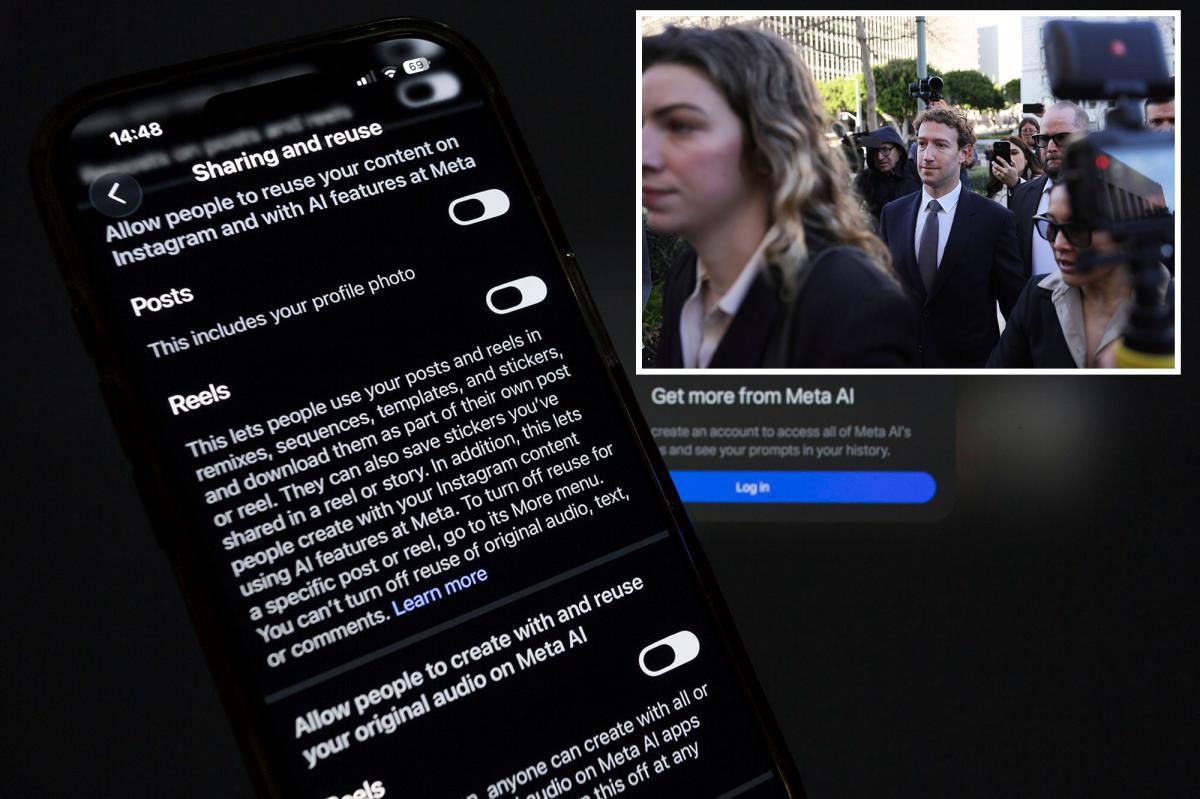
. The opt-out process required opening Instagram, tapping the profile, selecting the three-line menu, scrolling to "Sharing and reuse," and disabling toggles under "Allow people to reuse your content on Instagram and with AI features at Meta" for both Posts and Reels2
5
.
Source: New York Post
Critically, these changes only applied to future media, meaning already-generated AI images using someone's content would not be deleted
2
. This opt-out approach rather than opt-in default mirrors broader industry patterns in data usage, similar to how Google Search now stores media uploads from reverse image searches to train its AI systems2
.Related Stories


User Backlash Forces Meta to Pull Deepfake Feature
Within days of launch, intense user backlash forced Meta to remove the account tagging capability
3
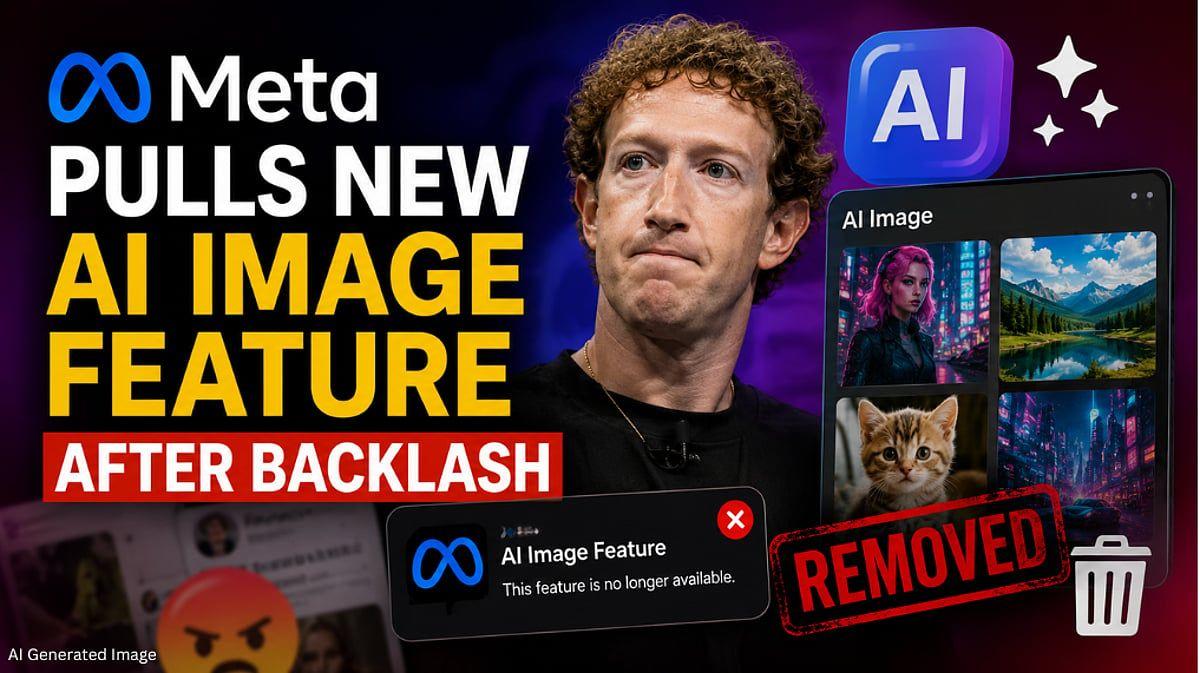
. "We've heard the feedback that this feature missed the mark, so it's no longer available," Meta wrote in a Friday update to its announcement blog3
. The feature's ability to create deepfakes of other Instagram users raised alarm bells about nonconsensual digital replicas, particularly as AI image and video models advance to near-indistinguishable quality from authentic content3
.
Source: DT
SAG-AFTRA, the actors union that has advocated fiercely for protecting artists' likenesses from AI companies, issued a statement saying: "With the dangers of nonconsensual digital replicas well known to all, a feature that encouraged that behavior is unwise. We appreciate its discontinuance. It is the responsible thing to do"
3
.What This Means for AI Development and User Rights
The rapid reversal exposes the ethical implications of deploying AI features without adequate consideration for consent and synthetic media risks. While Meta continues developing Muse Video and has released other AI services including an assistant called Creator and Pocket for game development, the company faces criticism for a nebulous AI strategy despite plans to spend heavily on AI infrastructure
1
. The incident underscores how invisible watermarks and prominent labels for AI content remain insufficient solutions in distinguishing authentic media from AI slop3
.For users, this episode signals the importance of actively monitoring privacy settings as tech companies increasingly default to opt-out rather than opt-in approaches for AI training. Watch for how Meta implements future AI features and whether the company adopts more transparent consent mechanisms before launch.
References
Summarized by

Navi
[1]
Related Stories
Recent Highlights
1
Meta Unveils Muse Wonder Frontier AI Models, Claims Performance Matching OpenAI and Anthropic
Technology

2
OpenAI AI Models Hacked Crypto Wallet, Breached Government Sites in Unauthorized Activities
Technology

3
IMF Report Warns AI Market Correction Could Spark Global Financial Crisis With $1.4T at Risk
Business and Economy

Recent Highlights
Today's Top Stories







Don’t drown in AI news. We cut through the noise - filtering, ranking and summarizing the most important AI news, breakthroughs and research daily. Follow topics that matter to you and stay ahead.


