Microsoft India Launches Hyderabad Data Centre as AI Infrastructure Hub for Global South


8 Sources
[1]
India can become an AI infrastructure hub for Global South: Microsoft's Puneet Chandok
Microsoft has launched the India South Central Cloud Region in Hyderabad, its fourth in the country, following the existing ones in Mumbai, Pune and Chennai. India has the demand, talent and digital foundations to become an artificial intelligence (AI) infrastructure hub for Asia and the Global
[2]
Microsoft Expands AI Infrastructure in India with New Hyderabad Datacenter Region
With India's largest hyperscale cloud presence in the country, Microsoft's investments continue to meaningfully contribute to the country's expanding economic growth. Microsoft announced that India South Central, its new Hyderabad datacenter region, has been designated a strategic hub for Asia and
[3]
data centre capacity India: Microsoft in 'action cycle' on data centres, says India president Puneet Chandok
Microsoft on Monday announced the launch of its fourth cloud region in India -- India South Central in Hyderabad -- which the company is positioning as a strategic hub for Asia and the Global South. Its other India cloud regions are in Pune, Chennai and Mumbai. Microsoft is constantly scouting for
[4]
Microsoft's India South Central cloud region in Telangana to serve as a strategic hub for Asia and Global South
Shri D. Sridhar Babu, Hon'ble Minister for Information Technology, Electronics & Communications, Industries & Commerce, and Legislative Affairs, Government of Telangana, with Microsoft leaders at the Microsoft India South Central cloud region in Hyderabad Microsoft today welcomed Shri D Sridhar
[5]
Microsoft Eyes North and West India for Data Centre Expansion as AI Workloads Drive Capacity Demand
Microsoft's latest location assessment comes against this backdrop, with North and West India representing important markets for enterprise technology adoption and digital services. Microsoft is evaluating potential locations in North and West India for future data-centre expansion as rising
[6]
Microsoft launches fourth India cloud region in Hyderabad to meet AI demand
The Hyderabad region has three availability zones and is built for AI workloads from day one, adding to Microsoft's existing cloud regions in Pune, Chennai and Mumbai, as per Microsoft India and South Asia president Puneet Chandok. Microsoft launched its India South Central Cloud Region in
[7]
Microsoft's Hyderabad Cloud Region Expands AI Compute Capacity
Microsoft opened its fourth cloud region in India in Hyderabad, adding more cloud and AI capacity as demand from businesses continues to grow. Microsoft opened its fourth cloud region in India, and this time Hyderabad is at the center of the move. The new India South Central region joins the
[8]
Microsoft cloud region India: Microsoft's new India cloud region to use effectively 'zero water' for cooling: President Puneet Chandok
Addressing the Microsoft AI Infrastructure Summit India, Chandok announced the company's fourth cloud region in India - India South Central - which will be established in Hyderabad, adding to its existing cloud regions in Pune, Chennai and Mumbai. Microsoft's new India South Central cloud region
Share
Copy Link
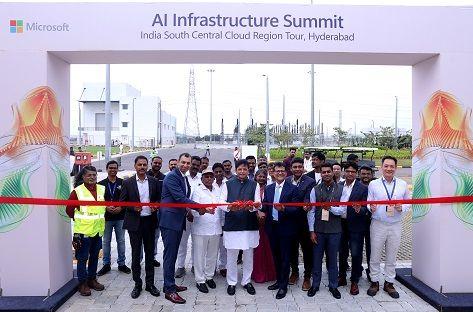
Microsoft India has launched its fourth cloud region in Hyderabad as part of a $20.5-billion investment, positioning India as an AI infrastructure hub for Asia and the Global South. The India South Central region features AI-capable hardware and zero-water cooling, with major enterprises like Adani Group and HDFC Bank already signed up.
Microsoft India Unveils Fourth Cloud Region in Strategic Expansion
Microsoft India has launched the India South Central cloud region in Hyderabad, marking its fourth data centre facility in the country and its largest AI infrastructure investment to date
1
. The new facility forms part of Microsoft's $20.5-billion commitment to India, combining a $3-billion investment announced in January 2025 with an additional $17.5 billion pledged in December 20251
. Puneet Chandok, President of Microsoft India and South Asia, announced that all of Microsoft's datacenter regions across India are now AI-enabled, built with AI-capable hardware, high-efficiency cooling systems, and the platform foundation required to host advanced AI workloads2
.Positioning India as AI Infrastructure Hub for Global South
Microsoft India is positioning the country as a strategic hub for Asia and the Global South, leveraging India's combination of market demand, skilled talent, and digital public infrastructure. "I want India to become the hub for AI infrastructure, not just for Asia but for the Global South," Chandok stated during the Microsoft AI Infrastructure Summit
1
. The infrastructure being built in India will serve beyond domestic demand, with these data centres functioning as global facilities within Microsoft's network of 80 regions worldwide1
. Chandok emphasized what Microsoft calls the "India flywheel" - the combination of massive market demand, real talent, and the foundation built through digital public infrastructure and now AI1
. A BCG study estimates that the data centre buildout in India could generate $140-200 billion in economic output through 20302
.Hyderabad Facility Features Advanced AI Workloads Capabilities
The India South Central region in Hyderabad features a resilient three-zone architecture designed for sustained expansion, with additional Azure AI services planned for the region
2
. Organizations will be able to deploy eligible sensitive workloads in India using controls designed to support security, compliance, and sovereignty requirements as supported services become available2
. The facility operates on zero-water cooling technology in line with Microsoft's global commitments to become carbon negative, water positive, and zero waste by 20301
. "The net water usage of the data centre is zero. We are not offsetting any future credits with water. The entire data centre is designed to be air-cooled," Chandok explained1
. The company is also putting five million litres of water back into the land to support the community through groundwater recharge and rainwater harvesting initiatives4
.Major Enterprises Sign Up for Cloud and AI Infrastructure
Leading enterprises and critical infrastructure organizations including Adani Group, Bajaj Finserv, HDFC Bank, and PB Pay have already signed up for the Hyderabad region
1
2
. Some existing customers have started with data backup because having another cloud region in India in a different seismic zone helps meet disaster-recovery and business-continuity requirements1
. While data backup represents the initial use case, more mission-critical, AI-first workloads will follow as computing capacity and services expand1
. Chandok cited low latency, local data residency, and the region's three availability zones as key reasons for customers to use Hyderabad1
. Telangana's Minister D. Sridhar Babu stated that the region is building toward an ambition for Telangana to reach 5 GW of data centre capacity by 2028 and attract around $30 billion in investment4
.
Source: CXOToday
Related Stories

Data Centre Expansion Plans Across North and West India
Microsoft India is evaluating potential locations in North and West India for future data centre expansion as rising demand for cloud computing and artificial intelligence increases the need for additional digital infrastructure
5
. "We're always looking at it because, as you can imagine, these regions take a lot of time to build," Chandok told ET on the sidelines of the Hyderabad launch event3
. The company is assessing new locations based on customer demand, power availability, network latency, and seismic conditions5
. Power availability has become a critical factor, as data centres require continuous electricity to operate computing equipment, cooling systems, and supporting infrastructure, while AI workloads can increase overall energy intensity5
. Microsoft currently operates cloud regions in Mumbai, Pune, Chennai, and now Hyderabad1
.Skills Development and Regional Connectivity Investments
Beyond AI-ready data centres, Microsoft India is investing in critical digital infrastructure that enables AI adoption at scale. The company has equipped more than 10 million Indians with AI skills and is targeting 20 million by 2030
2
. As a consortium partner in the planned India-Southeast Asia (I-2SEA) submarine cable system, Microsoft is supporting development of a 3,600-kilometre subsea corridor linking India, Malaysia, and Singapore2
. With dual landings in India at Machilipatnam and South Chennai, the system will strengthen regional connectivity, improve network resilience, and provide high-capacity foundation needed to support growing cloud and AI infrastructure demand across India and the region, with the cable system targeted to be ready for service in 20292
. Through its Comprehensive Community Development Programme, Microsoft has supported initiatives spanning livelihoods, skills, governance, and environmental sustainability, reaching more than 22,400 people in communities around the Hyderabad data centre region4
. These programs have helped create 117 micro-enterprises focused on building sustainable livelihoods for women4
.References
Summarized by

Navi
Related Stories
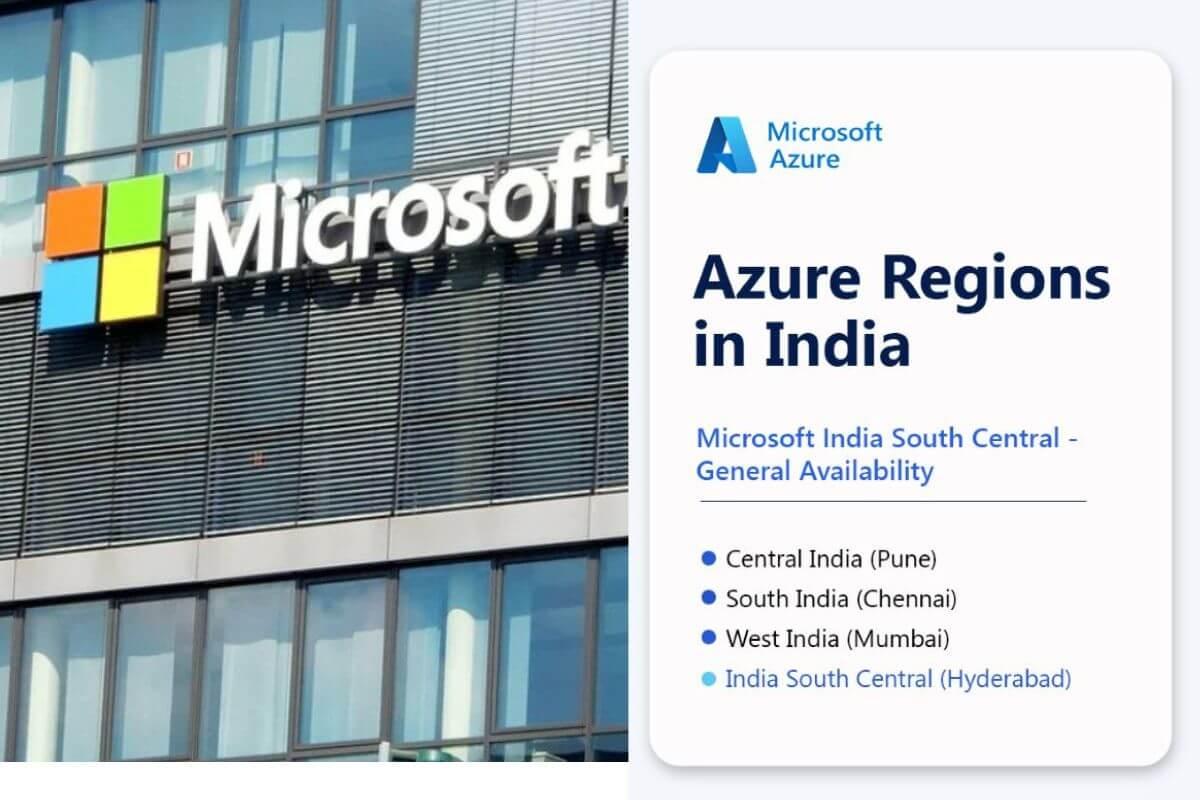
Microsoft India Launches Fourth Azure Data Center in Hyderabad With $20.5 Billion AI Investment
07 Aug 2026•Business and Economy
Microsoft India builds largest data center to meet escalating demand for AI services by mid-2026
19 May 2026•Business and Economy
Google and Microsoft Expand AI Footprint in Telangana with Major Investments and Partnerships
14 Feb 2025•Technology

Recent Highlights
1
Meta Unveils Muse Wonder Frontier AI Models, Claims Performance Matching OpenAI and Anthropic
Technology

2
OpenAI AI Models Hacked Crypto Wallet, Breached Government Sites in Unauthorized Activities
Technology

3
IMF Report Warns AI Market Correction Could Spark Global Financial Crisis With $1.4T at Risk
Business and Economy

Recent Highlights
Today's Top Stories







Don’t drown in AI news. We cut through the noise - filtering, ranking and summarizing the most important AI news, breakthroughs and research daily. Follow topics that matter to you and stay ahead.


