9 Sources
[1]
Microsoft kills off unsuccessful AI features while merging its separate Copilot apps
Two years ago, Microsoft described AI as a "generational shift" in technology that it wanted to lead. Today, the company is merging its Copilot-branded consumer and business apps, and ditching a number of unsuccessful AI features. As initially reported by GeekWire and detailed in Microsoft's support documentation, the tech giant will combine the functionality of its consumer-facing Copilot app and the more business-oriented Microsoft 365 Copilot app. The move is both an acknowledgement that personal and professional uses of AI often overlap, and that Microsoft's prior strategy was too complicated to make Copilot a viable competitor to the likes of ChatGPT, Claude, and Gemini. It also follows a broader consolidation in the AI app space that has seen Claude merging Cowork into Chat; OpenAI merging its agentic feature Operator into ChatGPT; and Google adding specialized capabilities to its Gemini app, like the combination of deep research and web browsing. According to Microsoft, consumers will lose access to Group Chats, AI-generated podcasts in Copilot, Copilot Labs experimental features, and Deep Research, by August 18, 2026. For paying professional users, Researcher will offer a replacement for the latter, at least. The company will also ditch its goofy animated character for Copilot, named Mico, a floating blob that felt like an AI-ified version of Clippy. Other features may temporarily disappear during the transition, Microsoft warns, and files generated by the standalone Copilot app will be migrated to OneDrive. While the company says the goal is to make Copilot a "simpler, more cohesive experience," it's also an admission that Copilot has lost its way. In July, The Information reported that Microsoft EVP Jacob Andreou, who oversees Copilot, said in an internal memo that the app needed to earn "the right to exist" in its customers' lives, which required moving on from features that didn't work.
[2]
Microsoft is merging Copilot and Copilot 365 into one unified app - and retiring 3 features
Follow ZDNET: Add us as a preferred source on Google. ZDNET's key takeaways * Microsoft is merging Copilot and Microsoft 365 Copilot into one unified app. * You'll be able to sign into Copilot with a personal, work, or school account. * This will reduce the clutter and confusion of juggling two separate apps. Microsoft currently offers two different Copilot apps for Windows, MacOS, iOS, Android, and even the web. The regular Copilot app is aimed at consumers and individual users. The Microsoft 365 Copilot app is designed for organizations and professional accounts. Copilot's dual existence is confusing, especially if you bounce between both apps. Which one do you use, and for what purposes? Now, Microsoft is aiming to solve that problem by melding both into one. Also: How to keep your conversations with ChatGPT, Gemini, Copilot or Claude as private as possible Scheduled to begin rolling out in mid-September, the new unified Copilot app will be Microsoft's attempt to blend the two separate but similar experiences. With that goal in mind, the new single app will let you sign in with your work, school, or personal account. You'll then be able to connect to your email, calendar, and cloud-based services, whether at home or at work. A new unified Copilot app Microsoft 365 subscribers will still enjoy higher usage limits than free Copilot users. Subscribers will also be able to access Word, Excel, Outlook, and other Microsoft 365 apps and files directly from Copilot. Free and paid users alike will be able to use all the current standard Copilot features to ask questions, submit requests, create images, upload files, and chat by text or voice. Otherwise, what you can do with the new unified Copilot app depends on how you currently use it. Also: Windows questions? How Copilot can analyze your PC settings now If you use the regular Copilot app with a personal account on the desktop or the web, you'll be moved to a new, updated version of the AI. Your chat history and most content will go along for the ride. Microsoft promises that you'll be guided through the process. If you use the Copilot mobile app, though, you'll have to download an updated version of it. If you use the Microsoft 365 Copilot app with a personal account and not a Microsoft 365 account, you'll notice some visual and navigational changes. But you'll have access to Copilot Chat at no additional cost. In Windows, the Microsoft 365 Copilot app icon on your taskbar may be refreshed. The updated mobile app will either be installed automatically or you might need to ask for the update. If you use both Microsoft Copilot and the Microsoft 365 Copilot app with a personal account, your chat history and content will be migrated to the new unified app. And if you use Microsoft 365 Copilot for work or school in Windows or on a mobile device, the Copilot icon and name will change, but otherwise, the overall experience will mostly stay the same. Also: How to remap the Windows 11 Copilot key and restore your missing Right Ctrl button However you use Copilot today, desktop and mobile users should be guided through the transition. Web users will be redirected to the updated version of Copilot online. Microsoft said it will also communicate with customers about the changes before the official rollout kicks off. Juggling two separate apps that essentially do similar things is not only clumsy but unnecessary. With the new unified app, users will be able to switch between their personal and work accounts using an account switcher within Copilot. For professionals who work with confidential files and information, Microsoft promises that your work and personal environments will stay separate and that no data will flow between the two. Three features retired But with the two Copilot apps becoming one, Microsoft is retiring the following three features: * Group chats. Any messages, conversations, or images you created in a group chat won't be accessible after August 18. To retain any of those, you'll need to copy them into a separate document or file before then. * Podcasts. After August 18, you'll no longer be able to create podcasts or access any you've already generated in Copilot. Before then, you can download individual podcasts from your library if you want to keep them. * Deep Research. Also after August 18, Deep Research mode will no longer be an option in Copilot. You'll still be able to access your Deep Research reports, but you won't be able to create new ones. Only Microsoft 365 Premium subscribers will be able to continue generating in-depth reports using the Researcher tool. A positive step I think this is a positive step for Copilot. Also: How to troubleshoot your PC problems with Copilot or ChatGPT - effectively Whether you feel that Microsoft's AI is good, bad, or a mixture of both, Copilot has become unwieldy in all its different products and permutations. Why have two different apps when you can combine them into one that serves the same purposes? Hopefully, this transition will play out smoothly without too many hiccups. If so, I look forward to taking the new unified app for a spin.
[3]
Microsoft is combining its Copilot apps ahead of a 'super app'
Microsoft is finally beginning to combine its consumer and commercial Copilot AI assistants into a single "super app" interface, starting with the Copilot and Microsoft 365 Copilot apps. Both personal and work accounts will be moved to the new unified app, which recycles the "Microsoft Copilot" name but features an updated app icon. The single app also means there won't be two annoying Copilot icons in the system tray or taskbar anymore. "Starting with a fresh look, the updated app combines the best of Copilot chat and image creation, with the power of Microsoft 365 for your work," Microsoft said in its update announcement. The updates are intended to be a technical milestone in preparation of the "super app" Microsoft is planning to launch later this year, so this is laying the foundations of what will be changing for Copilot products. A worldwide rollout for the mobile and web apps will start in "mid-August," according to Microsoft, with a rollout to Windows and Mac apps set for "mid-September." Mobile app users will be prompted to download the new Copilot app, and the updates will start appearing for some Windows Insiders this week. What changes you'll see will depend on which Copilot apps you're already using. Existing Microsoft Copilot users will be moved to the updated version, along with your chats and content, while Microsoft 365 Copilot app users will see "minor navigation changes," the updated Copilot icon, and gain access to Copilot chat. If you already use both apps, Microsoft says your chats and content will be merged to a single updated Copilot app, but notes that chats, content, and data will remain separate between account types within the app. There are no changes to enterprise security, compliance, and government controls. Like the current apps, Microsoft says users will still be able to switch between their Microsoft account (personal) and Microsoft Entra ID (work or school) accounts, and both account types will remain entirely separate. Core Copilot capabilities will remain free, though some people may see different usage limits for the free experience in the updated app. Some things won't be carried over to the unified Copilot app, however. Podcasts and Deep Research are being retired and won't be available after August 18th. Group Chat threads, messages, and content also won't be carried over to the new app experience after this date. These are the only impacted services mentioned, though Microsoft says that other features like Shopping and Copilot Health "may be temporarily unavailable" while the Copilot updates are rolled out. The changes to Copilot come months after Microsoft appointed a new Copilot chief to manage both the consumer and commercial sides of the AI assistant. Microsoft is moving Copilot more towards the commercial user interface, moving away from the unique design of Copilot that it first introduced in 2024 after Microsoft AI chief Mustafa Suleyman joined the company.
[4]
Microsoft's dueling Copilot apps have combined into a single entity
Microsoft's consumer Copilot app and Microsoft 365 Copilot are separate no more, with a unified Copilot app beginning its rollout Thursday - minus a few features. The Windows maker and AI pusher announced the Copilot superapp rollout in a help page update Thursday, describing the move as a way to simplify its app ecosystem and make the entire Copilot-first experience "more cohesive" for both consumer and business users. "Depending on the account and device you use, you will see changes to the Copilot app including changes to appearance and functionality, such as navigation, feature availability, or sign-in experience," Microsoft explained on the help page. The new Copilot app brings not only new branding but structural changes as well. The Copilot bot and its image generation features now live alongside the Microsoft 365 suite, files, and other content, allowing users with an account supporting the classic Office package to access their productivity software alongside Redmond's chatty LLM. Copilot users without a paid subscription, naturally, face lower usage limits and fewer features, but support for multiple accounts means users can switch between personal and work or school profiles instead of having to hop between entirely separate apps. "You can continue to chat with Copilot, create images, upload files and more for free, subject to available capacity and limits," Microsoft said. "For higher limits to chat and create, use agents, or tackle complex multi-step tasks, purchase a Microsoft 365 subscription." Whether the new combined app will come with nag messages is up to users to find out. What this change will look like in practice varies based on the sort of account a Copilot user had before the merger. Those who just use Copilot with a personal account "will be moved to an updated version of Copilot," with chat history and most content transferring to the updated app. Files shared and generated with the old standalone Copilot app will be shunted to OneDrive if you're wondering where they went. Users of Microsoft 365 Copilot, the name Redmond slapped on the Microsoft 365 (Office) app in January 2025, "may notice some updates to appearance and navigation," so get ready to rediscover where certain options and buttons are. What Microsoft left behind Microsoft is abandoning a few features from the old Copilot apps as part of the merger: It is removing Podcasts and Group Chat and scrapping Deep Research from the consumer Copilot app, while Microsoft 365 Premium subscribers can instead use the separate Researcher feature. All of this will be effective as of August 18. Podcasts that were created or saved in Copilot will be entirely unavailable, per an FAQ page, and links to any shared podcasts will stop working. Microsoft recommends downloading any podcasts users want to save before updating to the new app, or they'll be lost. Group chats, along with any shared content and images created in group chats, will be wiped. Microsoft recommends downloading any messages and content users want to save and tossing them in a document, as Redmond doesn't appear to be offering an automated way to preserve them. As for Deep Research, which offered standalone Copilot app users a version of Microsoft's chatbot able to look stuff up on the web and compile reports, those reports are being preserved in chat history for Microsoft 365 Personal and Family subscribers, while Premium subscribers can access saved research through Researcher. Researcher offers similar abilities to Deep Research, but sorry free and lower-tier users: It's only available to premium customers now. Windows Central reported on Thursday that the rollout of the unified Copilot app is beginning now, with mobile and web coming in the initial wave and an early-access option for Windows and Mac, ahead of a broader desktop rollout expected in the middle of next month. We've been unable to confirm that timeline with Microsoft. ®
[5]
Microsoft Is Combining Its Copilot AI Into One App That's Easier to Ignore
After letting Copilot colonize Windows 11, Microsoft is congregating a few of its disparate ends of the Windows AI experience into one place. This call to prayer for Copilot may help users enjoy their work and pleasure chatbots in one place. It may also help the less AI-hopeful to ignore Copilot entirely. For this merger, Microsoft is starting with the commercial and consumer ends of its Copilot experience. On Thursday, the Washington-based tech giant declared the Microsoft 365 Copilot and regular Copilot apps would do their best Vegeta and Goku impression and fuse into one "Microsoft Copilot" app. The new application will receive a distinct, though entirely familiar, icon. The company wrote in a support document that the new app will be "a simpler, more cohesive experience." This is the first push for the so-called Copilot "super app" built for Windows 11. All the web and mobile Copilot apps will merge sometime in the next few weeks. We'll have to wait until mid-September for the Windows and Mac apps to change over. As an all-in-one experience, you'll be able to access some common Microsoft 365 programs, like Word and Excel, through the Copilot app. With this change Microsoft is also deleting some capabilities you may have forgotten were even there. The Podcasts and Deep Research features are going the way of the dodo starting Aug. 18. In addition, all your Copilot Group Chats will not carry forward into the new app. Other Copilot components, like Shopping and Copilot Health, may see disruptions while Microsoft brings all the disparate AI functions into one place. Microsoft did not say explicitly what will happen to the Copilot key found on most modern Windows PC keyboards, but we assume it will instead open the new Copilot super app. The idea behind this move is to put the chatbot and image generation capabilities in the same place where you're expected to use the app for notetaking or drafting company emails. You'll still have to switch between personal Microsoft accounts and your EntraID information. There are two ways to look at this move. One is that Microsoft is expanding Copilot so that it is an all-in-one experience, no matter if you're using it for work or fun. The other is that Copilot will now be less fragmented and suffused throughout the Windows 11 experience. Microsoft claimed back in April it has over 20 million paid Copilot enterprise customers. That means those are companies with potentially thousands of employees all forced to use the AI, whether they want to or not. But it's never enough. Google claimed this week that Gemini has over 1 billion monthly active users. To justify their spending on the AI buildout, Microsoft, Google, OpenAI, and every other big tech firm need to show people are using the chatbots for work and non-work alike.
[6]
Microsoft starts merging its Copilot consumer and business apps in advance of 'Super App' rollout
Microsoft is starting the process of combining its consumer and business Copilot apps into one, laying the structural foundation for an upcoming "Super App," and trying to turn the company's sprawling artificial intelligence brand into a unified product that people actually use. The move is part of the company's effort to better compete with ChatGPT, Gemini and Claude, attempting to turn its legacy in workplace technology and cloud infrastructure into a stronger position in AI apps and agents. It also recognizes the blending of work and personal lives, and the reality that people typically don't switch AI assistants when jumping between them. The Copilot unification, detailed Thursday in support documents from the company, will take place gradually over the next several weeks, bringing major changes for some existing users. Several features of the consumer app are going away starting on Aug. 18, including Copilot Podcasts, Group Chat and Deep Research. Also disappearing is Mico, the expressive blob introduced less than a year ago to accompany the consumer Copilot's voice mode, although Microsoft expects it to live on in some of Copilot's education features. Commercial users will see far less change, with Microsoft calling them mostly cosmetic. For example, the Microsoft 365 Copilot app will be known simply as Microsoft Copilot, with a new icon and a new web address. The unified app is a key step for the company, but it is not, on its own, the launch of the Super App. That larger move will bring together Copilot's chat, AI coding, Cowork and new AutoPilot agents into a single app. Microsoft CEO Satya Nadella told investors on the company's July 29 earnings call that the Super App will be out this quarter, meaning by the end of September. The broader initiative is an attempt to remake and unify Copilot under Jacob Andreou, the former Snap executive Nadella put in charge of the product in March. Mustafa Suleyman, the DeepMind and Inflection co-founder who had run Microsoft's consumer AI efforts since 2024, shifted to a narrower role at the time, focused on developing new AI models. Andreou detailed the move in a memo to his 11,000-person organization in early July, as reported by The Information, citing the need to move on from features that weren't gaining traction, and "earn and respect the right to exist in our customers' lives." Microsoft said last month that Microsoft 365 Copilot surpassed 30 million paid seats, up from 20 million in April, with net seat additions more than doubling quarter over quarter. That amounts to just about 7% of the more than 450 million commercial Microsoft 365 paid seats the company reported in January. Microsoft doesn't disclose how many people use the consumer Copilot app, but Sensor Tower estimated 38.5 million monthly users in July, a fraction of ChatGPT's 1 billion monthly users. Here is more on what Copilot users can expect: Gradual rollout: Migration will begin this week with a small group of Windows Insiders and will expand more broadly next week. Worldwide rollout will start with mobile and web in mid-August; Windows and Mac apps will follow in mid-September. Users will see the change at different times, and Microsoft says that's expected. Mobile users will need to download an updated app. Unified app and name: The consumer and commercial apps will become a single app called Microsoft Copilot, with a refreshed icon. The commercial web address will move from m365.cloud.microsoft to copilot.cloud.microsoft, with automatic redirects beginning in late August. Work and personal will stay separate: Users will be able to sign in with a personal account, a work or school account, or both, and switch between them in the app. Microsoft says data won't flow between the two, employers won't be able to see personal activity, and enterprise security, compliance and administrative controls will remain unchanged. Chats and content will persist: Chat history, images and other content created in the consumer app will migrate to the new one. Files shared with or generated by Copilot will move to OneDrive, where additional storage requires a paid plan. Deep Research will get only a partial replacement: Deep Research generates long, detailed reports by searching the web and pulling sources together. It's being retired for consumers, and the substitute, a similar tool called Researcher, will be available only to subscribers of Microsoft 365 Premium, a higher tier than the Personal and Family plans. Personal and Family subscribers will still be able to open their old reports from chat history and save them to Word, but won't be able to create new ones. Podcasts and Group Chat will go away: Group chat threads, messages and the images created in them will disappear after Aug. 18. Copilot podcasts -- the AI-generated audio discussions the app made from websites and uploaded documents -- will need to be downloaded individually from the podcast library before then. Some features will be temporarily unavailable: Shopping and Copilot Health may be missing for some consumer users mid-migration. Microsoft says both will return, and that heavy Health users will be migrated later so the feature will be waiting when they arrive. Free limits may tighten: Microsoft says core Copilot chat will stay free "subject to capacity and limits," but that some users will hit those limits sooner than they do today. Those who do can buy a paid Microsoft 365 plan, such as Personal or Family, which come with higher usage limits. Implications for IT departments: Recall, the Windows feature that periodically captures screenshots of a user's activity for subsequent AI searching, can be configured to leave certain apps out of those screenshots. Organizations that excluded the old Copilot app will need to apply that setting again to the new one. The exclusion won't carry over automatically.
[7]
Microsoft ditches Copilot's mascot Mico (and cuts a few AI features)
Microsoft is merging its consumer and business Copilot apps. With the changes, come the loss of some AI tools and Copilot's own animated mascot. Credit: Thomas Fuller/SOPA Images/LightRocket via Getty Images Say "goodbye" to Mico and a handful of AI tools, Microsoft Copilot users. According to new Microsoft support documents, the tech giant is making major changes to its AI assistant, Copilot. The biggest change to Copilot is that it will no longer exist as separate apps for consumer and business use. Microsoft will merge both the consumer Copilot app and the business-oriented Microsoft 365 Copilot app into a single application. During this process, Microsoft is also killing off some lesser-used features, including Mico, its animated Clippy-like Copilot mascot. Mico is a blob-like animated character who currently lives in Copilot as an AI companion. According to Microsoft, Mico will be removed as part of a wave of Copilot updates rolling out to users throughout August. While Microsoft is killing Mico off in Copilot, the company says Mico will have a new home on a much less-used Microsoft platform, Learn Live, where the character will work as a tutor for users. But Mico isn't the only Copilot element that Microsoft is ditching. Microsoft is also removing Copilot's Group Chat, Podcasts, Deep Research, and experimental Copilot Labs features. Group Chats are a Copilot feature that allows multiple users to collaborate in a single Copilot AI chat. The Podcast feature enabled users to create AI-generated podcasts based on web interests and documents. Deep Research is a feature Microsoft dubbed a personal research assistant for creating detailed reports. Copilot Labs provided Copilot users with access to early-stage features. According to Microsoft, these four AI features will sunset on Aug. 18. All related generated content will also be removed. So, if a user has group chats or podcasts that they'd like to save, they need to export the content by that date. Microsoft says it's making these changes to Copilot to "create a simpler, more cohesive experience for everyone." However, a report from The Information late last year revealed more pressing problems with Microsoft's suite of AI tools. The company had significantly reduced AI-related sales targets as Copilot increasingly lost market share to AI tools from companies such as OpenAI, Google, and Anthropic.
[8]
Microsoft begins to merge consumer and enterprise Copilot apps in push for super app | Fortune
Microsoft has begun to integrate its consumer and enterprise Copilot apps, starting a process that will culminate in a super app planned to feature chat, coding, and autonomous functions. The company said that it is starting to roll out a unified experience across the two platforms, beginning this week with a small subset of users. Users will start to see changes in navigation, feature availability, and sign-in experience. This includes a color-coded cue to help users identify whether they are logged into their business or personal accounts. Most of the changes will be felt by Copilot consumer users, with some features for that app going away beginning Aug. 18, including Copilot Podcasts, Group Chat, and Deep Research. The Microsoft 365 app will become the "Microsoft Copilot" app. The changes represent the start of one of Microsoft's most critical projects. The company is racing to release a super app in the coming months that's expected to feature a chat function, its GitHub Copilot coding assistant, the Copilot Cowork tool, and a new agentic workflow capability internally named Autopilot, Fortune first reported in May. Microsoft is aiming to better compete with market leaders such as Anthropic and OpenAI while continuing to grow its enterprise Copilot business. In the company's latest earnings report, Chief Executive Satya Nadella said Microsoft's 365 Copilot service reached over 30 million paid seats. The super app project is being headed by Jacob Andreou, the 33-year-old executive who has had a fast rise at Microsoft and whom Nadella is trusting to save its AI strategy after falling behind competitors, Fortune reported in June. Microsoft's Azure cloud business continues to be the company's growth engine, having crossed $100 billion in annual revenue in its most recent quarter. Much of that growth has been due to AI demand, with a large part of its business coming from OpenAI. Microsoft has tried to diversify from its longtime partner while diverting computing resources toward improving Copilot. The company's AI lab this week unveiled its first reasoning model, MAI-Thinking-1, which it said matches leading models on some software engineering benchmarks, and it said its latest coding model is 25% more efficient than its previous model. Nadella has been among several tech industry CEOs to recently advocate for open-weight AI models, which critics say are more vulnerable to attacks but proponents say are necessary to level the playing field and compete with Chinese open-source models. "You can't depend on any one model," Nadella said in Microsoft's July earnings call. "You will maybe need multiple models to even remediate some challenges that get caused by one model."
[9]
Microsoft's Copilot consolidation sounds great until you see what's now hidden behind a paywall
Sara Heritage is a tech and gaming journalist, who's currently making her way up to Master Ball rank in Pokemon Champions. Bylines in IGN, GAMINGbible, The Gamer and more. You can usually find her tinkering with tech, or restoring old consoles, always with one of her 3 cats nearby. Come and talk with her over on Twitter @SHeritageJourno. * Microsoft merges consumer and Microsoft 365 Copilot into one app with account switcher. * Some features cut: group chat reworks, AI podcast removal, and Deep Research locked behind a paywall. * Rollout mid-September; desktop/web/mobile updates required, and advanced research now limited to paid plans. Microsoft is cleaning up its software clutter by merging... Copilot and Copilot. Let me try and explain. There are two versions of the tech giant's AI assistant app -- the regular consumer Copilot app and the Microsoft 365 Copilot app. Before, you would have to swap between them for work and personal across Windows, macOS, iOS, Android, and the web. One targeted standard users, the other professional organization accounts. I use Copilot at work, so I was always confused about having to switch between apps for different tasks. According to new Microsoft support documents, the company will be making major changes to its AI assistant, Copilot, allegedly starting in mid-September. Users will now be able to manage personal, work, and school accounts in one place using a simple account switcher. That's the good part of this update! But as usual, a helpful tech change comes with a frustrating catch that punishes everyday users who just want their tools to work without friction. Why combining the apps is a mixed bag for everyday users A cleaner desktop at the cost of Deep Research tools for thousands of people This rollout will consolidate everything into a single app. You sign in with personal or work credentials, and your chat history automatically migrates. For professional users handling sensitive data, Microsoft promises strict separation so work and personal files never mix. But, Microsoft is using this consolidation as an excuse to remove three existing features. Some collaborative group chat features are being reworked during the consolidation; if you rely on group chat history in a specific Copilot app, check Microsoft's migration guidance and back up important content. AI-generated podcasts are also being cut, ending your ability to create or access custom audio summaries. These two are sad, but the removal of Deep Research mode is a bitter pill to swallow. The thing that throws a spanner in my works is the fact Microsoft has moved the most capable Researcher/Deep Research functionality behind its paid Copilot/Microsoft 365 tiers. Exact availability depends on the plan (Microsoft 365 Premium and certain paid Copilot licenses get the largest usage allowances; other consumer/Free tiers have limited or no access). This means it's likely that standard users will no longer be able to generate in-depth research reports in Copilot. You can still view older saved reports, but creating new ones is now behind the paid Researcher tool and available only to Microsoft 365 Premium subscribers. To see a useful, advanced feature stripped from the base tier just to pad a monthly subscription is disappointing, at least to me. Depending on how you access AI tools, the shift will look different. Web users will be automatically redirected to the updated browser experience. If you use the standard consumer desktop app, you will be guided through an automated update that brings your chat history along. Mobile users on iOS and Android will need to download a fresh app update from their app stores to replace the old icons. It's also killing off Mico, its animated Clippy-like Copilot mascot. It's very cute, but I won't mourn it. Bring back Clippy, Microsoft! Merging these two apps is great from a UI perspective, but a paywall over the best analytical features leaves a bad taste in my mouth. Did you ever use Deep Research, or Copilot at all?
Share
Copy Link
Microsoft is consolidating its separate consumer and commercial Copilot apps into one unified platform starting mid-August, eliminating features like Group Chats, Podcasts, and Deep Research by August 18. The move reflects broader AI consolidation trends and Microsoft's struggle to compete with ChatGPT and Gemini.
Microsoft is merging its consumer-facing Copilot app and the business-oriented Microsoft 365 Copilot into a single unified platform, marking a significant shift in the company's AI strategy just two years after describing AI as a "generational shift" in technology
1
. The rollout begins mid-August for mobile and web platforms, with Windows 11 and Mac applications following in mid-September3
. This AI consolidation represents both an acknowledgment that personal and professional AI uses overlap and an admission that Microsoft's previous strategy was too fragmented to effectively compete with rivals like ChatGPT, Claude, and Gemini1
.
Source: GeekWire
The unified Copilot app will allow users to sign in with personal, work, or school accounts, eliminating the confusion of juggling two separate applications
2
. Users will access an account switcher within the application to toggle between environments, with Microsoft promising that work and personal data will remain completely separated to maintain enterprise security and compliance standards3
.As part of this transition, Microsoft is retiring several AI features by August 18, including Group Chats, AI-generated Podcasts, and Deep Research capabilities
1
. Any messages, conversations, or images created in Group Chats will become inaccessible after this date, with Microsoft advising users to copy content into separate documents before the deadline2
. Similarly, podcasts created or saved in Copilot will be entirely unavailable, and links to shared podcasts will stop functioning4
.For Deep Research, only Microsoft 365 Premium subscribers will retain access through the replacement Researcher tool, while free and lower-tier users lose this capability entirely
4
. Other features like Shopping and Copilot Health may experience temporary disruptions during the transition period3
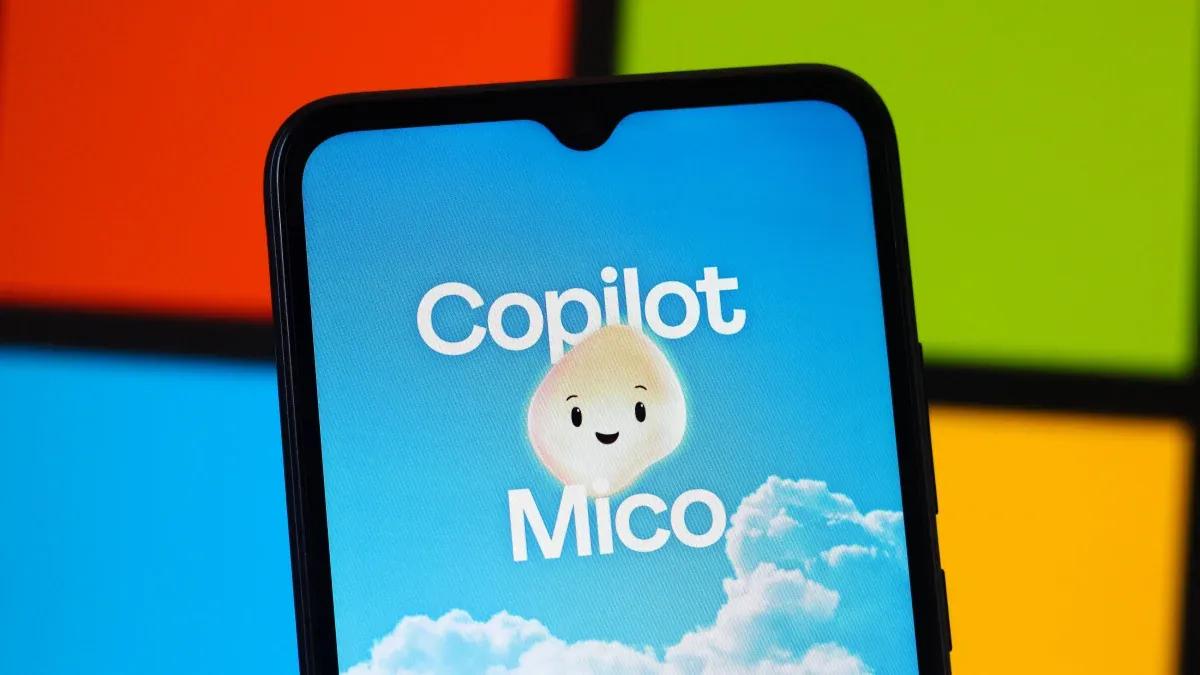
. The company also plans to eliminate Mico, the animated character that served as Copilot's mascot—a floating blob that resembled an AI-powered version of the infamous Clippy assistant1
.
Source: Mashable
The consolidation follows internal acknowledgment that Microsoft Copilot has struggled to establish itself. In July, The Information reported that Microsoft EVP Jacob Andreou, who oversees Copilot, stated in an internal memo that the AI assistant needed to "earn the right to exist" in customers' lives, requiring the company to abandon features that didn't resonate with users
1
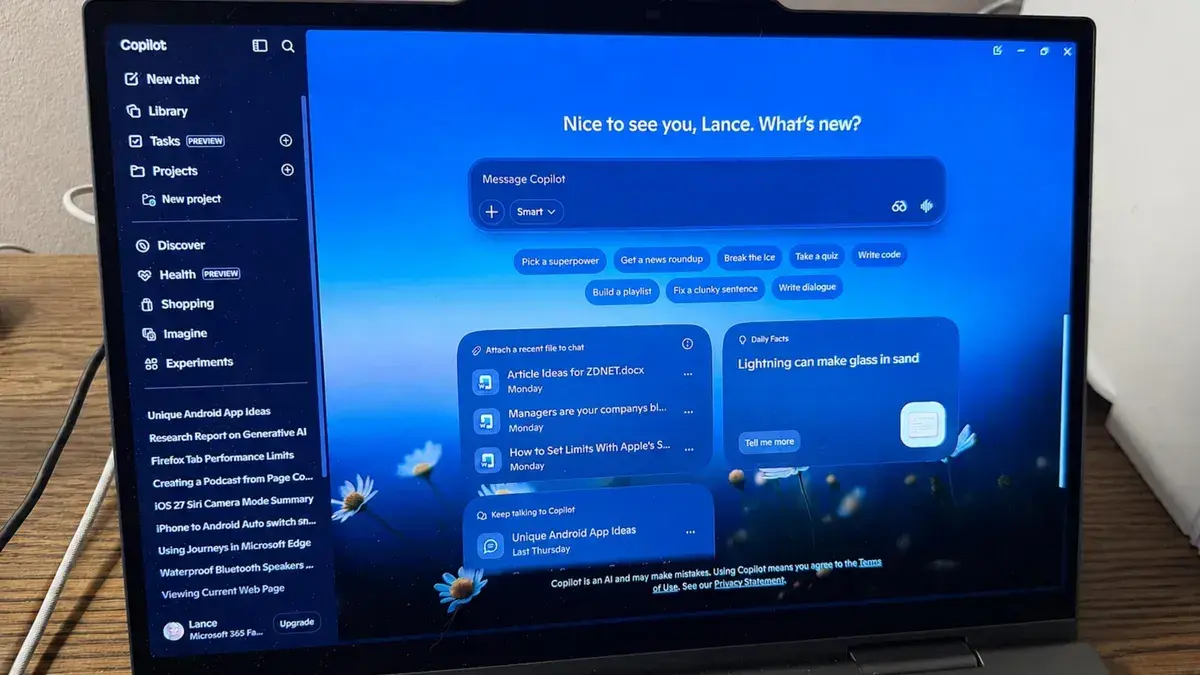
. This candid assessment underscores the competitive pressure Microsoft faces in the AI-powered productivity tools market.The updated application combines core Copilot capabilities including chat, image generation, file uploads, and text or voice interactions, with Microsoft 365 subscribers maintaining higher usage limits than free users
2
. Subscribers will also access Word, Excel, Outlook, and other Microsoft 365 applications directly through the unified platform, while files previously generated by the standalone Copilot app will migrate to OneDrive1
.
Source: ZDNet
Related Stories
Microsoft's move mirrors a broader AI consolidation trend across the technology sector. Claude recently merged its Cowork feature into Chat, OpenAI integrated its agentic feature Operator into ChatGPT, and Google has been adding specialized capabilities like deep research and web browsing to its Gemini app
1
. This pattern suggests the industry is moving away from fragmented AI experiences toward comprehensive "super app" platforms that consolidate multiple functions.The unified approach positions Microsoft to better compete in a market where Google claims Gemini has surpassed 1 billion monthly active users
5
. Microsoft reported over 20 million paid Copilot enterprise customers in April, representing organizations with potentially thousands of employees using the AI assistant5
. However, to justify massive investments in AI infrastructure, Microsoft and other tech giants must demonstrate sustained user engagement across both professional and personal contexts.Watch for how this consolidation affects Microsoft's competitive positioning against OpenAI and Google, whether the simplified experience drives increased adoption, and how the company balances enterprise requirements with consumer expectations in a single platform.
Summarized by
Navi
[2]
30 Jul 2026•Technology

30 May 2026•Technology

24 Apr 2025•Technology

1
Science and Research

2
Technology

3
Technology