Microsoft's $3.2B Anthropic gain surpasses Windows and Xbox operating income combined


2 Sources
[1]
Microsoft logs $3.2B from Anthropic investment, but OpenAI was a mixed bag
When Microsoft reported killer fourth-quarter earnings for its fiscal 2026 year (which ended June 30), it tucked in an interesting little tidbit about how its investments in the two biggest, and competing, AI labs are doing. For the quarter, it recorded its investment in Anthropic as a $3.2
[2]
Microsoft's Anthropic Gain Beat an Entire Business Segment - Microsoft (NASDAQ:MSFT)
Chief Financial Officer Amy Hood disclosed that Microsoft recorded a $3.2 billion gain from its investment in Anthropic during the quarter. The windfall was so large that it exceeded the $2.748 billion of operating income generated by Microsoft's entire More Personal Computing segment, which
Share
Copy Link
Microsoft reported a $3.2 billion gain from its Anthropic investment in Q4 2026, exceeding the operating income of its entire Windows and Xbox division. Meanwhile, its OpenAI stake saw a $600 million quarterly write-down, though it generated $5 billion in gains for the full year. The results highlight Microsoft's shift toward a diversified AI strategy across multiple frontier model providers.
Microsoft Records Massive Gain from Anthropic Investment
Microsoft logged a $3.2 billion gain from its Anthropic investment during the fourth quarter of fiscal 2026, a windfall so substantial it exceeded the $2.748 billion operating income generated by the company's entire More Personal Computing segment, which includes Windows, devices, Xbox, and search advertising
2
. The gain boosted diluted earnings per share by 33 cents, contributing significantly to Microsoft's reported diluted EPS of $4.81 for the quarter1
. CFO Amy Hood disclosed the figure during the earnings call, listing it among items that pushed quarterly earnings beyond previous guidance.Microsoft's Anthropic investment stems from a $5 billion commitment made in November 2025, structured as part of a circular agreement where Anthropic agreed to purchase $30 billion worth of Azure services
1
. Unlike Microsoft's OpenAI investment, which the company values quarterly, Microsoft does not routinely update the value of its Anthropic stake each quarter, making this disclosure particularly significant.OpenAI Investment Shows Mixed Results
While Microsoft's Anthropic investment delivered impressive financial outcomes of AI investments, Microsoft's OpenAI investment experienced a $600 million write-down during the same quarter, reducing diluted EPS by about 7 cents per share
1
. Microsoft owns approximately 27% of OpenAI and receives revenue-share payments, though the company does not disclose how much OpenAI pays under that arrangement. The quarterly decline represents a notable shift, even if it amounts to a rounding error for a company that delivered $90 billion in revenue and net income of $35.8 billion for the quarter.For fiscal 2026, Microsoft's OpenAI investment generated a $5 billion gain and added $0.67 to EPS
1
. The fact that Microsoft reported nearly as much gain from Anthropic in one quarter as it did from OpenAI for the entire year underscores the shifting dynamics in AI investments and why the company chose to disclose the Anthropic figure.Diversified AI Strategy Takes Center Stage
Source: Benzinga
The contrasting performance of these AI investments highlights Microsoft's evolving diversified AI strategy, which extends well beyond its closely watched partnership with OpenAI. CEO Satya Nadella emphasized during the earnings call that Microsoft is building an AI platform designed to support multiple frontier model providers. "We offer the broadest model catalog in the cloud with over 11,000 models, including the latest from OpenAI, Anthropic, Mistral, xAI, as well as our own MAI family," Nadella stated
2
.This multi-model AI architecture serves a dual purpose: providing customers with flexibility while ensuring business continuity. Nadella explained that the approach offers "the added benefit of business continuity and resilience because every model is substitutable," effectively addressing concerns about vendor lock-in
2
. The strategy reflects a calculated bet that enterprises will prefer platforms offering choice over those tying them to a single AI provider.Related Stories

What This Means for the AI Industry
The financial outcomes signal that Microsoft is not only generating revenue by selling AI infrastructure and software but also benefiting from strategic investments in companies shaping the next generation of artificial intelligence. Azure and other cloud services revenue climbed 43% year over year, helping Microsoft Cloud revenue surpass $214.4 billion for the fiscal year
2
. Commercial remaining performance obligations rose to $678 billion, reflecting sustained demand for Microsoft's cloud and AI offerings.For investors and AI industry watchers, the quarter demonstrates how strategic positioning across multiple frontier model providers can deliver substantial returns while mitigating risk. The fact that the Anthropic gain exceeded the operating income of legacy businesses like Windows and Xbox illustrates the financial weight AI investments now carry on Microsoft's balance sheet. As competition intensifies among AI labs, Microsoft's approach of supporting multiple models while maintaining significant stakes in leading companies appears to be paying dividends, both literally and strategically.
References
Summarized by

Navi
Related Stories
Microsoft Forecasts $1.5 Billion Loss from OpenAI Investment Amid AI Revenue Growth
31 Oct 2024•Business and Economy

Microsoft spending on Anthropic AI reaches $500M as tech giant diversifies beyond OpenAI
14 Jan 2026•Business and Economy

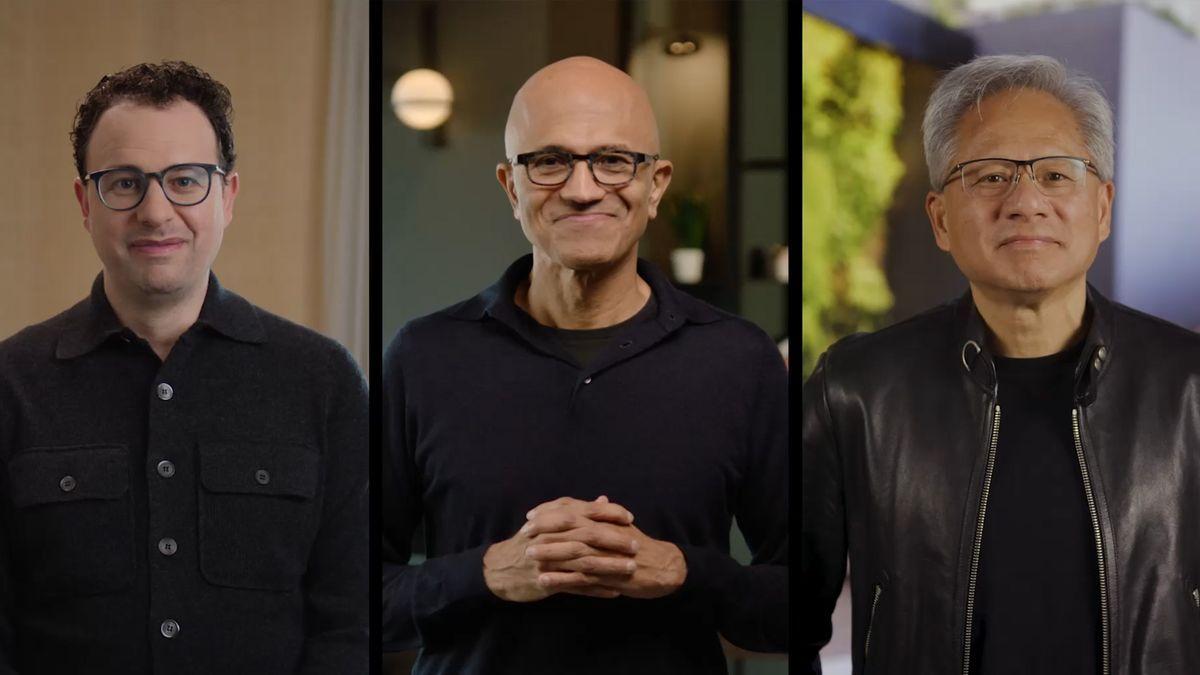
Microsoft, Nvidia, and Anthropic Form $30 Billion Strategic Partnership in Major AI Infrastructure Deal
19 Nov 2025•Business and Economy
Recent Highlights



Recent Highlights
Today's Top Stories






Don’t drown in AI news. We cut through the noise - filtering, ranking and summarizing the most important AI news, breakthroughs and research daily. Follow topics that matter to you and stay ahead.


