Motorola debuts Razr Fold and Qira AI platform at CES 2026, enters wearable AI race


4 Sources
[1]
Motorola Debuts Its First Book-Style Foldable and Wearable AI Concept
Lenovo Group Ltd.'s Motorola unveiled its first folding phone that opens like a book or passport, a departure from the string of clamshell-style foldables that the brand has released over the last several years. The device is called the Razr Fold -- though this iteration doesn't bear any
[2]
CES 2026: Motorola unveils Razr Fold, a book-style foldable phone
Motorola is taking another swing at foldables. The company announced the Razr Fold at CES 2020's Lenovo Tech World, introducing its newest flagship and a more ambitious take on the Razr formula. Instead of leaning into nostalgia with the flip-style Razrs, the Razr Fold is marketed as a
[3]
CES 2026: Motorola is entering the wearable AI game
Chance Townsend is the General Assignments Editor at Mashable, covering tech, video games, dating apps, digital culture, and whatever else comes his way. He has a Master's in Journalism from the University of North Texas and is a proud orange cat father. His writing has also appeared in PC Mag and
[4]
CES 2026: Motorola Enters the Wearable AI Race With Project Maxwell
Motorola also unveiled its first book-style foldable, razr fold Motorola announced two major artificial intelligence (AI) projects at the Consumer Electronics Show (CES) 2026 in Las Vegas. The company unveiled a unified AI platform, dubbed Qira, which works and retains context and memory across
Share
Copy Link
Motorola made a bold entrance at CES 2026, unveiling its first book-style foldable phone, the Razr Fold, alongside Qira, a unified AI platform that works across Lenovo and Motorola devices. The company also showcased Project Maxwell, a wearable AI concept that combines camera, microphone, and sensor inputs to provide real-time insights without requiring a phone.
Motorola Makes Late Entry Into Book-Style Foldable Market
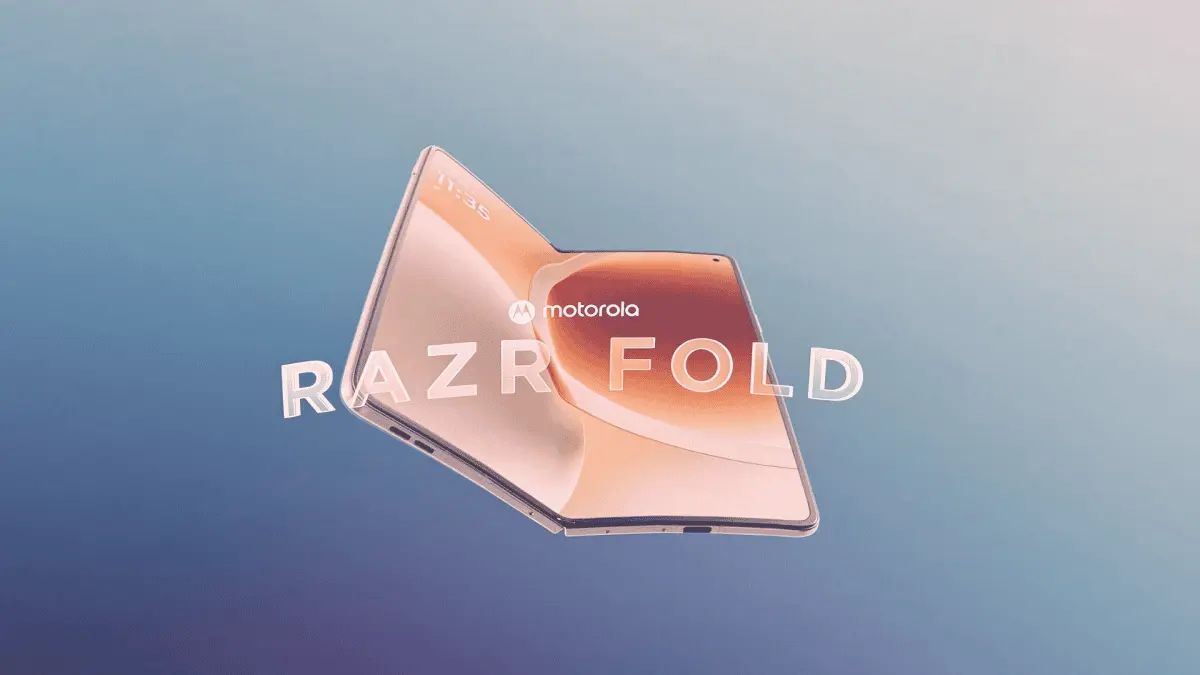
Motorola used CES 2026 as the stage to announce its first book-style foldable phone, the Razr Fold, marking a significant departure from the clamshell-style devices the brand has favored in recent years
1
. The device features a 6.6-inch external display that unfolds to reveal an 8.1-inch inner screen, dimensions slightly larger than most competing devices in the US market1
. Unlike the nostalgia-driven flip-style Razrs, the Razr Fold positions itself as a productivity device designed for multitasking2
.
Source: Mashable
The Android-based foldable phone will include three rear cameras at 50 megapixels each, a 32-megapixel selfie camera, and a 20-megapixel camera on the inner screen primarily intended for video calls
1
. The device also features a Sony LYTIA sensor, Dolby Vision video capabilities, and stabilization technology2
. In a move that sets it apart from Samsung's Galaxy Z Fold 7 and Google's Pixel 10 Pro Fold, Motorola will offer stylus support through a note-taking accessory1
. The company has not yet revealed pricing or an expected release date, promising more technical specifications in the coming months.Qira Unifies Lenovo and Motorola AI Ecosystems
Motorola introduced Qira, a unified artificial intelligence platform that merges Lenovo's AI Now and Motorola's moto AI into a single cross-device solution
4
. This AI assistant aims to solve the fragmentation problem that previously prevented users from carrying context, chats, or personalization instructions between Lenovo laptops and Motorola smartphones4
. The platform leverages partnerships with major industry players including Microsoft Copilot, Google, Qualcomm, Intel, and Perplexity AI, combining on-device AI capabilities with cloud-assisted features4
.Qira is designed to remember context, anticipate user needs, and respond more fluidly than existing siloed assistants, ensuring consistent cross-device AI experiences across the Lenovo-Motorola ecosystem
4
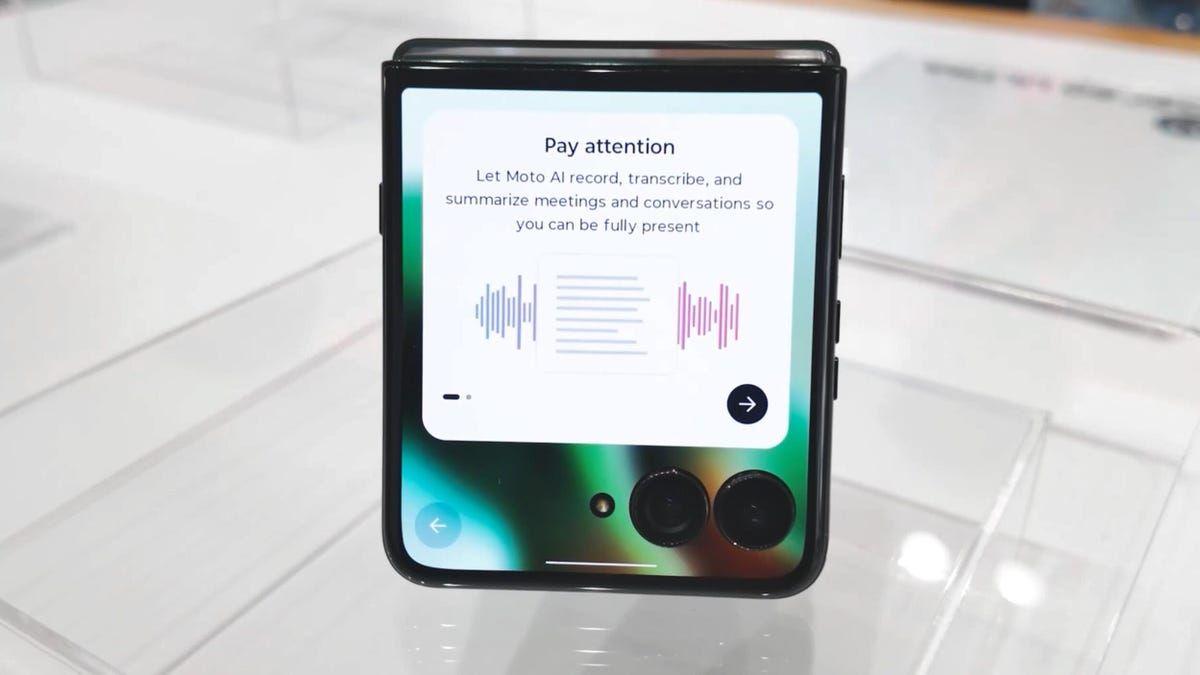
. The Razr Fold will feature on-device AI functions like Catch Me Up and Next Move, designed to surface reminders, context, and suggested actions without requiring constant app switching2
. This represents Motorola's effort to create a more seamless user experience as the company positions itself to compete in the age of artificial intelligence.Project Maxwell Explores Wearable AI Territory
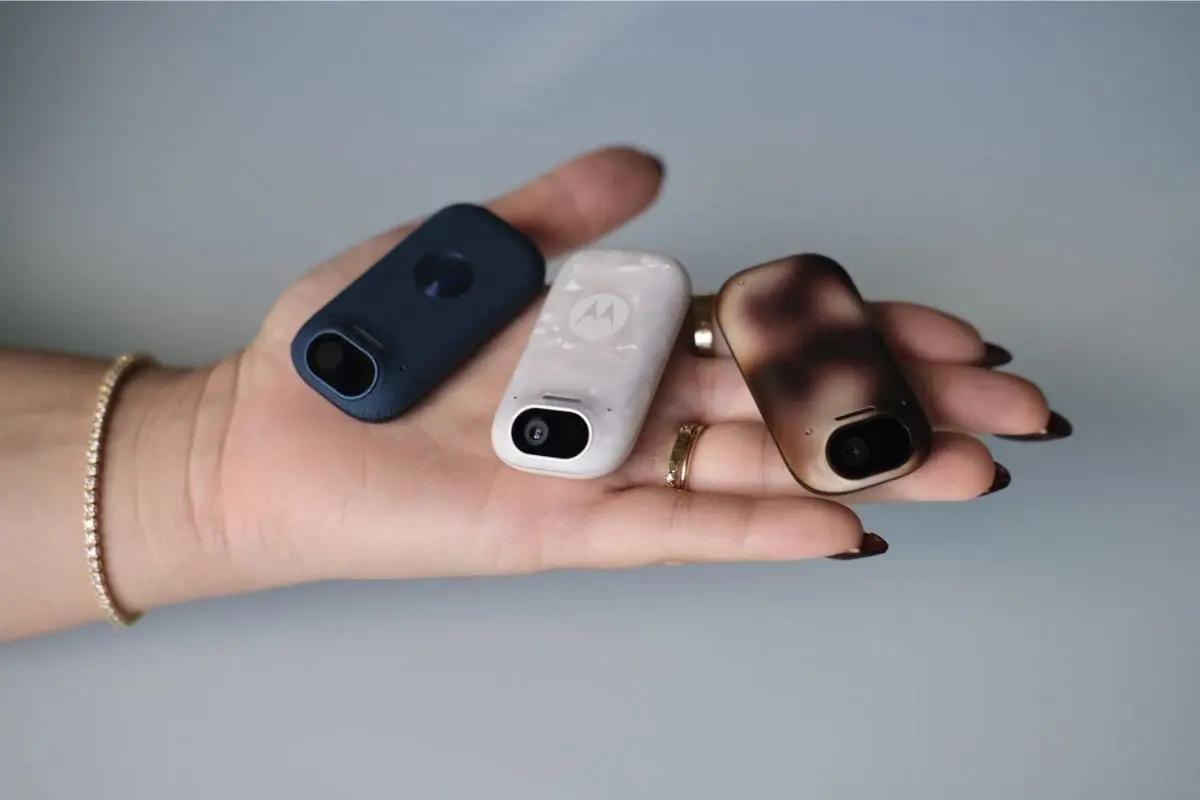
Motorola showcased Project Maxwell, a wearable AI concept device developed by its 312 Labs team, which focuses on future innovation
1
. The proof-of-concept device resembles a chunky pendant with a glossy, pearl-like shell and hangs from a thin necklace chain, featuring a small camera lens, sensor array, speaker slit, and pinhole microphones3
. Users activate the device by pressing a finger against its surface, triggering the AI-powered wearable companion to continuously collect scenario data by seeing what users see, hearing what they hear, and listening to what they say .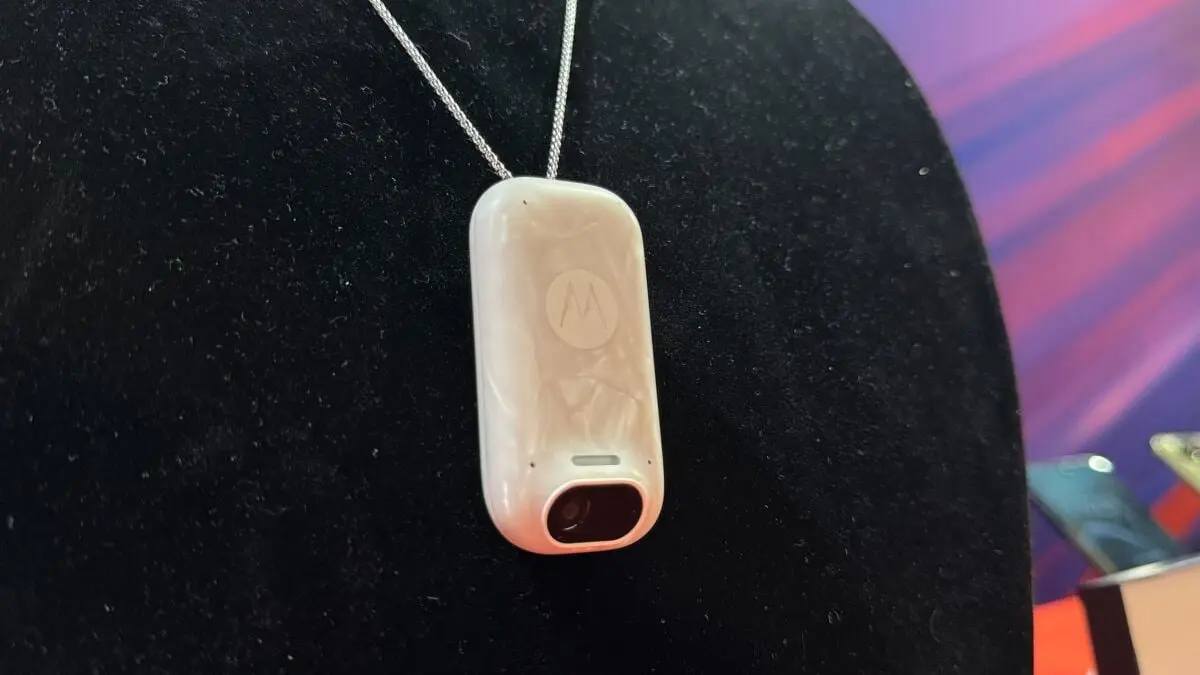
Source: Mashable
The concept device utilizes multimodal perception fusion, simultaneously processing and merging visual and audio data through its camera and microphone
4
. During demonstrations, the device showed agentic AI capabilities by opening Google Maps on a paired smartphone and entering destinations autonomously, rather than simply providing directions3
. Use cases include live translation, asking questions about surroundings, and automatically taking snapshots throughout the day for a digital journal1
. Battery life remains one of the biggest technical hurdles for this hardware type, according to company representatives1
.Related Stories


Motorola Enters Crowded Wearable AI Market
Motorola's entry into wearable AI comes as tech companies scramble to create a companion device that captures mainstream consumer interest. The bar remains low following high-profile failures like the Humane AI Pin, which was criticized for limited usefulness and high pricing
3
. A plethora of wearable AI-powered gadgets are expected to arrive in 2026 and beyond, with OpenAI developing its first hardware device in partnership with former Apple design executive Jony Ive1
. Motorola was careful to stress that Project Maxwell is very much a proof-of-concept, with no commercial release date specified3
4
.
Source: Gadgets 360
Learnings from the concept device will inform the company's future consumer-facing AI initiatives as it attempts to distinguish itself in an increasingly competitive landscape where natural language prompts and context-aware capabilities are becoming table stakes for any serious AI assistant.
References
Summarized by

Navi
Related Stories
Recent Highlights



Recent Highlights
Today's Top Stories






Don’t drown in AI news. We cut through the noise - filtering, ranking and summarizing the most important AI news, breakthroughs and research daily. Follow topics that matter to you and stay ahead.


