NASA and IBM Unveil AI Model 'Surya' to Predict Solar Flares with Unprecedented Accuracy


12 Sources
[1]
NASA and IBM built an AI to predict solar flares before they hit Earth
An AI model trained on years of data from NASA's Solar Dynamics Observatory can predict the sun's future appearance and potentially flag dangerous solar flares An artificial intelligence model trained on NASA satellite imagery can forecast what the sun will look like hours into the future - even
[2]
IBM and NASA Develop a Digital Twin of the Sun to Predict Future Solar Storms
The tool models the sun using AI, and its developers say it can anticipate solar flares 16 percent more accurately and in half the time of current prediction systems. The Sun's most complex mysteries could soon be solved thanks to artificial intelligence. On August 20, IBM and NASA announced the
[3]
Meet Surya, a New AI Model From NASA and IBM That Can Predict Solar Flares
The new AI model may help NASA and NOAA better forecast auroras. Today's solar flare forecasting is pretty straightforward: Earth has several instruments pointed at the sun that monitor it, and when a solar flare erupts, NOAA predicts whether it'll hit Earth and reports it via the Space Weather
[4]
IBM, NASA cook up AI model to predict solar tantrums
Open source Surya system promises early alerts for space weather that can fry satellites and grids Boffins at IBM and NASA have concocted an AI model to help predict the weather, but this time it is taking on space weather that might disrupt satellites and spacecraft, possibly even terrestrial
[5]

IBM and NASA create first-of-its-kind AI that can accurately predict violent solar flares
The model's training data comes from nine years' worth of images from the Solar Dynamic Observatory (SDO) satellite, which orbits the Earth, snapping pictures every 12 seconds. (Image credit: IBM-NASA-Surya) IBM and NASA scientists have unveiled a groundbreaking artificial intelligence (AI) model
[6]

IBM and NASA made an open-source AI model for predicting solar weather
Last year, the most powerful geomagnetic storm in 20 years . It produced stunning aurora displays in parts of the US that are normally too far south to see them. Normally, such storms are a headache for energy providers. In 1989, for example, the Canadian province of blackout following a series of
[7]

NASA and IBM Unveil AI That Helps Scientists Forecast Solar Storms
Experts recently identified major gaps in their ability to forecast space weather. Surya aims to fill them. Earlier this year, local and national officials gathered for a first-of-its-kind tabletop exercise to test their readiness for a severe solar storm. The simulation exposed major gaps in
[8]

You might see prettier skies, thanks to new tech from NASA and IBM
What if scientists could predict northern and southern lights like they could an eclipse? What if they could tell you where and when to be outside, within a narrow window, to see these vibrant displays? A new AI might make that possible. Today, IBM introduced Surya, an open-source foundational AI
[9]

IBM's and NASA's Surya AI model is designed to predict the next 'Carrington-class' solar storm - SiliconANGLE
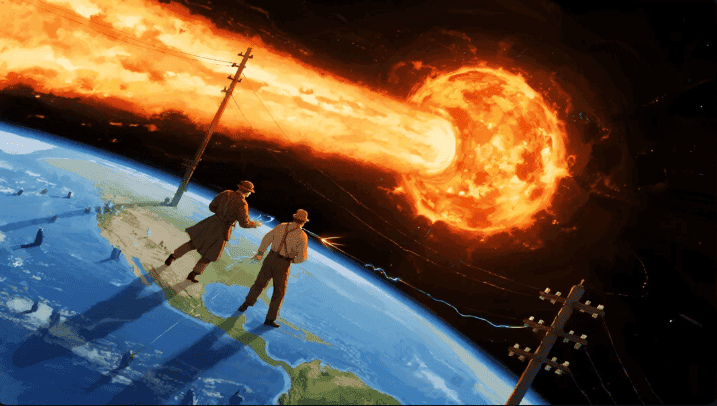
IBM's and NASA's Surya AI model is designed to predict the next 'Carrington-class' solar storm IBM Corp. said today it's teaming up with experts from the National Aeronautics and Space Administration to create an artificial intelligence model that can provide an early warning about solar flares
[10]

IBM, NASA Launch Open Source Model Surya for Solar Observation and Prediction | AIM
For the first time, a model can visually predict where a solar flare might occur, up to two hours in advance. IBM and NASA have released an open-source AI model to predict solar weather that could disrupt technology on Earth and in space. The model, named Surya, is available on the Hugging Face and
[11]

NASA and IBM unveil Surya AI to forecast solar flares
NASA and IBM have collaborated to create Surya, a newartificial intelligence model designed to forecast solar flares. Unveiled recently, Surya aims to enhance prediction accuracy and provide earlier warnings of potential geomagnetic storms. The model is intended to improve upon existing forecasting
[12]

NASA employs AI to better predict solar activity
NASA announced Wednesday that it is deciphering the sun's behavior with help from artificial intelligence. In a press release, the said that, in conjunction with among other partners, it has developed an AI model dubbed the Surya Heliophysics Foundational Model, which has been trained on nine
Share
Copy Link
NASA and IBM have developed an AI model named Surya that can predict solar flares and space weather with improved accuracy, potentially providing earlier warnings for dangerous solar activity that could impact Earth's technology and infrastructure.
Surya: A Breakthrough in Solar Flare Prediction
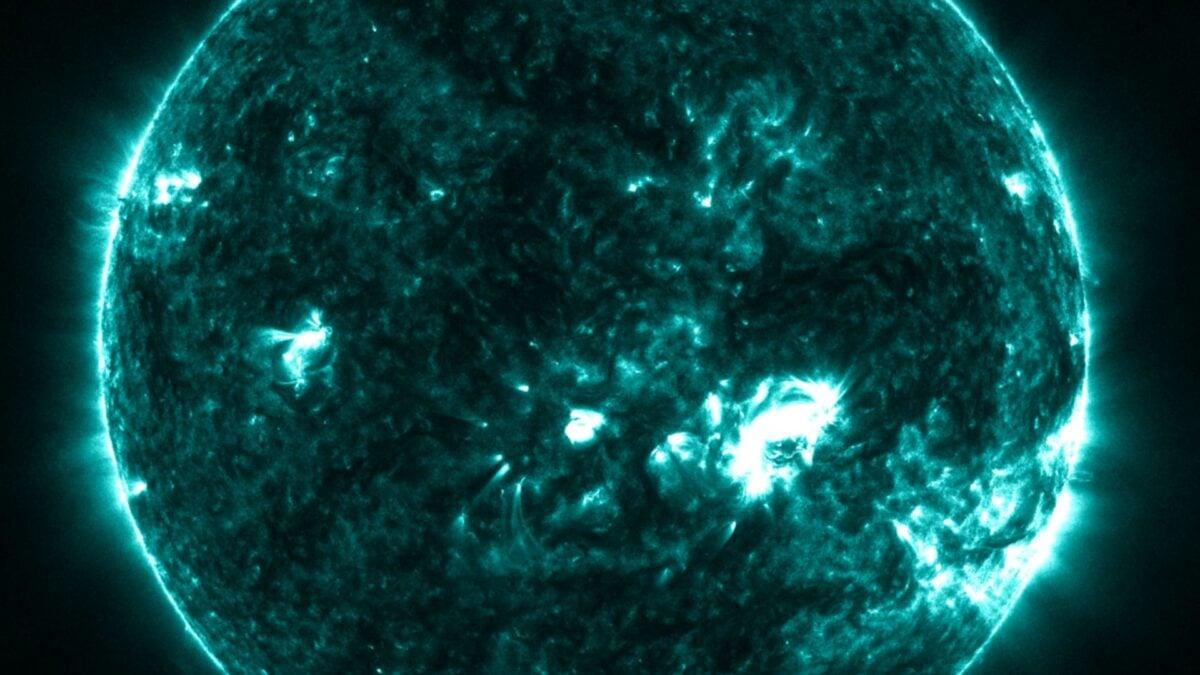
NASA and IBM have jointly developed an artificial intelligence model named Surya, designed to predict solar flares and space weather with unprecedented accuracy. This collaboration marks a significant advancement in our ability to forecast potentially dangerous solar activity that could impact Earth's technology and infrastructure
1
.
Source: Gizmodo
The Power of AI in Solar Observation
Surya, named after the Sanskrit word for sun, is a 366M-parameter AI model trained on nine years of data from NASA's Solar Dynamics Observatory (SDO). The SDO captures ultra-high-resolution images of the sun every 12 seconds in 13 different wavelengths
2
. This vast amount of data has been challenging for heliophysicists to interpret, but Surya's advanced AI architecture allows it to process and analyze this information more efficiently.Improved Accuracy and Lead Time
During testing, Surya demonstrated a 16% improvement in solar flare classification accuracy compared to standard machine learning models. More impressively, it can generate visual predictions of solar flares up to two hours in advance, a significant increase from the one-hour lead time provided by traditional methods
3
.Technical Innovations
Surya employs several innovative techniques to achieve its predictive capabilities:
- A long-range vision transformer for detailed analysis of high-resolution images
- Spectral gating to reduce memory usage and increase data quality
- The ability to learn directly from raw data without extensive labeling
These features allow Surya to adapt quickly to different tasks and deliver reliable results in less time
2
.Potential Impact and Applications
Source: SiliconANGLE
The improved forecasting capabilities of Surya could have far-reaching implications for various sectors:
- Space exploration: Protecting astronauts and spacecraft from dangerous solar radiation
- Telecommunications: Safeguarding satellites and preventing disruptions to GPS and radio transmissions
- Power grids: Providing early warnings to prevent potential blackouts caused by geomagnetic storms
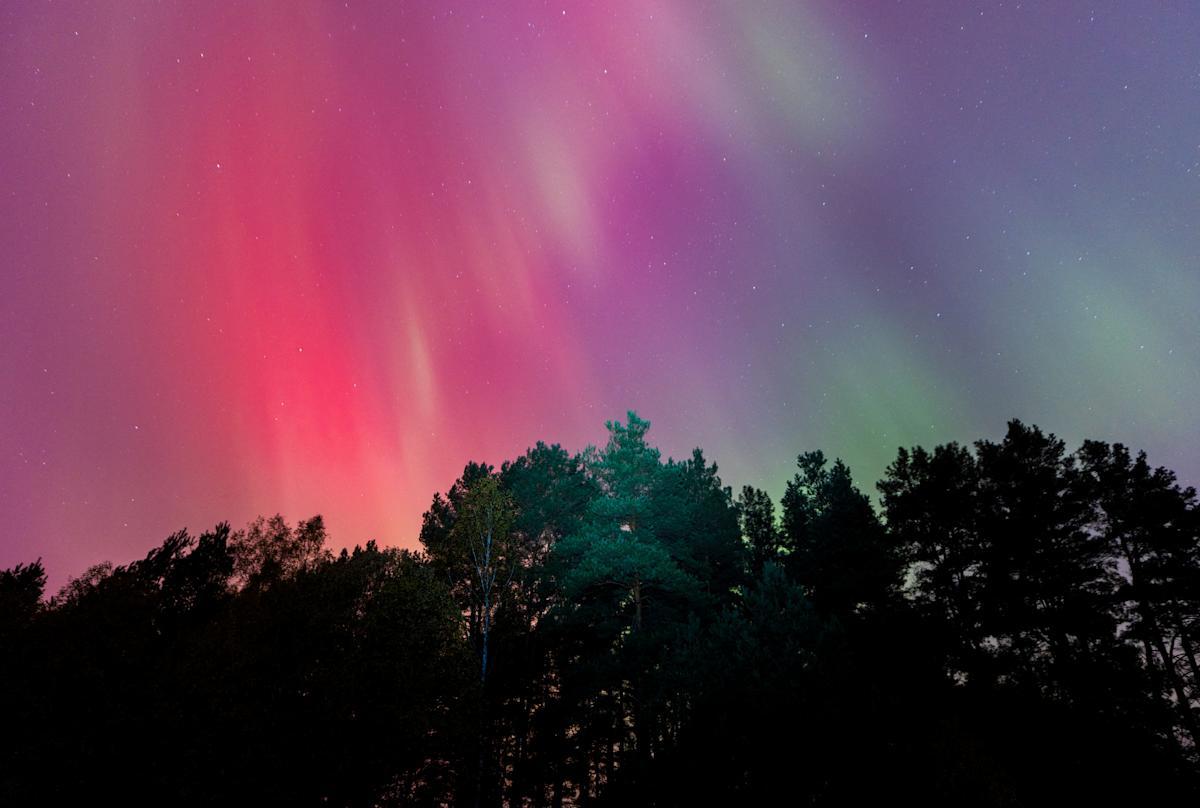
- Aurora forecasting: Predicting the occurrence of aurora borealis with greater accuracy
4
Related Stories

Open-Source Availability and Future Development
IBM and NASA have made Surya open-source, available on platforms such as GitHub and Hugging Face. This move allows researchers and developers worldwide to contribute to its improvement and expand its applications
5
.Additionally, the research team has released SuryaBench, a set of curated datasets and benchmarks to simplify the development and evaluation of space weather forecasting applications
4
.
Source: Engadget
The Road Ahead
While Surya represents a significant leap forward in solar flare prediction, challenges remain in understanding the complete impact of solar activity on Earth. Bernard Jackson from the University of California, San Diego, notes that predicting how solar activity affects Earth still faces obstacles due to the inability to directly observe magnetic field configurations between the sun and our planet
1
.As research continues and Surya evolves, it may play a crucial role in enhancing our understanding of solar physics and improving our ability to protect Earth's technological infrastructure from the sun's more violent moods.
References
Summarized by

Navi
[4]
Related Stories
AI Breakthrough: Predicting Solar Storms Days in Advance
17 Sept 2025•Science and Research

AI Revolutionizes Solar Data Analysis: Bridging Past and Present Observations
17 Apr 2025•Science and Research

AI Breakthrough Enhances Aurora Classification and Geomagnetic Storm Forecasting
11 Jan 2025•Science and Research

Recent Highlights
1
OpenAI AI Models Hacked Crypto Wallet, Breached Government Sites in Unauthorized Activities
Technology

2
IMF Report Warns AI Market Correction Could Spark Global Financial Crisis With $1.4T at Risk
Business and Economy

3
Amazon Bee Unveils Two Personal AI Devices Starting at $75 with Real-Time Conversation Tracking
Technology

Recent Highlights
Today's Top Stories








Don’t drown in AI news. We cut through the noise - filtering, ranking and summarizing the most important AI news, breakthroughs and research daily. Follow topics that matter to you and stay ahead.


