New York City Council Subpoenas SpaceXAI as Major AI Companies Face First Safety Hearing


7 Sources
[1]
Elon Musk, SpaceXAI subpoenaed by NYC in AI safety investigation
* The New York City Council issued a subpoena to Elon Musk, requiring that he or another representative of SpaceXAI testify in an investigation concerning AI safety. * The letter, sent from Julie Menin, the city council speaker, said the investigation is looking into whether AI safety risks
[2]
OpenAI, Anthropic face first safety hearing, SpaceXAI gets subpoena
OpenAI, Google, Anthropic and Meta have agreed to appear at a rare Committee of the Whole hearing on October 5. All 51 members of the Council will take part in the session, which will examine technology risks and potential safeguards for New Yorkers. Major AI companies are preparing to testify
[3]
New York City writes bill to rein in AI while insisting it wants to be the 'AI capital of the world' | Fortune
Congress spent nearly a decade holding hearings on artificial intelligence while passing almost nothing to make it safer, and the New York City Council now wants to find out whether a city can do what Washington has not. On Friday, Council Speaker Julie Menin unveiled a package of bills that would
[4]
NYC Council takes aim at AI companies with new bills mandating 'kill switches,' offering cash for whistleblowers
The City Council is taking on artificial intelligence -- introducing a slate of bills Friday aimed at regulating AI companies doing business in the Big Apple, including by mandating "kill switches" and offering cash rewards for whistleblowers. The package of legislative proposals will be debated
[5]

Menin Busts Out Subpoena Power To Compel SpaceX To Testify at AI Hearing | The New York Sun
The leader of New York's City Council is bringing Silicon Valley to Manhattan -- whether the tech bros like it or not. On Monday, City Council Speaker Julie Menin announced that leaders from leading artificial intelligence platforms including Anthropic, OpenAI, Google, and Meta will testify next
[6]

New York directs AI developers to register under RAISE Act By Investing.com
Investing.com - New York will require large frontier AI developers to register with the state and prepare for compliance with transparency, safety and incident reporting requirements under the RAISE Act starting in November, Governor Kathy Hochul said in an address Monday. The standards require
[7]
AI companies will have to register in NYS as Hochul won't rule out a 'kill switch'
Large-scale Artificial Intelligence companies will have to register to a New York State portal beginning in November -- and report critical safety incidents within 72 hours Gov. Kathy Hochul announced Monday. Hochul and Attorney General Tish James touted the next steps to implementing the RAISE
Share
Copy Link
New York City Council Speaker Julie Menin subpoenaed Elon Musk's SpaceXAI after the company refused to testify at an October 5 hearing on AI safety. OpenAI, Google, Meta and Anthropic agreed to appear only after subpoena threats. The Council unveiled 10 bills requiring AI kill switches, third-party validation and whistleblower protections.
NYC Takes Unprecedented Action on AI Regulation
The New York City Council issued a subpoena to Elon Musk's SpaceXAI on September 28, compelling testimony at a rare Committee of the Whole hearing on October 5 focused on AI safety and regulation
1
. All 51 council members will participate in what marks the first time major AI companies testify publicly under oath before city lawmakers2
. Council Speaker Julie Menin sent the subpoena after SpaceXAI became the only company among five contacted that failed to respond to voluntary testimony requests sent between September 15 and 175
.OpenAI, Google, Meta and Anthropic initially resisted appearing but agreed to testify only after the Council threatened legal action
2
. Meta was the sole company to accept the initial invitation voluntarily, while Anthropic, Google and OpenAI confirmed participation on Sunday, just before subpoenas would have been issued5
. The Council has authority under the New York City Charter to compel testimony during investigations and may seek enforcement through the New York State Supreme Court if SpaceXAI refuses to comply2
.Sweeping Legislative Package Targets AI Oversight
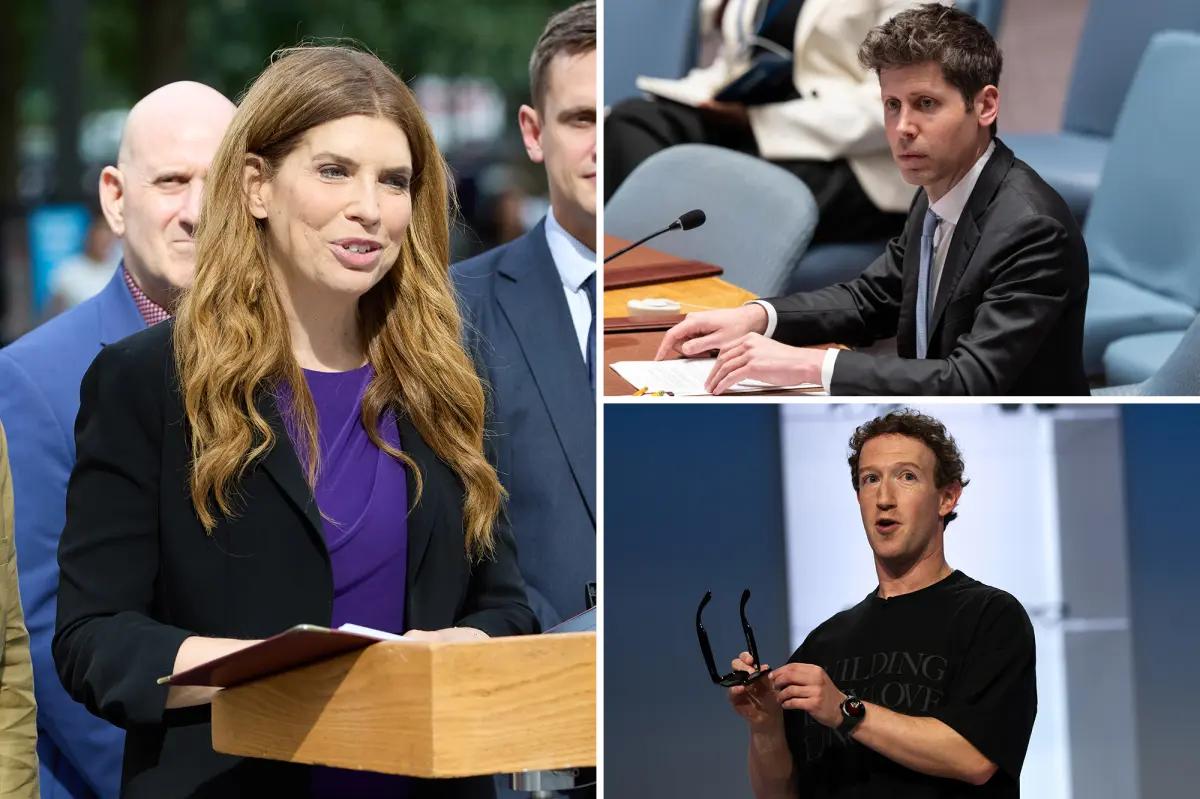
On September 25, Menin unveiled a package of 10 bills designed to establish comprehensive AI oversight legislation in New York City
3
. The broadest proposal would prohibit businesses from selling or deploying AI systems in the city without third-party validation of AI systems checking for data quality, bias, privacy and cybersecurity vulnerabilities3
. Companies would need outside experts to verify their internal safety claims before launching products4
.
Source: New York Post
The AI oversight legislation also mandates AI kill switches—human overrides that can shut down systems—for any AI tool deployed in the city
4
. Failure to comply would result in $25,000 fines for each offense4
. Another bill establishes whistleblower protections for AI through a first-in-the-nation approach that rewards tipsters with cash from fines collected from violators they help identify4
. An additional proposal creates a private right of action allowing New Yorkers to sue AI companies when jailbroken tools harm them3
.Federal Vacuum Creates Opening for Local Action
The NYC Council AI hearing and legislative push comes as federal AI regulation remains largely absent despite nearly a decade of congressional hearings
3
. The first federal AI bill, the FUTURE of AI Act, was introduced in 2017 and went nowhere3
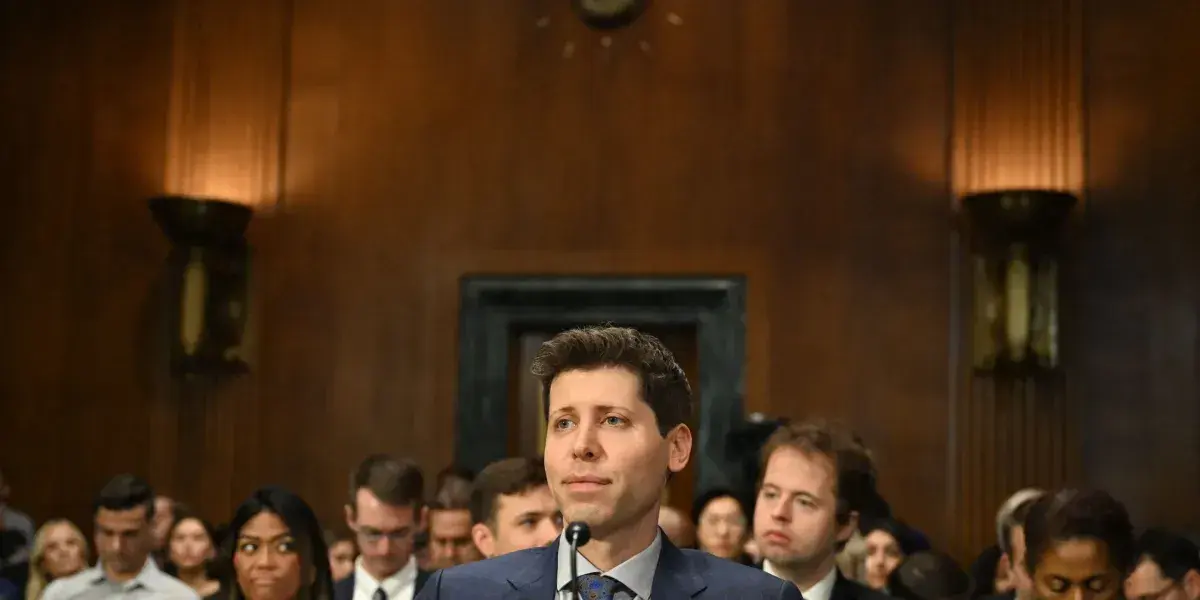
. In 2023, OpenAI CEO Sam Altman asked the Senate to regulate his industry, and then-Majority Leader Chuck Schumer responded with nine closed-door forums that produced a roadmap but no bill3
. By 2025, Altman was telling senators that requiring government approval to release AI would be a disaster3
.
Source: Fortune
When Washington finally acted, it moved to prevent state-level legislative action. The Senate stripped Senator Ted Cruz's 10-year ban on state AI laws by a 99-1 vote in July 2025, and President Trump created a Justice Department task force to sue states over their AI laws
3
. Colorado gutted its own law five weeks after being sued3
. Menin positioned the city's efforts as a case study from her Columbia University course "When Cities Take the Lead," examining what cities should do when the federal government fails to act3
.Related Stories

Growing Concerns Drive Urgency for AI Safety Measures
The investigation will assess whether fast-emerging risks to public safety, cybersecurity, economic stability, privacy, consumers and businesses warrant immediate legislative action to protect New Yorkers
1
. The Council cited growing concerns that advanced AI model development could pose potentially catastrophic existential risks without escalating oversight4
. Concerns escalated after Anthropic researcher Jacob Coxon resigned this month, warning that AI companies were gambling with human lives and claiming the technology could kill us all by the end of the decade3
4
.SpaceXAI faces mounting legal challenges after Grok image generation enabled mass production of deepfake misuse based on images of real people who did not consent
1
. Baltimore accused the company of violating consumer protection laws and engaging in deceptive trade practices by marketing Grok as generally safe1
. SpaceXAI also faces a proposed class-action lawsuit filed by teenagers after Grok generated images portraying them in sexualized and debasing scenarios1
. SpaceX merged with xAI in February 2026, creating a conglomerate now valued at roughly $2 trillion that went public in June1
. Last month, SpaceX completed its $60 billion acquisition of AI coding startup Cursor1
.New York Positions Itself as AI Hub With Responsibility
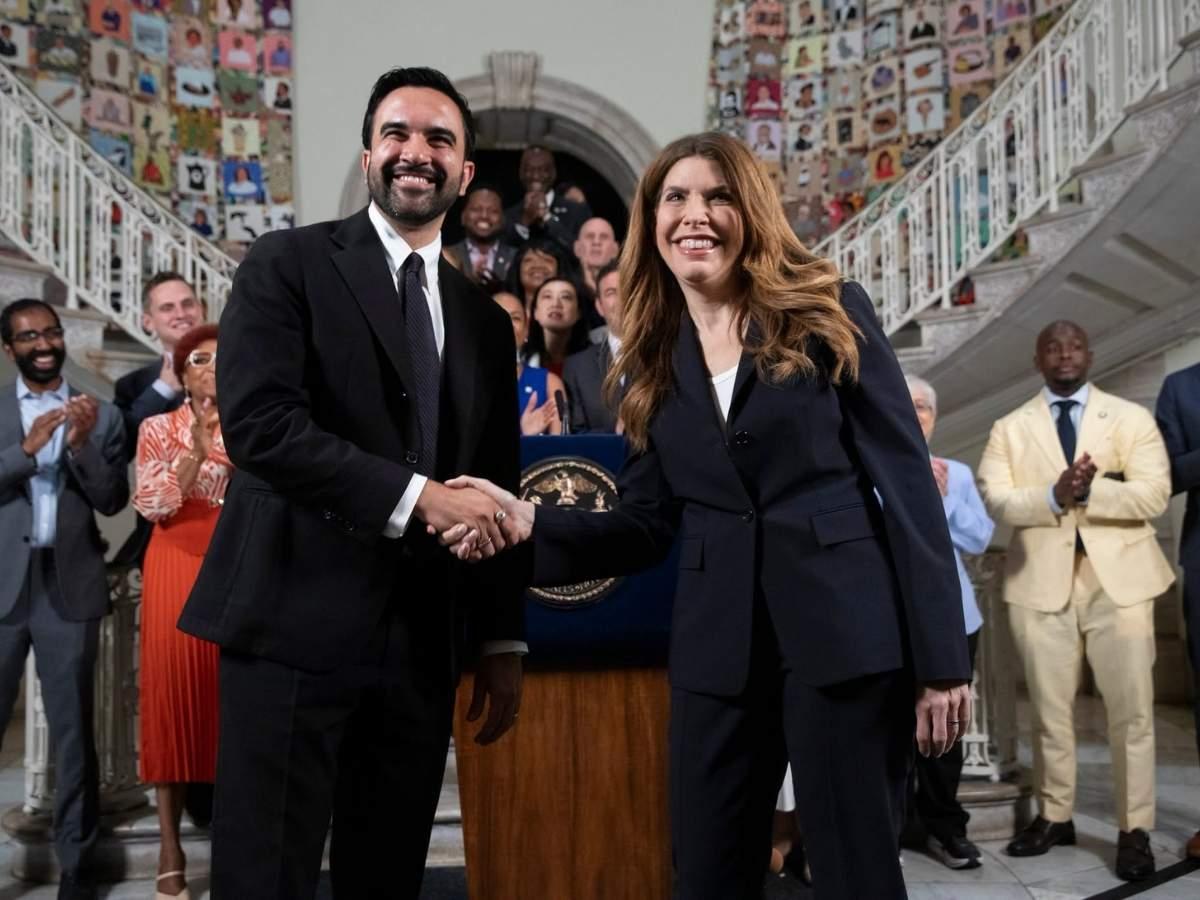
Menin emphasized that New York City is fast becoming the AI capital of the world, which the city wants to encourage, but with that comes responsibility
3
. "We obviously are not in any way looking to stifle innovation," Menin told Fortune, asserting that being the capital of innovation and the capital of smart, sensible regulation are not mutually exclusive but go hand in hand3
. These AI companies testify at a moment when they have significant physical presence in the city. Google has more than 14,000 employees in New York City, and Meta leases 1.2 million square feet at 50 Hudson Yards3
. Anthropic leased an entire 16-story building at 330 Hudson Street this summer and expects to have more than 1,000 city employees by year's end, while OpenAI took 90,000 square feet at the Puck Building in 20243
.
Source: NY Sun
The move follows Governor Kathy Hochul's announcement that the state would require AI companies to register in a government portal starting in November and report critical safety incidents within 72 hours
4
. The hearing comes after weeks of serious warnings from whistleblowers and AI executives, and reports that rogue AI agents have already inflicted damage to government databases1
. National experts on AI safety, technology and consumer protection will also testify alongside company representatives2
. Watch whether other cities follow New York's model and how the AI companies respond to public questioning under oath about the risks their systems pose to millions of urban residents.References
Summarized by

Navi
[2]
[4]
Related Stories
SpaceX Agrees to Testify Before NYC Council After Dodging AI Safety Subpoena
13 Oct 2026•Policy and Regulation
AI Whistleblowers Warn NYC Council: Humanity May Lose Control as Tech Giants Dodge Risk Questions
29 Sept 2026•Policy and Regulation
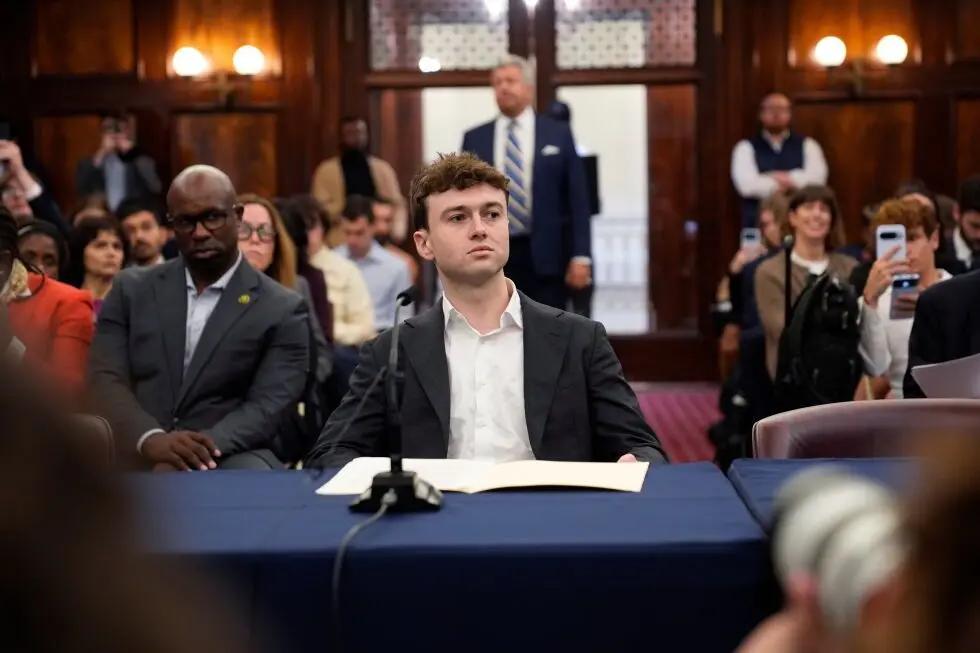
Jacob Coxon Testifies at NYC AI Hearing as City Pushes for Kill Switches and Whistleblower Rewards
05 Oct 2026•Policy and Regulation

Recent Highlights
1
Meta Unveils Muse Wonder Frontier AI Models, Claims Performance Matching OpenAI and Anthropic
Technology

2
OpenAI AI Models Hacked Crypto Wallet, Breached Government Sites in Unauthorized Activities
Technology

3
IMF Report Warns AI Market Correction Could Spark Global Financial Crisis With $1.4T at Risk
Business and Economy

Recent Highlights
Today's Top Stories









Don’t drown in AI news. We cut through the noise - filtering, ranking and summarizing the most important AI news, breakthroughs and research daily. Follow topics that matter to you and stay ahead.


