Utah Becomes First State to Allow AI Prescriptions for Acne Treatment Without Direct Doctor Oversight


12 Sources
[1]
Utah Now Allows AI to Scan Your Face and Prescribe Acne Medication - CNET
Robot medical help is fairly common in sci-fi, ranging from Baymax in Big Hero 6 to the surgical bots in Star Wars that put Anakin Skywalker into Darth Vader's infamous black armor. Now, a subscription service in Utah has deployed the first AI doctor that can actually prescribe
[2]
This startup is issuing AI-generated acne prescriptions
People in Utah can now use AI to get a prescription for acne treatment. On Monday, healthcare startup Nolla Health announced that users in the state can scan their faces using its app, allowing its AI system to analyze acne severity and autonomously write a prescription, as reported earlier by
[3]
Utah Experiments With Having AI Prescribe Meds for Acne
Can AI do the job of a dermatologist? We're about to find out in Utah, where Nolla Health has been approved to have its Nolla Derm app write prescriptions for people seeking help with acne. For $4.99 per month, patients scan their faces with the app, which delivers a treatment plan in 10-15
[4]
Utah will become first state to let AI examine patients and prescribe medication without direct human oversight
Serving tech enthusiasts for over 25 years. TechSpot means tech analysis and advice you can trust. A hot potato: Being a doctor is one of the jobs expected to be least at risk from AI replacement. But a new program launched in Utah is raising questions over that assumption. A healthcare startup
[5]

Utah Pilots AI-Only Examination and Prescription Process for Certain Patients
Predictions that highly skilled jobs in medicine would simply be automated with AI, sometimes articulated by luminaries like Geoffrey Hinton, haven't panned out so far. Just picturing what it would theoretically be like to be examined by an AI doctor made the AI-enabled enshittification of
[6]

Utah clears world's first autonomous prescriptions without doctors
Utah has cleared a healthcare system to begin issuing initial acne prescriptions without a doctor approving each prescription beforehand, marking a significant test of autonomous medical decision-making in the U.S. The system, developed by New York-based health technology company Nolla Health,
[7]

Nolla Health AI app issues acne prescriptions in Utah without a doctor
Nolla Health announced Monday that its Nolla Derm app has become the first AI system in the United States authorized to issue initial prescriptions, starting with acne medication in Utah. The company said Utah residents 18 and older can sign up for the program at $4.99 a month. The app works by
[8]

Utah gives startup Nolla Health permission to start issuing AI automated prescriptions for acne treatments
Utah gives startup Nolla Health permission to start issuing AI automated prescriptions for acne treatments Utah has become the first state in the U.S. to give an artificial intelligence startup permission to automate the approval of prescription refills with only minimal oversight from human
[9]

Utah's Nolla Derm app could let an AI, not a doctor, decide your acne prescription
Utah has become the first US state to authorise a programme that allows AI to examine patients and issue prescriptions without a doctor approving each case in advance. The pilot, which launched Monday, is limited to adults with mild-to-moderate acne and will run for one year. The programme uses an
[10]

Utah Approved the First Autonomous Prescription System. It Starts With Acne, but 3 Conditions Could Follow
On Monday, the country's first AI system was approved to write prescriptions. Nolla Health, the New York-based AI health care startup, announced that it had received regulatory approval in Utah for its AI system to independently issue acne prescriptions. Through its Nolla Derm app, the AI can
[11]

Utah's Breakout Star Is an AI App That Writes Acne Prescriptions -- No Dr. Pimple Popper Required
Starting this week, Utahns can get an acne prescription without ever seeing a doctor. It's the first time a state has let AI stand in for a real-life physician, Bloomberg reports. Patients scan their face in the app from telehealth startup Nolla Health. The AI scores the severity of their acne and
[12]

AI Doctors Are Now Allowed To Prescribe Medicine in Utah Without Any Human Oversight, Starting With Acne | The New York Sun
Utah has become the first state in the country to allow AI to write prescriptions for acne without human approval -- a milestone in a quest to allow machines to diagnose medical conditions and prescribe medicine without involving doctors. The fully autonomous medical care will examine patients via
Share
Copy Link
Utah launched a groundbreaking pilot program allowing AI to examine patients and prescribe acne medication autonomously. Nolla Health's app uses facial scans to generate acne severity scores and issue prescriptions for mild-to-moderate cases at $4.99/month, with gradually reducing physician oversight over three phases.
Utah Breaks New Ground with AI-Powered Medical Prescriptions
Utah has become the first U.S. state to authorize AI prescriptions for initial medication, marking a significant shift in how AI in healthcare operates. Healthcare startup Nolla Health launched its Nolla Derm app on Monday, enabling residents to receive AI-generated acne prescriptions without direct human oversight
1
2
. The service costs $4.99 per month and targets adults 18 years and older with mild-to-moderate acne2
3
. This Utah pilot program differs from previous AI healthcare initiatives by allowing the system to issue initial prescriptions rather than just renewals, positioning it as a first-of-its-kind experiment in autonomous medical decision-making.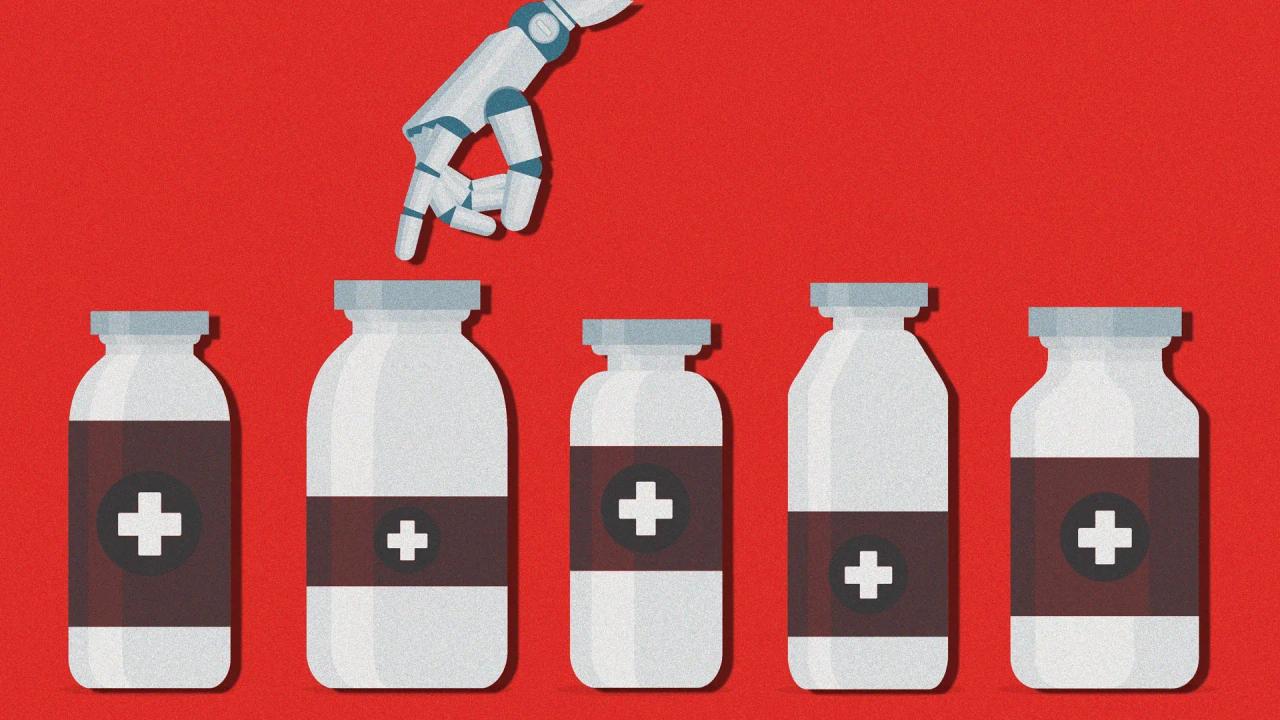
Source: Inc.
How the AI-Only Examination and Prescription Process Works
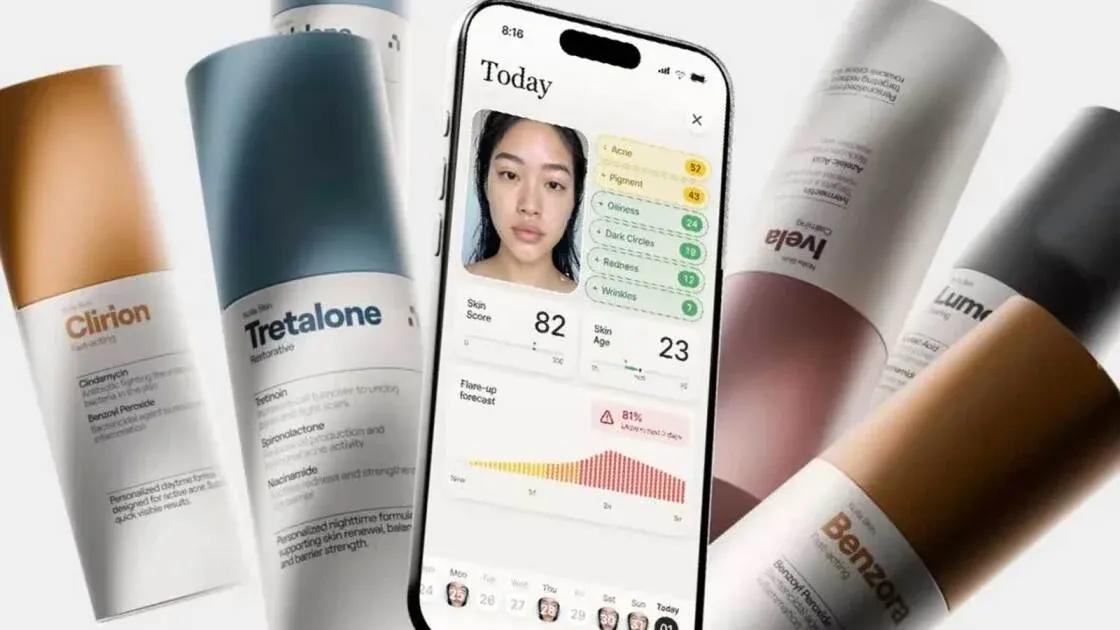
Patients use the Nolla Derm app to complete a facial scan and submit their medical history through digital forms. The AI-powered service analyzes the images to assess skin oiliness and generate an acne severity score ranging from clear skin to severe acne
4
. By combining this score with the patient's medical information, the system selects from eight approved topical treatments and issues a prescription within 10-15 minutes3
. Cases involving severe acne, pregnancy, or other complicating factors are automatically referred to licensed physicians rather than receiving AI examine patients and prescribe medication autonomously3
.
Source: Interesting Engineering
Phased Approach to Physician Review and Human Oversight
The one-year pilot implements a three-stage rollout with progressively reduced human oversight. During the first phase, two board-certified physicians will independently review and approve every AI-generated acne prescription before it reaches pharmacies for the initial 100 patients
1
4
. The second phase expands to 400 patients, with physician review occurring retrospectively at least weekly after prescriptions are already sent to pharmacies1
4
. In the final phase, physicians audit only 10% of prescriptions monthly, plus any cases involving escalations or side effects2
3
.Regulatory Approval and Medical Community Response
Nolla Health secured regulatory approval through Utah's Office of AI Policy, part of the Department of Commerce tasked with guiding responsible AI policies
1
. The Utah Medical Association was not directly involved in approving the program, though the Office of AI Policy consulted with the association's president, a dermatologist, and the Utah Medical Licensing Board subcommittee1
. Michelle McOmber, CEO of the Utah Medical Association, characterized this as a "very limited and very specific" use case acceptable for AI but emphasized the organization "would not be in favor of it being used for anything else at this time"1
. McOmber stressed that "care decisions ultimately should rest with the physician in consultation with the patient" and warned that "AI, if used inappropriately, can be very dangerous in healthcare"1
.Related Stories

Addressing Healthcare Access Gaps in Utah
The program responds to significant dermatology access challenges in Utah. The average wait for a dermatology appointment in the state is 61 days, nearly double the national median, and 11 counties have no dermatologist at all
3
. Visits can cost up to $300, creating barriers for patients with mild-to-moderate acne who may develop permanent scarring while waiting for treatment3
. Nolla Health positions its service as complementing rather than replacing physicians, stating it aims to handle routine, low-acuity cases so dermatologists can focus on complex, high-risk patients2
.
Source: PC Magazine
Future Expansion Plans and Broader Implications
Dr. Zaid Fadul, Nolla Health's Chief Medical Advisor, indicated the healthcare startup is exploring expansion into other conditions if the acne medication trial succeeds, including rosacea, flu, and UTIs with limited complications
3
5
. The company is also developing medical wearables, heart monitoring, bloodwork analysis, female hormone and cycle tracking, and menopause treatments3
. Fadul emphasized that the AI "can't improvise" and is limited to a "short list of physician-approved topical treatments" with adverse effects restricted to localized skin irritation or dryness5
4
. Utah is simultaneously running four other AI healthcare pilots through the Office of AI Policy, including programs for postpartum physical therapy, routine prescription refills, and psychiatric medication3
5
. This represents a broader state-level experiment in determining which healthcare functions AI can safely automate and where human judgment remains essential.References
Summarized by

Navi
[3]
Related Stories
Utah launches first-in-the-nation AI prescription pilot that refills meds without doctors
08 Jan 2026•Policy and Regulation
Utah's AI Prescription Pilot Sparks Medical Debate as Doctronic Bypasses Traditional Licensing
06 Jul 2026•Policy and Regulation

Legion Health's AI chatbot can now prescribe psychiatric meds in Utah's groundbreaking pilot
03 Apr 2026•Policy and Regulation

Recent Highlights



Recent Highlights
Today's Top Stories





Don’t drown in AI news. We cut through the noise - filtering, ranking and summarizing the most important AI news, breakthroughs and research daily. Follow topics that matter to you and stay ahead.


