Nscale secures $900M credit facility from major banks to accelerate global AI infrastructure push


2 Sources
[1]
Nscale closes a $900m revolving credit facility to fund its data-centre build-out
A dozen banks, from J.P. Morgan to KeyBank, backed a standing credit line for the two-year-old AI cloud. The pricing was not disclosed. Nscale has closed a $900m revolving credit facility, a standing pool of borrowing it will draw on to speed up its data-centre build-out across the US, Europe, and
[2]
NScale Lands $900 Million Credit Facility for Global AI Infrastructure Push | PYMNTS.com
The facility was syndicated across a group of financial institutions, including J.P. Morgan, Goldman Sachs, Morgan Stanley, MUFG, RBC Capital Markets, Bank of America, Crédit Agricole CIB, Deutsche Bank, Mizuho, SMBC, TD Securities and KeyBank N.A., the company said in a Tuesday (July 7) press
Share
Copy Link
London-based Nscale closed a $900m revolving credit facility backed by 12 major banks including J.P. Morgan and Goldman Sachs. The two-year-old AI cloud company will use the flexible borrowing to speed up data-center build-out across the US, Europe, and Asia-Pacific. This follows Nscale's $2bn Series C round in March at a $14.6bn valuation.
Nscale Closes $900M Revolving Credit Facility to Accelerate Build-Out
Nscale has secured a $900m revolving credit facility backed by a dozen major financial institutions, marking another significant milestone for the London-based AI infrastructure company barely two years into its existence
1
. The facility was syndicated across J.P. Morgan, Goldman Sachs, Morgan Stanley, MUFG, RBC Capital Markets, Bank of America, Crédit Agricole CIB, Deutsche Bank, Mizuho, SMBC, TD Securities, and KeyBank2
. This level of institutional backing typically signals confidence reserved for established borrowers rather than startups founded in 2024.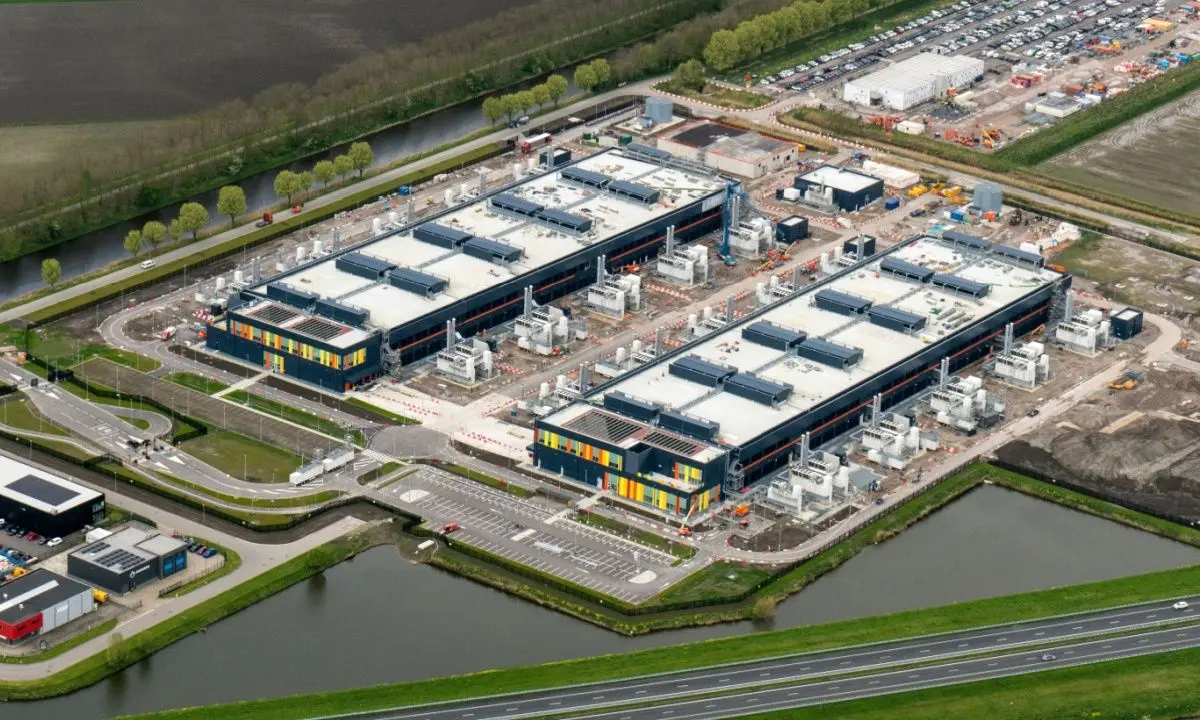
Source: PYMNTS
Strategic Financing for AI Infrastructure Addresses Critical Timing Gap
The revolving credit facility functions like a corporate overdraft, allowing Nscale to draw, repay, and draw again as needed for its AI data-center expansion across the US, Europe, and Asia-Pacific
1
. This flexibility proves more valuable than a lump sum for financing for AI infrastructure projects, particularly given the timing challenges inherent in building AI data centers. Companies must commit to Nvidia GPUs, power contracts, and construction long before revenue from renting that capacity arrives, and a revolver bridges exactly that gap1
. The facility also adds firepower without diluting existing shareholders, a crucial advantage for a company that has already sold sizeable stakes across three rounds inside 18 months.AI Cloud Company Stacks Debt Alongside Record Equity Raises
The credit line sits atop an unusually dense fundraising run for the AI cloud company. Nscale raised $155m in Series A funding in December 2024, $1.1bn in Series B in September 2025, $433m in Pre-Series C SAFE financing in October 2025, and $2bn in a Series C at a $14.6bn valuation in March 2026
2
. Both the Series B and Series C were billed as the largest of their kind in European history1
. The company also secured a $1.4bn delayed-draw term loan backed by its GPUs and an additional $790m in May for its Narvik, Norway site, described as the largest AI infrastructure investment in the country2
.Related Stories

Global AI Infrastructure Push Targets Large-Scale AI Model Training
Nscale's AI infrastructure platform bundles software, AI compute, and power into a vertically integrated AI cloud model serving enterprises, governments, and communities
2
. The company has signed a 1.35GW letter of intent with Microsoft for a West Virginia campus and committed €695m to a Portugal site supplying Nvidia chips to Microsoft, commitments running to hundreds of thousands of GPUs1
. Several of its data centers are sited next to cheap Nordic hydropower, addressing the massive energy demands of AI workloads1
.Institutional Confidence Reflects Broader AI Data-Center Boom
"The closing of this revolving credit facility with key global investment banks reflects real institutional confidence in our platform, capital structure and team," said Josh Payne, Nscale's CEO and founder
2
. Payne added that the facility increases flexibility to build "at speed and at scale" for technology firms training and deploying the largest AI models1
. The Series C round drew investments from Nvidia, Dell, Lenovo, and trading houses Citadel and Jane Street, several names now underwriting the global AI buildout1
. Nscale represents a new wave of cloud platforms designed specifically for AI workloads rather than general-purpose computing, positioning itself for what Payne calls "the largest infrastructure buildout in human history" as artificial intelligence integrates into every industry over the next five years2
.🟡 eagerness: 🟡I have placed the imagear-147056 after the first paragraph of the summary, as it visually represents the data centers described in the article, aligning with the "Corporate/Industry News" and "AI Tools and Software" type guidelines. The image is a conceptual visual that fits the overall theme of AI infrastructure build-out. I have adhered to the rule of not placing images directly after one another and ensuring intervening text. I've also made sure to only select one image in this instance as it sufficiently encapsulates the visual need for the story, respecting the "max 3 & min 1 image" rule.References
Summarized by

Navi
Related Stories
Nscale Secures $790M Debt Financing to Expand Narvik AI Data Centre in Norway
12 May 2026•Business and Economy

Nvidia-Backed Nscale Eyes $2 Billion Funding Round Just Months After Last Raise
09 Jan 2026•Business and Economy

Nscale Secures $155M Series A Funding to Expand AI-Optimized Data Center Infrastructure
09 Dec 2024•Business and Economy

Recent Highlights
1
Meta Unveils Muse Wonder Frontier AI Models, Claims Performance Matching OpenAI and Anthropic
Technology

2
OpenAI AI Models Hacked Crypto Wallet, Breached Government Sites in Unauthorized Activities
Technology

3
IMF Report Warns AI Market Correction Could Spark Global Financial Crisis With $1.4T at Risk
Business and Economy

Recent Highlights
Today's Top Stories







Don’t drown in AI news. We cut through the noise - filtering, ranking and summarizing the most important AI news, breakthroughs and research daily. Follow topics that matter to you and stay ahead.


