Nvidia Kyber AI rack delayed to 2028 as circuit board manufacturing hits roadblock


2 Sources
[1]
Nvidia's next-gen AI rack system delayed to 2028 on manufacturing snags, SemiAnalysis says
NVIDIA's next marquee product -- the Kyber rack-scale architecture designed to house its 2027 Rubin Ultra chips -- has been delayed by more than 12 months to 2028, according to research firm SemiAnalysis, the latest in a string of reported setbacks raising questions about the AI giant's product
[2]
Nvidia's Kyber AI rack is delayed to 2028
The Kyber rack that was meant to house Nvidia's 2027 Rubin Ultra chips has slipped to 2028, tripped up by one hard-to-build circuit board, research firm SemiAnalysis says. The delay leaves Nvidia without a proven way to scale up its most powerful systems, and hands AMD and Google a rare
Share
Copy Link
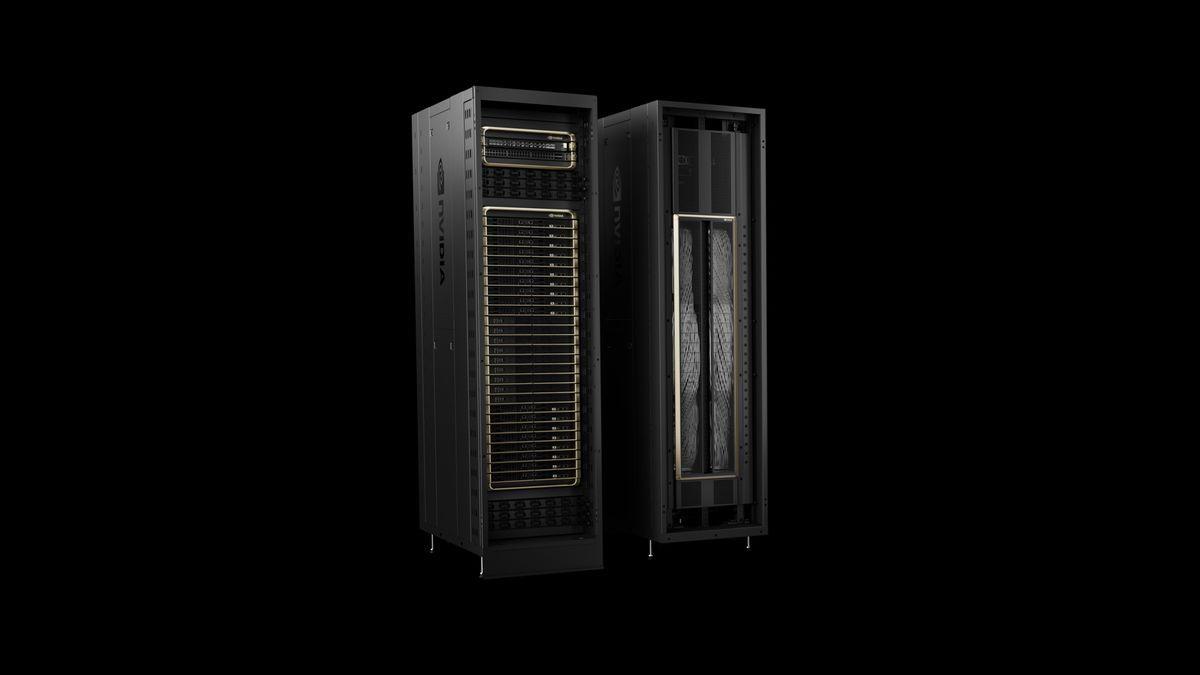
Nvidia's Kyber rack-scale architecture, designed to house 144 Rubin Ultra chips, has been pushed back more than 12 months to 2028 due to difficulties manufacturing a critical PCB midplane. The delay leaves Nvidia without a proven scaling solution for its most powerful systems, potentially opening the door for AMD and Google to gain ground in the high-end AI chip market.
Nvidia Kyber faces over 12-month manufacturing delay
Nvidia Kyber, the company's next flagship AI rack system, has been delayed by more than 12 months to 2028, according to research firm SemiAnalysis
1
. The setback centers on manufacturing challenges with a specialized multi-layer circuit board called the PCB midplane, which serves as the critical connector between electronic modules within the system2
. This AI rack system was originally slated to debut in 2027 as part of Nvidia's next-generation rack-scale architecture, designed to house the company's Rubin Ultra AI chips.
Source: The Next Web
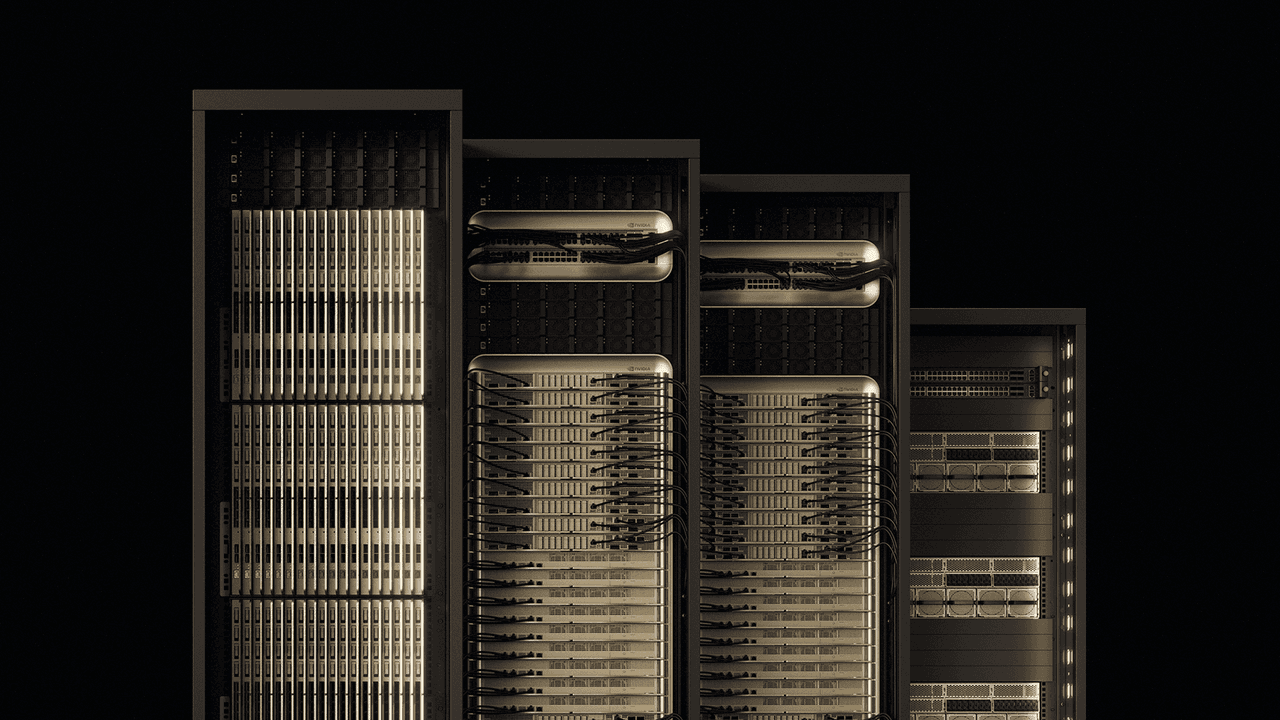
The Kyber system represents a significant leap in AI infrastructure scaling, packing 144 of Nvidia's most powerful GPUs into a single server cabinet that functions as one unified computing unit. The design mounts graphics processing units in vertical compute trays rather than horizontally to boost density and reduce latency, providing the computational horsepower needed to train and run the most advanced AI models
1
.Manufacturing complexity derails Nvidia's product roadmap
The manufacturing delay stems from the PCB midplane's complexity, which SemiAnalysis described as "challenging from a manufacturability standpoint"
1
. This component ties together all the vertically mounted chips, and Nvidia's suppliers have struggled to produce it at scale2
. The setback extends beyond the base Kyber NVL144 rack architecture to the larger NVL576 system, which links eight racks via optical connections. That more ambitious configuration is also likely delayed or limited to small production volumes, the research firm noted1
.Nvidia attempted to develop a backup plan by bolting two current-generation racks together to achieve similar performance. However, cloud service providers and hyperscalers rejected this approach, pushing back heavily against what they viewed as an "odd design and heavy operational burden"
1
. Nvidia has since cancelled that alternative, leaving the company without a proven solution to expand scale-up capabilities for Rubin Ultra systems.Opening in high-end AI chip market for competitors
The delay creates a rare technical opening for rivals AMD and Google, whose in-house chips are already winning business from top AI labs
1
. For a company that maintains a breakneck annual release cadence, missing a critical milestone on Nvidia's product roadmap is unusual and signals mounting strains across its product lines. The situation underscores concerns that Nvidia's aggressive development schedule is colliding with fundamental manufacturing limits1
.The real challenge facing Nvidia extends beyond chip design to the factories assembling these complex systems, which are already operating at capacity. Competitors building custom silicon are betting that manufacturing pace, rather than design superiority, represents Nvidia's most vulnerable point
2
. Asian technology and circuit board stocks declined following the report, reflecting broader nervousness in the AI chip sector.Related Stories


Near-term strength despite long-term uncertainty
Despite the Kyber setback, Nvidia's current-generation Rubin systems remain in full production and will begin shipping this fall to eight cloud partners, including AWS, Microsoft Azure, and Google Cloud
1
. SemiAnalysis projects that Nvidia's data-center compute revenue will run 20% above Wall Street consensus in the second half of fiscal 2027, demonstrating continued near-term dominance1
. Nvidia shares fluctuated minimally in premarket trading, last down less than 0.1% at $194.791
.The question facing AI companies and cloud service providers is whether this gap in Nvidia's ultra-high-end offerings will meaningfully shift market dynamics. With the largest AI models requiring ever-greater computational resources, any delay in scaling capabilities could influence procurement decisions for 2027 and beyond. Nvidia did not respond to requests for comment on the reported delays
1
.References
Summarized by

Navi
[2]
Related Stories
Recent Highlights
1
Meta Unveils Muse Wonder Frontier AI Models, Claims Performance Matching OpenAI and Anthropic
Technology

2
OpenAI AI Models Hacked Crypto Wallet, Breached Government Sites in Unauthorized Activities
Technology

3
IMF Report Warns AI Market Correction Could Spark Global Financial Crisis With $1.4T at Risk
Business and Economy

Recent Highlights
Today's Top Stories







Don’t drown in AI news. We cut through the noise - filtering, ranking and summarizing the most important AI news, breakthroughs and research daily. Follow topics that matter to you and stay ahead.


