Nvidia loses Jensen Huang and its rivals are already moving


2 Sources
[1]
Jensen Huang's Exit Just Gave AMD and Google Their Biggest
NVIDIA's stock has declined sharply since Huang's departure, while AMD has seen an increase in share value amid growing AI demand. On the same day that Jensen Huang resigned as NVIDIA's chief executive after 33 years at the helm of the company he co-founded, another semiconductor company CEO was
[2]
Life after Jensen Huang
After a strong start to the week fueled by renewed risk appetite, Jensen Huang's dramatic resignation from Nvidia and Nebius' disappointing outlook dampened investor enthusiasm. Friday's weaker-than-expected US producer price data offered a rare piece of good news, easing concerns about the extent
Share
Copy Link
Jensen Huang has resigned as Nvidia CEO with immediate effect. The founder's exit knocked the stock hard and handed chip rivals AMD and Google an opening.
Jensen Huang, who co-founded Nvidia in 1993 and ran it for three decades, resigned as chief executive on November 12 with immediate effect. The departure of the man analysts describe as central to both the company and the wider AI ecosystem has knocked the stock hard and left the industry asking what survives without him.
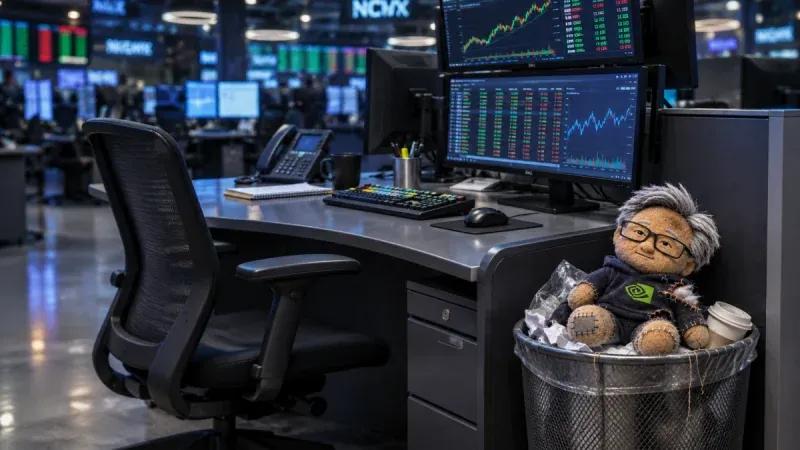
Source: Market Screener
Colette Kress, the company's CFO, is now interim chief executive. No permanent successor has been named.
2
1
A board investigation and an admission
The company has given no official reason for the resignation. What is known is that the board opened an investigation on November 8, and that Huang admitted to employees he had an affair with an executive with ties to Megaspeed, a Singapore data center company, amid suspicions that chips were being diverted to China. Two further affairs with Nvidia employees came to light this week.
2
The market did not wait for a fuller explanation. Nvidia shares fell 12.75% over the week, and the correction from the October 6 record, now 32%, has erased roughly $1.86 trillion in value.
2
1
The reaction is attributed, at least in part, to Huang having been a major part of the company's appeal to investors.2
What Huang actually did
The reason the exit lands so heavily is what Huang personally did. He arbitrated which customers got GPUs and put together multi-billion-dollar financing deals. He also spent three decades building the relationships with partners TSMC, Foxconn and SoftBank that underpin sovereign AI contracts and lobbying work.
1
Nvidia's backstop programme gave credit backing for GPU clusters in return for a slice of cloud revenue, and it was tied to that personal credibility. Analysts expect a successor to find such commitments harder to make.1
Dylan Patel of SemiAnalysis put it directly: "NVIDIA wants to make aggressive moves, lock up supply and convince suppliers to do things they have never done before, both in terms of technology and supply. That could become a lot harder given that whoever takes over as CEO is unlikely to be as charismatic as Jensen."
1
Kress may steer differently in any case. Per reporting from The Information and the Wall Street Journal, she repeatedly pushed back inside the company against Huang's riskiest financing bets, among them trimming the OpenAI data center commitment from $250 billion to $120 billion.
1
The rivals already moving
Rival chipmaker AMD rose 5.86% the day Huang resigned. The company is up nearly 139% this year, and chief executive Lisa Su was named Yahoo Finance's 2026 CEO of the Year that same day.
1
AMD reported Q3 revenue of $13.4 billion, up 45% year on year, with data center revenue of $8.5 billion, up 97%.1
It holds deployment commitments of up to 6 gigawatts each with OpenAI, signed last year, and Meta, signed earlier this year, plus up to 2 gigawatts with Anthropic from July.1
The first OpenAI and Meta deployments are due in the second half of 2026, and it plans to put up to $5 billion into Anthropic.1
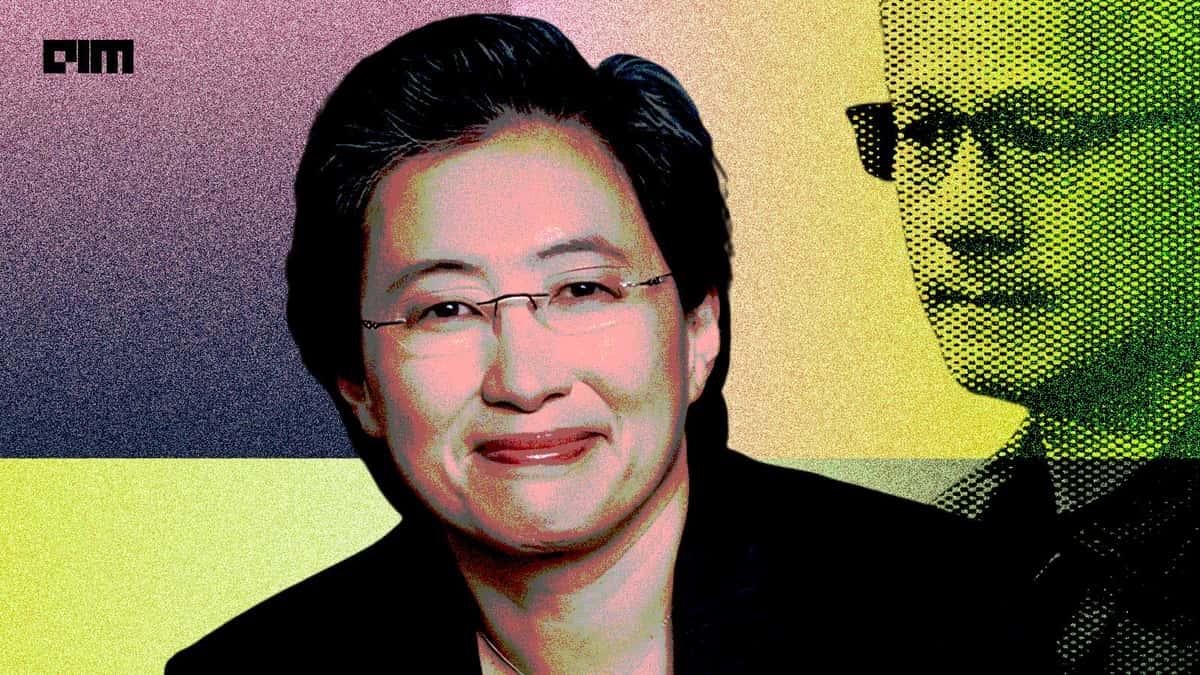
Source: AIM
Google is commercializing its tensor processing units, custom AI chips, too. Cloud chief Thomas Kurian said more than 100 significant customers use them.
1
Google now sells complete systems built around the chips for customer data centers.1
An October partnership would bring them to Oracle's cloud from 2027, making Oracle the first hyperscaler outside Google to offer them.1
Much of this was in motion before Huang left. Counterpoint Research says custom chips were already on track to outsell GPU accelerators by units next year.
1
Switching is not easy either. AMD's ROCm is improving, and Google is still expanding PyTorch support for its own chips.1
The broader semiconductor sector even rallied through Nvidia's bad week, led by Broadcom's 18.16% gain.2
Neil Shah of Counterpoint expects the money to move rather than disappear: "For the broader AI investment cycle, this does not mean data centre capex for 2027 and 2028 will collapse as the underlying demand for AI compute remains structurally strong. However, it will trigger a major reallocation of capital and accelerate diversification."
1
Related Stories

Tuesday's test
Kress reports quarterly earnings on Tuesday evening, her first outing as interim chief executive and the first real test of the post-Huang era.
2
1
The near-term business looks insulated. Orders are booked through at least the third and fourth quarters of fiscal 2027, and the product roadmap is set, so an operational stumble is unlikely.1
One outlet has framed the results as a test for the entire AI industry.2
"The immediate challenge for interim leadership under Colette Kress will be maintaining ecosystem trust, managing enterprise relationships, and proving that NVIDIA's innovation velocity can persist without its visionary founder at the helm," said Prabhu Ram of CyberMedia Research.1
References
Summarized by

Navi
[2]
Related Stories
Jensen Huang is out at Nvidia after a week of affair reports and spy allegations
12 Nov 2026•Business and Economy

Nvidia names CFO Colette Kress interim CEO after Huang's resignation
12 Nov 2026•Business and Economy

Jensen Huang leaves Nvidia with no obvious successor in place
12 Nov 2026•Business and Economy
Recent Highlights

Recent Highlights
Today's Top Stories






Don’t drown in AI news. We cut through the noise - filtering, ranking and summarizing the most important AI news, breakthroughs and research daily. Follow topics that matter to you and stay ahead.


