Nvidia's Blackwell AI GPU Cooling Issues: Overblown or Resolved?


2 Sources
[1]
Nvidia May Have Already Fixed Blackwell's Cooling Issues
Earlier this week, a report from The Information said Nvidia's Blackwell AI chips were delayed due to an overheating issue that developed when they were placed on server racks, but a third-party research firm claims the problem is overblown and was fixed months ago. Blackwell, which is designed
[2]
Nvidia's Blackwell AI GPU overheating issues are seemingly overhyped -- semiconductor analysts reveal cooling issues have been mostly addressed
Blackwell's cooling issues aren't as severe as some might have thought. Reports of Nvidia's GB200 NVL72 server racks overheating have purportedly been exaggerated. Business Insider reports that Blackwell's cooling design faults have already been addressed. Dylan Patel, chief analyst at
Share
Copy Link
Reports of overheating problems with Nvidia's Blackwell AI chips have been exaggerated, according to industry analysts. The company has reportedly addressed the cooling issues in its high-performance server racks.

Nvidia's Blackwell AI GPU: Cooling Concerns Addressed
Nvidia, the leading AI chip manufacturer, has reportedly resolved cooling issues with its latest Blackwell AI GPUs, contrary to recent reports suggesting significant delays due to overheating problems. Industry analysts claim that the concerns have been largely exaggerated and that Nvidia has already implemented solutions to address these challenges
1
2
.The Overheating Controversy
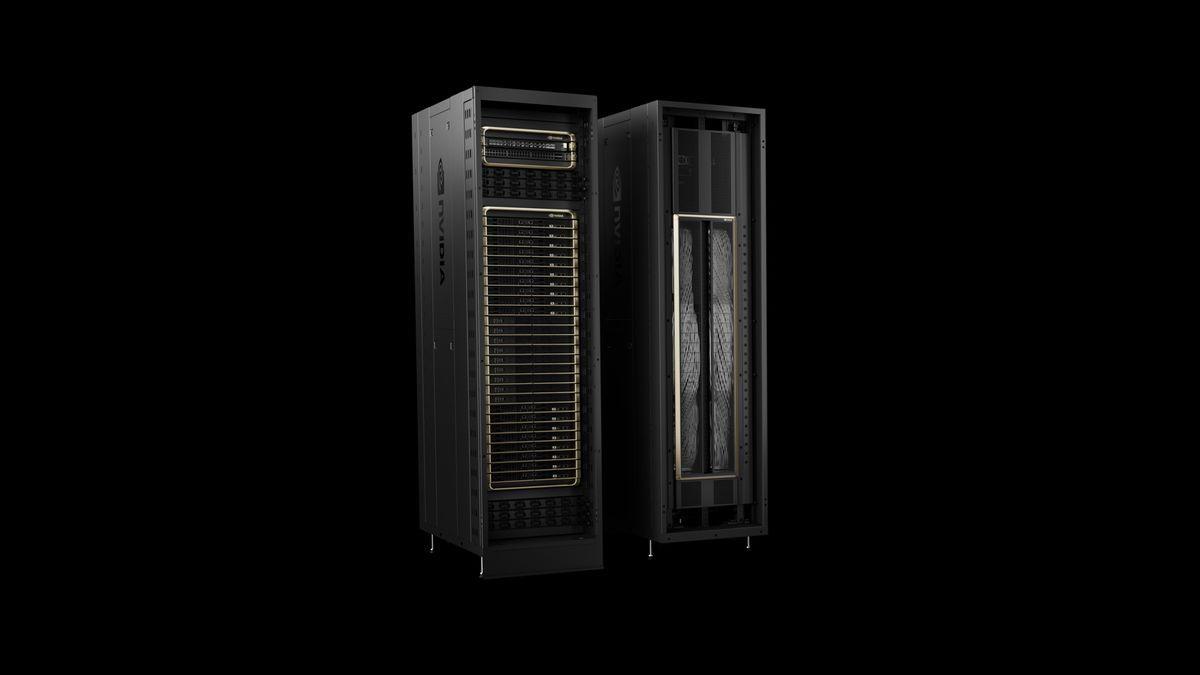
Earlier reports from The Information suggested that Nvidia's Blackwell AI chips were facing delays due to overheating issues when placed on server racks. The GB200 NVL72 server racks, capable of housing up to 72 GPUs, were said to be particularly affected by these thermal challenges
1
.Analyst Insights: A Different Perspective
Dylan Patel, chief analyst at Semianalysis, a research firm focusing on the semiconductor and AI industries, told Business Insider that Nvidia suppliers have already reworked the server racks with "minor" changes to address the problem. According to Patel, while cooling may be a concern in the future, the specific server issue in question has been largely resolved
1
2
.Nvidia's Response
Nvidia has acknowledged that they are "working with leading cloud service providers as an integral part of our engineering team and process" to address any potential issues. The company emphasized that "engineering iterations are normal and expected" in the development of cutting-edge technology
1
.The Cooling Challenge
The Blackwell GPUs, designed for businesses building AI data centers, are incredibly powerful and consume massive amounts of energy. The GB200 superchip, for instance, has a configurable TDP of up to 2,700 watts, making air cooling virtually impossible within standard rack mount form factors
2
.Related Stories

Liquid Cooling: A Necessary Solution
To manage the extreme heat generated by these high-performance chips, Nvidia has opted for liquid cooling solutions. This decision requires data centers to revamp their infrastructure to accommodate liquid-cooled servers, highlighting the company's commitment to prioritizing performance over conventional cooling methods
2
.Expert Opinion on the Real Challenge
Professor Bara Cola from Georgia Tech, who is also the founder of Carbice, a thermal computing solutions company, offers a different perspective on the challenges facing Blackwell:
"The real challenge is mechanical stress and not heat. I am confident that Nvidia will find a way to operate these chips for their customers. High-performance chips like this will always run hot, and it is just a matter of balancing how hot -- smart engineers will solve this," Cola explained
1
.Previous Design Flaws and Resolutions
It's worth noting that Blackwell had previously faced a "design flaw" unrelated to the server overheating issue. Nvidia CEO Jensen Huang has stated that this earlier problem has since been resolved, demonstrating the company's ability to address and overcome technical challenges
1
.As the AI GPU arms race continues, Nvidia's approach of prioritizing performance at the expense of conventional cooling methods underscores the company's commitment to maintaining its position at the forefront of AI technology. While challenges remain, the reported resolution of the cooling issues suggests that Nvidia is well-equipped to handle the complex engineering demands of next-generation AI hardware.
References
Summarized by

Navi
[1]
Related Stories
NVIDIA's GB200 AI Servers Face Overheating Rumors and Order Reductions Amid Conflicting Reports
14 Jan 2025•Technology

Nvidia Overcomes Technical Hurdles, Accelerates Production of Blackwell AI Servers
28 May 2025•Technology
Nvidia's Blackwell AI Servers Face Potential Delays Due to Technical Challenges
18 Dec 2024•Technology

Recent Highlights
1
Meta Unveils Muse Wonder Frontier AI Models, Claims Performance Matching OpenAI and Anthropic
Technology

2
IMF Report Warns AI Market Correction Could Spark Global Financial Crisis With $1.4T at Risk
Business and Economy

3
OpenAI Releases 722 AI-Generated Math Solutions, Triggering Existential Crisis in Mathematics
Technology

Recent Highlights
Today's Top Stories







Don’t drown in AI news. We cut through the noise - filtering, ranking and summarizing the most important AI news, breakthroughs and research daily. Follow topics that matter to you and stay ahead.


