7 Sources
[1]
NXP in talks to buy $3.3bn designer of camera chips for self-driving cars
NXP Semiconductors, one of Europe's top chipmakers, is in talks to buy Ambarella, a chip designer specialising in AI-enabled chips used in the camera technology for self-driving cars. Talks between the two companies are ongoing but a transaction is not a foregone conclusion, according to people familiar with the matter. They cautioned other buyers could emerge or talks could collapse altogether. Ambarella, of San Francisco, with a market value of about $3.3bn as of Friday, is part of a wave of companies specialising in designing chips for use in so-called edge AI, in which models run directly on devices instead of through the cloud. The potential deal would be a boost to NXP's business supplying chips for automotive makers, which is projected to account for roughly half of the group's $15.1bn in revenue this year. Ambarella specialises in image-processing semiconductors used in security cameras and self-driving car systems. The acquisition would land amid a wave of consolidation sweeping across the semiconductor industry as chip suppliers look to position themselves for the AI revolution. Earlier this year, Texas Instruments struck a $7.5bn deal to buy Silicon Labs, while last year Japan's SoftBank acquired Ampere Computing for $6.5bn. NXP, of the Netherlands, has largely eschewed doing sizeable deals of its own in recent years. The group agreed to sell itself to Qualcomm for $47bn in 2016 but the deal unravelled two years later after not obtaining Chinese regulatory approval. Shares in Nasdaq-listed NXP are up 11 per cent so far this year, giving the group a market capitalisation of roughly $62bn as of Friday. NXP declined to comment. Ambarella did not immediately respond to requests for comment. Bloomberg reported last year that Ambarella was exploring a sale.
[2]
NXP reportedly in talks to acquire vehicle chip supplier Ambarella
NXP Semiconductors NV is reportedly in talks to buy Ambarella Inc., a fellow provider of vehicle chips. The Financial Times today cited sources as saying that other industry players could also make bids. The report didn't divulge any other details, notably what sale price Ambarella is seeking. The company had a market capitalization of about $3.25 billion before the acquisition rumors boosted its shares by 16%. Any bids the company receives will likely value it higher. Netherlands-based NXP is among the world's largest suppliers of car chips. Its processors can be found in infotainment devices, autonomous driving systems and a variety of other auto parts. NXP is also active in several additional segments including the data center market. Its chips are used for tasks such as distributing electricity to servers and managing the flow of coolant. Santa Clara, California-based Ambarella competes in many of the same segments as NXP, most notably the auto sector. The company makes chips that enable carmakers to install artificial intelligence software in their vehicles. Ambarella debuted its newest auto chip in January. The CV7 combines a four-core central processing unit with an image signal processor and a video encoder. The image signal processor enhances footage from the host vehicle's sensors by removing errors, boosting brightness and performing other edits. The CV7's video encoder, in turn, compresses footage into a memory-efficient format that can be more easily sent over the network. The chip also features an artificial intelligence accelerator. According to Ambarella, the module is based on a custom architecture that can provide five times better power-efficiency than competing designs. The technology enables the CV7 to run transformer-based language models. Carmakers can use the chip to power their vehicles' ADAS, or advanced driver assistance systems. Such modules provided limited autonomy features such as automated parking and lane centering. Ambarella offers the CV7 alongside a more advanced processor called the CV3-AD685. It can equip vehicles with L4 autonomy, or the ability to operate without driver input in most situations. The chip features a hardened processing module called a safety island that is optimized to run the host car's most sensitive code. Many autonomous vehicles enrich footage from their cameras with radar measurements. Radar sensors work by transmitting radio waves and measuring how they're reflected by nearby objects. Each reflected radio wave becomes a dot in a point cloud, a three-dimensional map of the car's environment. The CV3-AD685 ships with a set of radar algorithms called Oculii. According to Ambarella, the software adapts the radio waves generated by a car's radars to the environment in which they operate. That reduces the number of antennas needed to collect radar data while boosting mapping resolution. Ambarella's technology could help NXP boost its presence in the autonomous vehicle market. Waymo LLC, Amazon.com Inc.'s Zoox unit and other industry players are currently in the process of growing their self-driving taxi fleets. Ambarella's chips are also used in more than a half-dozen other segments including the industrial robot market.
[3]
NXP's reported bid for Ambarella targets edge AI gap in automotive chips By Investing.com
Investing.com -- The strategic logic here is almost uncomfortably clean: NXP, the king of automotive semiconductors, is circling Ambarella -- the rising star of edge AI vision chips. Think of it as a chassis manufacturer buying the brains that make the car actually see. Ambarella's Edge AI revenue surged 50% in FY2026, now representing 80% of total sales, and NXP's automotive segment is already ~half of its projected $15.1B in 2026 revenue -- the two puzzle pieces fit with rare precision. NXP Semiconductors (NXPI): $220.93 (-3.59% today, -17.47% this week) | Market Cap: $55.7B || Automotive ~50% of revenue || 2026E Revenue: ~$15.1B Ambarella (AMBA): $83.89 (-2.45% today, +22.97% this week on deal news) | Market Cap: $3.69B || FY2026 Revenue Growth: +37% || Gross Margin: 59% The Missing Piece in NXP's Car NXP dominates the infrastructure of modern vehicles -- radar, V2X communication, secure microcontrollers, electrification management. What it has historically lacked is a best-in-class AI vision processing capability. Ambarella's CV-series chips (5nm CV72/CV75, with 4nm CV7 entering production by end of FY2027 and 2nm CV8 by 1H FY2028) are purpose-built low-power SoCs for exactly this: camera-based ADAS and autonomous vehicle domain controllers. This isn't feature overlap -- it's pure vertical integration into the software-defined vehicle stack. The Edge AI Gold Rush Ambarella just reported record FY2026 revenue growth of 37%, with Edge AI climbing to 80% of total sales -- a business that barely existed a few years ago. Stifel had a Buy with a $106 price target even before deal rumors, implying NXP may be acquiring at a reasonable entry given the growth trajectory. Adding to the picture: Ambarella recently signed an $800M, 10-year deal with Hanwha Group for AI SoC platforms -- proof of enterprise durability that NXP's B2B sales machine could accelerate. Each new chip generation commands ASPs well above the current ~$15 blended level, meaning margin expansion is structural, not cyclical. Why Now? The Consolidation Window The semiconductor sector is in a land-grab moment -- Microchip Technology (MCHP) just agreed to acquire edge AI firm Hailo, and NXP's own Oppenheimer analyst raised the price target to $325 just last week citing a broad-based cyclical uptrend. At ~$3.3B, Ambarella represents roughly 6% of NXP's market cap -- a manageable bolt-on, not a bet-the-company deal. For NXP, this is a surgical strike to own the full perception-to-decision silicon stack in next-generation vehicles. The Bear Case Not everyone is convinced -- NXPI shares dropped -3.59% today and are -17.47% on the week, suggesting the market questions deal discipline or integration risk. Ambarella is still pre-profitability at scale, the chip roadmap (CV7, CV8) involves execution risk, and other bidders could surface and drive up the price. The deal is also not confirmed -- talks could collapse. The Strategic Verdict Bottom line: NXP isn't buying what Ambarella is today -- it's buying what Ambarella becomes inside NXP's automotive distribution moat. The automotive perception market is measured in the tens of billions by the end of the decade, and this deal would position NXP to own a critical slice of it from sensor to silicon to software. This article was generated with the support of AI and reviewed by an editor. For more information see our T&C.
[4]
Why is NXP Semiconductors stock sliding today? By Investing.com
Investing.com -- NXP Semiconductors stock fell 3.6% in mid-day trading to reach $236.40, weighed down by a report that the Dutch chipmaker is in active negotiations to acquire Ambarella, a San Francisco-based designer of AI-enabled chips used in the camera systems of autonomous vehicles, in a transaction that would value the target at approximately $3.3 billion. The deal is not finalized, and other potential buyers could emerge or talks could fall through entirely, leaving investors to price in both the uncertainty and the significant cash commitment such an acquisition would represent. The acquisition headline arrived on top of already-fragile sentiment following NXP's Q2 2026 earnings release on July 28. While the company beat revenue and earnings estimates -- posting sales of $3.5 billion, up roughly 19.5% year over year, and non-GAAP EPS of $3.61 -- its Q3 guidance came in below analyst targets, prompting TD Cowen to cut its price target to $290 from $340 and BofA to lower its target to $300 from $310, both retaining their respective ratings. A Form 4 filing on July 31 also flagged insider trading activity, and data showed insiders had been net sellers over the prior three months. The broader market offered no cover for the decline, with the S&P 500 up 0.6%, the Dow Jones up 0.6%, and the Nasdaq up 0.9% on the session, underscoring that NXPI's weakness is entirely company-specific. Semiconductor peers were not uniformly under pressure, further isolating the Ambarella deal report as the dominant intraday catalyst. In combination, the prospect of a multi-billion-dollar acquisition layered onto guidance that had already disappointed the Street created a double headwind for the stock, pulling it well off its session high of $251.72 and toward a low of $233.02 -- a wide intraday range that reflects the degree of uncertainty investors are grappling with today. This article was generated with the support of AI and reviewed by an editor. For more information see our T&C.
[5]
NXP Weighs Takeover of Chip Designer Ambarella
Such an acquisition would allow NXP to strengthen its footprint in software-defined vehicles, radar technologies and electrification solutions. Ambarella specializes in low-power artificial intelligence chips and software for edge devices, including cameras, vehicles and robots. Neither NXP nor Ambarella has confirmed the report. The potential transaction comes just days after NXP issued quarterly revenue guidance above expectations, supported by resilient demand for its semiconductors used in automotive, industrial and data center markets.
[6]
Ambarella reportedly in talks to be acquired by NXP Semiconductors, shares spike By Investing.com
Investing.com -- NXP Semiconductors is in discussions to acquire Ambarella, a chip designer focused on AI-enabled chips for camera technology in self-driving cars, the Financial Times reported on Friday. The talks between the two companies are ongoing, though a transaction is not certain, the report said. Other buyers could emerge or the discussions could fall through entirely. Get instant alerts on market-moving headlines on InvestingPro -- now 60% off. Ambarella, based in San Francisco, has a market value of about $3.3 billion as of Friday. The company designs chips for edge AI applications, where models run directly on devices rather than through the cloud. The potential acquisition would strengthen NXP's automotive chip business, which is expected to represent roughly half of the company's $15.1 billion in revenue this year. Ambarella produces image-processing semiconductors used in security cameras and self-driving car systems. The deal would come during a period of consolidation in the semiconductor industry as chip suppliers prepare for the AI revolution. Texas Instruments agreed to buy Silicon Labs for $7.5 billion earlier this year, while SoftBank acquired Ampere Computing for $6.5 billion last year. NXP, based in the Netherlands, has largely avoided large acquisitions in recent years. The company agreed to sell itself to Qualcomm for $47 billion in 2016, but the deal collapsed two years later after failing to obtain Chinese regulatory approval. Shares in NXPI are up 11% so far this year, giving the company a market capitalization of roughly $62 billion as of Friday. Ambarella shares are trading over 17.5% higher following the announcement. NXP Semiconductors is trading 3.3% lower.
[7]
NXP considers acquiring chip designer Ambarella
Such an acquisition would allow NXP to strengthen its presence in software-defined vehicles, radar technologies and electrification solutions. Ambarella specializes in low-power artificial intelligence chips and software for devices operating at the network edge ('edge'), including cameras, vehicles and robots. Neither NXP nor Ambarella has confirmed the report. The potential deal comes a few days after NXP issued quarterly revenue guidance above expectations, supported by robust demand for its semiconductors in the automotive, industrial and data center sectors.
Share
Copy Link
NXP Semiconductors is negotiating to acquire Ambarella for approximately $3.3 billion to strengthen its position in AI-enabled vision processing for self-driving cars. The deal would integrate Ambarella's edge AI chips into NXP's automotive portfolio, which already accounts for roughly half of its projected $15.1 billion revenue in 2026.
NXP Semiconductors, one of Europe's leading chipmakers, is in active negotiations to acquire Ambarella for approximately $3.3 billion, according to sources familiar with the matter
1
. The talks remain fluid, with other potential buyers possibly emerging or discussions collapsing altogether1
. Ambarella, based in San Francisco, specializes in designing AI chips for edge AI applications, particularly image-processing semiconductors used in security cameras and self-driving cars2
. The acquisition would significantly bolster NXP's automotive chip business, which is projected to account for roughly half of the group's $15.1 billion in revenue this year1
.Source: Market Screener
Ambarella has emerged as a rising force in AI vision processing chips, with Edge AI revenue surging 50% in fiscal year 2026 and now representing 80% of total sales
3
. The company reported record fiscal year 2026 revenue growth of 37% with a gross margin of 59%3
. Ambarella's newest automotive chip, the CV7, combines a four-core central processing unit with an image signal processor and video encoder2
. The chip features a custom AI accelerator architecture that delivers five times better power efficiency than competing designs and can run transformer-based language models2
. Carmakers use these chips to power advanced driver assistance systems that provide limited autonomy features such as automated parking and lane centering2
.Ambarella offers the CV3-AD685, a more advanced processor designed to equip vehicles with L4 autonomy—the ability to operate without driver input in most situations
2
. This chip features a hardened processing module called a safety island optimized to run the host car's most sensitive code2
. The CV3-AD685 ships with radar algorithms called Oculii that adapt radio waves generated by a car's radars to the environment, reducing the number of antennas needed while boosting mapping resolution2
. The company's chip roadmap includes the 4nm CV7 entering production by the end of fiscal year 2027 and the 2nm CV8 by the first half of fiscal year 20283
. Ambarella recently signed an $800 million, 10-year deal with Hanwha Group for AI system-on-chip platforms, demonstrating enterprise durability3
.The acquisition would allow NXP to strengthen its footprint in software-defined vehicles, radar technologies and electrification solutions
5
. NXP dominates the infrastructure of modern vehicles including radar, vehicle-to-everything communication, secure microcontrollers, and electrification management, but has historically lacked best-in-class AI vision processing capability3
. Ambarella's technology could help NXP boost its presence in the autonomous vehicle market as Waymo, Amazon's Zoox unit and other industry players grow their self-driving taxi fleets2
. At approximately $3.3 billion, Ambarella represents roughly 6% of NXP's market capitalization, making it a manageable acquisition rather than a transformative bet3
. The deal would position NXP to own the full perception-to-decision silicon stack in next-generation vehicles3
.
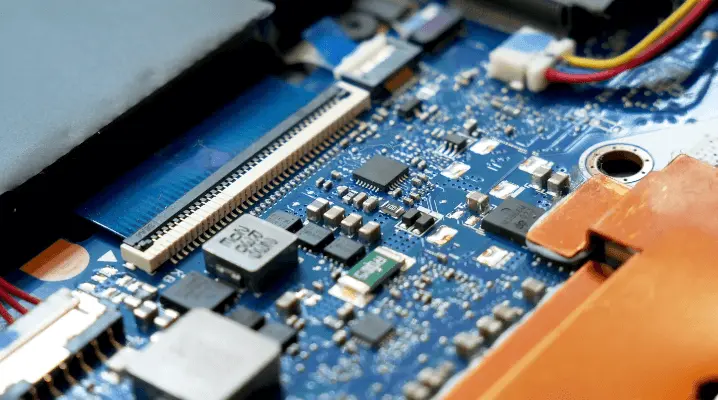
Source: SiliconANGLE
Related Stories

The potential deal arrives amid a wave of semiconductor industry consolidation as chip suppliers position themselves for the AI revolution
1
. Earlier this year, Texas Instruments struck a $7.5 billion deal to acquire Silicon Labs, while last year Japan's SoftBank acquired Ampere Computing for $6.5 billion1
. Microchip Technology recently agreed to acquire edge AI firm Hailo, further demonstrating the sector's land-grab momentum3
. NXP has largely avoided sizeable deals in recent years following a failed $47 billion sale to Qualcomm in 2016 that unraveled after not obtaining Chinese regulatory approval1
.NXP shares fell 3.6% on the acquisition news, reaching $236.40 in mid-day trading, with the stock down 17.47% for the week
4
. The decline suggests the market questions deal discipline or integration risk3
. The acquisition headline arrived following NXP's second quarter 2026 earnings release on July 28, when the company beat revenue and earnings estimates with sales of $3.5 billion, up roughly 19.5% year over year, and non-GAAP earnings per share of $3.614
. However, weak Q3 guidance came in below analyst targets, prompting TD Cowen to cut its price target to $290 from $340 and Bank of America to lower its target to $300 from $3104
. A Form 4 filing on July 31 flagged insider trading activity, with insiders being net sellers over the prior three months4
. Meanwhile, Ambarella shares jumped 16% on the acquisition rumors2
.
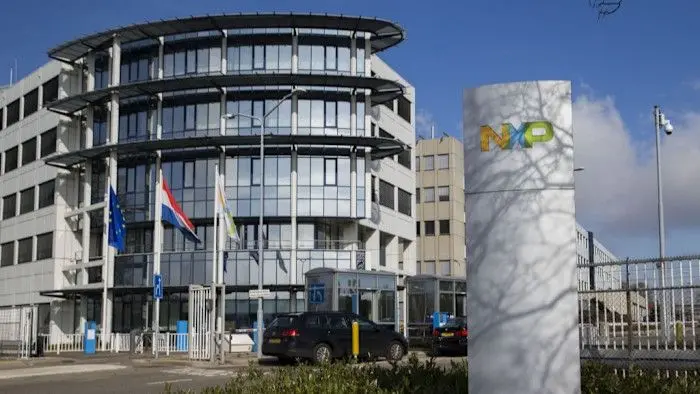
Source: FT
Summarized by
Navi
[3]
[4]
[5]
29 Aug 2025•Technology

11 Feb 2025•Technology

29 May 2026•Business and Economy