OpenAI launches GPT-Live-1 voice models that speak and listen simultaneously for ChatGPT


29 Sources
[1]
OpenAI releases new voice models for more natural live conversations
OpenAI today released new conversational models, called GPT-Live-1 and GPT-Live-1 mini, claiming that they sound more natural and can handle turn-taking better. These are full-duplex models, meaning they can speak and listen at the same time, allowing users to interrupt naturally and enabling
[2]
ChatGPT's New Voice Models Can 'Listen' and 'Talk' at the Same Time
OpenAI is updating its AI voice technology to match its text-based artificial intelligence. Two new models, GPT-Live-1 and a mini version, are rolling out now to all ChatGPT users. The new model duo relies on OpenAI's latest frontier models. You can select from three different levels of
[3]
I tested ChatGPT's Live Voice upgrade, and it almost felt human - how to try it
Follow ZDNET: Add us as a preferred source on Google. ZDNET's key takeaways * ChatGPT's Live model aims to enhance voice-based conversations with AI. * With Live, ChatGPT can speak and listen to you at the same time. * ChatGPT can now speak with you almost as if it were a real person. I like
[4]
ChatGPT's New Voice Models Aim for More Human-Like Conversations
GPT-Live-1 replaces Advanced Voice Mode as the default voice option in ChatGPT, and can understand long pauses in your speech. OpenAI is updating ChatGPT's Voice Mode with new models that aim to make interacting with AI feel as natural as talking to another human. The new models, GPT-Live-1 and
[5]

OpenAI makes ChatGPT better at banter
OpenAI has released a new voice model that can produce human-sounding speech, or scour the web in response to spoken queries. GPT-Live, according to the company, makes chatbot banter feel more like a real conversation, something of a bold move for a company battling multiple lawsuits alleging
[6]

OpenAI launches GPT-Live voice models that listen and speak simultaneously
July 8 (Reuters) - OpenAI on Wednesday launched GPT-Live, a new family of voice models capable of listening and speaking simultaneously in real time. The IPO-bound AI startup said it will roll out two versions of GPT-Live - GPT-Live-1 and GPT-Live-1 mini - to users globally on Wednesday. In May,
[7]

The Future Is Always Listening: OpenAI Says Its New Voice Assistant Is 'One Step Closer to a Truly Accessible AGI'
OpenAI just dropped a new AI model that's designed to sound like an actual, human conversation partner -- and the company says it marks a step closer to AGI. For years, OpenAI has been investing in the development of AI tools that can speak in humanlike voices. That's sometimes led to controversy,
[8]

OpenAI's GPT-Live: ChatGPT voice that listens and talks
OpenAI has rebuilt ChatGPT's voice, and the new GPT-Live models can listen and speak at the same time. They roll out to everyone from today, free users included, with live translation and a more human feel. OpenAI wants you to talk to ChatGPT, not type at it. On 8 July it launched GPT-Live, a new
[9]

ChatGPT has new voice models that make conversations feel much more natural
ChatGPT just became a much closer rival to Google's Gemini Live. OpenAI has released a major ChatGPT Voice update that brings far more natural conversations with AI, not to mention better answers. The upgrade uses new GPT-Live-1 and GPT-Live-1-mini models that revolve around continuous two-way
[10]

ChatGPT might actually be worth talking to now
GPT-Live is available to all ChatGPT users including free accounts, promising more natural and fluid AI voice interactions. AI voice modes are so bad that I typically don't bother. Up to now, the voice modes for ChatGPT, Claude, and Gemini have had to take turns as they listen and talk, making for
[11]

OpenAI Introduces GPT-Live to Make ChatGPT Voice Feel Like a Real Conversation
OpenAI today introduced GPT-Live, which it describes as a new generation of voice models meant to make talking to AI feel more like having a conversation with a real person. GPT-Live is meant to replace the existing ChatGPT voice experience. GPT-Live is able to listen and speak at the same time,
[12]

Got ChatGPT's new voice mode? Here's how to check -- and 5 things you should try first
* GPT-Live is rolling out to all ChatGPT users now * It can both talk and listen at the same time for more natural chats * Real-time translations are also now possible ChatGPT has a shiny new AI voice model called GPT-Live, which has a number of helpful tricks -- including being able to listen
[13]

OpenAI launches GPT-Live, a full-duplex voice upgrade that lets ChatGPT talk more like a person
OpenAI on Wednesday launched GPT-Live, a pair of new voice models that fundamentally redesign how people talk to ChatGPT -- replacing the company's existing Advanced Voice Mode with an architecture that can listen and speak simultaneously, much like an actual human conversation. The two models,
[14]

OpenAI bets voice will become AI's primary interface with new models
Why it matters: The company sees this as a step toward a future where voice is the primary way people interact with AI. Zoom in: OpenAI says its smartest voice models yet, GPT-Live-1 and GPT-Live-1 mini, make conversations feel more human by allowing users to interrupt naturally and pause speech
[15]

OpenAI launches GPT-Live voice models for real-time conversations
OpenAI launched GPT-Live, a new family of voice models capable of listening and speaking at the same time, on Wednesday. The company said it is rolling out two versions -- GPT-Live-1 and GPT-Live-1 mini -- to users globally. GPT-Live-1 mini will replace the current Advanced Voice Mode in ChatGPT
[16]

ChatGPT Live could make talking to AI feel straight out of the movies
AI voice assistants have been chasing the sci-fi dream for years, but they still have a hard time holding a conversation with humans. Most voice systems still need clear turns, clean pauses, and a few seconds before they respond. OpenAI is now rolling out GPT-Live, a new voice model for ChatGPT
[17]

I Tried ChatGPT's Improved Voice Mode, and It's More Natural Than Ever
* GPT-Live is the big new voice model upgrade for ChatGPT. * It's more natural and capable, and can listen while talking. * The upgrade is rolling out now across free and paid tiers. The latest upgrade being pushed out to ChatGPT, heading to all users now, is GPT‑Live. OpenAI is describing it as
[18]
ChatGPT's 'smartest voice model ever' is rolling out to everyone today -- and GPT-Live-1 gives you more natural conversations without interruptions
OpenAI's new GPT-Live models are coming to everybody starting today * ChatGPT's new voice mode is rolling out today to everybody, even Free users * It allows for much more natural conversations and won't interrupt if you stop talking * You'll be able to do simultaneous translation for the first
[19]

The viral influencer who broke ChatGPT's brain just proved OpenAI's latest GPT-Live model still can't beat him
OpenAI says GPT-Live is its most human AI voice model yet, but spelling simple vocab words still proves too big a challenge. ChatGPT just launched a new voice model, and above all else, its conversations are meant to feel natural. Seriously -- the word natural appears no less than 13 times in
[20]

OpenAI launches GPT-Live voice model series ahead of broad GPT-5.6 release
OpenAI launches GPT-Live voice model series ahead of broad GPT-5.6 release OpenAI Group PBC today introduced GPT-Live, a family of artificial intelligence models optimized to process spoken instructions. The model series will power ChatGPT's voice mode. Additionally, OpenAI plans to make it
[21]

GPT-Live finally gives ChatGPT the one thing Gemini already had
When not writing, Dave enjoys spending time with his family, running, playing the guitar, camping, and serving in his community. His favorite place is the Blue Ridge Mountains, and one day he hopes to retire there (hopefully his fear of heights will have retired by then, too!). * GPT-Live is an
[22]

OpenAI launches upgraded voice model GPT-Live that sounds more natural
OpenAI has introduced two new voice AI models for ChatGPT. These models enable simultaneous listening and speaking for natural interruptions. GPT-Live-1 mini is now the default, while GPT-Live-1 is for paid users. The new voice capabilities improve turn-taking and response speed significantly.
[23]

OpenAI Launches GPT-Live for Real-Time Conversations
Sam Altman's OpenAI has introduced a "GPT-Live" feature, a new-generation model that powers the ChatGPT voice, taking AI voice commands to the next level. The feature is exclusive to paid members and offers direct conversation with ChatGPT in a natural tone. * Make Telecom Talk My Trusted
[24]

New ChatGPT Voice Full-Duplex Update Lets You Interrupt at Any Time
OpenAI's latest development, ChatGPT Voice, introduces full-duplex communication, allowing the system to listen and respond at the same time. This capability lets users refine their input mid-conversation without pauses, creating a more dynamic interaction. By incorporating contextual
[25]

OpenAI Unveils GPT-Live As Competition Heats Up Around AI Voice Assistants - Microsoft (NASDAQ:MSFT)
Unlike traditional systems that wait for a user to finish speaking, GPT-Live listens and responds simultaneously. This allows it to handle instant interruptions, recognize pauses and provide brief conversational cues like "yeah" or "mhmm" for a human-like flow. The system also integrates directly
[26]

OpenAI Introduces GPT-Live to Transform ChatGPT Voice with More Natural AI Conversations
The new model brings advanced voice interaction capabilities to ChatGPT, combining real-time communication, improved reasoning, live translation, and richer visual responses to create a more human-like conversational experience. OpenAI has unveiled GPT-Live, a next-generation voice model designed
[27]
OpenAI Launches GPT Live Voice Models for Natural Human-AI Interaction
OpenAI's latest release, GPT Live, introduces a new chapter in AI voice technology with its focus on multitasking, real-time translation and natural conversational flow. Highlighting this development, AI Grid explores how GPT Live's full-duplex communication enables simultaneous listening and
[28]

OpenAI launches GPT-Live voice models for ChatGPT By Investing.com
Investing.com -- OpenAI released GPT-Live on Wednesday, a new generation of voice models designed to make conversations with artificial intelligence more natural. The models now power ChatGPT Voice. GPT-Live uses a full-duplex architecture that allows it to listen and speak simultaneously. During
[29]

ChatGPT's voice chat gets an update, and it's simply impressive
GPT-Live lets ChatGPT listen, speak, and translate simultaneously OpenAI has unveiled GPT‑Live, its new voice model, which completely changes the way we talk to ChatGPT. Now we can have much more natural and fluid conversations with the AI and get the feeling that we're really talking to a person.
Share
Copy Link
OpenAI introduced GPT-Live-1 and GPT-Live-1 mini, new conversational voice models that can speak and listen at the same time, replacing Advanced Voice Mode in ChatGPT. The full-duplex models handle interruptions naturally, delegate complex tasks to GPT-5.5, and aim to make voice the primary interface for computing. Over 150 million people already use ChatGPT's voice features.
OpenAI Replaces Advanced Voice Mode with Full-Duplex Communication
OpenAI has released new voice models for ChatGPT called GPT-Live-1 and GPT-Live-1 mini, marking a shift in how users interact with conversational AI models
1
. The company is replacing its current Advanced Voice Mode with GPT-Live-1 mini by default, while paid users on Go, Plus, and Pro tiers gain access to the larger GPT-Live-1 model4
. These models represent a fundamental architectural change from previous systems that combined separate speech-to-text, language processing, and text-to-speech components into a unified experience.
Source: SiliconANGLE
Simultaneous Listening and Speaking Transforms User Experience
The breakthrough feature of these new voice models lies in their full-duplex architecture, which allows ChatGPT to speak and listen at the same time
2
. This continuous interaction framework means the AI can receive information and produce outputs simultaneously, enabling users to interrupt naturally without derailing the conversation3
. During conversations, GPT-Live shows it's paying attention with phrases like "mhmm," "yeah," or "got it," creating more natural live conversations that mirror human-like conversations5
. The model can also stay silent for extended periods, understanding long pauses in speech as moments when users need time to think rather than prompts to start responding.
Source: VentureBeat
GPT-5.5 Integration Enables Agentic Work During Conversations
When GPT-Live encounters queries requiring research, reasoning, or agentic capabilities, it delegates tasks to OpenAI's frontier GPT-5.5 model while maintaining conversational fluidity
1
. Kundan Kumar, research lead for the GPT-Live model, explained that "when GPT-Live has to think hard for a question, it can delegate its reasoning and complex task to GPT-5.5, which can do things in parallel, and this GPT-Live can still remain in conversation with the user"2
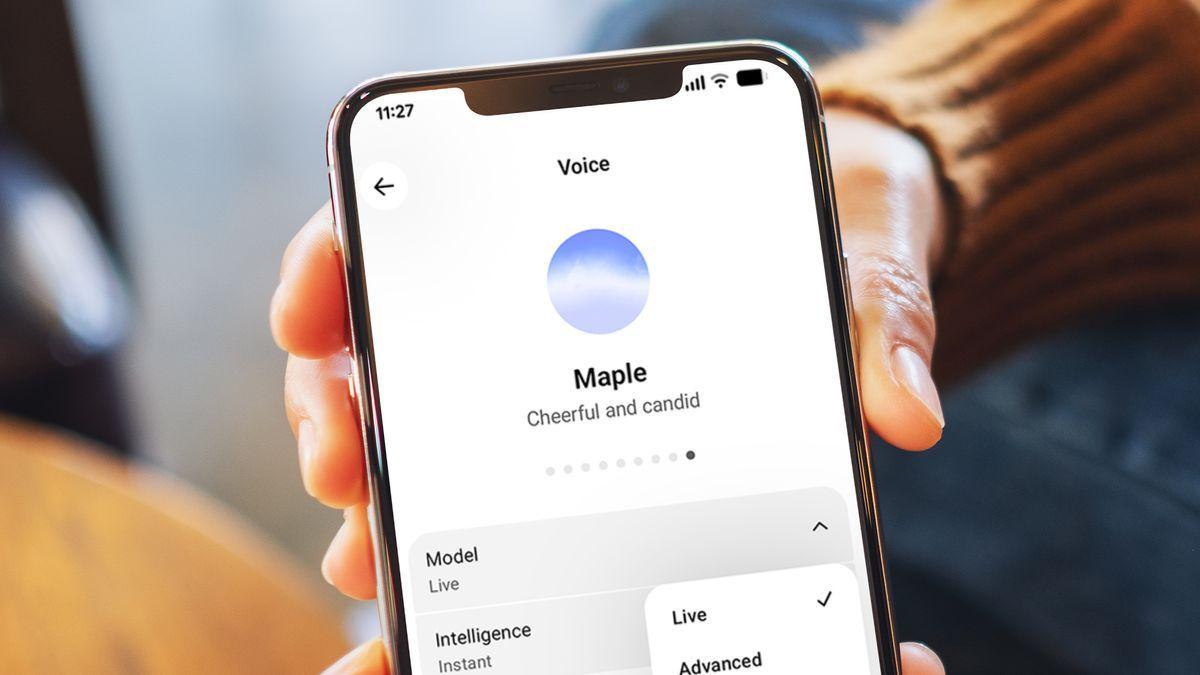
. Users can select from three intelligence levels—Instant for quick responses, Medium for deeper analysis, and High for complex problem solving—depending on their needs3
.Voice Interface Aims to Become Primary Computing Method
OpenAI envisions voice as the future primary interface to computing for increasingly complex long-running agentic work
1
. ChatGPT Voice's product lead, Atty Eleti, reported having 30- to 40-minute-long conversations with the voice feature during walks, demonstrating the system's capability for extended interactions1
. More than 150 million people already talk to ChatGPT using features like Voice and Dictation, indicating substantial existing demand1
. The models can also present information in visual formats when appropriate, with rich visual cards appearing for topics like weather, stocks, and sports4
.
Source: TechRadar
Related Stories



Expanded Safety Testing Addresses Anthropomorphizing AI Risks
OpenAI emphasized expanded safety testing to address concerns about anthropomorphizing AI, particularly for users struggling with mental health issues
2
. The new models include safeguards to provide age-appropriate responses to teens and resources if conversations turn to topics like self-harm, psychosis, violence, and sexual content1
. OpenAI automatically opts users out of AI training with voice mode, storing audio clips for 30 days to maintain context from prior conversations, with deletion options available2
. Despite making conversations feel more natural, the company stressed it's not aiming to create an AI companion.Rollout Details for iOS, Android, and Web Users
The GPT-Live models are rolling out now to all ChatGPT users worldwide on iOS, Android, and web platforms, though OpenAI notes it may take a day or two for everyone to gain access
2
. Free users receive GPT-Live-1 mini, while paid users access the more capable GPT-Live-1 version4
. Legacy models like Standard and Advanced Voice Mode remain accessible from the app for users who prefer them4
. The models have been optimized for most spoken languages, though during demonstrations, the live translation feature in Hindi exhibited a heavy American accent and unnatural, bookish-sounding speech1
.References
Summarized by

Navi
[5]
Related Stories
Recent Highlights



Recent Highlights
Today's Top Stories







Don’t drown in AI news. We cut through the noise - filtering, ranking and summarizing the most important AI news, breakthroughs and research daily. Follow topics that matter to you and stay ahead.


