OpenAI's Research Uncovers Root Cause of AI Hallucinations, Proposes Controversial Fix


11 Sources
[1]
Can researchers stop AI making up citations?
Artificial intelligence (AI) models are known to confidently conjure up fake citations. When the company OpenAI released GPT-5, a suite of large language models (LLMs), last month, it said it had reduced the frequency of fake citations and other kinds of 'hallucination', as well as 'deceptions',
[2]
OpenAI's fix for hallucinations is simpler than you think
Even the biggest and most advanced generative AI models occasionally hallucinate, or generate inaccurate information presented as fact. Now, OpenAI claims to understand why -- while offering a possible solution. In a research paper published last week, a team of researchers from the company argued
[3]
Why OpenAI's solution to AI hallucinations would kill ChatGPT tomorrow
University of Sheffield provides funding as a founding partner of The Conversation UK. OpenAI's latest research paper diagnoses exactly why ChatGPT and other large language models can make things up - known in the world of artificial intelligence as "hallucination". It also reveals why the problem
[4]
OpenAI Realizes It Made a Terrible Mistake
OpenAI claims to have figured out what's driving "hallucinations," or AI models' strong tendency to make up answers that are factually incorrect. It's a major problem plaguing the entire industry, greatly undercutting the usefulness of the tech. Worse yet, experts have found that the problem is
[5]

Why AI Keeps Making Stuff Up -- And How to Fix It - Decrypt
Users can fight back. Ask for sources, frame prompts tightly, and use factuality settings to cut down on false answers. Why does GPT sometimes hallucinate like a tech bro on an ayahuasca bender? According to a new OpenAI's research paper, Why Language Models Hallucinate, the root of hallucinations
[6]

Despite Improvements, GPT-5 Continues to Hallucinate, OpenAI Says | AIM
'Accuracy will never reach 100% because, regardless of model size, search and reasoning capabilities, some real-world questions are inherently unanswerable.' OpenAI said in its blog post on September 5 that hallucinations, which are plausible but false outputs generated by AI systems, remain a
[7]

OpenAI explains why language models 'hallucinate'; evaluation incentives reward guessing over uncertainty
OpenAI has identified a fundamental flaw in the design of large language models (LLMs) that leads to the generation of confident yet incorrect information, known as "hallucinations." This discovery, detailed in a recent research paper, challenges existing assumptions about AI reliability and
[8]

OpenAI's Plan to Make ChatGPT Smarter and More Honest Stopping AI Hallucinations
What if the AI you rely on could confidently say, "I don't know," rather than misleading you with a plausible-sounding, yet entirely false, response? For years, the Achilles' heel of large language models (LLMs) has been their tendency to produce so-called "hallucinations" -- outputs that sound
[9]

OpenAI Says AI Hallucinations Are Systemic, Not a Bug | PYMNTS.com
By completing this form, you agree to receive marketing communications from PYMNTS and to the sharing of your information with our sponsor, if applicable, in accordance with our Privacy Policy and Terms and Conditions. The report, "Why Language Models Hallucinate," traces the problem to two root
[10]
AI Hallucinates : Why Your AI Assistant Might Be Lying & How to Stop It
What if the AI assistant you rely on for critical information suddenly gave you a confidently wrong answer? Imagine asking it for the latest medical guidelines or legal advice, only to receive a fabricated response delivered with unwavering certainty. This unsettling phenomenon, known as AI
[11]

Hallucinations in AI: OpenAI study blames wrong model measurements
Redesigning scoreboards to reward humility could reduce confident AI errors When I wrote about AI hallucinations back in July 2024, the story was about inevitability. Back then, GenAI was busy dazzling the world with its creativity, but equally embarrassing itself with fanciful citations, biased
Share
Copy Link
OpenAI's latest research reveals that AI hallucinations stem from flawed evaluation incentives, not just training data quality. The proposed solution could significantly impact user experience and computational requirements.
OpenAI's Research Reveals Root Cause of AI Hallucinations
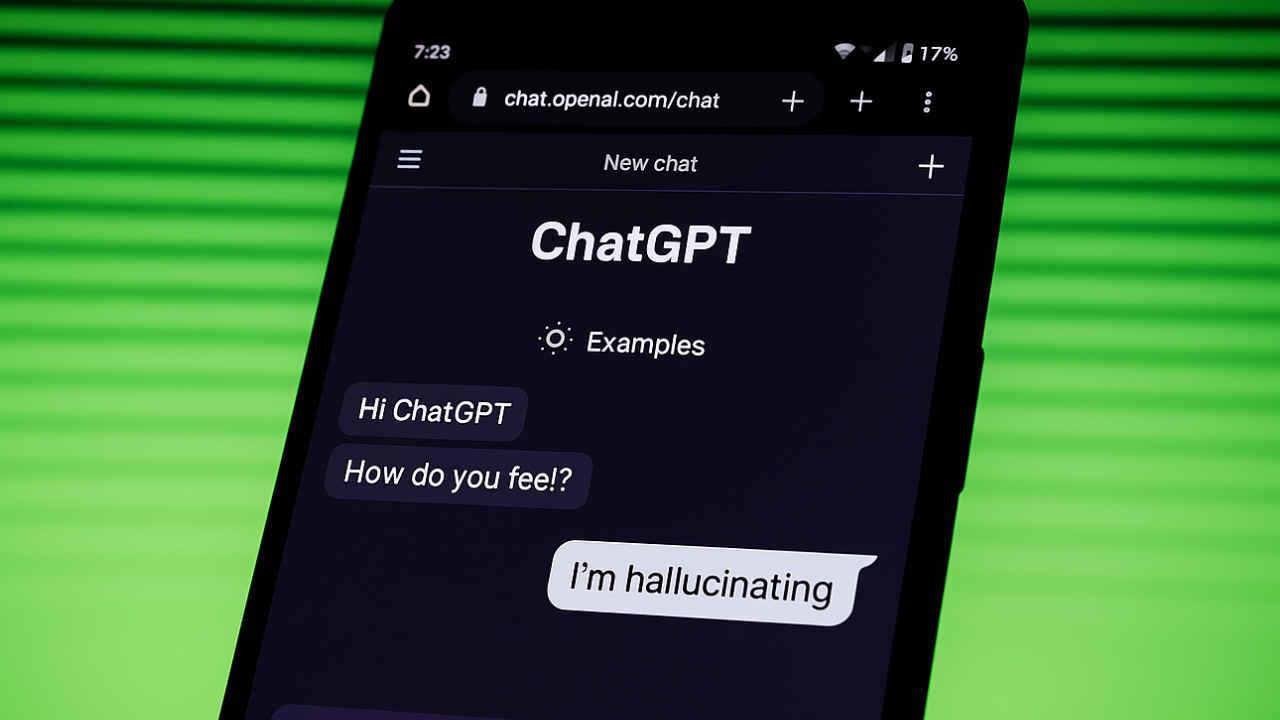
In a groundbreaking study, OpenAI researchers have uncovered the fundamental reason behind AI hallucinations - a persistent problem plaguing large language models (LLMs) like ChatGPT. The research paper, titled "Why Language Models Hallucinate," argues that the issue stems from flawed evaluation incentives rather than the quality of training data
1
.
Source: Digit
The Guessing Game: How Evaluation Methods Encourage Hallucinations
The current evaluation paradigm for LLMs uses a binary grading system that rewards accurate responses and penalizes inaccurate ones. This approach inadvertently encourages models to guess rather than admit uncertainty, as expressing ignorance is treated as an incorrect response
2
. The researchers demonstrate that even with perfect training data, hallucinations are mathematically inevitable due to the way LLMs generate responses by predicting one word at a time based on probabilities1
.
Source: PYMNTS
The Impact on AI Performance and User Experience
This "accuracy-only" approach has led to an industry-wide trend of building models that prioritize guessing over admitting uncertainty. As a result, newer AI models designed to mimic human reasoning tend to generate more hallucinations than their predecessors
3
. While OpenAI claims its latest GPT-5 model has reduced hallucinations, the problem persists, especially in technical fields such as law and mathematics3
.Related Stories

Proposed Solutions and Their Implications
OpenAI suggests modifying evaluation methods to reward appropriate expressions of uncertainty rather than penalizing them
1
. The proposed fix involves implementing confidence thresholds, where models would be instructed to answer only if they are more than a certain percentage confident4
.
Source: Geeky Gadgets
Practical Steps for Users to Mitigate Hallucinations
While the AI industry works on long-term solutions, users can take immediate steps to reduce the impact of hallucinations:
- Request sources for every claim made by the AI.
- Frame questions precisely to limit the scope for wandering responses.
- Cross-check information with multiple AI systems or search engines.
- Be wary of overly confident or detailed responses, which may indicate hallucinations.
- Treat AI-generated content as a starting point, not as definitive information
4
.
As the AI industry grapples with this challenge, the focus shifts to developing more nuanced language models with richer pragmatic competence. The path forward involves not just technological advancements but also a reevaluation of how we measure and incentivize AI performance
5
.References
Summarized by

Navi
[3]
[4]
Related Stories
OpenAI's Latest Models Excel in Capabilities but Struggle with Increased Hallucinations
21 Apr 2025•Technology

AI Hallucinations on the Rise: New Models Face Increased Inaccuracy Despite Advancements
05 May 2025•Technology

AI Hallucinations: The Challenges and Risks of Artificial Intelligence's Misinformation Problem
22 Mar 2025•Technology

Recent Highlights



Recent Highlights
Today's Top Stories






Don’t drown in AI news. We cut through the noise - filtering, ranking and summarizing the most important AI news, breakthroughs and research daily. Follow topics that matter to you and stay ahead.


